REVIEW · BUDAPEST
Budapest Castle Walk
Book on Viator →Operated by Taste Hungary · Bookable on Viator
History hangs on every cobblestone here. This 3-hour Budapest Castle Walk strings together the hilltop UNESCO quarter, from Royal Palace sights to Danube views, with a coffee break built in.
I like the small-group max of eight, because you can actually ask questions without a herd mentality. I also love that Matthias Church entry is included, along with your coffee or another drink, so you’re not constantly doing ticket math.
The only real drawback is timing: the tour starts at 3:00 pm and may run a bit past three hours if you have lingering questions. If you’ve got a strict plan right after, say so at the start.
In This Review
- Key points worth planning around
- Why this Budapest Castle Walk works (and where it shines)
- The meet point and how the 3:00 pm start affects your day
- Fisherman’s Bastion: the view, the hill’s shape, and the neighborhood stories
- Matthias Church: coronation vibes plus the Siege of Budapest
- National Széchényi Library area: the golden age question no one expects
- Castle Garden and the presidential neighborhood you might not notice
- Várkert Bazaar and Danube-side panoramas: where the tour earns its photo time
- Coffee break and what’s actually included (so you don’t get surprised)
- Price, small-group size, and what you’re really paying for
- Who should book this Budapest Castle Walk
- A timing hiccup to watch for (and how to avoid it)
- Should you book it? My practical take
- FAQ
- How long is the Budapest Castle Walk?
- What time does the tour start?
- Where do I meet the guide?
- Where does the tour end?
- Is Matthias Church entrance included?
- What’s included besides the church entrance?
- Is there an entrance fee for Fisherman’s Bastion or other stops?
- Are museum entrances included?
- Is the tour always small group?
- What if the minimum number of travelers isn’t met?
- What’s the cancellation window?
Key points worth planning around
- UNESCO hilltop focus: Buda Castle district, with stories from the 1200s through Ottoman, Habsburg, and WWII.
- Big-view stops: Fisherman’s Bastion and the Danube-side Várkert Bazaar for skyline and river photos.
- More than royal buildings: Jewish community sites, courtyards, hidden gardens, and statues you’d miss on your own.
- Matthias Church inside visit: including the entrance fee, with the tiled roof you’ve seen in photos.
- WWII gets real here: you’ll hear about the Siege of Budapest and visit a WWII bunker.
- Food break included: coffee/tea during the walk, plus photos and time for questions.
Why this Budapest Castle Walk works (and where it shines)
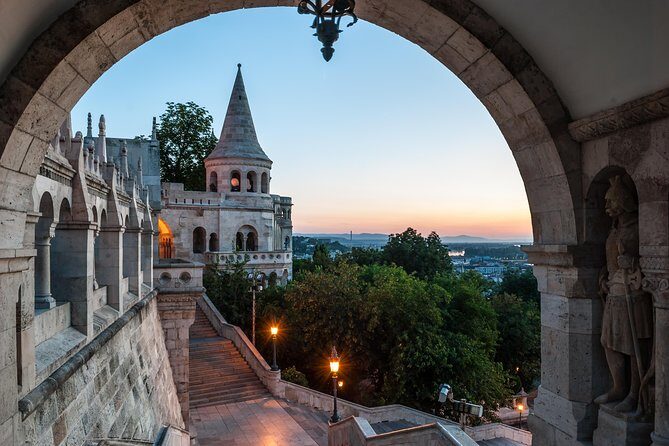
This is a history-forward walking tour that stays grounded in what you can actually see: the cobbled streets, baroque and Gothic details, courts tucked behind walls, and viewpoints that make the Danube feel right there under your nose. You’re not just “touring buildings.” You’re watching the city’s layers stack up—medieval to Ottoman to Habsburg, and then the brutal reset of World War II.
Two things make it especially good value for a first or early visit to Budapest’s Castle District. First, it’s timed as a single 3-hour circuit with multiple anchor stops, so you get your bearings without spending the whole day on stairs. Second, Matthias Church entrance is included, which matters because it saves you from scrambling for tickets while you’re trying to enjoy the tour pace.
The price is $125 per person, and it’s not the cheapest thing on the board. But when an entrance fee and a guided explanation are part of the package, it starts to feel less like a “just walk around” deal and more like a guided orientation through the most important corners of Buda.
You can also read our reviews of more tours and experiences in Budapest.



The meet point and how the 3:00 pm start affects your day
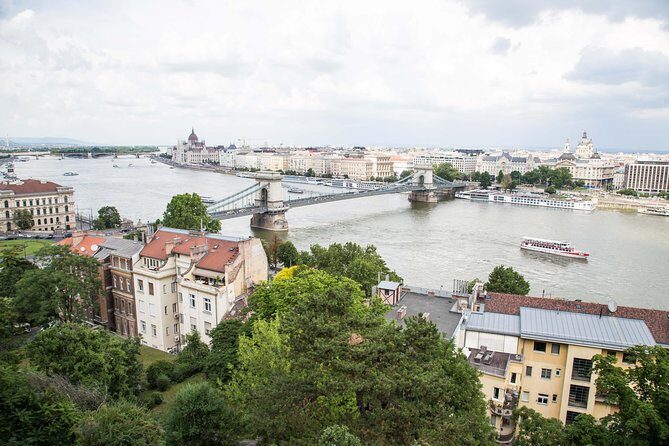
You meet at the Zero Kilometre Stone area at Clark Ádám tér (1013), and you finish at Matthias Church (1014, on Szentháromság tér). The tour begins at 3:00 pm, which can be a sweet spot for softer light over the Danube and the hilltop stonework.
Because this is a walking tour and not a quick photo stop, you’ll want to treat it like an event, not an add-on. Comfortable shoes are a must, especially around the cobblestones and the viewpoints where you’ll be standing to take pictures.
Also, keep your schedule flexible. The tour is described as about 3 hours, but it can stretch longer if you’re not in a rush—so if you’ve got dinner reservations or another timed ticket, tell your guide at the start. That one heads-up can save you from feeling rushed later.
Fisherman’s Bastion: the view, the hill’s shape, and the neighborhood stories

The walk opens at Fisherman’s Bastion, where the streets follow the hill like they were designed to match the terrain. You’ll hear how this area has been shaped by royal ambitions since the mid-1200s, when an early royal residence was built on these heights.
What I like about starting here is that it gives you a “why it looks like this” moment before you move on. Once you understand the hill and the defensive logic of the district, the rest of the walk makes more sense—especially when you start noticing courtyards, terraces, and street angles.
The guide also puts special emphasis on the Jewish population that once lived in the area, and how different powers influenced who lived here and what the district became. If you want Budapest’s Castle District to feel less like a museum backdrop and more like a real community with shifting populations, this is the place to start.
This stop is listed with free admission, which is always a nice bonus when you’re trying to keep the day’s costs under control.
Matthias Church: coronation vibes plus the Siege of Budapest
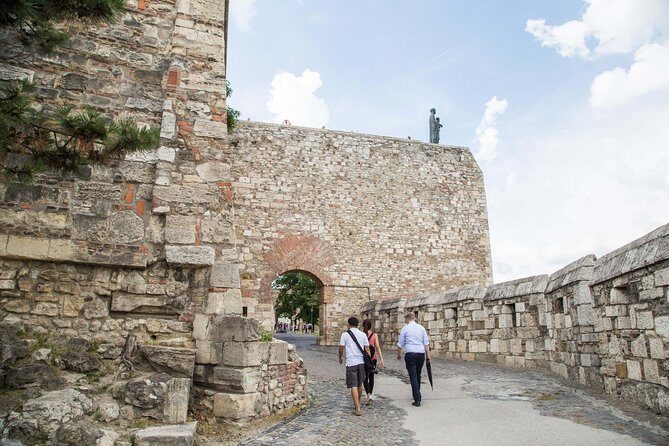
Next comes Matthias Church, one of the big “face it, you’ll see it everywhere” buildings in Budapest. The guided focus here goes beyond exterior photo ops, with an explanation tied to Hungary’s kings and the church’s role as a coronation site for many Hungarian rulers.
Inside, you’ll get time to look around—especially at the features people remember, like the multi-colored tiled roof (you can’t unsee it once you know where to look). This is also where the tour slows down enough to feel like you’re not just walking past history—you’re standing in it.
Then the tone takes a hard turn toward World War II. You’ll hear about the heroes and villains left their mark on these streets and about the Siege of Budapest, when Russian and German forces fought in 1945 and the neighborhood suffered massive destruction. It’s the kind of historical reality that makes the ornate architecture hit differently—less postcard, more layered memory.
There’s also mention of a WWII bunker visit in the tour experience, and the focus on destruction and rebuilding is part of how the guide connects the visible today to what was lost. If you prefer gentler historical storytelling, that shift might feel heavy, but it’s presented as part of understanding the district’s full timeline.
Matthias Church entrance is included, so you avoid the common “ticket line vs. tour schedule” stress.
National Széchényi Library area: the golden age question no one expects
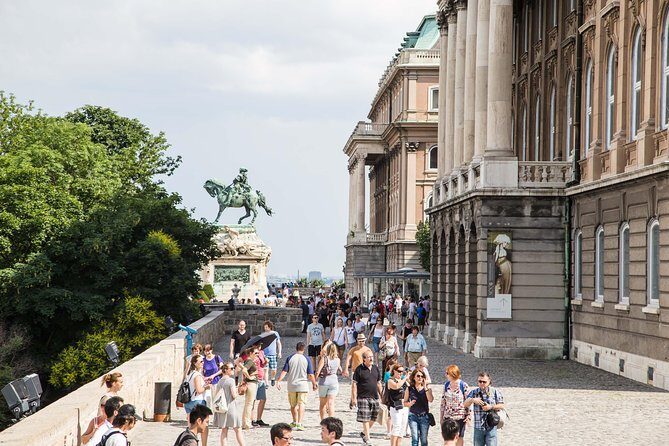
You then move to the National Széchényi Library area for one of the more interesting explanations on the walk. You’ll hear how the arrival of the Royal Court sparked the beginning of a long golden age, even if royals themselves didn’t actually reside there.
That detail matters because it changes the way you interpret the space. Instead of thinking “royalty lived here, case closed,” you get a more accurate picture: court influence, cultural power, and how a neighborhood’s identity can shift because of what surrounds it, not just because of who sleeps in a building.
You’ll also get the practical context that this area has been destroyed and rebuilt multiple times. The tour emphasizes the impact of World War II damage and the rebuilding that followed, which is visible in the look of what you’re standing in today.
Admission is listed as free for this stop, which keeps the walk’s cost steady while the guide does the heavy lifting of connecting the dots.






Castle Garden and the presidential neighborhood you might not notice

A quieter stop comes next in Castle Garden. Here, the story is very much about everyday life in an old district rather than just kings and churches.
The information you’ll get includes that the Hungarian president calls this area home, along with a few hundred residents living in centuries-old buildings. It’s a reminder that the Castle District isn’t only a stage for monuments—it’s also a lived-in neighborhood, with residents navigating the same slope and street geometry that visitors marvel at.
This stop is brief, but it helps balance the emotional intensity of the WWII material with something more grounded. You see that the district still functions as a community even while it carries the weight of its past.
Admission is listed as free, too.
Várkert Bazaar and Danube-side panoramas: where the tour earns its photo time
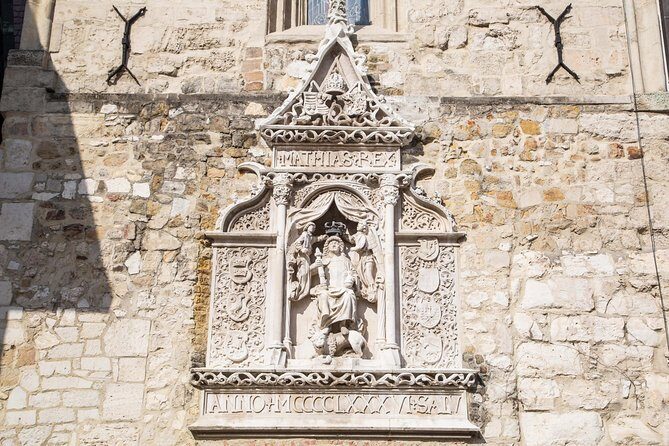
As you move through the walk, you’ll spend time around Várkert Bazaar, restored and described as neo-Renaissance along the Danube. If you’ve only seen this area in passing, the tour helps you understand why it feels like a hinge between city life and the river world below.
This is also where you’ll get some of the best “hold the camera steady” moments. Between the hilltop angles and the Danube-side open views, it’s easy to forget you’re on a walking schedule and start treating it like a viewpoint day.
Time for photos and questions is built into the overall flow, and you’ll likely appreciate that if you like to stop and ask the kind of questions that pop up when you see courtyards and statues you didn’t plan for.
Coffee break and what’s actually included (so you don’t get surprised)
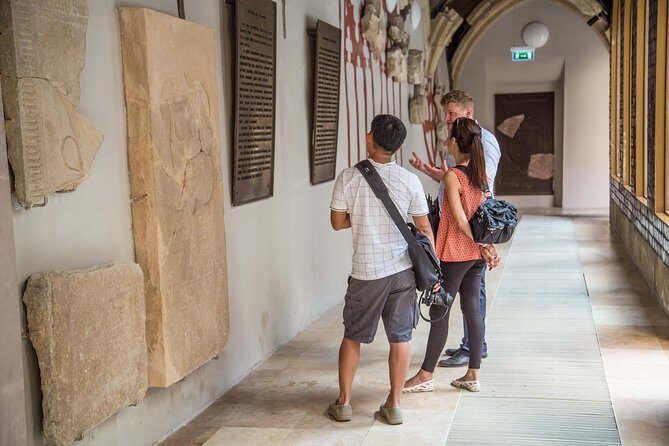
The tour includes a coffee or another drink, plus coffee and/or tea during the experience. The drink is included as a pause, not as a “pay on your own” moment that breaks the rhythm.
One thing to keep straight: the tour includes the entrance to St. Matthias Church, but it does not include entrances to museums. So if you’re hoping for extra museum time beyond what’s directly tied to the church visit, you’ll need to plan that separately.
Practical tip: since you’ll be walking for a solid chunk of time on hills and cobblestones, treat the coffee break as your fueling point. It’s an easy win for keeping energy up for the views near the Danube.
Price, small-group size, and what you’re really paying for
At $125 per person, you’re paying for three things: a local English-speaking guide, the guided pacing across multiple landmark areas, and a bundled inclusion (Matthias Church entrance) plus your drink.
The small-group setup matters. This is a maximum of eight travelers, and there’s also a minimum of two. In practice, that means fewer people to crowd the guide during questions, and more chance to hear details you might otherwise miss.
There’s also the option to upgrade to a private tour, which can be worth it if you want custom timing or if you’re traveling with someone who needs a slower pace. For larger groups, there’s a group tour option with a minimum of eight.
Also, this is booked fairly ahead of time—about 85 days in advance on average—so if your travel dates are fixed, you’ll want to reserve earlier rather than later.
Who should book this Budapest Castle Walk
This tour is a strong fit if you:
- Want a first-time orientation to the Buda Castle district with real historical context.
- Appreciate stories that move past “look at that building” into why the district changed over centuries.
- Prefer a moderate pace where you can ask questions, not a fast shuffle through landmarks.
It’s also a good match for people who want history that includes the Jewish community focus and the WWII material, not just royal and church highlights.
If your idea of a perfect day is mostly museums and long indoor visits, you may find the “walking + key stops” format less satisfying—since museum entrances beyond Matthias aren’t included and the stops are designed for a 3-hour arc.
A timing hiccup to watch for (and how to avoid it)
One potential snag worth planning around: the start time can be easy to miss if your confirmation details aren’t clear. There was at least one case where the purchase page didn’t show the tour hour clearly, and the person had to sort it out by contacting assistance and then involving their hotel when they couldn’t get through.
You can prevent that kind of headache with a simple habit: when you book, double-check the email or confirmation screen for the 3:00 pm start and the exact meeting point near the Zero Kilometre Stone. Then arrive a few minutes early so you’re not hunting for your group while you’re trying to read your phone.
Also, because the tour ends at Matthias Church, it’s smart to plan your next stop around that location rather than trying to sprint across the district afterward.
Should you book it? My practical take
I think the Budapest Castle Walk is a good choice if you want your Castle District visit to feel structured, meaningful, and efficient. The combination of Fisherman’s Bastion viewpoints, an inside stop at Matthias Church, and the district’s Jewish and WWII stories gives you more than a sightseeing loop.
It’s also a solid option for value compared to tours where you pay extra for entrance fees later. Here, one of the major tickets—Matthias Church—is included, and your coffee break is part of the schedule.
The main reason to hesitate is if you dislike heavier WWII framing or you have a rigid plan right after 3:00 pm. If either of those is true, you can still enjoy the district on your own—but you might miss the guide’s connections that make the stones tell a bigger story.
FAQ
How long is the Budapest Castle Walk?
It’s listed as about 3 hours.
What time does the tour start?
The start time given is 3:00 pm.
Where do I meet the guide?
Meet at the Zero Kilometre Stone area at Clark Ádám tér, 1013 Hungary.
Where does the tour end?
The tour ends at Matthias Church, Mátyás Templom, Szentháromság tér 2, 1014 Hungary.
Is Matthias Church entrance included?
Yes. Entrance to St. Matthias (Matthias Church) is included.
What’s included besides the church entrance?
You get an English-speaking local guide, a coffee break with one coffee or another drink, and coffee and/or tea.
Is there an entrance fee for Fisherman’s Bastion or other stops?
Admission is listed as free for Fisherman’s Bastion and free for the National Széchényi Library and Castle Garden.
Are museum entrances included?
No. Museum entrances are not included.
Is the tour always small group?
It’s described as a small-group tour with a minimum of 2 and a maximum of 8 travelers. You can also book a private tour or choose a larger group option.
What if the minimum number of travelers isn’t met?
There’s a possibility of cancellation if minimum numbers aren’t met, in which case you’ll be offered an alternative or a full refund.
What’s the cancellation window?
Free cancellation is available up to 24 hours before the experience start time for a full refund.