REVIEW · BUDAPEST
Accessible Budapest Tour
Book on Viator →Operated by Tourist Angel · Bookable on Viator
Budapest can feel like a challenge when the streets, stairs, and long climbs aren’t on your side. This tour focuses on a wheelchair-accessible route with a guide who plans around steps and levels.
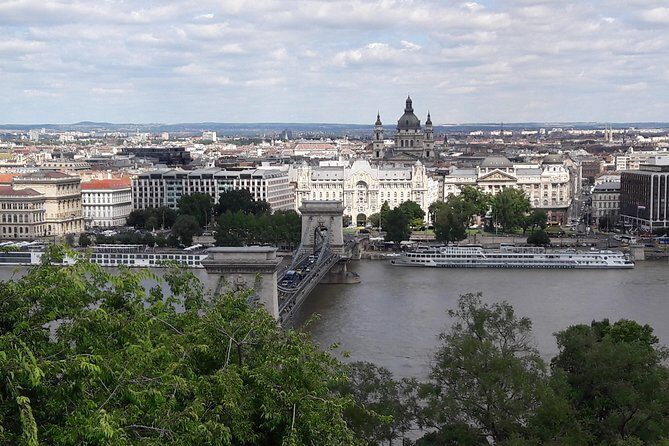
I especially like the way you get to major sights without wasting time stuck at the wrong entrance. And I love that the stop plan includes the kind of views people travel for, like the Danube panorama from Buda Castle.
One thing to keep in mind: some famous churches and spots aren’t fully accessible inside, and not every ticket is included. If you want specific indoor time, you’ll want to check what you’re actually paying for as you go.
In This Review
- Key Points at a Glance
- A Wheelchair-Friendly Route That Still Feels Like Budapest
- What You’re Paying For: Price and Value in Plain Terms
- Starting at Szent István tér: Pickup, Meeting Point, and Timing Feel
- Stop 1: St. Stephen’s Basilica (Szent István Bazilika) Without the Wrong Stairs
- The “Getting Around” Stretch: From Pest’s Junction to Buda by Accessible Bus
- Stop 2: Buda Castle and the Royal Palace Terrace Views
- Stop 3: Fountain of King Matthias for a Quick Reset
- Stop 4: Sándor Palace and the Presidential Guards Moment
- Stop 5: Fisherman’s Bastion for the Danube Panorama
- Stop 6: Matthias Church Timing and Accessibility Limits
- The Bridge Note: Budapest Under Renovation
- Along Andrassy Avenue to Heroes’ Square (A Long, Elegant Street)
- Stop 7: Heroes’ Square and the Millennium Monument Area
- Stop 8: The Millennium Monument Close-Up
- Stop 9: City Park and Vajdahunyad Castle on an Island
- Stop 10: Anonymus Szobor (Anonymus Statue) for a Little Brainy Flavor
- How the Guide’s Approach Can Change Your Day
- Should You Book This Accessible Budapest Tour?
- FAQ
- Is this tour wheelchair-friendly?
- What’s included in the price?
- Do you offer pickup from my hotel?
- How long is the tour?
- Are there accessible transport options during the day?
- Is the tour only for my group?
- What about church dress rules?
Key Points at a Glance
- Real accessibility planning: the route is built to avoid steps and levels when possible, with accessible options prioritized.
- A guide who adjusts timing: the best part here is how your guide can tailor the pace to mobility needs.
- Great view stops: Buda Castle terrace and Fisherman’s Bastion give you classic panoramas without forcing an exhausting route.
- Basilica access with limits: you get an elevator inside St. Stephen’s Basilica, but the tower area isn’t part of the accessible route.
- Tickets and interiors vary: entry is included for St. Stephen’s Basilica (with a day/time exception), while other sights may require separate tickets.
- Accessible transport help on request: pickup can be arranged, and an accessible minibus is available if you want it.
A Wheelchair-Friendly Route That Still Feels Like Budapest
This is the kind of tour you book when you want the real highlights, but your mobility needs control the agenda. You’re not just handed a map and told to do your best. You have a licensed guide who works the plan so you spend more time seeing Budapest and less time wrestling with stairs.
Two things make it work well. First, the itinerary is designed to swap out inaccessible areas for places with usable amenities. Second, the guide’s job isn’t only to explain sights—it’s to help your group actually get to the sight in the first place.
The pacing is usually a sweet spot for a 4-to-6 hour window. You’ll get a lot of variety: grand church interiors (with limitations), palace viewpoints, a couple of short photo stops, and then a big cultural stretch toward Heroes’ Square.
You can also read our reviews of more tours and experiences in Budapest.


What You’re Paying For: Price and Value in Plain Terms
At $142.97 per person, this isn’t a budget “hop-on” sightseeing deal. But you are paying for a private setup that’s built around mobility needs, plus a licensed guide. You also get hotel pickup and drop-off, which matters in Budapest because transit and street navigation can be tiring even for people without mobility barriers.
Here’s the value logic that matters most:
- Guide + private group: You’re not fighting crowds or generic pacing.
- St. Stephen’s Basilica entry included (with an exception): that saves money and avoids ticket hassles.
- Pickup/drop-off: you’re starting and ending at the meeting point, and drop-off can be at your hotel or another chosen city point after the tour.
- Accessibility flexibility: you can request an accessible minibus, and the guide is set up to work around stairs/levels.
One “watch this” note: some top-name locations have limited accessibility or require separate admission. If you’re expecting everything to be included no matter what you do inside, plan to confirm ticket coverage for each stop.
Starting at Szent István tér: Pickup, Meeting Point, and Timing Feel
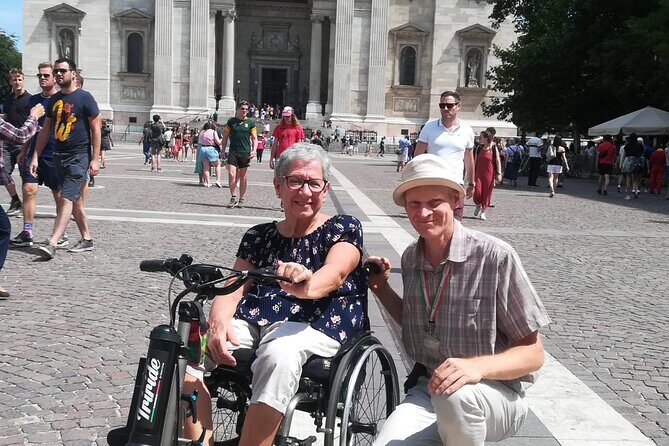
The tour starts at Szent István tér 4, 1051, and it ends back at that same meeting point. If you booked pickup, the guide meets you at the hotel reception desk or right in front of your accommodation address. Either way, you’re set up for an easier start than “find the right bus stop and hope.”
It’s also private, meaning only your group is on the schedule. That’s a big deal for mobility. You don’t get stuck waiting while someone else uses a different pace, and your guide can keep the route more responsive to your needs.
The tour operates in all weather conditions, so dressing smart matters. In church areas, you’ll need to cover legs and shoulders, which is a simple rule but it can throw off plans if you’re traveling light.
Stop 1: St. Stephen’s Basilica (Szent István Bazilika) Without the Wrong Stairs
This is the headliner for the church portion, and it’s the right kind of dramatic. St. Stephen’s Basilica was built to honor the first Hungarian king, St. Stephen, who died in 1038. Inside you’ll see lots of statues and frescoes, plus an unforgettable detail: the mummified right hand of St. Stephen.
Access is mostly handled well for wheelchair users. There is an elevator to get inside the church area, but the route excludes the tower area, including the treasury and panoramic terrace.
Timing runs about 45 minutes, and admission is included with one exception: it’s not available when the basilica is closed for Sunday morning religious service. If your trip lands on a Sunday morning, you’ll want to think about whether that affects your visit plan.
Practical tip for your day: even if you’re not planning to go up anything like a terrace, still factor in the time it takes to get through the main interior calmly.
The “Getting Around” Stretch: From Pest’s Junction to Buda by Accessible Bus
After the basilica, you head toward Budapest’s central traffic junction. From there, you can enter the old town of Pest and the inner city area. The tour then uses an accessible public bus to cross you over to the Castle of Buda.
This matters because Budapest’s city center can be steep, crowded, or just plain slow if you’re dealing with mobility limits. Using transit thoughtfully turns a potential hassle into “just part of the route.”
It’s not flashy like the next stops, but it’s one of the smartest ways this itinerary earns its keep: you’re spending less effort on logistics and more time where you’ll actually want photos and time inside.


Stop 2: Buda Castle and the Royal Palace Terrace Views
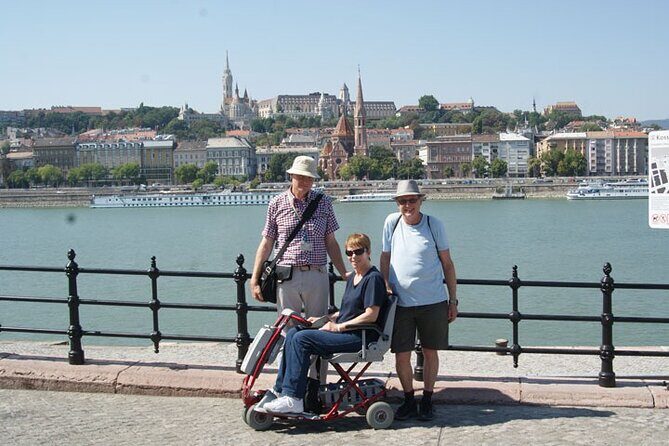
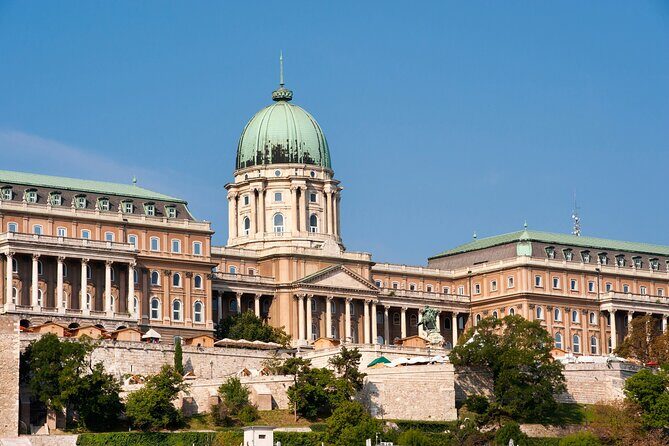
Once you reach the Castle of Buda, you get the classic Danube-and-city payoff. The itinerary focuses on the panoramic terrace of the Royal Palace, with the “big view” angle over Budapest.
The stop is around 45 minutes, and admission is free for this terrace visit. In other words: you’re not paying extra just to enjoy the view, and you’re not forced into long indoor loops.
This is a strong stop for many mobility travelers because it’s about the scenery, not about climbing into every nook. You’re here to see the city’s layout: Pest spread out across the river and the Parliament area in the wider skyline picture.
Stop 3: Fountain of King Matthias for a Quick Reset
This is a short, easy stop—about 10 minutes—to see the Fountain of King Matthias, a beautiful feature built in the 19th century.
I like stops like this on accessible tours because they break up longer stretches with something you can enjoy without huge movement demands. It’s also a good “photo and breathe” moment.
Admission here is free, so you can treat it as a break rather than another ticket line.
Stop 4: Sándor Palace and the Presidential Guards Moment
From the castle area you move toward Sándor Palace, the presidential palace. The short stop here is mainly about seeing the palace front and the guards in historical uniforms.
This stop takes about 10 minutes and admission isn’t included. Still, for a quick look, it’s one of those Budapest “people watch from a good spot” moments—especially if you like seeing ceremonial details up close.
If you want extended time for photos, don’t assume you’ll get it. The itinerary here is brief by design.
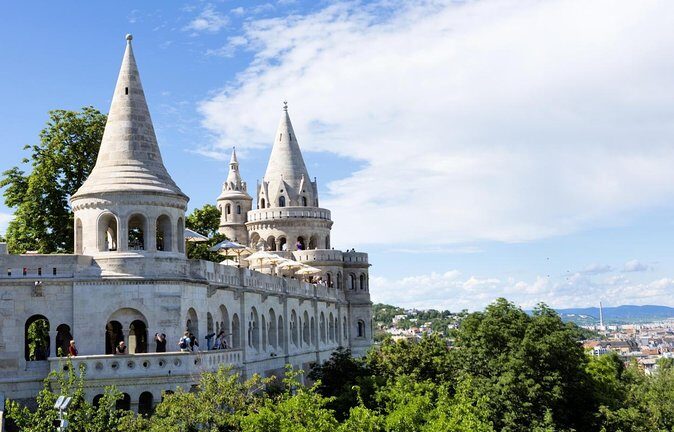
Stop 5: Fisherman’s Bastion for the Danube Panorama
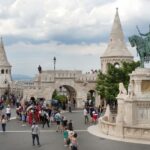
Next up: Fisherman’s Bastion. This is one of Budapest’s most photogenic areas, and the tour gives you a focused chance to admire the view—especially toward the Danube and the Hungarian Parliament building in the distance.
Plan about 15 minutes. Admission isn’t included, and you may find yourself more in “look, take photos, enjoy the scenery” mode than “long sit-down explore.”
Also, a timing note: Fisherman’s Bastion is a place people tend to linger. If you’re traveling with limited stamina, the short, guided window is actually helpful. Your guide can help you decide the best angle without turning it into a long trek.
Stop 6: Matthias Church Timing and Accessibility Limits
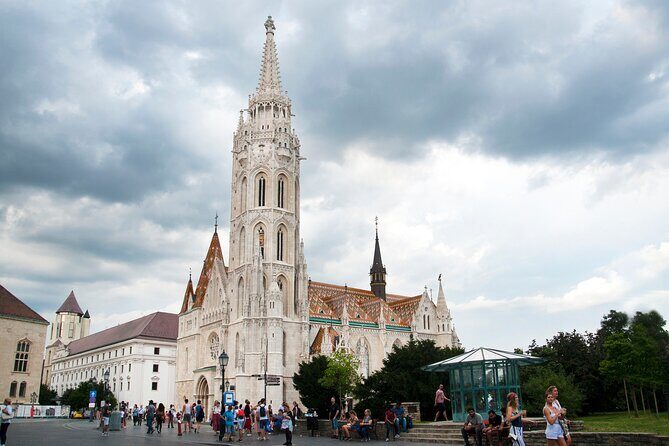
Matthias Church is the next stop, and it’s visually stunning on the outside. It’s a Middle Ages Gothic-style church, and the itinerary includes walking around to enjoy the architecture.
Here’s the key accessibility reality: the church is not accessible inside for wheelchair users. The admission isn’t included either, and the information indicates the interior visit is not included for wheelchair users. The plan does mention that walkers may be able to visit the interior upon request, but that’s conditional.
So set your expectations before you go. You’re getting exterior time as the dependable part, and inside access may depend on your mobility profile.
The Bridge Note: Budapest Under Renovation
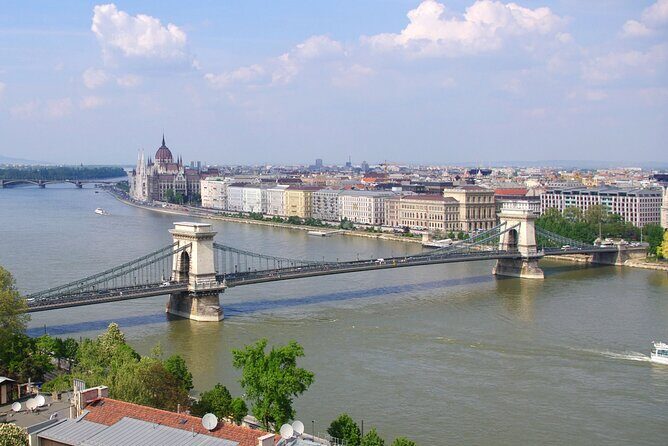
There’s an additional heads-up: the iconic bridge is under renovation in the period from 2021 to 2022. That doesn’t automatically mean you won’t get views, but it can affect how you experience the crossing or photo angles depending on where construction limits access.
If your trip falls during ongoing work, I’d treat bridge sightseeing as “weather plus construction equals flexible.” Your guide should steer you to the best photo options available.
Along Andrassy Avenue to Heroes’ Square (A Long, Elegant Street)
The tour then heads to Andrássy Avenue, described as a two-mile historical thoroughfare. You ride an accessible public bus along the avenue to get to Heroes’ Square.
This is a smart choice if you’re mobility-limited. Andrássy Avenue looks like a walking street, but it can be tiring when your energy is better saved for the actual destination sights. By using a bus for the transit portion, you keep the “effort-to-reward” ratio higher.
Stop 7: Heroes’ Square and the Millennium Monument Area
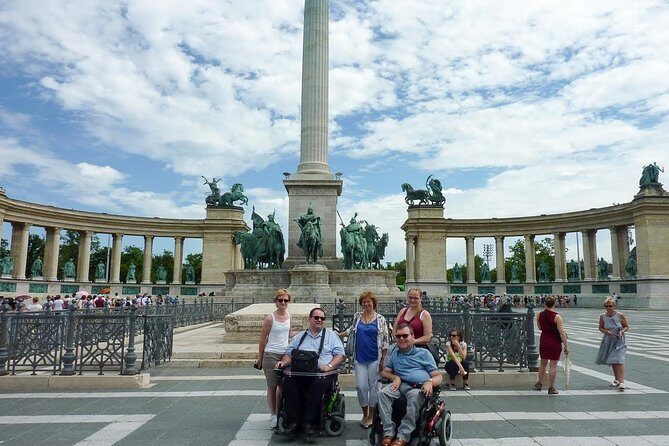
At Heroes’ Square, you’ll walk through one of Budapest’s biggest squares. In the middle is the Millennium Monument, and along the sides you’ll see the Arts Hall and the Fine Arts Museum.
This is short—about 10 minutes—but it’s designed for quick orientation. Heroes’ Square is also a great place to reset your bearings. It’s wide open, and the view helps you understand the city’s grand layout.
Admission here is free.
Stop 8: The Millennium Monument Close-Up
Right in front of the Millennium Monument is the grave of the unknown heroes, and around the colonnades you’ll see statues of important kings and leaders of Hungary.
The tour gives you about 10 minutes. It’s enough to see the key symbolic elements without turning it into a museum-style stop.
Admission is free, which makes this one of the best “value per minute” stops on the itinerary.
Stop 9: City Park and Vajdahunyad Castle on an Island
Next comes Budapest City Park, said to be one of the oldest public parks in the world. The stop includes a short walk over a bridge to reach an island on the lake and the romantic Vajdahunyad Castle courtyard.
You’ll spend about 15 minutes. Admission is free for this stop, and you’ll see copies of buildings representing different periods and styles of Hungarian architecture.
This is a great place to enjoy “Budapest’s idea of style” without committing to a long indoor program. If you prefer scenery and architecture with limited walking, this part fits well.
Stop 10: Anonymus Szobor (Anonymus Statue) for a Little Brainy Flavor
Finally, in the courtyard you’ll spot the Anonymus Szobor, a statue of Anonymus, described as Hungary’s first history writer from the 12th century.
The time is short—about 10 minutes—and admission is free. This is the kind of stop that adds personality. Even if you don’t read every plaque, the story detail makes the architecture feel anchored in people and memory rather than just stone and photos.
How the Guide’s Approach Can Change Your Day
The strongest part of this experience is the human factor: a guide who understands mobility challenges and adjusts. One past group highlighted how the guide tailored both timing and the itinerary to their specific requirements. That’s not a small detail. It’s the difference between a “tour you survive” and a tour that lets you actually enjoy the sights.
For you, that means:
- You should expect the guide to steer around inaccessible spots and aim for accessible alternatives.
- You’ll likely spend less time stuck at dead ends.
- Your group’s pace matters more than keeping a rigid checklist.
It’s still worth being realistic about stops that are inherently limited. For example, Matthias Church interior access is specifically described as not accessible for wheelchair users. So you get the exterior experience, not a guaranteed indoor visit.
Should You Book This Accessible Budapest Tour?
If you want a structured Budapest day that protects your energy and prioritizes accessible routes, this is a strong choice. The best match is someone who wants major sights—basilica, Buda Castle views, Fisherman’s Bastion, Heroes’ Square—without turning accessibility into a daily stress test.
I’d book it if:
- You need wheelchair-friendly planning and a guide who can handle steps/levels issues.
- You want a classic highlights route with accessible transport support.
- You value a private group format where your pace drives the day.
I’d hesitate or at least confirm details if:
- You strongly care about specific interior visits at places like Matthias Church (because inside access is limited for wheelchair users).
- You’re expecting every ticketed site to be included automatically—some entries aren’t included, and certain stops are designed around views/exteriors instead of paid interior time.
Bottom line: you’re buying a smooth, accessibility-minded plan with real payoff views. Just go in with flexible expectations for indoor access and separate tickets.
FAQ
Is this tour wheelchair-friendly?
Yes, it’s designed for wheelchair users and people with mobility issues. St. Stephen’s Basilica has an elevator for wheelchair users to get inside, but the tower area is not included in the accessible route. Matthias Church is noted as not accessible inside for wheelchair users.
What’s included in the price?
The tour includes a professional, licensed guide; entry to St. Stephen’s Basilica (except Sunday morning religious service); and hotel pickup and drop-off. Public transport tickets are not included.
Do you offer pickup from my hotel?
Pickup is available. The guide meets you at the hotel reception desk or in front of your accommodation address if you need pickup.
How long is the tour?
The duration is about 4 to 6 hours, with a possible optional one-hour lunch break that may be excluded from the tour duration.
Are there accessible transport options during the day?
You’ll use accessible transport during the tour, including an accessible public bus between key stops. You can also request an accessible minibus if you want one.
Is the tour only for my group?
Yes. It’s a private tour/activity, so only your group participates.
What about church dress rules?
In church areas, you’ll need to cover your legs and shoulders. The tour operates in all weather conditions, so dress appropriately.