REVIEW · BUDAPEST
Explore Budapest from the Local’s Perspective – Public Transportation Tour
Book on Viator →Operated by Fungarian · Bookable on Viator
Budapest clicks into place fast with transit. This 3-hour tour pairs a local expert with a 24-hour public transportation pass, so you see big sights while learning the system you’ll actually use after your tour. I like that the route mixes major landmarks with practical ride tips, though the pace is brisk and you’ll be on your feet and moving a lot.
The second thing I really like is the focus on usable skills: you get a mobile ticket and a printed rider guide/map, so the learning doesn’t stop when the tour ends. One consideration: this is a “ride-and-see” format, not a slow museum day, and it’s not the best choice if you want long indoor time.
In This Review
- Key things that make this tour work
- Why a 24-hour pass turns a tour into a tool
- Andrássy Avenue to Deák Ferenc tér: seeing the grand streets the transit way
- Heroes’ Square and City Park: art, castles, and one very old ice rink
- Vajdahunyad Castle and why it was built at all
- Museum of Fine Arts and Budapest Hall of Art
- City Park Ice Rink: when the view matters more than the season
- Margaret Bridge and Nagykörút: the Danube crossing plus the tram lifeline
- Learning the ring route on Nagykörút
- Nyugati, Elizabeth Square, and the pulse of Deák Ferenc tér
- Buda Castle area, funicular options, and the Gellért panorama payoff
- Szent Gellért Square and the water-themed underground feel
- Gellért Thermal Baths and Gellért Hill
- Liberty Bridge and the view line back toward the Danube
- What you’ll actually learn (and keep using) after the tour ends
- Price, pace, and who gets the most out of it
- Should you book this Budapest public transportation tour?
- FAQ
- FAQ
- How long is the Budapest public transportation tour?
- What does the tour cost?
- Is pickup from my accommodation included?
- What language is the tour offered in?
- Is a city transportation pass included?
- Is food included in the price?
- Is this tour private?
Key things that make this tour work
- A 24-hour transit pass you can keep using right after the walking and riding
- A local guide who explains how to use the system, not just what to look at
- Five-plus transportation modes in a short window, built around real routes
- High-value stops from Heroes’ Square to major rail and metro junctions
- UNESCO-rated Andrássy Avenue plus Danube views from key bridges
- Tour materials in your bag: notebook, pen, route map, and a Budapest transport booklet
Why a 24-hour pass turns a tour into a tool
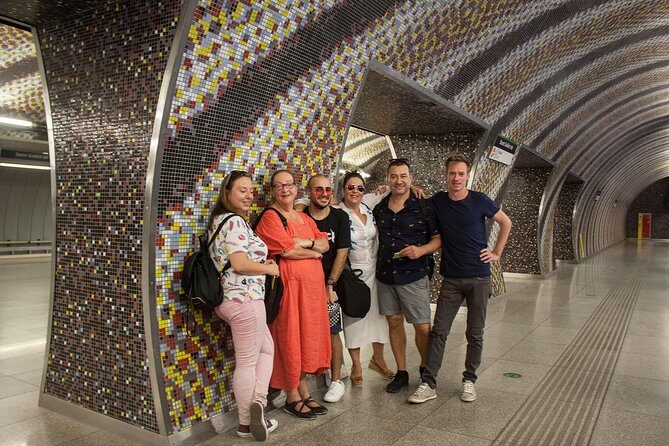
The real “souvenir” here isn’t a postcard. It’s the fact that you leave with a 24-hour transit pass for any means of transportation. That changes how you travel in Budapest, because you’re not guessing how to get from sight to sight on your own the first time you’re using the network.
In practical terms, this format is great for first-timers. You get guided rides while the stops are still fresh in your mind. Then, when you go back out later for dinner or a second round at a viewpoint, you’re not starting from zero. You already know the rhythm of the city’s transit and how to read the simple basics your guide points out.
And yes, you’re paying for the guide plus the materials and pass. At $118.58 per person for a 3-hour private-style experience, the value makes sense if you’ll actually use the pass afterward. If you plan to stay mostly in one neighborhood by foot all day, the pass may feel less useful.
You can also read our reviews of more tours and experiences in Budapest.



Andrássy Avenue to Deák Ferenc tér: seeing the grand streets the transit way
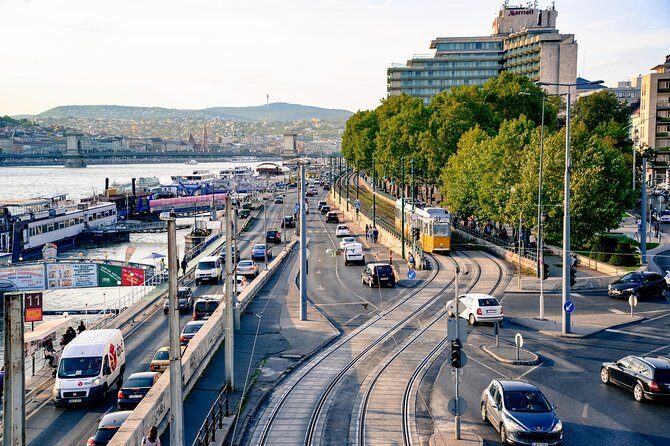
You start with Andrássy Avenue, a boulevard dating to the 1870s and recognized as a World Heritage Site. This is the kind of street where the buildings do a lot of the talking: Neo-renaissance facades, grand townhouses, and a corridor of embassies, theaters, cafés, and shops.
What makes this stop smart in a transit-focused tour is how it sets expectations. Budapest can look complicated until you realize it’s built around clear corridors and junctions. Andrássy Avenue is one of those “main lines” where the city feels organized.
Then you move toward the big transport brains of the center, especially Deák Ferenc Square. This is where three metro lines converge under the square, and trams and buses also fan out. If you want one lesson that pays off for the rest of your trip, it’s understanding how to use a hub like this. Even if you never use every line, knowing where they meet helps you plan without stress.
A small practical note: this kind of stop is great when you travel light. You’ll be stepping on and off at transfer points, and crowd flow matters. A daypack you can manage easily beats a heavy bag that makes every platform feel like a workout.
Heroes’ Square and City Park: art, castles, and one very old ice rink

Heroes’ Square is one of those places you’ll recognize instantly, even if you’ve never been. The statue complex shows the Seven chieftains of the Magyars, plus other leaders tied to Hungarian national identity. There’s also the Memorial Stone of Heroes, which is often mistakenly called the Tomb of the Unknown Soldier—your guide can help you see what’s what.
This area is also connected to two big “what kind of city is this” stops:
Vajdahunyad Castle and why it was built at all
You’ll spend time at Vajdahunyad Castle, built in 1896 for the Millennial Exhibition marking 1,000 years since the Hungarian Conquest in 895. What I find useful here is the idea that the castle is partly a statement: it’s designed by Ignác Alpár to echo famous buildings from the Kingdom of Hungary, especially Hunyad Castle in Transylvania (now Romania).
Even if you don’t go inside everything, the setting helps you understand why Budapest carries layers of identity. You’re not just looking at a pretty fortress-like structure—you’re seeing a symbol of how Hungary wanted to present itself.
Museum of Fine Arts and Budapest Hall of Art
Next up is the Museum of Fine Arts, built in eclectic-neoclassical style between 1900 and 1906, with plans by Albert Schickedanz and Fülöp Herzog. The collection is international art across European periods (over 100,000 pieces), so it’s more than a Hungarian museum. In a short tour, you’re likely getting orientation—what the buildings represent and where the art world sits relative to the square.
Across the square sits the Budapest Hall of Art (Műcsarnok), focused on contemporary exhibitions in a historic setting. It’s also useful because it shows how the city mixes eras in the same spotlight area.






City Park Ice Rink: when the view matters more than the season
In City Park you’ll pass the City Park Ice Rink, opened in 1870 and considered the largest and one of the oldest in Europe. If you’re there in winter, you’ll understand why locals love using public spaces year-round. If you’re there in warmer months, it’s still worth clocking because it gives context for how this park functions as a social and recreation zone.
The drawback? If you’re hoping for deep museum time, you won’t get it here. This is more about seeing the buildings and learning what they are, so you can decide later if you want a longer visit.
Margaret Bridge and Nagykörút: the Danube crossing plus the tram lifeline
At Jászai Mari tér, you’re stepping into a transport-and-life hub right near the east foot of Margaret Bridge. It’s named after Mari Jászai, a major Hungarian actor. That name matters here because it reminds you that squares aren’t just wayfinding—they’re local identity markers.
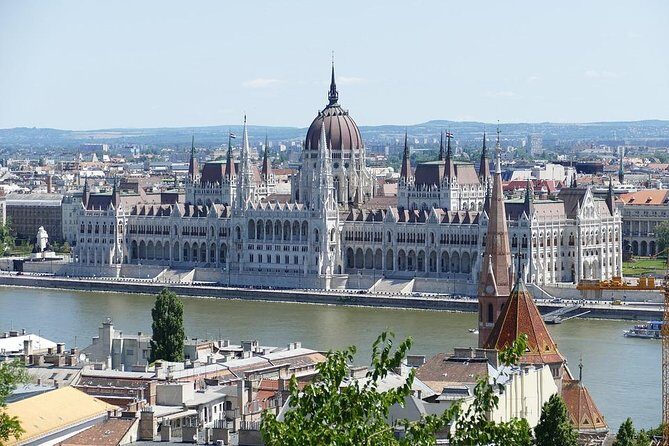
Then you cross Margaret Bridge, a three-part bridge connecting Buda and Pest and linking Margaret Island to the banks. It’s the second-northernmost and second-oldest public bridge in Budapest. Even in a quick ride-and-walk format, the bridge is a key “Danube lesson.” It shows how the river isn’t a barrier; it’s a line you build your routes around.
Learning the ring route on Nagykörút
One of the best practical moments is hopping onto the tram lines that run along Nagykörút, Budapest’s big ring road. The tour description points out that these tram lines are among the busiest in the world (with a legend that one is the busiest), with services often running about every 15 minutes and as frequently as every 2 minutes during rush hours.
Why this matters to you: ring lines are a cheat code. They help you move without constantly backtracking through the same central streets. Once you understand the ring, you can pick the closest connection to where you want to go next.
And since this tour is built around trying different transportation options (the exact mix can vary by route and timing), this is where the theory starts feeling automatic.
Nyugati, Elizabeth Square, and the pulse of Deák Ferenc tér
Nyugati pályaudvar (Western railway station) is a major terminal on the Pest side. It’s connected by tram lines 4 and 6 and the M3 metro line, which makes it a perfect transit stop for learning how the city’s rails and streets talk to each other. The surrounding area also has lots of restaurants, bars, and stores, so it’s not just a station—you’re in a social zone.
Then you hit Elizabeth Square, a park next to Deák Ferenc tér. This is a good “local rhythm” stop. It’s popular with younger crowds, and the grassy area sells alcoholic drinks. Deák Ferenc tér itself can stay active late, often until midnight.
This can be a win for you because it adds realism. Budapest isn’t only monuments and view decks. It’s also people hanging out at transport hubs and turning them into meeting places.
The only caution: if you’re sensitive to noise or crowds, plan your pace. These hubs can be busy, and a fast tour schedule means you’ll be walking through that energy rather than sitting in it.
Buda Castle area, funicular options, and the Gellért panorama payoff
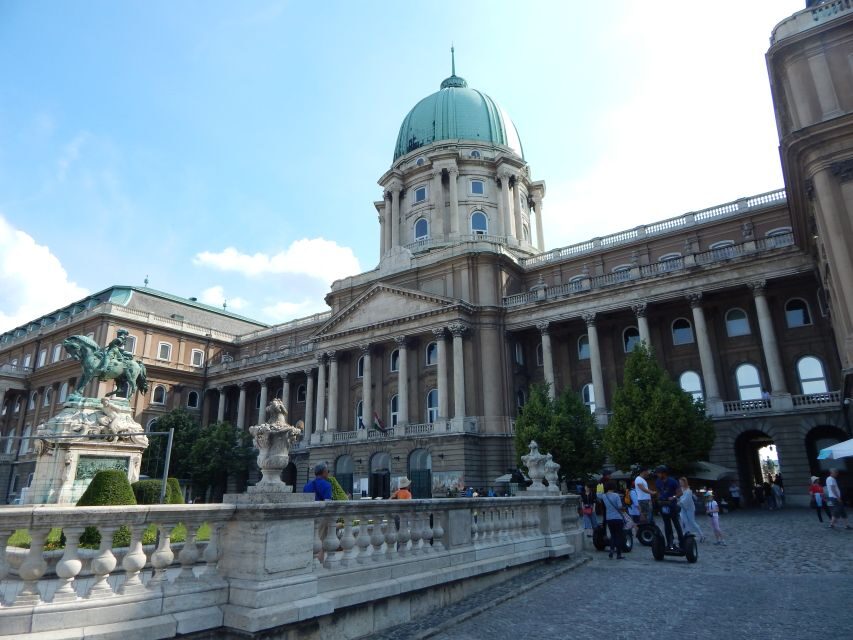
From the Pest side, the tour shifts toward Buda’s higher ground. Buda Castle is on your radar, and there’s also mention of a version that uses the funicular option. Translation: your guide can tailor the approach so you get the right mix of sights and views without feeling like you’re doing random climbs.
Even if you only get a partial look at the castle area in a 45-minute stop, this part of Budapest is about perspective. You’re meant to see why locals frame the city from these elevations.
Szent Gellért Square and the water-themed underground feel
Next comes Szent Gellért Square, with a water-themed design—wavy benches and a small fountain/pond at the entry. It’s also a stop tied to a unique underground station environment. This is the kind of detail you might miss if you only ride transit without a guide.
Gellért Thermal Baths and Gellért Hill
You’ll also pass Gellért Thermal Baths and the Hotel Gellért complex. Even if you don’t go in during this 3-hour window, seeing the location sets up future planning, because thermal baths are a big part of Budapest’s travel identity.
Then you reach Gellért Hill, rising to 235 meters above the Danube. The hill is presented as the best panorama point above the capital. There’s also the story of bishop Gellért, arriving from Italy around 1000 AD, and the legend about him being rolled down the hill in a barrel into the Danube in 1046.
Liberty Bridge and the view line back toward the Danube
Finally, you cross Liberty Bridge (Szabadság hid)—framed as one of Budapest’s most beautiful bridges—to arrive at the foot of Gellért Hill. This walk is where you feel the city’s layout: bridges guide you, and each one opens a new view angle.
If you’re short on time, the Gellért portion is a strong “close the loop” ending because the altitude makes the earlier transit stops feel connected. But if you hate stairs and slopes, tell your guide. Budapest is friendly to transit, yet hills still affect your comfort.
What you’ll actually learn (and keep using) after the tour ends
The strongest praise for this experience is simple: the guide makes Budapest’s public transportation feel usable. That’s not a small thing. The system works well, but you still need to know what to do at the moment you’re standing there with a map and a phone.
Here are the skills that tend to matter most on a tour like this:
- How to use the mobile ticket so you don’t get stuck at the worst possible time.
- How to choose routes using major hubs like Deák Ferenc tér and Nyugati.
- How to read the city flow, especially around ring routes like Nagykörút.
- How to avoid tourist-trap detours, because you’re moving along the same lines locals rely on.
Also, don’t be surprised if you get extra practical help. One review notes that the guide assisted with airport departure planning and finding a destination later on—and even added a public boat ride. That kind of flexibility can be a real value boost, especially if your schedule is tight.
Just remember the limits: food and drinks are not included, so plan a meal break before or after. This keeps the tour moving smoothly, but it’s on you to eat.
Price, pace, and who gets the most out of it
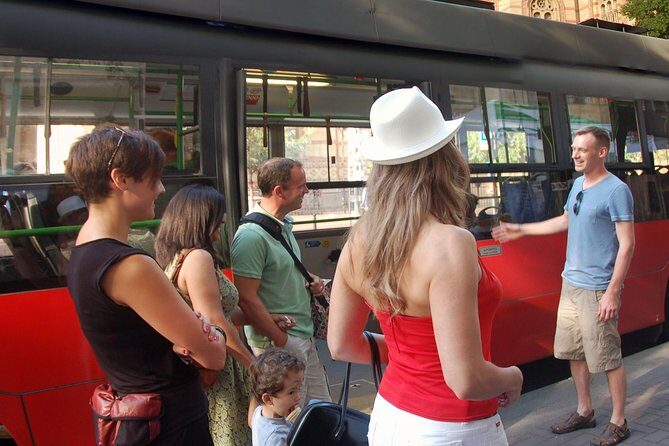
At $118.58 per person for about 3 hours, you’re paying for more than “transport.” You’re paying for:
- a knowledgeable local guide,
- a 24-hour pass you can use beyond the tour,
- and tools you can carry with you (notebook, souvenir pen, route map, and a Budapest public transport booklet).
This is a good deal when you fit the mission. Book it if:
- you’re visiting Budapest for the first time,
- you want an efficient, money-saving way to see key sights,
- you like learning the system so you can travel independently afterward.
It’s less ideal if:
- you want lots of time inside major museums,
- you prefer a very slow pace,
- or you’re only interested in one or two neighborhoods (because you’ll be moving across the city).
One more plus: it’s described as private in the sense that only your group participates, so you’re not stuck with a loud, mixed crowd controlling the rhythm.
Should you book this Budapest public transportation tour?
I’d book this if you want confidence. You’ll see big, recognizable places—Andrássy Avenue, Heroes’ Square, the Danube bridges, and the Buda Castle/Gellért area viewpoints—but the real win is learning how to use Budapest’s public transit like you live there.
Skip it if you’re the type who hates moving around on short timelines or you’re only planning to walk everywhere anyway. In that case, you might feel rushed and not use the pass.
If your goal is to get your bearings fast and leave with the map skills (plus the pass) to keep going, this is a smart, high-value way to start.
FAQ
FAQ
How long is the Budapest public transportation tour?
It runs for about 3 hours.
What does the tour cost?
The price is $118.58 per person.
Is pickup from my accommodation included?
Yes. The tour offers pickup from your accommodation, and you’ll need to provide your address.
What language is the tour offered in?
It’s offered in English.
Is a city transportation pass included?
Yes. You receive a 24-hour pass for the city’s public transportation system.
Is food included in the price?
No. Food and drinks are not included.
Is this tour private?
It’s listed as a private tour/activity, with only your group participating.