Budapest tastes better with history on foot. This small-group Budapest walking and cooking tour blends city highlights with a hands-on kitchen session and a full dinner. I love how the day links major landmarks to specific historical chapters, and I love the dinner afterward because you can actually talk with your group while everything tastes fresh. One heads-up: it’s part walking, part cooking, so you’ll want comfortable shoes and the stamina for a steady 5-hour stretch.
After about 1.5 hours of guided walking, you head to the kitchen to cook Hungarian dishes, using the day’s history as the flavor thread. Guides (including Kata and Karolina, mentioned by name in a top review) are the reason the tour feels personal instead of rushed. The stops along the way matter: Gul Baba’s Tomb, the Hungarian Parliament Building, and the Great/Central Synagogue.
The pacing is set for a max of 10 people, so the guide can keep explanations moving and still answer questions as you work. If you like your travel day to mix stories, food, and real group time at the table, this one fits.
In This Review
- Key things that make this tour worth your time
- A Five-Hour Day Built for Food Lovers Who Care About Context
- Gul Baba’s Tomb: Ottoman Echoes You Can See in Stone
- Hungarian Parliament Building: Austro-Hungarian Ambition in Plain Sight
- Great / Central Synagogue (Nagy Zsinagóga): WWII Memory and Cultural Continuity
- From the Walk to the Kitchen: How the Workshop Uses Your Day’s Story
- What You’ll Cook and Eat: A Menu That Covers Sweet, Savory, and Comfort
- Savory mains and hearty comfort
- Sweet desserts that make the meal feel complete
- Sit-Down Dinner for Up to 10: The Real Benefit of the Small Group
- How the Stops Work Together: A Story You Can Taste
- Pace, Comfort, and What to Expect On the Day
- English Guide and Mobile Ticket: Easy to Plan, Easy to Start
- Price and Value: Why $131.06 Can Be Fair Here
- Who This Tour Fits Best (and Who Might Skip It)
- Should You Book Walk and Cook Budapest?
- FAQ
- How long is the Walk and Cook Budapest tour?
- How many people are in the group?
- What language is the tour offered in?
- Is the ticket digital?
- Where does the tour start and end?
- What are the main stops on the tour?
- What food is included?
- When will I receive confirmation after booking?
- Can I cancel for a full refund?
- Is it near public transportation?
Key things that make this tour worth your time
- 10 people max keeps the walk and cooking practical, not crowded.
- History-to-food connection ties Ottoman, Jewish WWII memory, and Austro-Hungarian building culture to what you cook and eat.
- Landmarks in a tight route: Gul Baba’s Tomb, Hungarian Parliament Building, and Nagy Zsinagóga.
- Hands-on cooking plus sit-down dinner means you eat what you helped make.
- Hungarian classics on the menu like töltött paprika, mákos guba, and székelygulyás.
- English guide and mobile ticket make it easy to plan and show up.
A Five-Hour Day Built for Food Lovers Who Care About Context
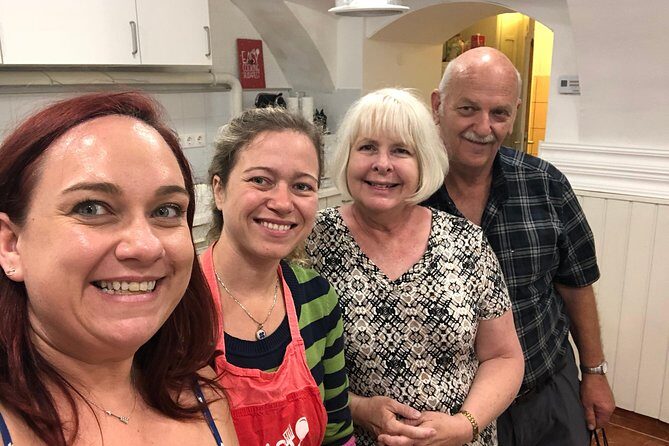
This is not a quick “see and snack” tour. It’s a walking tour that takes its time with meaning, then shifts into a cooking workshop where the day’s themes show up in the dishes.
The value here is the combination. You get guided time outdoors (so you’re not just stuck in a classroom), then you get guided time in the kitchen (so you’re not guessing what to do). Finally, you end with a full dinner you can enjoy without having to pick restaurants afterward or figure out what to order.
At $131.06 per person for a roughly 5-hour experience, the price starts to make sense once you treat it as three things bundled together: a city walk, an actual cooking session, and a meal.
You can also read our reviews of more tours and experiences in Budapest.



Gul Baba’s Tomb: Ottoman Echoes You Can See in Stone
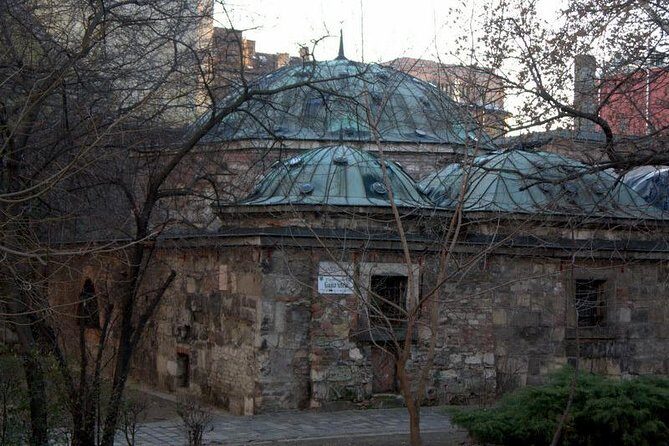
Your first stop is Gul Baba’s Tomb (Gul Baba Turbeje). This is where the Ottoman chapter of Budapest’s story comes into focus. The tour’s approach is simple: you walk through eras of history, then you carry those ideas into the kitchen later.
Why this works well for real travelers: landmarks can feel like just photos if you don’t have a thread. Here, the thread is how historical forces shape everyday culture. Food is part of that, so you’re not just learning dates—you’re learning why tastes, traditions, and influences travel across time.
One practical consideration: this kind of opening stop sets the tone. If you’re the type who likes to jump straight into food, you may feel the history start is a warm-up rather than the main event. But it also makes the later dishes more satisfying.
Hungarian Parliament Building: Austro-Hungarian Ambition in Plain Sight
Next comes the Hungarian Parliament Building. This stop is tied to the Austro-Hungarian period and the impressive buildings that came out of it. You’re looking at more than architecture. You’re seeing what power and identity look like when a city puts its money into stone.
I like this part because it gives you a mental map for Budapest’s “big story.” Even if you don’t read every detail on the façade, you’ll leave with a clearer sense of how different eras left their mark—and how that same idea shows up in food traditions later on.
Tip for your day: keep your phone handy for context shots, but don’t block the path. On a small group tour, you’ll move as a unit. Quick photos are great; slow photo sessions can throw off everyone’s timing.
Great / Central Synagogue (Nagy Zsinagóga): WWII Memory and Cultural Continuity

Your third major stop is the Great / Central Synagogue (Nagy Zsinagóga). This is where the tour addresses what happened with Jewish people in Budapest during the Second World War. The point isn’t to turn a solemn topic into entertainment. It’s to connect a painful historical chapter to the persistence of culture.
This part can hit emotionally. That’s not a bad thing, as long as you go in prepared for a more reflective moment. The best tours handle this with care, and in this format—history followed by cooking and shared dinner—the goal is respectful continuity: you leave with understanding, not just facts.
If you’re traveling with teens or friends who prefer lighter topics, this stop might feel heavier than expected. On the flip side, it’s also what can make the dinner afterward feel more meaningful, because you’re eating in the shadow of real history.
From the Walk to the Kitchen: How the Workshop Uses Your Day’s Story
After the city portion, the schedule turns into a cooking rhythm. After about 1.5 hours of walking, you head to the kitchen to cook Hungarian dishes, guided by the influences linked to the eras you just visited.
The workshop format is hands-on, which matters. Cooking as a group changes your experience. You slow down, you pay attention, and you learn something real: how these dishes come together, not just what they’re called.
Also, you’ll likely notice that some dishes match the idea of “influence” in different ways. The tour frames it as national connections behind what you’re making. Even if you don’t remember every historical detail, you’ll remember the flavors and the reason the guide told you they mattered.
Practical mindset: expect to use your hands and focus. This isn’t the time to multitask with a phone. If you want photos, do them between steps.






What You’ll Cook and Eat: A Menu That Covers Sweet, Savory, and Comfort
The menu is a major selling point because it mixes classic Hungarian staples and comforting, recognizable portions. You’re looking at multiple main courses, soups, and desserts, so plan on a full meal rather than “a snack with a side of history.”
Here’s what’s listed as part of the sample menu:
Savory mains and hearty comfort
- töltött paprika (stuffed peppers)
- roast goose, served with onion potatoes and braised cabbage
- székelygulyás (goulash soup with sauerkraut)
If you’re a meat-and-stew person, you’ll likely feel at home here. If you’re not a huge fan of sauerkraut-style flavors, the goulash soup could be the one item you approach carefully—but it’s also one of the best ways to experience the Hungarian comfort-food style the tour is built around.
Sweet desserts that make the meal feel complete
- mákos guba (dumps with poppy seeds)
- fánk (a special donut)
- szilvásgombóc (plum dumplings)
The desserts are not an afterthought. They’re part of the experience, and they help balance the heavier dishes. Poppy seed desserts and dumplings also come with that comfort-food feeling that you can’t easily fake at home unless you’re willing to put in serious kitchen time.
Sit-Down Dinner for Up to 10: The Real Benefit of the Small Group
One reason this tour gets high marks is the group size: maximum of 10 travelers. That cap changes the whole vibe. You’re not waiting for your turn. You’re not shouting over background noise. You can actually ask a question and get a direct answer.
A top review specifically thanks Kata and Karolina for taking time during their holidays to guide and create good memories in Budapest. That kind of care matters because it often shows up in the details: how the guide paces the walk, how calmly they explain the cooking steps, and how the meal feels like shared time rather than a production line.
If you’re the type who likes to meet people but doesn’t want the chaos of a huge group, this format is ideal.
How the Stops Work Together: A Story You Can Taste
The tour’s clever move is that it doesn’t treat food like a separate attraction. It treats food like a result of history.
You start with Ottoman-era presence at Gul Baba’s Tomb. Then you move to Austro-Hungarian power and construction at the Parliament Building. After that, you face Jewish history in Budapest during WWII at Nagy Zsinagóga. Then you move into a kitchen where the guide draws connections to the influences behind the dishes.
That structure means your dinner lands harder. Instead of thinking, “This is good Hungarian food,” you’re thinking, “This is Hungarian food shaped by real historical forces.”
That’s the core value of this experience: you don’t just eat. You understand why the meal exists.
Pace, Comfort, and What to Expect On the Day
The day is about 5 hours, with a guided walk portion that runs around 1.5 hours before the cooking starts. After that, expect time in the kitchen and a sit-down dinner.
So plan around two modes:
- walking outdoors between key landmarks
- standing and working in a cooking environment
That’s why comfortable shoes are a smart call. Also, if you have dietary restrictions, the provided information lists specific dishes but doesn’t say what substitutions are available. It’s worth checking directly when you book, so you don’t get surprised once you reach the kitchen.
English Guide and Mobile Ticket: Easy to Plan, Easy to Start
The tour is offered in English, and you’ll get a mobile ticket. That combination reduces friction, especially if you’re juggling transit times or you’re only in Budapest for a short stretch.
It also says the meeting point is near public transportation. Translation: you’re not forced into a long, complicated commute just to start the day. Still, if you’re arriving from far away, give yourself a little buffer so you’re not stressed before you meet the group.
Price and Value: Why $131.06 Can Be Fair Here
At $131.06 per person, you’re paying for more than a walking guide. Your ticket includes:
- the guided city portion through major landmarks
- a hands-on cooking workshop
- a sit-down full dinner
- a small-group format capped at 10 people
If you tried to do these separately, you’d likely spend similar money on at least a guided walk plus a separate cooking class, and then you’d still need dinner. Here, it’s bundled with a theme that connects all three parts.
The best value tends to happen when you actually want the full experience. If you only want sightseeing, you might not get your money’s worth. If you want both history and Hungarian food in one day, the price feels more reasonable.
Who This Tour Fits Best (and Who Might Skip It)
This is a great match if you:
- want a small-group Budapest experience
- enjoy hands-on food activities, not just tasting
- like history that shows up in everyday life, not just museum walls
- want a satisfying dinner without hunting for a restaurant afterward
You might consider a different option if you:
- prefer fully guided indoor time with minimal walking
- strongly dislike cooking as an activity (this is hands-on by design)
- can’t handle a mix of walking plus kitchen work in one day
If you’re traveling with a friend and you both like food, this becomes a fun, easy shared story.
Should You Book Walk and Cook Budapest?
I’d book it if you want one ticket that gives you three experiences in one: landmark walk, culinary workshop, and a real sit-down dinner. The small group size is a big deal, and the menu is specific enough that you can picture what you’ll eat. Most importantly, the tour isn’t just history or just food—it’s the connection between the two.
If you’re the kind of person who remembers meals longer than museum hours, this tour has your name on it. Just go in prepared for a steady, active schedule and for a serious historical stop before the desserts roll out.
FAQ
How long is the Walk and Cook Budapest tour?
The duration is about 5 hours.
How many people are in the group?
The tour has a maximum of 10 travelers.
What language is the tour offered in?
The tour is offered in English.
Is the ticket digital?
Yes, it includes a mobile ticket.
Where does the tour start and end?
It starts in Budapest, Hungary, and ends back at the meeting point.
What are the main stops on the tour?
The stops listed are Gul Baba’s Tomb (Gul Baba Turbeje), the Hungarian Parliament Building, and the Great / Central Synagogue (Nagy Zsinagóga).
What food is included?
The experience includes cooking Hungarian dishes and a full sit-down dinner. A sample menu includes töltött paprika, mákos guba, roast goose, fánk, székelygulyás, and szilvásgombóc.
When will I receive confirmation after booking?
You should receive confirmation within 48 hours of booking, subject to availability.
Can I cancel for a full refund?
Yes. Free cancellation is available up to 24 hours in advance for a full refund.
Is it near public transportation?
Yes, it is near public transportation.