REVIEW · BUDAPEST
101 things in Budapest – Full Day Tour with Lunch & Metro Pass
Book on Viator →Operated by Budapest Urban Walks · Bookable on Viator
One day. Two river worlds. Lots of landmark photos.
This full-day Budapest group walk ties together iconic sights across Pest and Buda with a meal that’s actually part of the experience, not an afterthought. Starting near the Hungarian State Opera, you roll past the city’s best-known monuments and viewpoints, then finish where you started.
I especially like two parts of the setup. First, the tour gives you a tight, sensible route through Heroes’ Square, the Chain Bridge, and the Castle District—so you get the big “Budapest postcard” moments without planning your own circuit. Second, you get real food time: lunch, Hungarian dessert, and alcoholic beverages are included, and the guides (people like Rebecca, Fanni, Ferenc, and Gabriella) are praised for making it feel organized, friendly, and fun.
The main drawback to plan for is the length. This is a 7–8 hour walking day, and while the terrain is described as manageable, you still need stamina. Also, several major sights you’ll see are marked as not included for entry (like St. Stephen’s Basilica, Parliament, the Great Synagogue, and Matthias Church), so you may want to budget if you care about going inside.
In This Review
- Key things that make this tour worth your time
- Price and value: what you’re really paying for
- The walking reality: start time, pace, and what to wear
- Heroes’ Square to Andrássy Avenue: the monuments that set the tone
- Széchenyi Baths: thermal water facts and why this stop feels special
- Vajdahunyad Castle and City Park views: a fairytale-looking history stop
- Liberty Square, Parliament’s presence, and the Chain Bridge payoff
- Great Synagogue to Matthias Church: two spiritual landmarks, different vibes
- Fisherman’s Bastion and Buda Castle: the skyline that makes the whole day click
- Central Market Hall, lunch, and the Hungarian dessert moment
- Metro pass and transit help: how to not waste time between stops
- Who this tour suits best (and who should skip it)
- The one caution I’d actually take seriously
- Should you book 101 Things in Budapest Full Day Tour?
- FAQ
- How long is the tour?
- What time does the tour start, and where is it meeting?
- Does the tour include lunch and drinks?
- Is a metro pass included?
- Are entry tickets included for major buildings like Parliament or St. Stephen’s Basilica?
- What group size should I expect?
- What if weather changes during the day?
Key things that make this tour worth your time
- Lunch plus dessert plus drinks included (not just a snack stop)
- A classic Pest-to-Buda route that covers the city’s headline monuments
- A metro pass included, with guides who will help you figure out transit basics
- Small group size (max 20), which keeps the pace from feeling like cattle
- Most stops are outdoors or quick, so you don’t lose the whole day in queues
- Strong guide energy, with multiple names mentioned for humor and clear explanations
Price and value: what you’re really paying for
At $204.81 per person for roughly 7.5 hours, the price is not “cheap,” but it does make sense if you value time, structure, and included food.
Here’s where the value comes from:
- Food is built in: lunch, Hungarian dessert, and alcoholic beverages are included. In a city where food costs add up quickly, this matters.
- Transit support is included: you get a metro pass, plus your guide can point out practical ways to use transit during the day.
- You’re not buying many entrance tickets upfront: several stops are listed as free, and many of the big sights are viewed quickly from the outside (which is exactly what works for a time-limited tour).
The trade-off is that a few important indoor sights are not included, so the final “all-in” cost depends on what you choose to add on your own. If you only want the best exterior views and photos, you’ll likely feel like this is a strong deal. If you’re the type who wants every church and interior ticket, you’ll want to plan extra.
You can also read our reviews of more tours and experiences in Budapest

The walking reality: start time, pace, and what to wear
This tour starts at 9:00 am at the Hungarian State Opera, Andrássy út 22, 1061, and it ends back at the meeting point. Expect a full day with moderate physical fitness needed—meaning you should be comfortable walking for hours and keeping up a steady pace.
A few practical tips based on how the day is described:
- All weather is part of the deal. You’ll want a rain layer or compact umbrella.
- Comfortable shoes matter. Even if the walk isn’t described as extreme, it’s still a long day.
- The group stays small (max 20), so you’ll have space to ask questions, not just follow blindly.
If you want a “see a lot without thinking” day, this fits. If you prefer a slower pace with longer museum time, it might feel like too much.
Heroes’ Square to Andrássy Avenue: the monuments that set the tone
Your morning kicks off at Heroes’ Square (Hősök tere). It’s one of the major public squares in Budapest, famous for the statue complex of the Seven chieftains of the Magyars. You’ll also see the memorial area that’s sometimes confused with a tomb story you don’t need to get stuck on—just enjoy the overall symbolism and scale.
Next, the tour threads into the grand boulevard vibe of Andrássy Avenue. Dating to 1872, this is a World Heritage Site lined with Neo-renaissance style buildings. This section is more than eye candy. It’s where you start to understand Budapest’s “showpiece” side—how the city uses architecture to signal status and national pride.
Along this stretch, you’ll also pass by the Hungarian State Opera House (Magyar Állami Operaház), a neo-renaissance building originally known as the Hungarian Royal Opera House. Designed by Miklós Ybl, it’s the kind of stop where even a quick glance helps you place what you’re seeing later in the Castle District and along the river.
Consideration: These are quick hits. If you want to go deep into interiors or museums, remember that time on this tour is optimized for outdoor views and efficient coverage.
Széchenyi Baths: thermal water facts and why this stop feels special
The tour includes Széchenyi Baths and Pool. This is billed as the largest medicinal bath in Europe, with thermal spring water supplied at around 74°C to 77°C (165°F to 171°F). That’s hot enough to make you stop thinking like a tourist for a second and think like a human.
How this stop works on a walking tour:
- You get the big “Budapest baths” experience without turning your day into a spa retreat.
- It’s a useful break in the schedule, especially after the early monuments.
What to expect: Since the stop time is listed as short, you’re probably not planning a full soak session here unless you’re okay with rushing. Think of it as a viewpoint-plus-bath-house moment. If you’re desperate to fully bathe, you may want a separate baths visit on another day.
Vajdahunyad Castle and City Park views: a fairytale-looking history stop
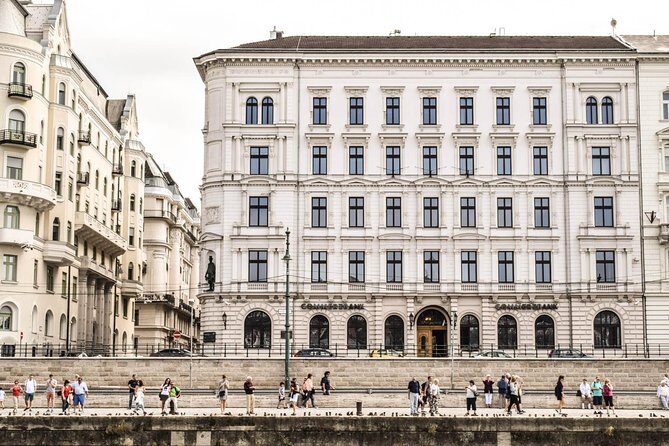
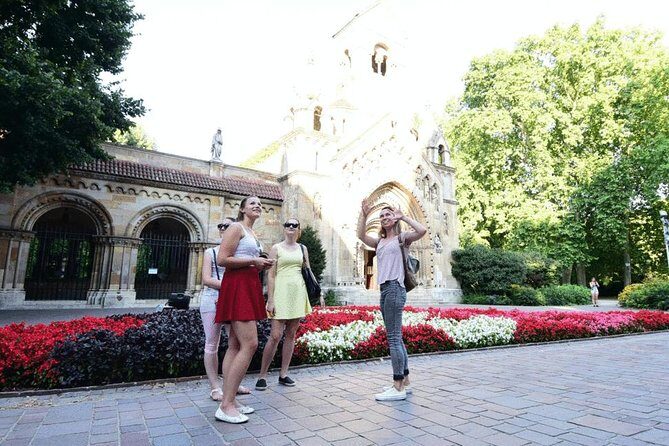
In the City Park, you’ll see Vajdahunyad Castle (Vajdahunyad vára). It was built in 1896 as part of the Millennial Exhibition celebrating 1,000 years of Hungary since the Hungarian Conquest in 895.
This stop is a great example of why this tour works for first-timers. It gives you a “this is why Budapest looks like it does” moment. The castle’s style and setup look romantic, but the origin story is tied to national celebration and identity.
Consideration: You’ll likely view it from the outside during a quick stop. If you’re expecting long time inside, don’t set that expectation.
You can also read our reviews of more tours and experiences in Budapest




Liberty Square, Parliament’s presence, and the Chain Bridge payoff
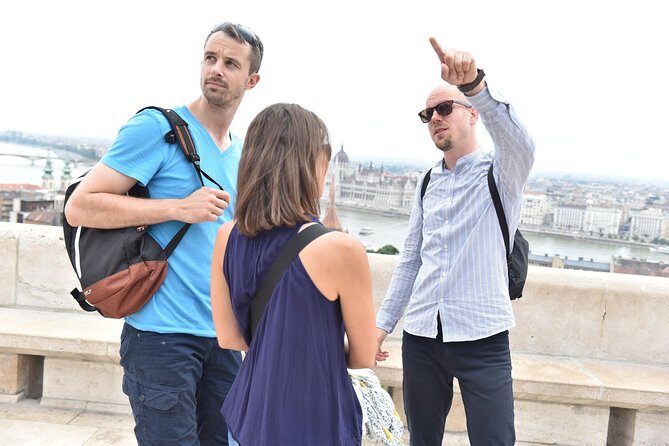
Next you move into the civic and river-photography zone.
At Szabadság tér (Liberty Square), you’ll see the mix of business and residential energy around you, plus notable landmarks like the United States Embassy and the headquarters of the Hungarian National Bank on the west side of the square.
Then comes Hungarian Parliament (Országház). Even when you don’t go inside, the building’s scale and attention to detail make it one of the best “big city” moments in Budapest. The stop time is short, but the effect is real: it anchors the day’s theme of national identity and public power.
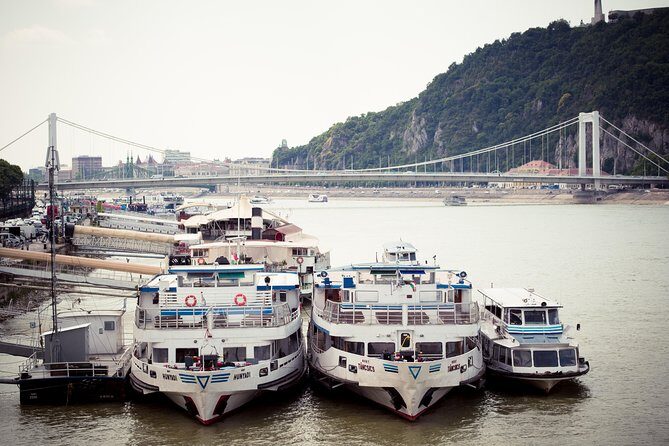
After that, you’ll reach Széchenyi Chain Bridge. This is the classic Danube crossing between Buda and Pest. You don’t need a perfect angle to understand why this bridge is a symbol—just stand near it, look both directions, and you’ll feel the city’s geography click into place.
Practical note: For photos, come prepared. River light changes fast, and the walk keeps moving.
Great Synagogue to Matthias Church: two spiritual landmarks, different vibes
The day also includes the Great / Central Synagogue (Nagy Zsinagóga) in the Erzsébetváros area. This is one of Budapest’s major historical landmarks, often known as the Dohány Street Synagogue.
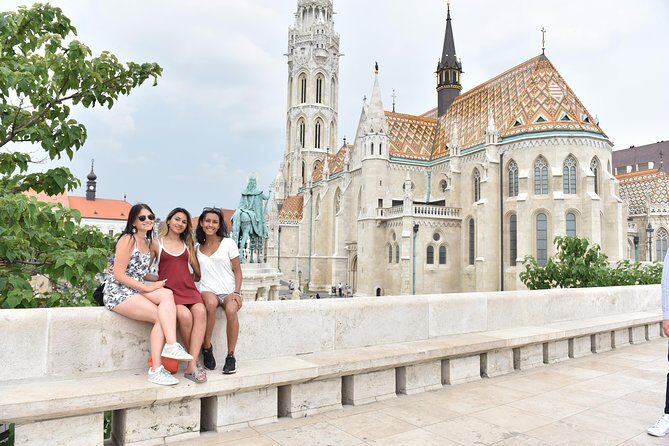
Then you shift toward the Buda Castle District area and stop at Matthias Church (Mátyás-templom), also known as the Coronation Church of Buda. It’s located in Holy Trinity Square, in front of the Fisherman’s Bastion area.
Both stops matter, even if you don’t enter:
- They show that Budapest’s culture isn’t only Catholic and national monuments.
- They reveal layers of European religious architecture across centuries.
Consideration: These stops are listed as not included for entry. If going inside is important to you, you’ll need to add that separately and plan your time.
Fisherman’s Bastion and Buda Castle: the skyline that makes the whole day click

If you’re chasing the view that sells Budapest to the rest of the world, this is it.
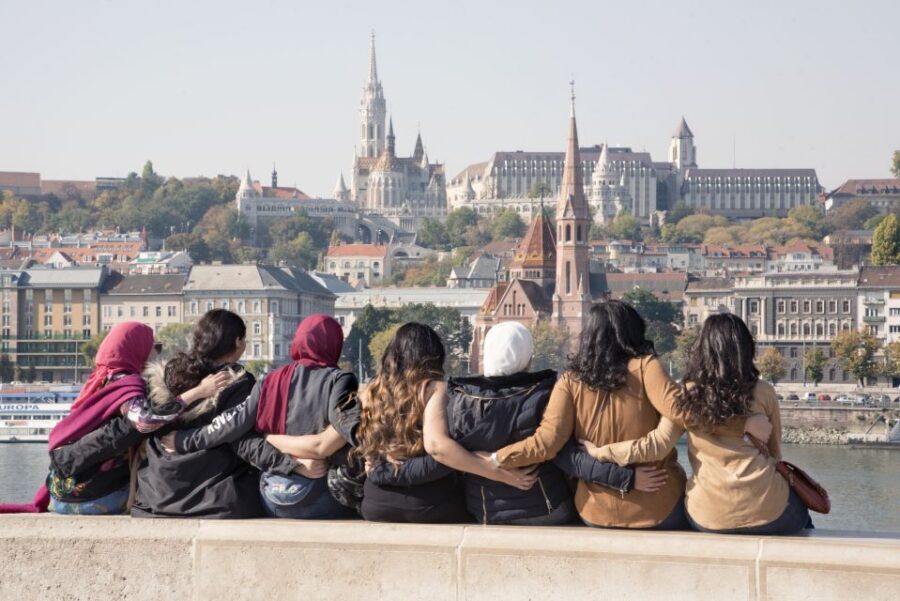
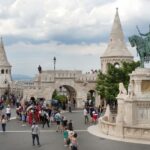
At Fisherman’s Bastion (Halászbástya / Halászbástya), you get some of the best panoramic terraces over Budapest. It’s one of the most photographed spots for a reason. The terraces feel like an outdoor viewpoint gallery.
Then you move to Buda Castle (Budavári Palota), the historic royal complex. The site’s history stretches back to the 1265 completion of an earlier castle, while the grand Baroque palace most people associate with the castle complex was built between 1749 and 1769.
Why these stops work together:
Fisherman’s Bastion gives you the “wow” view. Buda Castle gives you the long-view context—what it means for Budapest to grow around power, religion, and defense.
Consideration: Even outdoors, this area can take more walking effort because of how the district is laid out. If you’re planning extra stops inside churches or museums nearby, keep your energy in mind.
Central Market Hall, lunch, and the Hungarian dessert moment
One of the smartest blocks in the tour is Central Market Hall (Nagyvásárcsarnok). It’s described as the largest and oldest indoor market in Budapest. You’ll hear that the idea was tied to Károly Kamermayer, Budapest’s first mayor, and it dates to a 1897 opening ceremony.
A market stop on a big walking tour has a purpose:
- It gives your brain a break.
- It helps you taste and see what local life looks like beyond monuments.
And then there’s the included meal: lunch plus traditional Hungarian dessert. The tour also includes alcoholic beverages, with a minimum drinking age of 18. This is where you get the “Hungarian food” highlight in a concrete way, not just as a theoretical idea.
If you’re the type who likes to understand a place through what people eat, this is one of the best reasons to book. It’s not only about sightseeing—it’s about resetting your energy so you can keep walking afterward.
Who should pay attention to this food portion:
Anyone who thinks a city tour is only walking and photos. This one tries to make eating part of the day’s rhythm.
Metro pass and transit help: how to not waste time between stops
You get a metro pass, and the tour is set up near public transportation. You won’t need to master Budapest transit on day one, but it helps to understand how to move efficiently if you’re exploring beyond the tour.
Guides have been praised for giving practical pointers on how to use the metro and buses—including explanations that help you feel confident getting around when you’re off the tour.
Tip for you: If you have any questions about how to reach your next stop after the tour ends, ask your guide right when you still have their attention. That’s when the advice is most useful.
Who this tour suits best (and who should skip it)
This tour is a strong fit if:
- You want a structured first-day overview of Budapest’s most famous sights.
- You like a guide who can connect monuments with story and architecture and keep things moving.
- You want a built-in food plan: lunch, dessert, and drinks.
- You’re okay with a long walk and you’d rather see a lot in one day than spread it out.
It’s probably not ideal if:
- You want long inside visits at every major site. Several key buildings are not included for entry.
- You prefer a slow pace or lots of downtime.
- You’re sensitive to long walking schedules. This is a full day.
Also, if you’re bringing kids, they must be accompanied by an adult. And if you’re planning on alcohol, remember the minimum drinking age is 18.
The one caution I’d actually take seriously
Most of the feedback emphasizes organization and guide quality, but there’s one notable downside to keep in mind: one person reported being charged after canceling due to a schedule conflict. That doesn’t mean this will happen to you, but it’s a reminder to confirm timing and cancellation rules before you hit cancel.
In general, plan your day carefully. You’ll be walking enough that a rushed decision can make you regret it.
Should you book 101 Things in Budapest Full Day Tour?
Book it if you want a high-structure, high-coverage Budapest introduction where food is included and your guide helps you connect the dots between monuments, architecture, and the city’s layout. At around $205, the value improves a lot when you factor in lunch, dessert, and drinks, plus the metro pass and the fact that most stops are designed for quick viewing rather than expensive, time-consuming entry fees.
Skip it or do a different format if you’re chasing deep museum time and long indoor church visits. This tour is built for walking and key stop moments. It’s not trying to replace a full independent sightseeing day inside the big attractions.
If you’re traveling for the first time and want to feel confident about Budapest afterward, this is the kind of tour that gives you a good foundation fast—and then you can return to the places that truly hook you.
FAQ
How long is the tour?
It runs for about 7 hours 30 minutes.
What time does the tour start, and where is it meeting?
It starts at 9:00 am at the Hungarian State Opera (Andrássy út 22, 1061).
Does the tour include lunch and drinks?
Yes. Lunch and traditional Hungarian dessert are included, and alcoholic beverages are also included (minimum drinking age is 18).
Is a metro pass included?
Yes. The tour includes a metro pass.
Are entry tickets included for major buildings like Parliament or St. Stephen’s Basilica?
No. St. Stephen’s Basilica, the Hungarian Parliament Building, the Great Synagogue, and Matthias Church are listed as not included for admission tickets. Other stops are listed as free.
What group size should I expect?
The tour has a maximum of 20 travelers.
What if weather changes during the day?
It operates in all weather conditions, so you should dress appropriately for rain or cold.