Castle Hill saves the best for last. In a compact 2 hours, you’ll hit panoramic views at Fisherman’s Bastion and learn Matthias Church’s story from the outside, plus a string of political and everyday landmarks on the hill. The only real drawback: it’s hills and steps, so wear grippy shoes and don’t plan on doing this in sandals.
I like how the tour keeps things practical: it’s small (max 10 people), guided in English, and you’ll also get tailor-made ideas for what to eat and what museums are worth your time after the walk. And at about $3.63 per person, the value comes from the fact that many stops are free, while you only likely pay for the Matthias Church ticket.
If weather hits hard, the tour still works because most of what you’re seeing is outside or quick to pass by. One group even dealt with torrential downpour with their guide, and the focus stayed on the sights you can actually appreciate in any conditions.
In This Review
- Key highlights worth your attention
- What this Buda Castle walk is really like in 2 hours
- Matthias Church: what you’ll notice while you’re outside
- Fisherman’s Bastion: the Danube view that makes everything worth it
- Holy Trinity Square and the plague monument
- Ruszwurm: pastries, tradition, and a smart break
- András Hadik’s statue: the good-luck horse detail
- Setany promenade (Arpad Toth Promenade): the hill’s residential side
- Hospital in the Rock: the story without the entrance
- The Castle labyrinth: a “wait, how do streets work here?” moment
- Sandor Palace and Karmelita Monastery: politics behind old walls
- Buda Hill Funicular: a historic ride with views built in
- Királyi Lovarda and the Fountain of King Matthias
- Buda Castle finish: knowing what to do next at the Royal Palace
- Price and value: what $3.63 gets you (and what it doesn’t)
- Guides and group energy: who tends to make it click
- Who should book this tour, and who might prefer something else
- Should you book Buda Castle Tour: Fisherman’s Bastion and hidden gems?
- FAQ
- How long is the tour?
- Is the tour offered in English?
- Do I get a mobile ticket?
- Is Matthias Church admission included?
- Is Fisherman’s Bastion free to enter?
- Do we enter Hospital in the Rock?
- Where do the tour start and end?
Key highlights worth your attention
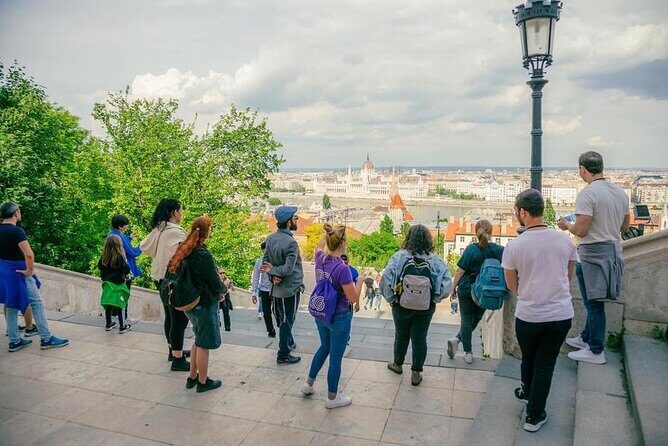
- Fisherman’s Bastion views: a fairy-tale terrace with big Danube skyline payoff and free entry time.
- Matthias Church context without the rush: you stay outside, snap photos, and learn what makes the building matter.
- Castledistrict variety: from statues and promenades to palaces and government buildings.
- Ruszwurm stop for a real bite: a long-running pastry shop (since 1827) built into the route.
- Quick transport moment: the Buda Hill Funicular ride adds charm and a view break.
- Small-group pacing: max 10 people means the guide can answer questions and adjust the tempo.
What this Buda Castle walk is really like in 2 hours
This isn’t a slow museum crawl. It’s a tight, hill-focused walking tour where you’re mostly outside, moving between key spots on Buda Castle Hill. Expect frequent short stops, quick photo moments, and a guide who ties each place to a person, event, or odd tradition.
The route is a mix of postcard-famous sights and quieter corners that help you understand the layout of the district. You’ll walk through the Castle District’s high points, then finish around Buda Castle’s museum area at the entrance of the National Gallery.
You’ll also feel the “budget value” behind the price. Many stops are marked as free, and the guide’s job is to help you make sense of what you’re seeing so you don’t waste time later playing historical catch-up.
You can also read our reviews of more tours and experiences in Budapest.



Matthias Church: what you’ll notice while you’re outside
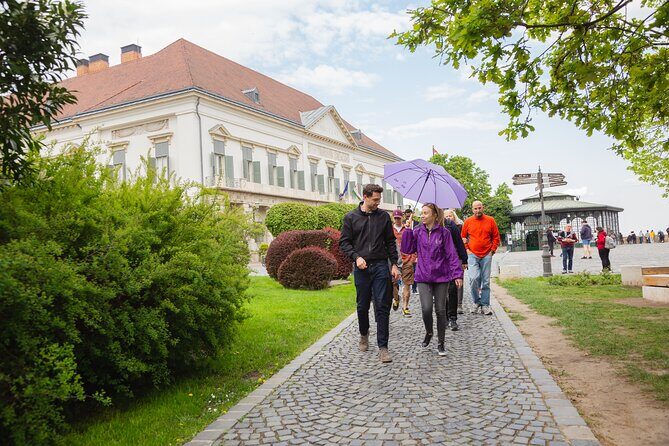
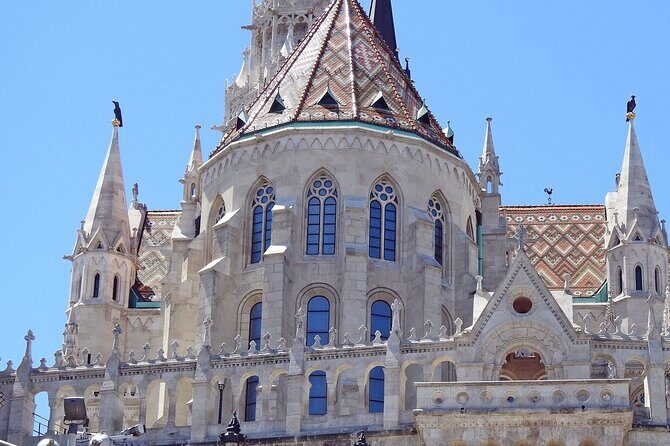
Matthias Church is one of those buildings you can spot from far away, and it’s easy to see why it’s been tied to Hungary for centuries. This stop is built around the exterior: Gothic Revival design, a striking tiled roof, layered spires, and details that make the façade look like it belongs in a storybook.
You’ll get about 15 minutes here, with admission not included, and you’ll take photos outside rather than touring the interior. That sounds limiting until you realize what the guide can do for you: you learn what to look for so the church doesn’t become just another pretty roof.
This is the kind of stop where you’ll come away with better “reading skills” for the rest of the Castle District. After hearing the basics, the surrounding buildings start to feel like they’re connected, not just scattered landmarks.
Fisherman’s Bastion: the Danube view that makes everything worth it
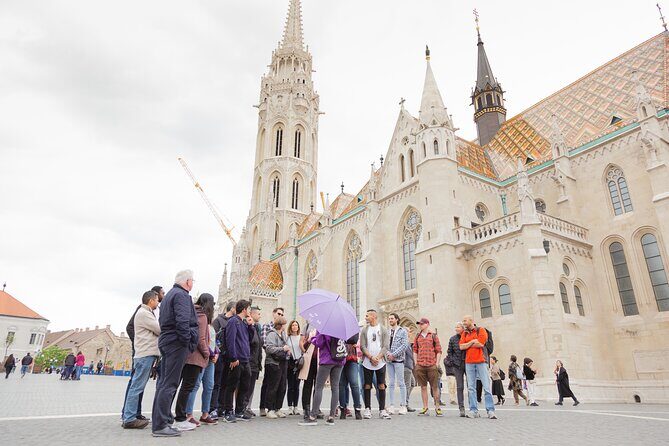
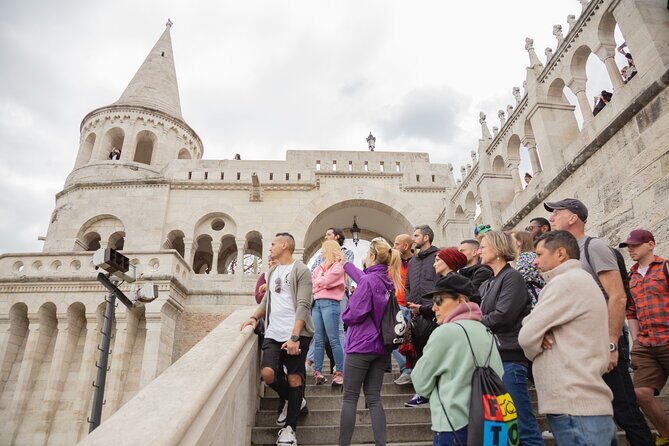
Fisherman’s Bastion is a terrace designed for looking out. Neo-Gothic and neo-Romanesque features—turrets, arches, and curving pathways—create a scene that feels theatrical, but the real reason to come is the panorama.
You’ll spend around 15 minutes here, and entry is free. The views typically do the heavy lifting: Danube angles, the city skyline, and that sense of scale you only get when you’re above the water and rooftops.
A practical note: this is a popular viewpoint area, and it sits right on Castle Hill. Give yourself a second to pause, turn slowly, and pick out landmarks instead of rushing to the next photo. When you do that, the place becomes a quick geography lesson.
Holy Trinity Square and the plague monument
Right in Trinity Square, you’ll encounter the Holy Trinity Column, a monument linked to the end of the 18th-century plague. It’s not just tall and detailed—it’s meant to commemorate a specific turning point, and that changes how you look at carvings and symbolism.
This is a short stop (about 5 minutes) and entry is free. The point here isn’t to linger like it’s a full museum. It’s to give you the context you’d otherwise miss when you’re just passing through an open square.
There’s also an iconic building near the square that you’ll see as part of this segment. Even if you don’t identify it at first glance, you’ll understand it better after your guide connects it to the square’s role in the district.
Ruszwurm: pastries, tradition, and a smart break
After the big stone landmarks, the tour gives you a locals-and-classics moment at Ruszwurm Confectionery. This shop has been serving treats since 1827, which means you’re stepping into a place with serious staying power—not just a modern café with a “Budapest vibes” sign.
You’ll get around 10 minutes there, and admission is free because it’s a stop, not a paid entry. It’s the ideal time to grab something small and sweet so the rest of the walking doesn’t feel like punishment.
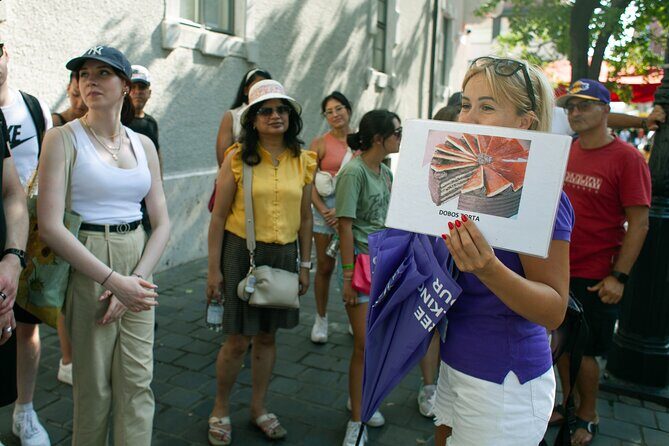
The guide will point you toward traditional Hungarian options like Dobos torta and krémes. If you’re trying only one thing, choose based on what you usually like: chocolatey and layered for krémes, or more cake-and-caramel style for Dobos torta.
Even if you don’t buy anything, I still like this stop because it breaks the “history only” rhythm and helps you reset your attention.





András Hadik’s statue: the good-luck horse detail
Next up is the Statue of Mounted András Hadik, tied to a real person: a legendary Hungarian soldier and Maria Theresa’s favorite general. His reputation includes audacious victories, so your guide helps turn the statue from a landmark into a mini story.
You’ll spend about 5 minutes here, and entry is free. What makes this stop fun is the superstition: touching the horse’s shiny bronze is said to bring good luck.
It’s quick, low-pressure, and surprisingly memorable. It also gives you something human-scale to do during a mostly uphill, mostly-outside tour.
Setany promenade (Arpad Toth Promenade): the hill’s residential side
Between the big sites, you’ll move into the residential area of Buda Castle Hill along the Arpad Toth Promenade (Setany). This is about 10 minutes, and it’s free.
Why include a neighborhood stretch? Because it helps you understand how Castle Hill isn’t just monuments. People live here. Streets are tighter than you expect, and the slope shapes everything—walkways, sightlines, and even where you naturally stop to take photos.
This is also where you’ll feel the tour’s pace most. If you’re managing energy, this segment is a good time to slow down slightly and sip water.
Hospital in the Rock: the story without the entrance
You’ll hear about the Hospital in the Rock during the tour, including what the museum experience is like and the fact that there is a private guided tour in English. But on this specific walking tour, you don’t enter the site—you pass by.
It’s a smart approach if your time is limited. You get context now, and you can decide later whether you want to spend extra time for the indoor museum experience.
If you love choosing your own pace, this works well. If you prefer every stop to be a full-on attraction, you might feel a tiny bit of FOMO because it’s a pass-by segment rather than an admission stop.
The Castle labyrinth: a “wait, how do streets work here?” moment
One of the most interesting route features is the mention of a labyrinth area—a hidden pocket of Castle Hill that’s all about twisting passages and getting oriented.
This segment is brief, free, and meant to make the district feel real. Instead of treating the hill like a straight-line sightseeing route, you start to see how the street layout creates shortcuts, turns, and surprise sightlines.
It’s also a good reminder that Buda Castle isn’t one big open square. It’s a web of corridors and slopes where you’ll remember the experience by how it felt to walk it, not just by photos.
Sandor Palace and Karmelita Monastery: politics behind old walls
When your tour moves into Sandor Palace, it stops being only about architecture. Sandor Palace serves as the official residence of the President of Hungary. It’s also connected to its original owner, Count Sándor Móricz, known as the Devil’s Rider for his equestrian stunts.
This stop is short (about 5 minutes) and free, but it carries weight because you’re seeing a working symbol of state power. Your guide helps explain how the palace’s story fits into Hungary’s broader historical narrative.
Then you’ll visit the Karmelita Monastery area for about 10 minutes, also free. The building’s past includes roles as a monastery, then a theater and concert hall, and today it houses the Hungarian Prime Minister’s Office. That transformation matters. It shows you how buildings evolve while staying tied to place.
If you like your history practical—how countries actually use their space—these two stops are among the most rewarding in the walk.
Buda Hill Funicular: a historic ride with views built in
Buda Hill Funicular is one of those details that feels like bonus scenery. It’s been operating since 1870, connecting the Chain Bridge area to the Castle District. You’ll spend about 10 minutes on it, and it’s included as a free segment in this tour.
This is a good chance to catch your breath and reset your legs. And yes, you’ll see the Danube and city skyline from the ride, which helps tie the hill panorama together.
Even if you’re not a “transport nerd,” the funicular makes the tour feel more complete, because it’s not just walking upward—it’s using the hill’s own solutions.
Királyi Lovarda and the Fountain of King Matthias
Back in the Castle District, you’ll see Kiralyi Lovarda, the Riding Hall. It’s a beautifully restored structure and originally served as a royal equestrian facility.
This stop is only about 5 minutes, and it’s free, so don’t expect a long photo session. Instead, focus on how the building’s purpose shows up in its shape and restoration style.
Then comes the Fountain of King Matthias, a Baroque-style monument dedicated to King Matthias Corvinus. The central sculpture shows the king riding a horse, and the symbolism is tied to his 15th-century power and cultural flourishing.
You’ll spend around 10 minutes here, and it’s free. This is another “look closer” stop. After a tour like this, you’ll notice the fountain’s details more because you’ll understand why the figure and style were chosen.
Buda Castle finish: knowing what to do next at the Royal Palace
Your final stop is Buda Castle, the Royal Palace area that hosts multiple museums, including the Hungarian National Gallery, the Budapest History Museum, and the National Library. You’ll get about 15 minutes, and entry for the segment is free.
This isn’t a full museum visit in the tour. Instead, it’s a chance to understand where you are and what options you have if you want to add more time.
I like this kind of finish because it helps you plan without pressure. If you’re an art person, you’ll know the National Gallery is here. If you prefer chronological stories, you can steer toward Budapest History Museum. If you’re a reader, the National Library can be a surprising detour.
And because you end near the entrance of the National Gallery on Szent György tér, it’s easy to keep going immediately after the tour.
Price and value: what $3.63 gets you (and what it doesn’t)
At about $3.63 per person for a roughly 2-hour guided walk, the value comes from two things: expert routing and lots of stops that don’t require paid admission. Many segments are listed as free—Fisherman’s Bastion, Trinity Square’s highlights, Ruszwurm as a stop, the Hadik statue, Sandor Palace area, Karmelita Monastery area, the funicular ride segment, and the Buda Castle finish.
The main “paid ahead” item to consider is Matthias Church, where admission is not included. Your tour includes photo time outside, so you’re not paying for a full interior visit through this specific package.
Also remember that tips aren’t included. If you want smooth, friendly service from a guide, budget a reasonable tip based on your experience.
Finally, group size matters here. With a maximum of 10 people, the tour doesn’t feel like a cattle line. That’s part of why this route tends to score high: fewer distractions and easier questions.
Guides and group energy: who tends to make it click
This tour is run by Luna Walking Tours, and the guide style seems to be a big part of why people rate it so highly. Names that show up include Sou, Bayler, Nacho, Ignacio, and Sophie.
The common thread in their approach is energy: humor, friendly interaction, and an ability to connect details so they stick. One guide handled a scorching hot day by adjusting what the group could realistically do, which is exactly what you want in a hills-and-steps tour.
So if you’re the type who gets more out of a place when someone explains why it matters, this tour matches that preference well.
Who should book this tour, and who might prefer something else
You should book if you want:
- a 2-hour, outdoor-focused way to orient yourself on Castle Hill
- a clear path that hits major sights like Matthias Church and Fisherman’s Bastion
- quick local texture with a stop at Ruszwurm
- practical next-step ideas for museums once you reach Buda Castle
You might skip this one (or pair it differently) if you:
- hate hills and steps, or you need a fully seated experience
- prefer long indoor museum time at every stop, because this tour is mostly outside and pass-by segments like Hospital in the Rock are short
Should you book Buda Castle Tour: Fisherman’s Bastion and hidden gems?
Yes, if you want the smartest route for a short window. This is a focused walking tour with a small group, English guidance, and a strong mix of iconic views plus details that help you understand the district fast. The price is low enough that you’re not taking a big financial risk, and the main “extra cost” to plan for is the Matthias Church admission ticket.
To make it feel great when you’re there, show up with comfortable shoes, water, and a willingness to slow down for viewpoints. If you’re ready for a story-driven walk through Buda Castle Hill, this is the kind of tour that leaves you with better memories than photos alone.
FAQ
How long is the tour?
The tour duration is about 2 hours.
Is the tour offered in English?
Yes, it’s offered in English.
Do I get a mobile ticket?
Yes, the tour uses a mobile ticket.
Is Matthias Church admission included?
No. You’ll take photos outside Matthias Church, and the admission ticket is not included.
Is Fisherman’s Bastion free to enter?
Yes. Fisherman’s Bastion is listed as free for admission on this tour.
Do we enter Hospital in the Rock?
No. The tour tells the story of Hospital in the Rock, but you pass by and do not enter. The museum offers private guided tours in English.
Where do the tour start and end?
It starts at Budapest, Szentháromság tér, 1014 Hungary, and ends at Buda Castle near Budapest, Szent György tér, 1014 Hungary, at the entrance of the National Gallery.