REVIEW · BUDAPEST
A Journey through Jewish Budapest – Walking Tour
Book on GetYourGuide →Operated by insightcities.com · Bookable on GetYourGuide
Jewish Budapest lands hard and then lingers. This 3-hour walking tour gives you historian-led context for Jewish life in the city before WWII and guides you through major landmarks that still carry weight. I especially like the way the stops connect ideas, not just buildings—so Dohány Street Synagogue, the ghetto memorial wall, and the Shoes on the Danube don’t feel like separate souvenirs.
One thing to keep in mind: it’s a walking tour with several solemn moments, and you’ll need to plan for the practical stuff at the Great Synagogue—tickets are not included and visitors are asked to cover shoulders and knees.
In This Review
- Key moments to clock on this tour
- A historian-led Jewish Budapest walk in three hours
- Kamara Café meeting point and a smart start on foot
- Herzl’s birthplace square: Zionism in the Budapest city plan
- Entering the Great Synagogue at Dohány Street
- Tickets and the practical clothing rule
- Inside the Dohány complex: Temple of Heroes, museum, and memorial park
- Meeting your historian guide: why pacing and personality matter
- Ghetto Wall Memorial and the street-level walk of memory
- Rumbach Street Synagogue: Status Quo Ante and community detail
- Shoes on the Danube Bank: reflection with care
- Price and value: what you’re really paying for
- Who should book this Jewish Budapest walking tour
- Tips to make your 3 hours go smoothly
- FAQ
- How long is the A Journey through Jewish Budapest walking tour?
- What does the tour cost?
- Is entry to the Dohány Synagogue included?
- Where do I meet the tour guide?
- What sites are included on the route?
- What language is the tour offered in?
- Who leads the tour?
- Is there a dress code for the Dohány Synagogue?
- What is the cancellation policy?
- Should you book this Jewish Budapest tour?
Key moments to clock on this tour
- Herzl’s birthplace square sets the tone for modern Zionism in Budapest
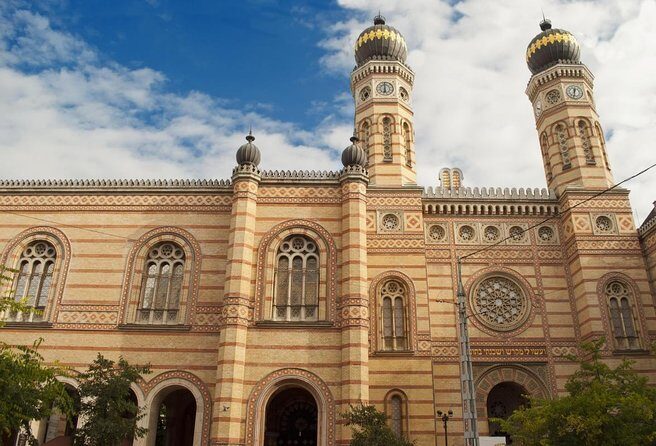
- Dohány Street Synagogue: Moorish Revival style plus expert guidance inside the complex
- Temple of Heroes, Jewish Museum, Memorial Park are part of your time in the Great Synagogue area
- Ghetto Wall Memorial (2014) brings the wartime story into the streetscape
- Kazinczy and Rumbach Street synagogues show how different Jewish communities expressed faith through architecture
- Shoes on the Danube Bank ends with reflection at one of Europe’s most haunting memorials
A historian-led Jewish Budapest walk in three hours
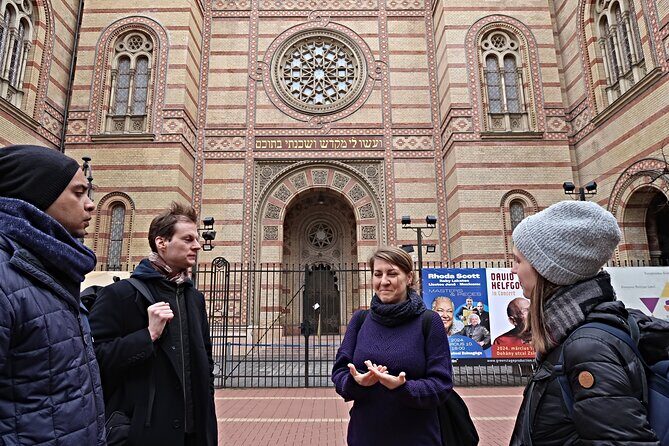
Budapest’s Jewish story is big, painful, and personal—so it helps to have a guide who can slow the pace and connect what you’re seeing to what was happening. On this tour, you’re not just walking between sights. You’re building a timeline of Jewish life in the city before WWII, when about a quarter of the population was Jewish, and when many communities still had room to shape culture, worship, and identity.
What makes this experience practical is the structure: you start with ideas (Herzl and Zionism), move into major places of worship (especially the Dohány Street Synagogue complex), then head toward the memorial landscape at the end. By the time you reach the Danube, the sites make emotional sense instead of feeling random.
English is the working language, and the guides are not tour-bus amateurs. The program is run by historian-types—professors, doctoral students, historians, journalists, art critics, and published authors—so you can expect real explanation, not just a recitation of facts.
You can also read our reviews of more walking tours in Budapest


Kamara Café meeting point and a smart start on foot
You’ll meet at Kamara Café, Dohany utca 1/A. If you choose a different pickup option, your start can vary, but this is the clear default point. Either way, you begin in the Jewish quarter area and quickly shift from “I’ve arrived” to “I’m reading the city.”
If you want to get value fast, arrive a few minutes early. Even a short delay can make the first section feel rushed. And since the tour includes both ornate interiors (at the Great Synagogue) and outdoor walking (most of the rest), I treat this kind of morning/afternoon schedule like a compact city lesson: you’ll enjoy it more if you’re not trying to fit snacks and big breaks into the 3 hours.
Herzl’s birthplace square: Zionism in the Budapest city plan
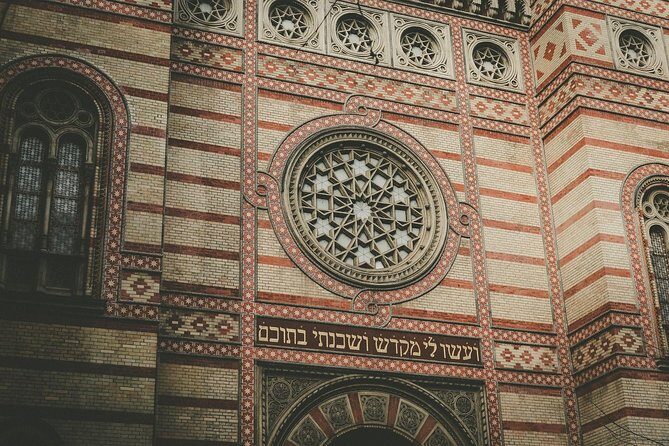
The tour begins at the square where Theodor Herzl, often called the father of modern Zionism, was born. This opening matters because it frames Jewish identity beyond religion alone. Before you get to any synagogue architecture, you’re reminded that the story includes political ideas and community ambition.
From a reader’s point of view, this is a strong way to start because it prevents tunnel vision. It’s easy to only associate Jewish Budapest with later tragedy. Starting with Herzl helps you see the earlier confidence—then you can watch how the narrative turns.
You’ll get guided orientation while walking—so you’re not stuck at one corner trying to guess where you are in relation to the next stop. The guide’s job here is to help you connect the streets to the themes: faith, community life, and later rupture.
Entering the Great Synagogue at Dohány Street
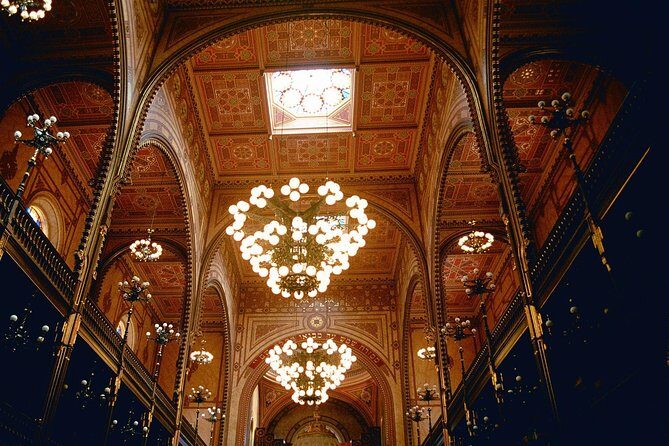
Dohány Street Synagogue is the star in almost every Jewish Budapest itinerary, and this tour treats it that way. You’ll spend guided time at the Dohány Street Synagogue, with assistance from a Jewish Studies Scholar. That’s a big deal for value because you’re not only hearing art/architecture notes. You’re also getting meaning—what the space is for, how people used it, and how it fits into Budapest Jewish history.
The exterior alone is worth the effort: the synagogue is described as having lavish Moorish Revival style, and it’s considered the greatest Jewish house of worship in Europe and the largest temple in Europe. But the tour’s strength is what happens when you move from looking to understanding.
Tickets and the practical clothing rule
Important: Dohány Synagogue tickets are not included. The listed individual price is 14500Ft. On the ground, that means you should budget for it separately rather than assuming the tour cost covers entry everywhere.
Also, plan your outfit accordingly. Visitors are requested to have shoulders and knees covered. If you show up with shorts and a tank top, you’ll spend precious minutes figuring out what to do next instead of focusing on the stories the guide is telling.






Inside the Dohány complex: Temple of Heroes, museum, and memorial park
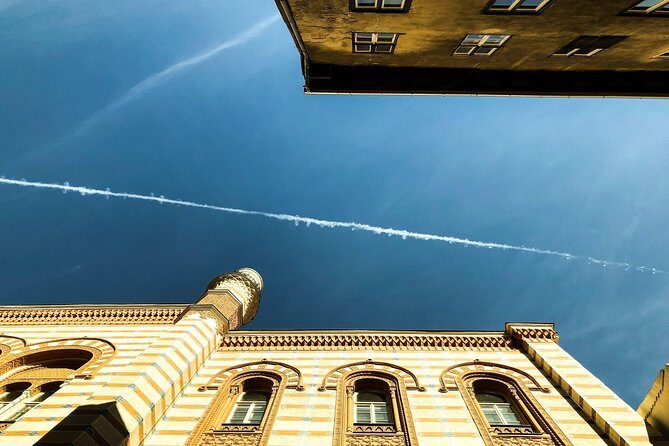
One of the smarter parts of this tour is that your synagogue time includes more than one room. Within the Dohány complex, you visit areas connected to memory and heritage: the Temple of Heroes, the Jewish Museum, and a Memorial Park.
This works well for your brain because it adds layers. Instead of only thinking about worship, you also see how the community preserved history and honored those lost. The Temple of Heroes and the museum elements shift the story from present-day architecture to remembrance and continuity.
If you like tours where the guide helps you look at details without making it an exam, you’ll probably enjoy this. The format encourages you to pause, absorb, and then move on—so the complex doesn’t become a blur of photos.
Meeting your historian guide: why pacing and personality matter
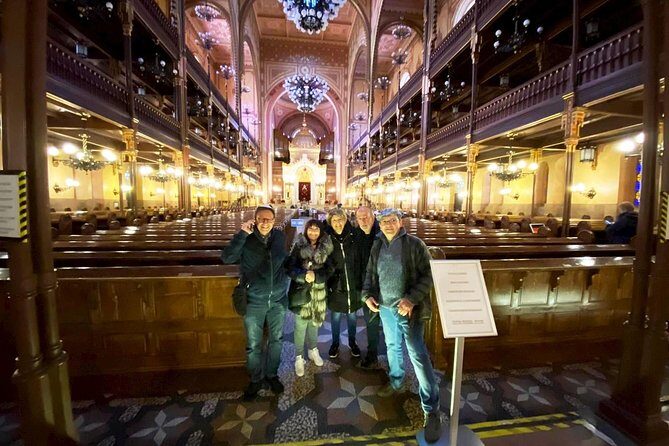
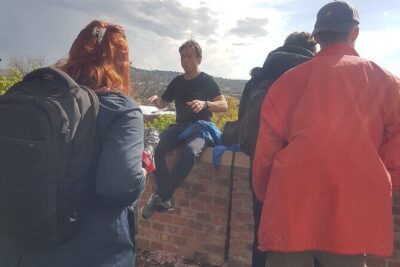
The tour is led by historians and academics, and one of the best reasons to book is that you’re likely to get careful pacing. Past groups have praised guides for being friendly, engaging, and thorough, including checking in before transitioning to the next section so the group stays comfortable.
In particular, one praised guide named Orsolya was noted for being extremely knowledgeable, thoughtful, and for keeping the group’s pace in mind. Another guide, Endres, was highlighted for exceptionally detailed historic context and for handling requests that were more personal than standard commentary.
That matters because Jewish Budapest isn’t the kind of topic where you benefit from rushed storytelling. You want time to ask questions, to sit with what you’re seeing, and to understand why these sites matter today—not just why they mattered then.
And if you’re the kind of traveler who likes a meaningful moment rather than only facts, it’s good to know that guides have supported requests for remembrance activities. In one case, Endres provided materials and joined the group in cleansing several stumbling stones as a sign of respect.
Ghetto Wall Memorial and the street-level walk of memory
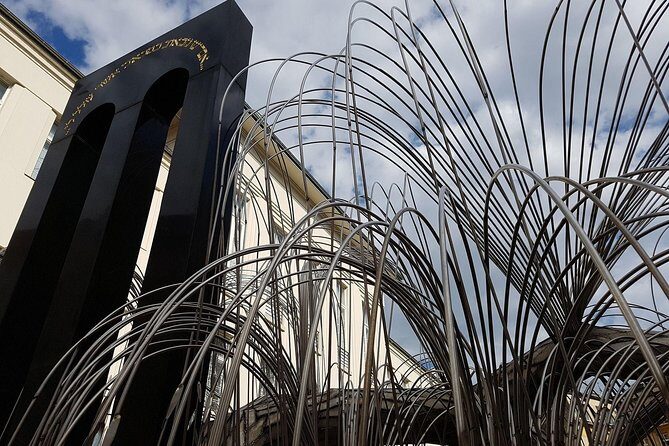
From the Dohány complex area, you head toward the Ghetto Wall Memorial, which was erected in 2014. This stop is powerful because it moves the story into the modern city fabric. You’re not walking through a museum. You’re walking alongside memory that’s still part of everyday Budapest streets.
Next comes a change in texture: you pass a mikve, a Jewish ritual bath. The tour description calls it luxurious, and even as an exterior stop, it signals that community life wasn’t only about public landmarks. There were also daily spiritual rhythms and spaces designed for ritual.
You then continue to the exteriors of the Art Nouveau orthodox synagogue on Kazinczy Street. Looking at the exterior is a different kind of experience than being inside Dohány, but it still teaches something: different communities and periods can leave different architectural fingerprints in the same neighborhood.
This section is where I like to pay attention to transitions. The guide is essentially helping you see how the city holds multiple layers at once—official memorials, surviving religious buildings, and streets that have changed roles over time.
Rumbach Street Synagogue: Status Quo Ante and community detail
Rumbach Street Synagogue enters the story with a specific religious context: the tour explains the history of the Status Quo Ante stream of Judaism while you observe the impressive facade.
Why should you care about this term? Because it’s a reminder that Jewish life in Budapest wasn’t a single uniform story. Different currents of Judaism shaped governance, practice, and community arrangements. When a guide gives you that context before you see a facade, the building stops being just pretty stonework. It becomes a clue.
Even though the tour focuses on facades here (not an interior visit), it’s still valuable. You’re trained to look for meaning in design choices and how communities wanted to represent themselves. This is also a good moment to ask questions if you’re curious about what makes Orthodox synagogues differ from one another, at least in terms of community tradition and expression.
Shoes on the Danube Bank: reflection with care
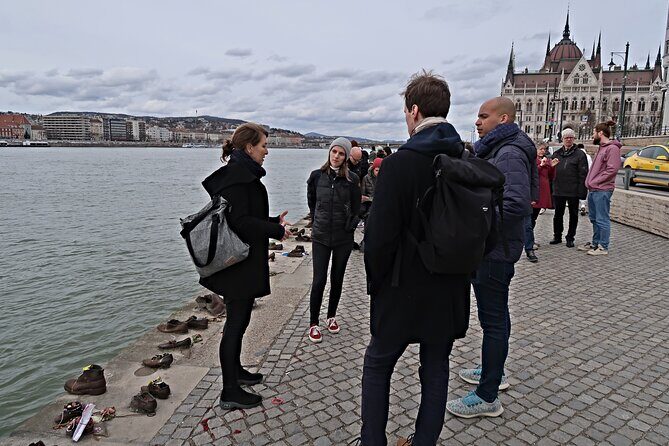
The tour finishes at the Shoes on the Danube Bank memorial. This is the emotional payoff after walking through major religious and community landmarks. Here, you’re asked to reflect on the Jewish lives lost at this site, and the guide also frames the moment in relation to the Jewish community today and Budapest’s ongoing renewal.
This stop is not for speed. I treat it like a pause button. You’ll likely stand, look, and let the setting do its work. The Danube itself adds a cold practicality to the symbolism: a real river, a real place where violence was made concrete.
If you want your visit to land, resist the urge to only take photos and move on. The tour is designed to help you slow down and connect memory to present identity—so the last minutes don’t feel like an afterthought.
Price and value: what you’re really paying for
The price is $123 per person for a 3-hour walking tour with a historian guide. That’s not a bargain price like a generic city stroll, but it’s also not priced like a private limousine tour. What you’re paying for is expertise plus structure: historian guidance, site-to-site storytelling, and English interpretation.
The big extra cost to plan for is the Dohány Synagogue ticket (14500Ft), which is not included. So, in practical terms, your total outlay will be the tour cost plus the synagogue admission. If you’re used to tours where entrance fees are folded in, this is the one surprise you should factor in early.
Where the value really shows up is in the guide quality and how the time is spent. The program includes assistance from a Jewish Studies Scholar at Dohány and covers several important stops tied together by themes. For $123, you’re buying interpretation—what you’re seeing and why it mattered—rather than simply getting access to one or two sites.
Also, group size can affect value. The tour offers private or small groups available, which often makes a difference when you want questions answered and the pace adjusted.
Who should book this Jewish Budapest walking tour
You’ll likely love this if you:
- want a walking tour that connects major landmarks to the broader Jewish experience in Budapest before WWII
- appreciate guides who can explain context and not just recite dates
- want a route that ends with a serious memorial and includes reflective framing
- prefer English interpretation from experienced, academic-style guides
You might think twice if:
- you’re not comfortable walking for about 3 hours (even if the tour is paced by the guide)
- you’re sensitive to heavy themes and want a lighter, more entertainment-first route
- you forget that the Dohány Synagogue requires ticket purchase and shoulder/knee coverage
If you’re planning your first trip to Budapest, this is also a useful “foundation tour.” It gives you the background to understand the neighborhood before you explore on your own.
Tips to make your 3 hours go smoothly
- Plan your outfit for the Dohány Synagogue dress request: shoulders and knees covered.
- Budget for the 14500Ft synagogue ticket separately.
- Wear comfortable shoes. Even though the route is curated, you’re on your feet through streets, memorial spaces, and synagogue approaches.
- If you like personalization, consider booking for a private or small group option so your guide can slow down where you want more detail.
- If you have questions about terms like Status Quo Ante or about how different Jewish communities expressed identity, save them for moments when you’re facing a facade or transition between sites.
FAQ
How long is the A Journey through Jewish Budapest walking tour?
It lasts 3 hours.
What does the tour cost?
The tour price is $123 per person.
Is entry to the Dohány Synagogue included?
No. Dohány Synagogue tickets are not included, and the individual ticket price is listed as 14500Ft.
Where do I meet the tour guide?
The meeting point is Kamara Café, Dohany utca 1/A.
What sites are included on the route?
You visit key stops including Herzl’s birthplace square, the Dohány Street Synagogue complex (including the Temple of Heroes, Jewish Museum, and Memorial Park), the Ghetto Wall Memorial, areas around the mikve, Kazinczy Street synagogue exteriors, Rumbach Street Synagogue facade related to Status Quo Ante, and the Shoes on the Danube Bank memorial.
What language is the tour offered in?
The tour is available in English.
Who leads the tour?
The guide is a historian-type professional, such as professors, doctoral students, historians, journalists, art critics, and published authors.
Is there a dress code for the Dohány Synagogue?
Yes. Visitors to the Dohány Synagogue are requested to have shoulders and knees covered.
What is the cancellation policy?
You can cancel up to 24 hours in advance for a full refund.
Should you book this Jewish Budapest tour?
If you want Jewish Budapest to feel understandable—not just photographed—this is a strong booking. The main reason: you get a guided, historian-led walk that connects Herzl, the Dohány Street Synagogue complex, neighborhood memorials, and the Shoes on the Danube into one coherent story.
Book it if you’re happy to walk, you can handle reflective subject matter, and you’re willing to add the Dohány Synagogue ticket plus follow the dress request. Skip it only if you’re looking for a casual sightseeing route with minimal depth.