REVIEW · BUDAPEST
Half day Budapest city tour by car / minivan
Book on Viator →Operated by Private Sightseeing Tours in Budapest and in Hungary · Bookable on Viator
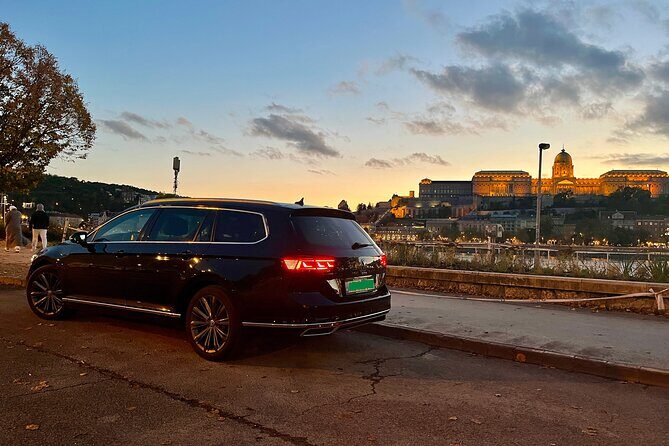
Budapest looks best when you don’t rush it. This half-day private city tour by car is a fast way to get oriented, then decide what deserves more time later. I like that it’s truly door-to-door, so you spend your energy on the sights, not logistics.
Two things I especially appreciate: you get a professional guide doing the story-telling while you ride between major neighborhoods, and you also get practical comfort with bottled water and an air-conditioned vehicle. That helps when the schedule is tight and the summer sun or winter chill is doing its thing.
One possible drawback: because the tour is short, most stops are brief and you’ll spend time driving. If you’re hoping for long walks and lots of interior exploring, you’ll want to plan separate add-ons.
Key highlights you’ll feel right away
- Private pickup and door-to-door service, so you start stress-free from any hotel or accommodation in Budapest
- A car/minivan route built for speed, covering Pest and Buda viewpoints without exhausting transfers
- Photo-friendly, high-impact stops, like Fisherman’s Bastion and the Citadel viewpoint area
- Expert-led context in English, including big-picture Hungarian history as you move through key landmarks
- Optional paid interiors at a few famous churches/terraces, so you can choose how deep to go
In This Review
- How the Private Car Makes a Half-Day in Budapest Actually Work
- Getting Oriented: Andrássy Avenue, Heroes’ Square, and the City’s Power Belt
- City Park Highlights: Vajdahunyad Castle and the House of Music
- Bath Culture Without the Long Wait: Széchenyi and Gellért
- Pest Landmarks: Opera, St Stephen’s Basilica, Liberty Square, and Parliament
- Danube Moments: Zero Kilometre, Chain Bridge, and the Castle District Views
- Gellért Hill and the Citadel Viewpoint: Why This Stop Often Feels Like the Best One
- Price and Value: Is $141.56 Worth It for 4 Hours?
- Who This Tour Fits Best (and Who Should Plan Something Different)
- A Booking Check: Should You Book This Half-Day Budapest Tour?
- FAQ
- How long is the half-day Budapest city tour?
- Is pickup included, and where does the tour start?
- Is this a private tour or a shared group?
- What language is the tour guide?
- Is bottled water and transportation included?
- Are entrance fees included?
- Are there different start times available?
- What is the cancellation policy?
How the Private Car Makes a Half-Day in Budapest Actually Work
Budapest can feel big—mostly because the city is split by the Danube, with two very different sides. This tour is built for that reality. You don’t have to figure out which tram goes where, or how to time your walks between viewpoints. You get in, drive smart, stop often enough for photos, and hear the stories while you’re still fresh.
The “private” part matters. Only your group rides with the guide and driver, so you’re not stuck with a loud group rhythm or pressured to keep moving when you want one more picture of a facade. And you get a wide range of start times, which is great if you’re balancing dinner plans, an arrival day, or another booked activity.
Also: this route is compact by design. The itinerary mixes major “you have to see this” sites with a couple of modern/culture stops, so you leave with both the postcard and the lived-in feel.
Getting Oriented: Andrássy Avenue, Heroes’ Square, and the City’s Power Belt
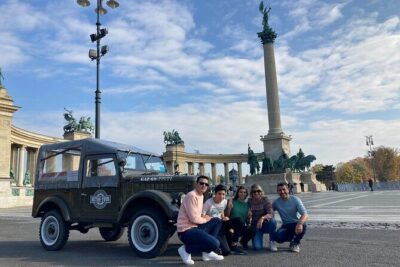
Your tour kicks off along Andrássy Avenue, one of Budapest’s great boulevards dating back to the 1800s. It links the city center with Heroes’ Square and is lined with Neo-Renaissance mansions and townhouses, plus embassies and luxury boutiques. Even if you’re not shopping, the street teaches you something: Budapest loves grand, ceremonial architecture—and it built it as a statement.
Then you hit Heroes’ Square, a major landmark with an iconic statue complex. It’s built around the Seven chieftains of the Hungarians, plus the Memorial Stone of Heroes. What I like here is the blend of symbolism and real modern history. The square has hosted major political moments, including the reburial of Imre Nagy in 1989, a detail that gives the space extra weight beyond the “pretty monument” factor.
This stop is short, and that’s okay. Heroes’ Square is one of those places where you can photograph the whole idea quickly, then use your guide’s explanation to make sense of what you’re looking at. If you’re the kind of person who always wants a map in their head, this is where you start building it.
You can also read our reviews of more city tours in Budapest



City Park Highlights: Vajdahunyad Castle and the House of Music

From the grand square, you swing toward City Park, where Budapest softens its tone. The first big stop is Vajdahunyad Castle. It was built in 1896 as part of the Millennial Exhibition celebrating 1000 years since the Hungarian conquest of the Carpathian Basin in 895. The neat twist is that the design is meant as a collage: copies of landmark buildings from different regions and eras of Hungary.
So yes, it looks like a fairytale castle from a distance. But it’s also a lesson in how Budapest staged national identity through architecture for that 1896 celebration. In a short tour, that context turns a quick stop into something you actually remember.
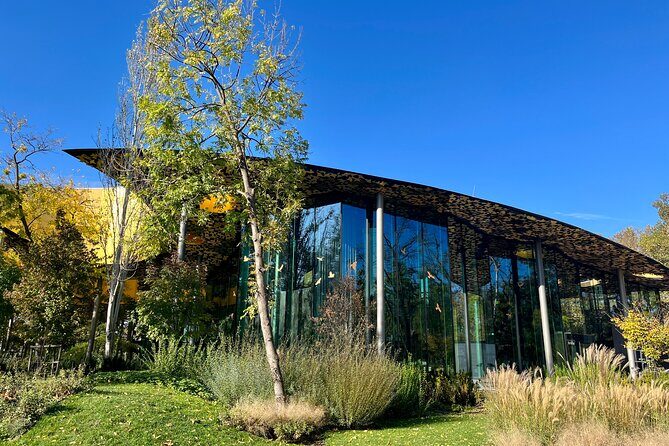
Next is House of Music Hungary, an institution focused on learning music history and the country’s musical roots. It opened in January 2022, and the building itself drew major international attention after winning a competition among 170 designs. Even if you don’t go inside on this half-day, seeing it in the park tells you Budapest isn’t stuck in the past. It’s actively building new cultural spaces too.
Practical tip: these park stops work best for quick photo moments and short listening sessions. If you want to linger in museums, you’ll likely need a longer day.
Bath Culture Without the Long Wait: Széchenyi and Gellért

Budapest is famous for thermal baths, and this tour gives you a quick, respectful nod to that whole culture. One stop is the area around Széchenyi Medicinal Bath, described as the largest medicinal bath in Europe. The thermal waters come from two springs with temperatures of 74°C and 77°C.
Another stop includes Gellért Baths at the Hotel Gellért area on the Buda side. The bath complex was built between 1912 and 1918 in the Art Nouveau (Secession) style.
Here’s the thing: on a half-day highlights tour, you’re usually viewing these baths and learning what they represent, not fully soaking and spending hours. That can be a positive. You’ll see the architectural wow-factor and understand why locals treat baths as more than a tourist activity. Then, if one bath really grabs you, you can book a full soak time later with the right ticket and enough hours.
If you’re traveling in colder months, you might want to treat this tour as your preview, then plan a later bath visit when you can actually enjoy the water.
Pest Landmarks: Opera, St Stephen’s Basilica, Liberty Square, and Parliament
After the park stops, the route swings back into the city core on Andrássy Avenue, where you’ll pause at the Hungarian State Opera House. It’s a neo-Renaissance opera house, and it’s a perfect example of Budapest’s grand “stage-ready” architecture. Even if you never attend an opera, the building helps you understand the city’s love of performance and ceremony.
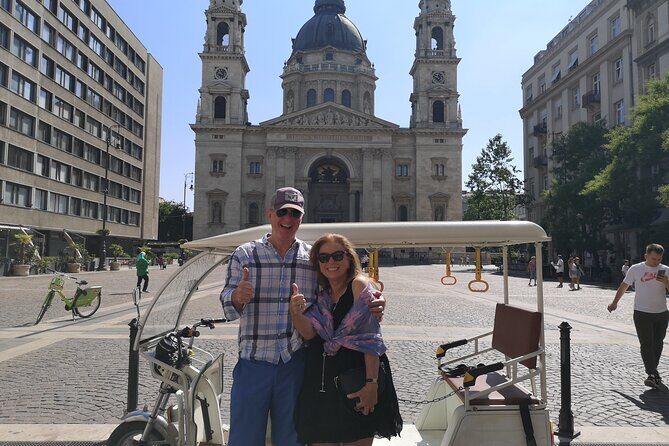
Next you have St. Stephen’s Basilica, one of Budapest’s biggest churches. It’s named for Stephen, the first King of Hungary, and the reliquary is said to house his right hand. The basilica is also described as the third-largest church building in present-day Hungary. This is one of the stops where interiors may cost extra, so choose based on your interest level: if you love churches and art inside, it can be worth paying for the entry.
Then it’s Liberty Square, a square with a practical mix of business and residential life. On one side you’ll find the United States Embassy and historicist headquarters of the Hungarian National Bank. The architecture includes Art Nouveau details, which can look especially good when light hits at the right angle.
Finally, the big-ticket stop is the Hungarian Parliament Building on Kossuth Square, next to the Danube. It’s described as the largest building in Hungary. From the outside, it gives you instant context for why Budapest became such an important political center. It also makes the city feel “serious” in a way that other European capitals do not always capture so clearly.
Because the tour is by car and time is limited, you won’t have long to explore each of these. But you’ll get a guided sense of what each one means, plus the exterior photo moments you can’t really recreate later.
Danube Moments: Zero Kilometre, Chain Bridge, and the Castle District Views
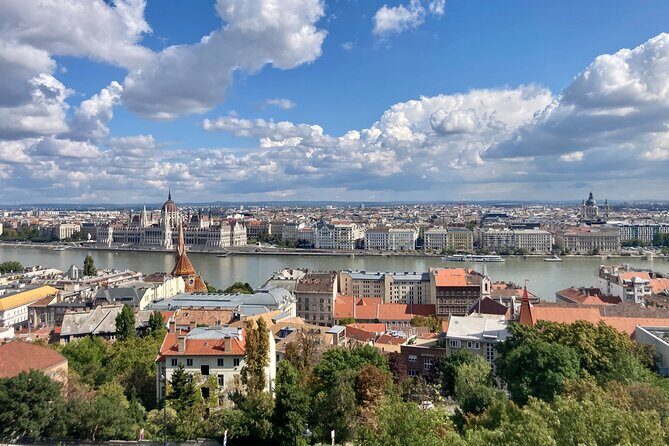
Budapest runs on “look both ways” energy: Pest opens the wide urban views; Buda gives you steep streets and dramatic overlooks. You’ll cross key transitions during the drive.
You’ll pass the Zero Kilometre Stone, a 3-meter limestone marker that indicates the reference point for road distances from Budapest. It’s one of those small details you’d miss without a guide. The fun part is that it shows how Budapest organizes space and direction—like a quiet piece of the city’s system.
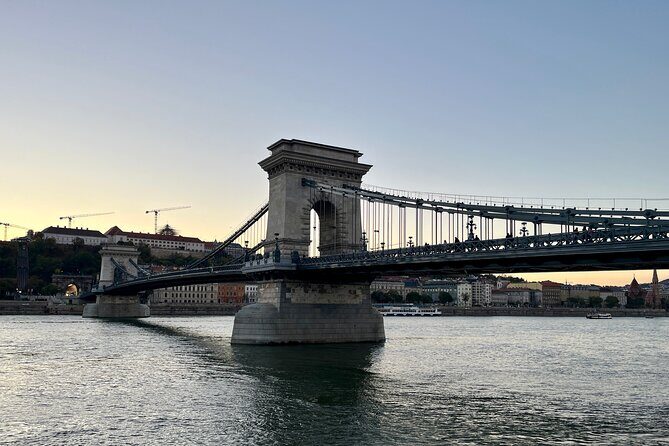
Then you reach the Széchenyi Chain Bridge, built as the first permanent bridge across the Danube in Hungary, opened in 1849. It was designed by English engineer William Tierney Clark and built by Scottish engineer Adam Clark. When you see it from the right angle, it’s hard not to appreciate that this is a piece of engineering history, not just a pretty bridge for photos.
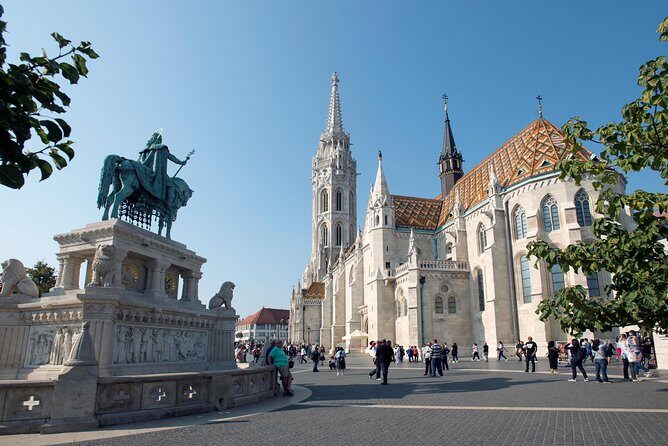
On the Buda side, you arrive at Matthias Church in the Castle District. It’s known as late Gothic, constructed in the second half of the 14th century and restored in the late 1800s. The location is ideal for a quick “I get why people stop here” moment, especially if you’re also going to Fisherman’s Bastion.
Speaking of which: Fisherman’s Bastion is one of Budapest’s best viewpoints. It’s built between 1895 and 1902 on the base of old castle walls, and it’s famous for panoramic terraces. This is one stop where people often remember the view more than the facts, and that’s fair. It’s the kind of overlook that makes you understand why Budapest gets labeled as dramatic.
Some interior/upper-level areas may require additional fees, so decide ahead of time if you want more than the exterior terraces.






Gellért Hill and the Citadel Viewpoint: Why This Stop Often Feels Like the Best One
The tour finishes with two areas that focus on height and perspective: the Citadel Lookout and the Gellért Bath area.
The Citadel is located on Gellért Hill, built in 1851 by Julius Jacob von Haynau (associated with the Austrian Empire). From up there, the city looks like it’s laid out for you—Danube curves, the bridge lines, the spread of rooftops, and the way Buda climbs toward its viewpoints.
This is also where a short car tour can feel like a cheat code. You get the payoff of a big walk without having to plan a long climb from scratch. If you’re the type who likes views but dislikes getting “touristy tired,” you’ll probably rate this section high.
Then you wrap with Gellért Baths, built between 1912 and 1918 in the Art Nouveau Secession style. Even if you don’t go inside, seeing the bath complex helps tie the whole “Budapest is thermal life and architectural drama” story together.
Price and Value: Is $141.56 Worth It for 4 Hours?
At $141.56 per person for about 4 hours, the price might look steep at first—until you compare what it replaces.
You’re paying for:
- Private guiding in English
- Private transportation (not just a transfer)
- Door-to-door pickup and drop
- Bottled water and an air-conditioned vehicle
The real value is time and comfort. If you’re first-timer, or you only have part of a day, this kind of route helps you avoid the “spent half the day getting there” problem. You also get a guide who can explain what you’re seeing while you ride—so you don’t end up squinting at plaques and guessing.
If your priority is museum interiors, long photo walks, or deep church entry time, you might feel like the itinerary is too quick. But if your goal is to get your bearings fast and learn how the city pieces connect, this is a strong deal. It’s basically buying concentrated context plus efficient sightseeing.
Who This Tour Fits Best (and Who Should Plan Something Different)
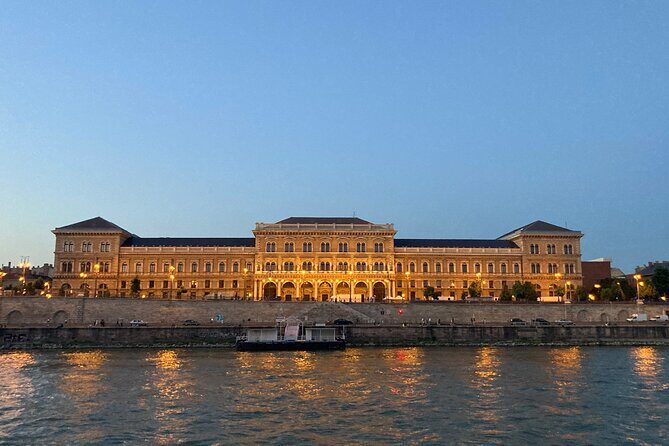
This tour fits best if you:
- Are on a first visit and want the biggest hits with context
- Have limited time and want a comfortable, efficient route
- Prefer guided stops rather than building a day plan yourself
- Want viewpoints like Fisherman’s Bastion and the Citadel without committing to an all-day hike
It may feel less ideal if you:
- Want lots of inside visits during the 4 hours
- Hate short stops and lots of driving between photo points
- Plan to spend your energy reading every detail in museums rather than hearing a guide summary
A Booking Check: Should You Book This Half-Day Budapest Tour?
If your schedule is tight, I’d book it. This is one of those experiences that gives you immediate structure: you leave with Budapest organized in your head—major landmarks, neighborhood feel, and the “why” behind the architecture.
My go/no-go advice is simple:
- Book it if you want fast orientation + guided stories + comfortable transport.
- Consider adding your own separate time blocks for the interiors that matter most to you, like St. Stephen’s Basilica or Matthias Church, and any terrace/upper viewing areas you care about.
If you like options, the tour’s setup is also practical because you can choose how much paid entry you want. And if you need flexibility, you can plan your timing without feeling locked in.
FAQ
How long is the half-day Budapest city tour?
It’s about 4 hours (approx.).
Is pickup included, and where does the tour start?
Yes. Pickup is offered door-to-door, and the tour can start from any hotel or other accommodation in Budapest.
Is this a private tour or a shared group?
This is a private tour/activity. Only your group will participate.
What language is the tour guide?
The tour is offered in English.
Is bottled water and transportation included?
Yes. You get bottled water and a private air-conditioned vehicle, plus private guiding.
Are entrance fees included?
No. Entrance fees are not included. Some optional interior visits require extra payment, such as St. Stephen’s Basilica, Matthias Church, and the upper floor of Fisherman’s Bastion.
Are there different start times available?
Yes. A wide range of start times is available to fit your schedule.
What is the cancellation policy?
You can cancel up to 24 hours in advance for a full refund. If you cancel less than 24 hours before the start time, the amount paid isn’t refunded.