REVIEW · BUDAPEST
Budapest Dohany, Heroes’, Rumbach synagogues & Jewish Ghetto Tour
Book on Viator →Operated by Hidden Treasure Tours · Bookable on Viator
Budapest’s synagogue tour tells two stories at once. You’ll connect Budapest Jewish Quarter history with the Holocaust memorial landscape, while walking today’s streets that still shape Jewish life.
I love how this tour treats the Great Synagogue as more than a photo stop. You also get real context for why the Holocaust sites, tree memorial, and ghetto cemetery matter, with time to absorb it.
One possible drawback: this is a tight schedule in about 2 hours 20 minutes, so breaks to wander off for snacks or extra sightseeing are limited. Also, the dress code (shoulders covered and knee-length or longer) can feel like the main hurdle before you even start.
In This Review
- Key things I think you’ll notice
- Entering the Great Synagogue (Nagy Zsinagóga) and why it matters
- Raoul Wallenberg Holocaust Memorial Park: trees, names, and the ghetto cemetery
- Rumbach Street Synagogue and Otto Wagner’s Moorish style
- Király Street and Gozsdu Udvar: the Jewish Quarter’s street life today
- Carl Lutz Memorial and the “small” stops with big meaning
- Dob Street, Kazinczy Street, and the layers of Jewish religious life
- Timing, pacing, and what the $63.52 price buys you
- Dress code and respectful planning (you’ll thank yourself)
- Who should book this Budapest Jewish Quarter tour?
- Should you book this tour?
- FAQ
- How long is the Budapest synagogues and Jewish Ghetto tour?
- How much does the tour cost?
- Is the tour offered in English?
- Which stops include admission tickets?
- What memorials and Holocaust-related sites will I see?
- What dress code do I need for synagogue visits?
- Is the tour suitable for most travelers?
- What happens if a synagogue closes temporarily during the tour?
- What is the group size limit?
- Can I cancel for a full refund?
Key things I think you’ll notice
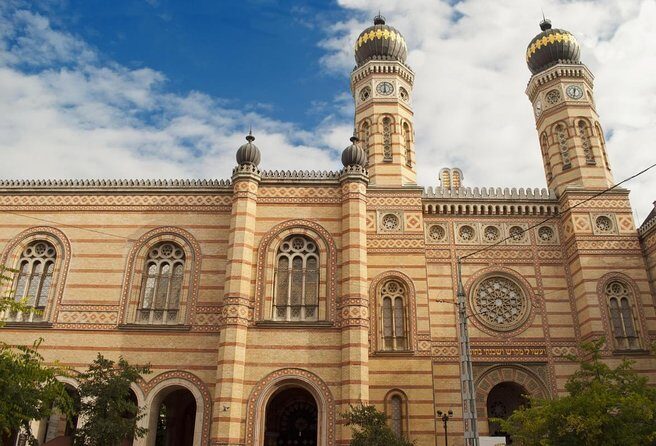
- Entry included at the Great/Central Synagogue so you see the inside, not just the exterior
- Holocaust Memorial Park details that point you to the Emmanuel Tree of Life Memorial and the ghetto cemetery
- Rumbach Street Synagogue by Otto Wagner with its Moorish look and a recently reopened interior
- Street-level context on Király Street, Gozsdu Udvar, and Dob Street where Jewish life returns today
- Short stops that add up like Carl Lutz, Spinoza Színház, and a chance to look for kosher flodni nearby
- Small group size (max 35) helps you hear the guide and ask questions during heavier moments
Entering the Great Synagogue (Nagy Zsinagóga) and why it matters
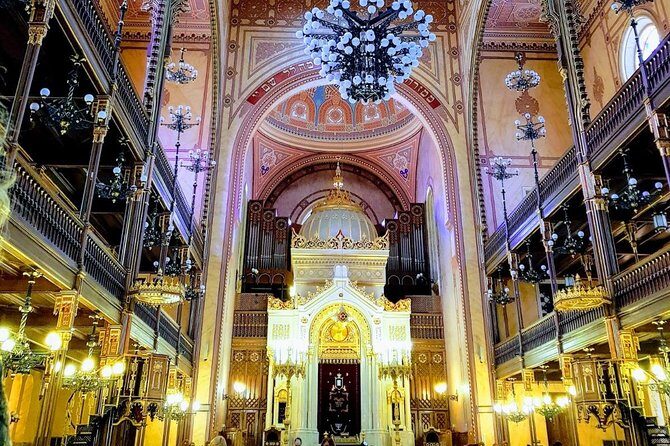
This tour starts at the Great / Central Synagogue, the largest Jewish temple of Europe. The guide sets the stage by explaining the Hungarian Neologue Jewish Community, and how Hungarian Jewish life developed in different religious streams.
Inside, you’re looking at 1850s architecture built to be seen. You’ll also hear about the organ associated with Franz Liszt—one of those details that makes the building feel woven into broader Hungarian cultural history, not sealed off in a separate world.
Practical tip: go in with your shoulders covered and your knees covered. If you forget, there’s clothing cover available for purchase on the spot, but it’s easier to start properly dressed and get to the good part sooner.
You can also read our reviews of more tours and experiences in Budapest.



Raoul Wallenberg Holocaust Memorial Park: trees, names, and the ghetto cemetery
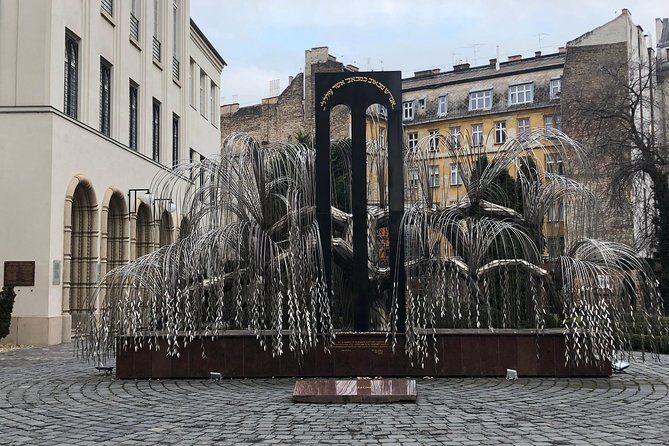
The next stop shifts tone, and it should. At the Raoul Wallenberg Holocaust Memorial Park, you learn how Hungary’s Jews were persecuted—and you’re also shown the role of the Righteous Gentiles who saved lives while risking their own.
You’ll visit the Emmanuel Tree of Life Memorial. It’s a quieter kind of remembrance than a typical monument, and it gives your brain a moment to slow down between facts. Then you go to the Holocaust Cemetery on the territory of the Budapest ghetto, where more than 2,000 victims are laid to rest.
This part of the tour is where a good guide makes the difference. In the group, you can expect the explanation to be respectful and grounded, with room for questions when people want clarification on what they’re seeing.
Rumbach Street Synagogue and Otto Wagner’s Moorish style
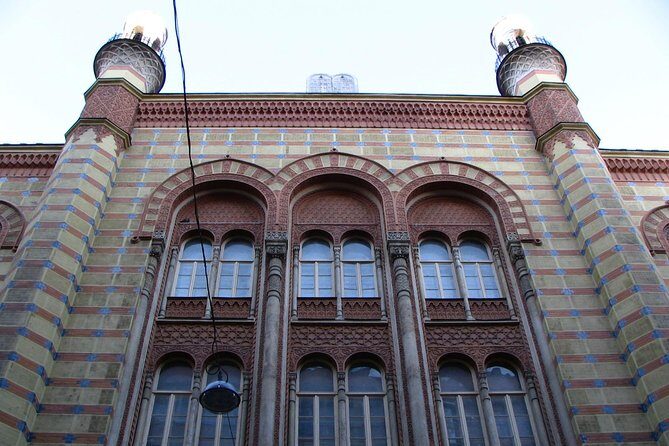
Rumbach Street Synagogue is the kind of place you might walk past on your own and never realize what it is. The building is tied to architect Otto Wagner (1872), and the Moorish look is the headline—especially once you’re standing close enough to spot the details.
A strong point here is that it has recently reopened after renovations. That matters because you’re not just hearing about an old landmark; you get to experience it again as a functioning, visitable synagogue.
The guide also places this in context with the Budapest Jewish district’s layers. You’ll understand why synagogues in the same neighborhood can feel visually and culturally different, and how architecture worked like a public language for each community.
Király Street and Gozsdu Udvar: the Jewish Quarter’s street life today
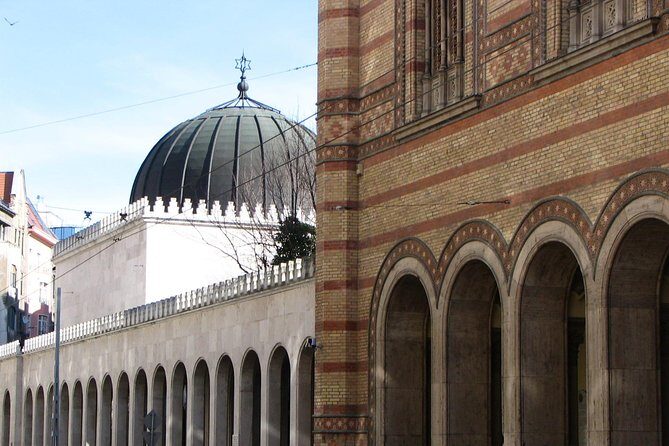
After the heavier memorial stops, you move through the neighborhood in a way that helps you connect past to present.
On Király Street, you’re stepping into the historic high street of Pest in the 18th and early 19th centuries. The guide explains how it became a commercial and trading hub—so Jewish life wasn’t only religious. It was also shops, trade, and day-to-day community space.
Then there’s Gozsdu Udvar, one of the most colorful spots in the Jewish district. Historically, the area housed kosher salami and other food stores, plus apartments. Today, it’s a place for entertainment and cultural hangouts, where you can see how the neighborhood keeps reinventing itself while still holding onto its identity.
If you’re hungry: this is the moment you’ll likely want to grab a bite. Just be aware the tour keeps moving, so you may not have time for a long meal.
Carl Lutz Memorial and the “small” stops with big meaning
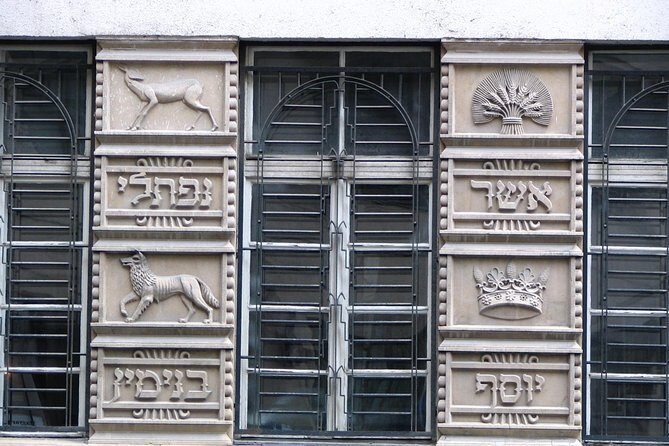
This tour includes short, focused moments that add emotional weight without dragging on.
At the Carl Lutz Memorial, you learn about the Righteous Gentile who risked his life to save thousands of Hungarian Jews. It’s brief in time on paper, but the point isn’t the length—it’s that you learn the name, the act, and the scale.
You’ll also pass by Spinoza Szinház, named for the Jewish Dutch philosopher of Portuguese Sephardi origin. The guide uses this stop to connect Enlightenment ideas to Jewish intellectual history, and to show how Jewish names and culture are threaded into Budapest’s modern cultural spaces.
These micro-stops work well because they break up the walking rhythm and prevent the tour from turning into a single long lecture.






Dob Street, Kazinczy Street, and the layers of Jewish religious life
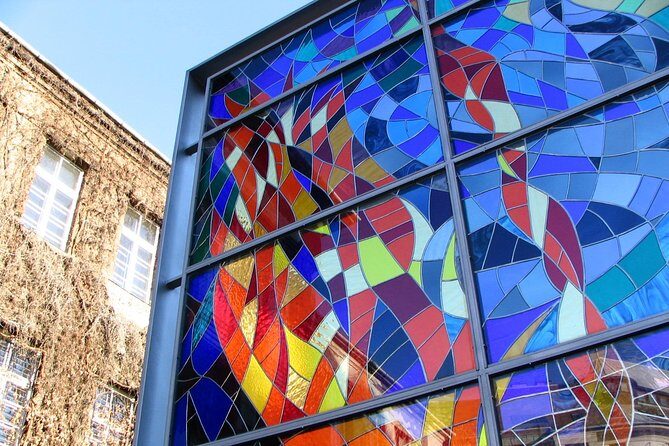
Two streets help you understand why the Jewish Quarter isn’t one story—it’s many.
Dob Street runs parallel to Király Street and also sits at the heart of the ghetto area. Today it reflects a revival of Jewish life in Budapest, including Hungarian Orthodox Jewish life. You get the sense that the neighborhood isn’t frozen in history; it’s still actively used and shaped.
Later, you reach Kazinczy Street Synagogue, in what’s often called the cultural street of Budapest. The area is known for ruin pubs, but the synagogue side of Kazinczy is where you get a clearer view of Orthodox Jewish community infrastructure: a synagogue, a mikveh, kosher restaurants and cafes, schools, and kosher food stores.
Architecturally, the building relates to early 20th-century Art Nouveau in Budapest, often called Secession. The tour doesn’t include entry here, but you still get guidance on what you’re looking at from the outside and what distinguishes this synagogue’s community.
Timing, pacing, and what the $63.52 price buys you
At about $63.52 per person for roughly 2 hours 20 minutes, this is priced like a guided combo rather than a casual neighborhood stroll. And the value is in what’s actually covered.
You get admission included for the Great Synagogue, the Holocaust Memorial Park, and Rumbach Street Synagogue. That’s three paid, high-impact stops. Add the guided explanation tying them together, and the tour becomes less about “where to go” and more about “what to notice once you’re there.”
The pace is fairly brisk. One of the most honest things I can tell you: you won’t have lots of slack time to wander off. There’s also a stop that can lead you toward kosher flodni (Hungarian Jewish cake), but you shouldn’t count on time for browsing and buying without feeling like you’re risking missing the group.
Group size stays capped at 35, which usually helps with hearing the guide over the street noise and keeping the experience orderly when emotions run high.
Dress code and respectful planning (you’ll thank yourself)
Before you go, plan around the synagogue dress code. Shoulders must be covered, and clothing needs to reach the knee or be covered up before entering. Covers are available for purchase on the spot, and men can also receive head cover upon entry.
This matters for two reasons. First, it keeps the experience smooth. Second, it signals the right mindset when you’re visiting places that are still active in community life.
Also note: synagogues may close temporarily without warning. If that happens and affects one synagogue, the provider offers alternative visiting time. If everything closes, you’ll get alternative hours or full refunds. This is worth factoring in if you have tight plans for the day.
Who should book this Budapest Jewish Quarter tour?
Book it if you want your Budapest history with both architecture and human context. It’s ideal for:
- People who like guided interpretation in English, not just wandering
- Travelers interested in how Neologue and Orthodox communities differ in visible ways
- Anyone who wants Holocaust memorial education tied to the actual ghetto landscape
- Visitors who appreciate street-level context, not only museum-style stops
Skip it or choose carefully if you’re looking for a slow, casual walk with lots of free time to shop and snack. This route packs meaning into a limited window, and that can feel intense if you’re hoping to drift at your own pace.
Should you book this tour?
I’d say yes for most first-timers who care about Jewish history and Budapest’s synagogue architecture. The admission-included stops do real heavy lifting, and the guide’s job is to connect buildings and memorials to the lived story behind them.
Just go in expecting a short, guided sprint through big themes. If you dress properly, listen closely, and don’t plan on long detours for food shopping, you’ll come away with a much clearer picture of what the Jewish Quarter has been—and what it still is.
FAQ
How long is the Budapest synagogues and Jewish Ghetto tour?
The tour lasts about 2 hours 20 minutes.
How much does the tour cost?
It costs $63.52 per person.
Is the tour offered in English?
Yes, it is offered in English.
Which stops include admission tickets?
Admission is included for the Great / Central Synagogue, the Raoul Wallenberg Holocaust Memorial Park, and the Rumbach Street Synagogue. The Kazinczy Street Synagogue admission ticket is not included.
What memorials and Holocaust-related sites will I see?
You’ll visit Raoul Wallenberg Holocaust Memorial Park, including the Emmanuel Tree of Life Memorial and the Holocaust Cemetery located on the territory of the Budapest ghetto.
What dress code do I need for synagogue visits?
Shoulders must be covered, and clothing must reach the knee or be covered before entering. Clothing covers can be purchased on the spot. Men can get head cover upon entry.
Is the tour suitable for most travelers?
The tour notes that most travelers can participate, and it is near public transportation.
What happens if a synagogue closes temporarily during the tour?
If one synagogue closes unannounced and affects the program, you’ll be offered alternative visiting time. Refunds are not offered for that change because it’s a package deal. If all synagogues close unannounced, you’ll be offered alternative hours/dates or full refunds.
What is the group size limit?
The tour has a maximum of 35 travelers.
Can I cancel for a full refund?
Yes. You can cancel up to 24 hours in advance for a full refund. If you cancel less than 24 hours before the start time, the amount paid is not refunded.