REVIEW · BUDAPEST
Budapest Grand Walk
Book on Viator →Operated by Taste Hungary · Bookable on Viator
One afternoon walk can turn Budapest from postcards into real streets. This 4-hour guided Grand Walk strings together big-ticket sights and the quieter corners between them, with stories that connect Hungary’s past to what you see today.
I especially liked the way the guide ties the city to major events, from older empires to 1956 and beyond. And I really valued the done-for-you pacing: you get public transport moments (including the continent’s oldest metro line) plus breaks that keep the tour moving without feeling rushed.
The main catch is simple: there’s a moderate amount of walking, so plan on steady steps and comfy shoes, even if you’re not doing a hardcore day of sightseeing.
In This Review
- Key things I’d plan around
- Why This Grand Walk Works in 4 Hours
- Meeting at Tasting Table and the Aperitif Start
- Pest Palace District: National Museum, Radio Building, and Andrássy Street
- Jewish Quarter Highlights: Grand Synagogue Area and Király utca
- St. Stephen’s Basilica and the Oldest Metro Line Moment
- Heroes Square, Parliament Views, and Danube Promenade Drama
- The Danube Memorials: Shoes and Soviet-Era Connections
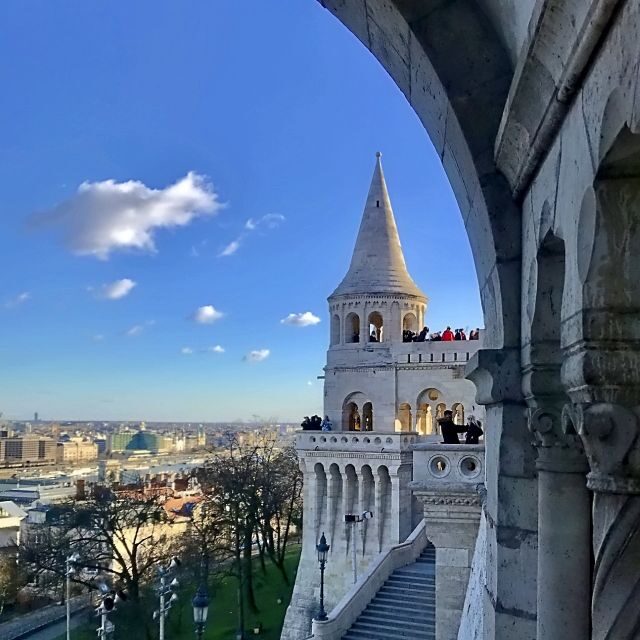
- Buda Castle Complex Walkthrough: Courtyards, Academy, and Liberty Square
- What You Get for the $125 Price Tag
- Small Group Size: Easy Questions, Human Pace
- Who Should Book This Walk (and Who Might Skip It)
- Should You Book the Budapest Grand Walk?
- FAQ
- How long is the Budapest Grand Walk?
- Where does the tour start and where does it end?
- Is the tour in English?
- What’s included during the tour?
- How much walking is involved?
- How big is the group?
- What if the tour is canceled or you need to change your booking?
Key things I’d plan around
- Sparkling wine start at a wine cellar in the Palace district, before you even hit the streets
- Pest-to-Danube prime views of Parliament, Chain Bridge, and Buda Castle from the water’s edge
- St. Stephen’s Basilica + coffee break timed with the tour’s metro stop
- Former Jewish Quarter context including the Grand Synagogue area and Király utca
- Danube memorial time at Shoes on the Danube, plus other Soviet-era references
- Small group size (2–8) that keeps questions easy and the pace human
Why This Grand Walk Works in 4 Hours
Budapest can feel like two different cities that learned to share a river. Pest is all grand boulevards and public buildings. Buda is the hill country of courtyards, viewpoints, and castle-area streets.
This tour is built for getting your bearings fast. You cover a large chunk of central Pest, then hit the Danube promenade for the views that make people stop mid-walk. The trick is that you’re not just snapping photos—you’re also getting the why behind what you see.
The best part is the rhythm. You walk long enough to notice architectural details and street texture, but you also get structured stops where history and daily life get tied together. If you’re here for the first time, this is a smart way to avoid the usual mistake: seeing sites but missing the thread that connects them.
You can also read our reviews of more tours and experiences in Budapest.



Meeting at Tasting Table and the Aperitif Start
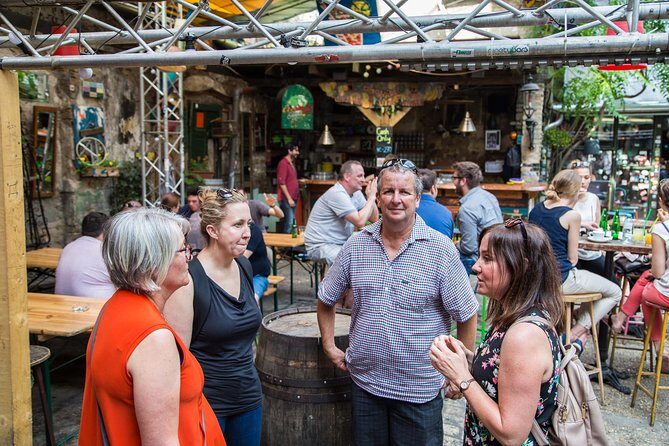
You begin at Tasting Table Budapest (Bródy Sándor u. 22, 1088). It’s a wine-shop meeting point in the Palace district, and the tour starts with an aperitif: a glass of Hungarian sparkling wine. This sets the tone. You’re not drinking to party; you’re drinking because this part of Budapest has its own pace and rituals.
You’ll then head into Pest by foot. That matters because many of the key sights here aren’t just landmarks—they’re embedded in the neighborhood fabric. Walking helps you notice the in-between stuff: street scale, building styles, and how people actually use these spaces day to day.
Tip: If you don’t love coffee, don’t panic—there’s a coffee break during the tour, but the tour also includes time for other drinks. Still, comfortable shoes are non-negotiable. You’ll be on your feet for hours.
Pest Palace District: National Museum, Radio Building, and Andrássy Street
Early on, you’ll move through the Palace district area, where the buildings can look grand even when they’re weathered. You’ll pass the Hungarian National Radio Building, which played a role during the 1956 Revolution. This is one of those stops where the architecture alone isn’t the point—the story gives it meaning.
You’ll also see the National Museum area and then get onto Andrássy út, the big boulevard where the city flexes. One standout you’ll pass is the Hungarian State Opera House, a neo-Renaissance building designed by Miklós Ybl. Even if you only view it from outside, it helps to learn why this street is considered so important in Budapest’s urban story.
Andréssy út is long enough that it can blur into “another boulevard” if you’re on your own. With a guide, it becomes a timeline: who built what, and why certain designs and power statements mattered to the city’s identity.
Jewish Quarter Highlights: Grand Synagogue Area and Király utca
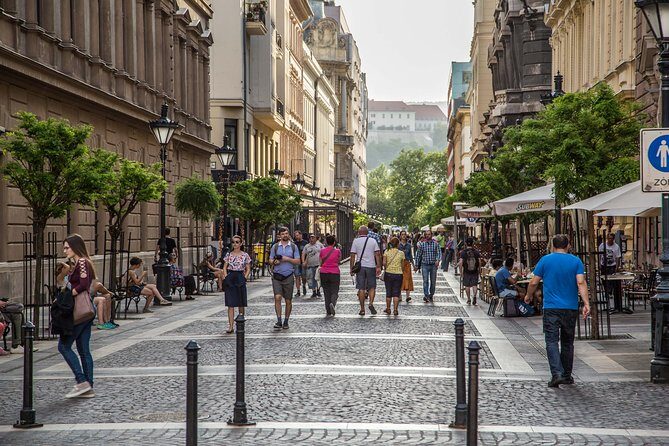
Next comes a carefully handled section of the city’s Jewish Quarter area. You’ll briefly check out the surrounding neighborhood and key points tied to the former district.
The tour focuses on recognizable anchors:
- the Grand Synagogue area (noted as Europe’s largest)
- Gozsdu udvar, with its complex layout and lively pedestrian feel
- Király utca, the kind of street where you’ll understand why people like returning to it
This portion works best when you’re open to context. The point isn’t just “here’s a famous building.” It’s how this neighborhood shaped community life, and what it means to stand in the same streets while remembering what happened.
Also, it’s timed so you’re not completely worn out by the time you reach the Danube side of town. That matters, because Budapest sighting fatigue is real.
St. Stephen’s Basilica and the Oldest Metro Line Moment
One of the cleanest transitions in the tour is the stop at St. Stephen’s Basilica (Szent István Bazilika). It’s named for Stephen, the first King of Hungary, and the tour notes the mummified right hand housed in the church. That detail alone gives you a reason to look up and pay attention rather than treat the basilica like just another church stop.
After that, you’ll hop onto public transport, including a ride on Europe’s oldest metro line. This is one of those Budapest facts that feels fun and practical at the same time: you get to experience a piece of the city’s everyday infrastructure rather than only viewing it from street level.
Then comes a coffee break at a favorite local café. It’s built into the pacing. Even if you’re not a coffee person, you’ll usually find a drink you can handle, and it’s a good reset before the view-heavy Danube stretch.






Heroes Square, Parliament Views, and Danube Promenade Drama
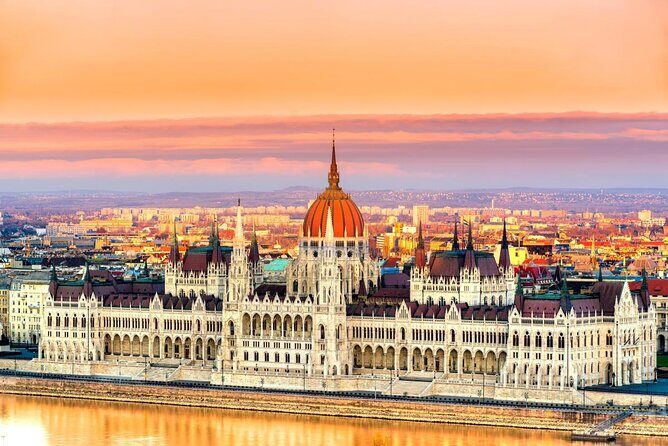
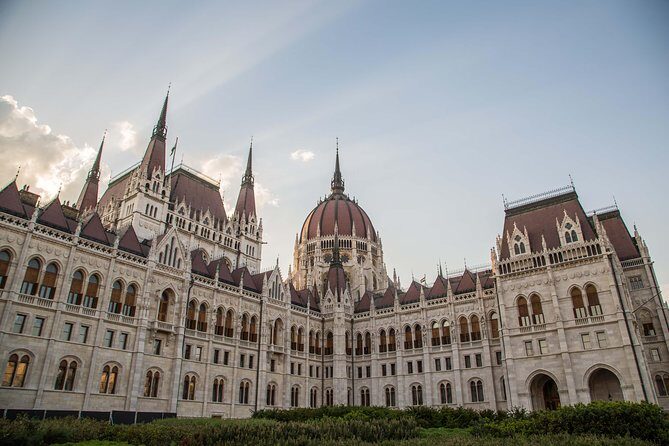
When the tour reaches the Danube bank, the experience changes. Pest looks different when you’re seeing it with Buda across the water. The guide points out the neo-Gothic Parliament building dominating the Danube bank, and the scale suddenly makes sense.
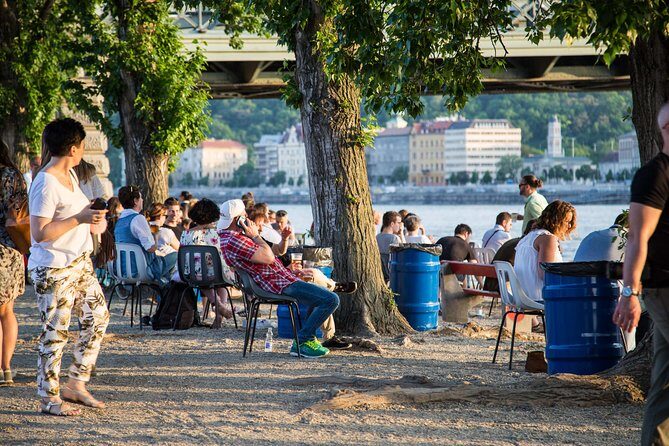
From here, you’ll enjoy Danube promenade time with some of Budapest’s signature viewpoints:
- Parliament
- Chain Bridge
- Buda Castle across the water
This is where you’ll likely stop doing mindless photos and actually start noticing how the skyline lines up. The tour doesn’t ask you to sprint. It gives you enough time to absorb the big picture and ask questions without feeling like you’re holding up the group.
If you’re planning your own follow-up walking later, this is an ideal section to orient yourself. You’ll see where your next climb to Castle Hill would make sense.
The Danube Memorials: Shoes and Soviet-Era Connections
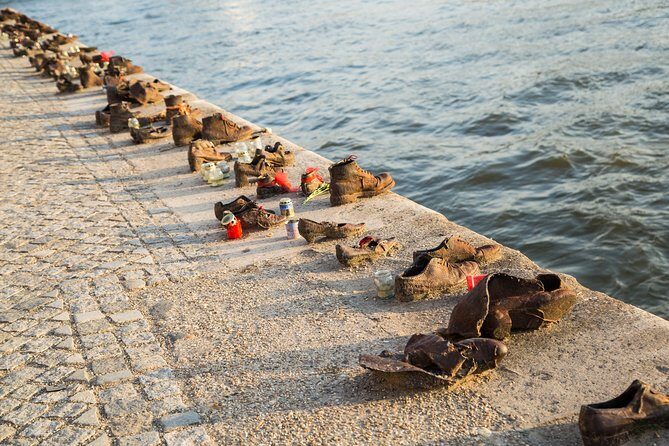
The most emotionally heavy part of the walk is the Shoes on the Danube Holocaust memorial. It’s placed right where the river becomes part of the story, and it’s one of those moments where the guide’s context matters more than your camera.
The tour also references other points in the same memorial-area zone, including a Soviet Monument and additional memorial context tied to individuals connected to international events (including mention of a US major and Ronald Reagan). You don’t need to know every name going in. The value here is that the guide helps you understand why a riverside location became a place for remembrance.
My practical advice: don’t treat this stop like a quick photo. Even if you’re short on time, slow down. It’s the kind of moment that sticks because it makes the city’s geography feel personal.
Buda Castle Complex Walkthrough: Courtyards, Academy, and Liberty Square
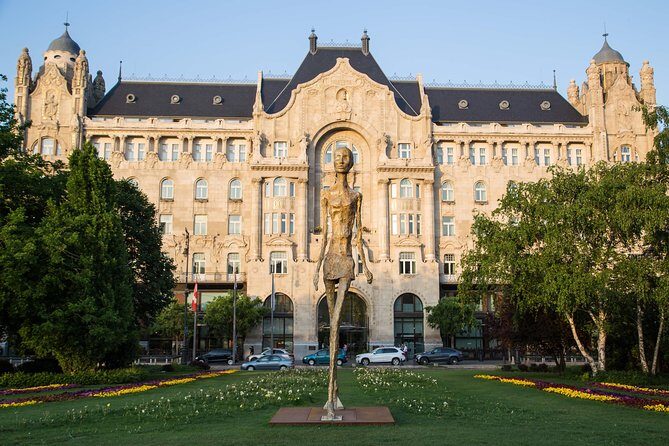
After Danube-side time, the tour ends near the Chain Bridge on the Pest side. The idea is that you can cross over on your own to continue into the Buda Castle area.
Before that, the tour guides you through what the Castle district is like. You’ll pass through the complex of seven buildings and their connected courtyards in the 7th district. These courtyards are lively and practical—shops and restaurants are part of the everyday scene, not just a tourist backdrop.
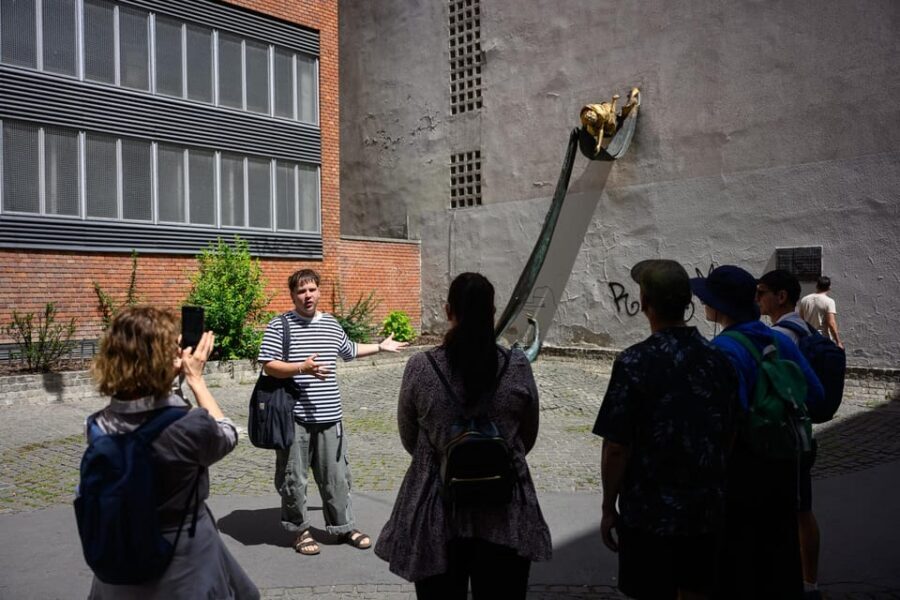
The tour also points out monuments such as the Soviet memorial area and provides context around what you’re seeing in that Castle-adjacent zone. Then it shifts to more institutional beauty and public space:
- the Hungarian Academy of Sciences, housed in an elegant neoclassical palace built in 1865
- Liberty Square, flanked by notable buildings including the former stock exchange
If you’re curious about how Budapest tells different stories through different building types, this is where the tour pays off. Churches, political buildings, remembrance sites, and academy façades sit next to each other in your mental map.
One note: because the tour ends near Chain Bridge, you’ll want a plan for what happens next. If you’re already tired, crossing to Buda Castle might become a “when I feel ready” task, not a must-do. That’s fine. The tour sets you up; it doesn’t trap you.
What You Get for the $125 Price Tag
At $125 per person for about 4 hours, this is not a cheap “walk and take pictures” add-on. But it also isn’t priced like a fancy private driver day.
Here’s what makes it feel like value:
- You get an English-speaking local guide who can connect buildings to events and daily life.
- You start with a glass of Hungarian sparkling wine.
- You get coffee/tea plus a coffee break during the metro segment.
- You get a few short rides on public transportation, including the oldest metro line.
- You get built-in stops for questions and photos, rather than you trying to manage logistics on your own.
If you’d otherwise pay for a guide plus transit plus a couple of museum admissions and still feel like you missed the “why,” this price can make sense. The biggest cost saver is time and clarity: you spend fewer hours “figuring out what matters” and more time understanding the city’s layout and meaning.
If you’re the type who loves reading plaques and wandering without a plan, you might do fine on your own. But if you want structure without feeling like a bus tour, this one hits a good middle.
Small Group Size: Easy Questions, Human Pace
This is set up as a shared small-group tour with a maximum of 8 travelers (and sometimes as few as 2–8). That size does something subtle: it makes questions feel natural.
In the feedback I saw, guides like Aniko and Angela (spelling can vary by booking notes) were singled out for being approachable and for giving a tight timeline—from older periods to modern events. It’s the kind of tour where you can ask a specific question about what you’re seeing and get an answer that doesn’t feel generic.
Also, the tour time is roughly four hours, but it can stretch if you’re not in a rush. If you have a dinner reservation or another timed plan, tell the guide at the start so they can keep the pace right for you.
Who Should Book This Walk (and Who Might Skip It)
This tour is a great match if:
- You want an overview of Pest and major Danube-area sights without sprinting.
- You care about history, but you also want it explained in plain language.
- You like seeing big landmarks and also hearing what makes the streets matter.
You might skip it if:
- You hate walking for hours, even at a moderate pace.
- You prefer total freedom and don’t want a set route.
- You’re only interested in one or two sites and can plan them on your own.
It’s especially useful on your first full day in Budapest. The tour gives you the mental map that makes your later explorations smoother.
Should You Book the Budapest Grand Walk?
I’d book it if you want a smart first pass at the city that mixes major sights with the stories that explain them. The wine-and-coffee rhythm helps keep energy up, and the public transit moments (especially the oldest metro line) give you an experience that goes beyond standing on sidewalks.
If you’re worried about history overload, don’t be. The guide doesn’t just name dates; the tour connects what happened to what you can still see—buildings, streets, and memorial placements along the river.
Bottom line: for $125, you’re buying clarity, pacing, and a guide who helps you read Budapest in layers. If that’s what you want, this walk is a strong choice.
FAQ
How long is the Budapest Grand Walk?
The tour is about 4 hours. It may run a bit longer if you have room in your schedule, so mention your timing needs at the start.
Where does the tour start and where does it end?
It starts at Tasting Table Budapest (Bródy Sándor u. 22, 1088) and ends near the Chain Bridge (Széchenyi Lánchíd).
Is the tour in English?
Yes. The tour is offered in English.
What’s included during the tour?
Included items are an English-speaking local guide, a glass of Hungarian sparkling wine, coffee/tea (including a coffee break), and a few short trips on public transportation, including the continent’s oldest metro line.
How much walking is involved?
There is a moderate amount of walking, so comfortable shoes are recommended.
How big is the group?
It’s a shared small-group tour with 2–8 guests (maximum 8). A larger group option or a private tour option may also be available.
What if the tour is canceled or you need to change your booking?
If you cancel, it is described as non-refundable and changes can’t be made. If the minimum traveler requirement isn’t met, you’ll be offered an alternative or a full refund.