REVIEW · BUDAPEST
Budapest: Guided Tour of the House of Music, Hungary
Book on GetYourGuide →Operated by Városliget Ingatlanfejlesztő Zártkörűen Működő Részvénytársaság · Bookable on GetYourGuide
One roofline, a whole lesson in sound. The House of Music tour is a focused, one-hour way to understand why this building feels like it grew out of Budapest’s City Park.
I love how the guide walks you through the architecture as you move—especially the undulating roof and glass-heavy spaces that pull daylight into the interior. I also love the emphasis on why the building sounds the way it does, even though you won’t sit in a live performance during the tour.
One thing to consider: the tour doesn’t include the exhibitions or the special sound areas, so if you’re hoping for immersive audio rooms like the Sound Dome, you’ll want to plan something else separately.
In This Review
- Key Points to Notice Before You Go
- Why This Building Feels Like Part of City Park
- Meeting in the Foyer: Where the Tour Starts and Ends
- The Roof and Its “Leaf” Canopy: More Than a Visual Trick
- Inside the Glass: Daylight, Open Space, and Warm Materials
- Spiral Staircase: The Stair You Actually Want to Photograph
- How the Building Supports Music Without a Performance
- City Park Views: Why the Setting Is Part of the Experience
- Concert Hall, Library, Archives, and the Gift Shop
- What’s Not Included: Exhibitions and Special Sound Spaces
- Sustainability Notes You’ll Hear About While You Walk
- Price and Value: Is $13 Worth an Hour?
- Guide Experience: When the Person Makes the Building Click
- Who This Tour Suits (And Who Might Skip It)
- Should You Book This House of Music Tour?
- FAQ
- How long is the House of Music guided tour?
- Is the tour available in English?
- What does the guided tour include?
- What isn’t included in this tour?
- Where do I meet the guide?
- Is the tour wheelchair accessible, and is it suitable for kids?
Key Points to Notice Before You Go

- Sou Fujimoto’s design logic: the building isn’t just pretty; it’s planned to blur inside and outside.
- Leaf-like metal canopy: the roof isn’t just a photo spot—it’s tied to light and acoustic thinking.
- Spiral staircase as a highlight: plan to slow down here; it’s truly eye-catching.
- City Park framing: you get panoramic outlooks that make the building feel even more open.
- Concert hall and library access (on the tour): you’ll see major spaces without needing to buy exhibition entry.
- Music mission, minus performances: you’ll learn how it supports music and education, even without show time.
Why This Building Feels Like Part of City Park
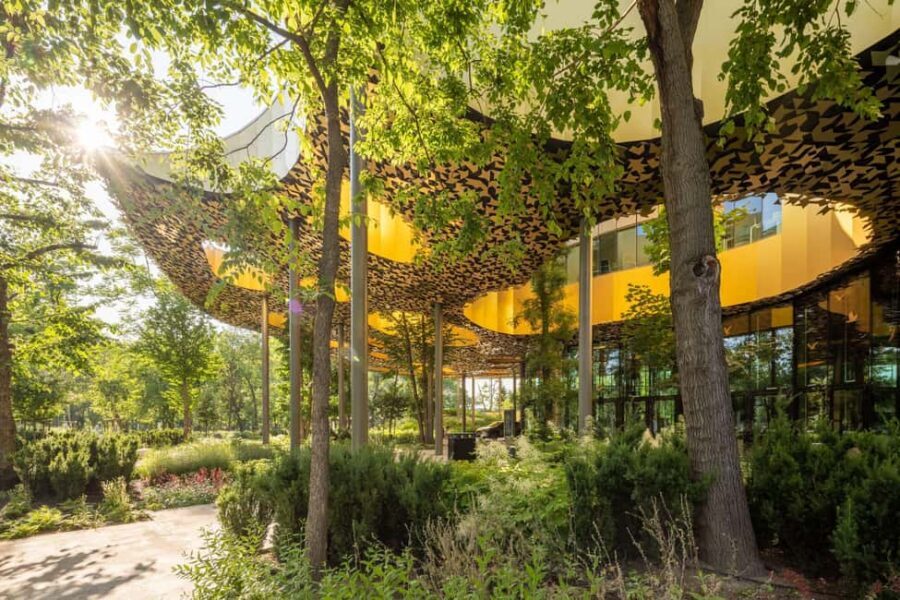
Budapest’s House of Music is one of those places where the “wow” isn’t only in the photos—it’s in how the space behaves when you walk through it. The big theme is integration: the tour keeps returning to the idea that the structure continues the park’s forms instead of fighting them.
The guide points you toward the building’s unusual silhouette: an undulating, floating-style roof and a canopy made from thousands of leaf-like metal elements. Inside, the glass walls and open volumes help you feel like you’re always connected to the outdoors, even when you’re under cover.
If you’re an architecture fan, this tour is a rare deal: you get a clear, guided explanation in English with real time spent on the structure, not just a quick glance-and-go.
You can also read our reviews of more guided tours in Budapest



Meeting in the Foyer: Where the Tour Starts and Ends
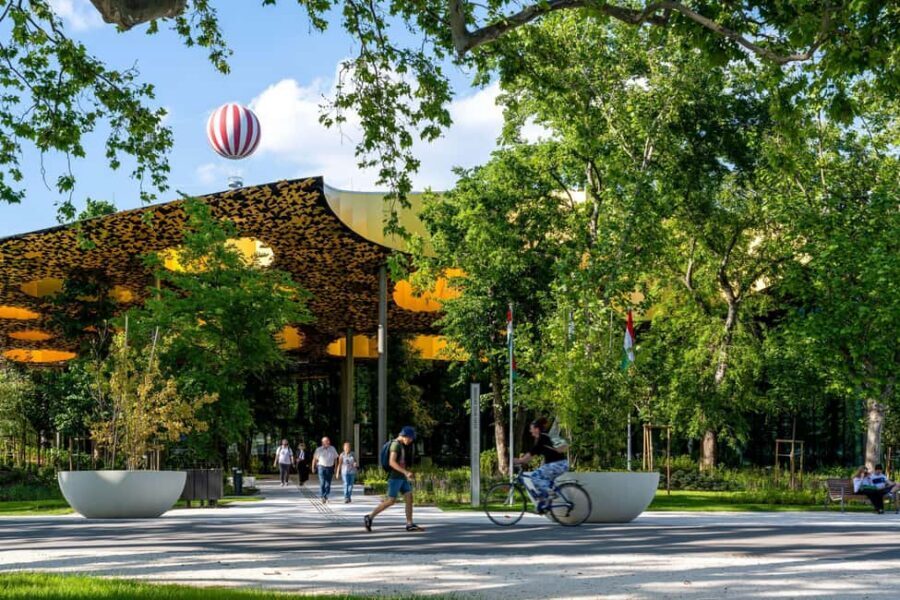
You start inside the foyer, and that’s also where the tour wraps up. It’s a practical setup. You’re not hunting for a meeting sign across the park, and you’re able to regroup at the end without a second journey.
The foyer is described as spacious, which matters because it’s where you’ll get your bearings fast. It also sets expectations: this isn’t a dark museum with corridors designed to shush you; it’s a bright, open place built to welcome people in.
A small planning tip: wear comfortable shoes. The tour is only an hour, but the building’s design encourages you to look around at levels and openings, not just march forward.
The Roof and Its “Leaf” Canopy: More Than a Visual Trick
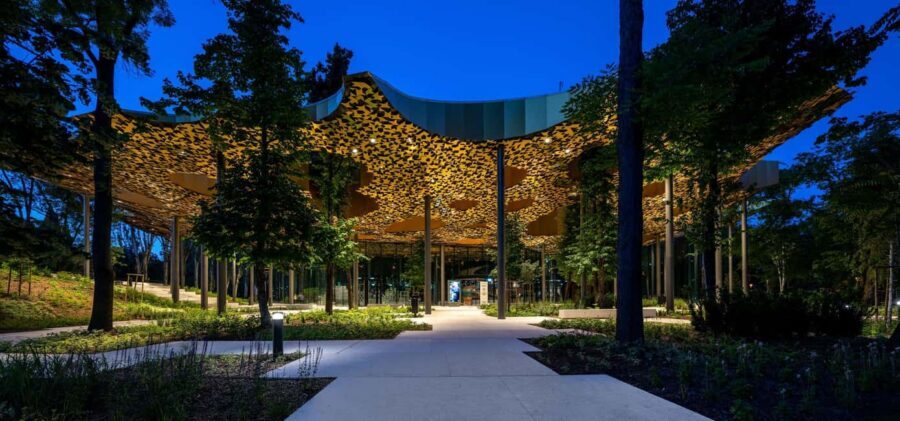
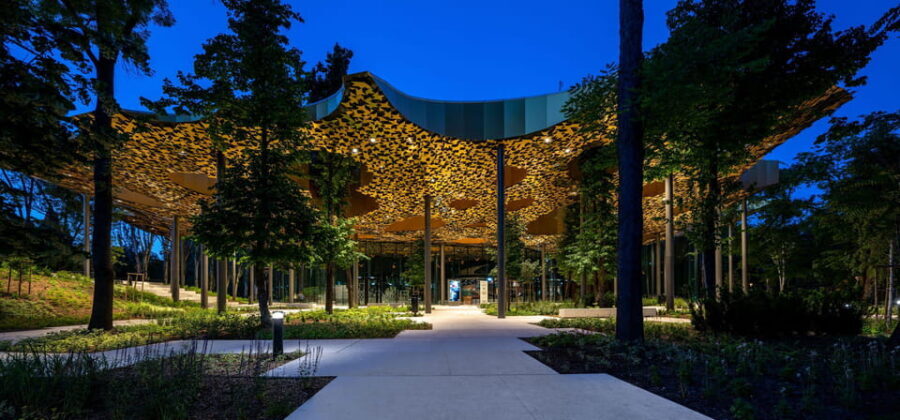
Outside first, the tour really teaches your eyes what to look for. The standout is that roofline you’ll likely notice from a distance—then the guide helps you see the details up close: a striking canopy composed of thousands of leaf-like metal elements.
Here’s the part I’d file under useful: the roof isn’t treated as decoration. The explanation ties it to acoustics and natural lighting, meaning it’s part of how the building is meant to work for performances and public spaces.
Also, the roof’s organic undulation helps the building feel less heavy than it might otherwise. In City Park, that matters. You don’t get a “block dropped onto the lawn” vibe. You get a structure that looks like it belongs to the landscape.
Inside the Glass: Daylight, Open Space, and Warm Materials
When you move into the interior, the tour emphasizes wide, open spaces and glass walls. That’s one of the reasons this visit is so easy to enjoy: you’re not stuck in dim lighting trying to decode what’s behind thick walls.
The guide also points out the construction feel. You’ll see exposed concrete surfaces and wooden elements that add warmth. Together, those materials create a contrast—cool structure outside the room, plus warmth in how the interior is finished.
A practical upside of that design: it’s easier to take in the architecture while you’re walking. If you like buildings that you can understand with your feet—through sightlines and levels—this one is made for you.
Spiral Staircase: The Stair You Actually Want to Photograph
The tour highlights the spiral staircase as a true work of art, and I’d treat it as a “slow down here” moment. This is where the architecture stops being a concept and becomes something you can appreciate from multiple angles.
Even if you’re not normally obsessed with staircases (fair), the shape and flow fit the building’s larger idea: levels, openings, movement. A spiral forces you to follow its logic, so it becomes a guided architectural moment even without the guide doing extra talking.
If you’re sensitive to crowds, go a bit quieter here. The tour schedule is short, but this is the one spot where everyone naturally pauses.






How the Building Supports Music Without a Performance
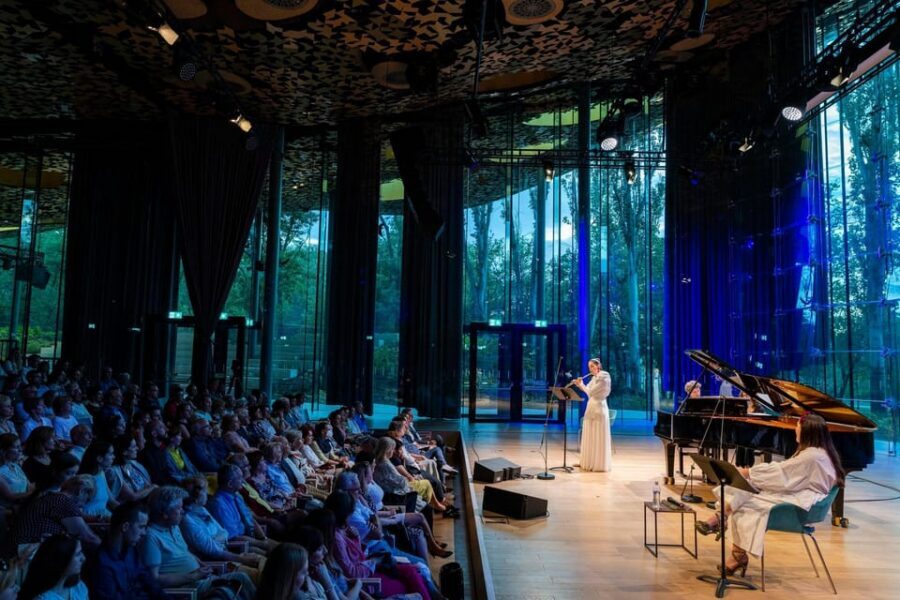
You won’t hear a concert during this tour, but the guide still makes music a core theme. They explain how the building’s shape, materials, and roof structure were carefully designed to optimize sound quality in performance spaces and public areas.
This approach is smart. It means you’re not paying for a show you can’t access—you’re paying for understanding. You get to see the logic behind the building, including how sound is treated as part of the design process.
The tour also points out levels and open spaces that are meant for community engagement and music education. The key detail: you learn about these areas even without access to the exhibitions.
So if you’re curious about how architecture can support culture, you’ll leave with a clearer picture of what this place is trying to do.
City Park Views: Why the Setting Is Part of the Experience
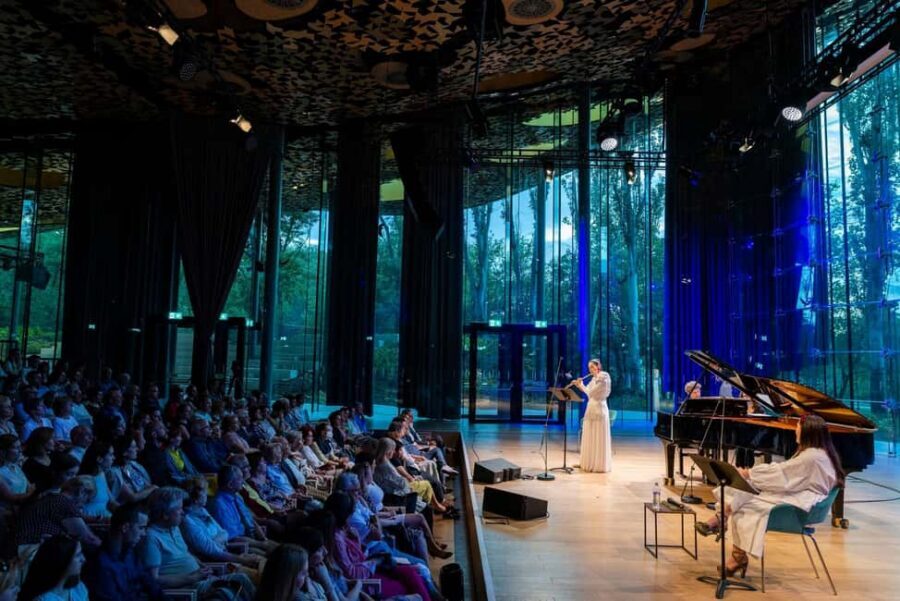
The House of Music sits inside Budapest’s City Park, and the tour uses that location on purpose. You’ll get views of the park, plus a sense of the building responding to its surroundings.
I like tours that respect the setting instead of treating it like a postcard background. Here, the building’s design is described as a continuation of the park, which changes how you read the structure while you’re there.
If the weather cooperates, plan to look up and out in a few places—not just straight ahead. The architecture and the landscape are meant to be read together.
Concert Hall, Library, Archives, and the Gift Shop
One of the best value points is what you do get access to during the hour. The guided tour includes a look at the concert hall, the library and archives, and the beautiful outdoor spaces around the building. There’s also a gift shop stop built into the experience.
Why this matters: these are major spaces that would usually require separate planning. Even if you’re mainly there for architecture, seeing where music lives and how the institution stores knowledge gives the building more meaning.
Also, the gift shop is there at the end of your visit. That’s a good timing choice. You’ll have a much better sense of what you actually saw before you start browsing.
What’s Not Included: Exhibitions and Special Sound Spaces
This tour focuses on architecture and how the building functions as a music venue. It does not include entry to exhibitions. It also does not include the Sound Dome or the Creative sound space.
So, go in with the right expectations. If you want hands-on or audio-focused content, you may need a separate ticket or a different visit timed for those areas.
On the other hand, if you care more about design, structure, and context, the exclusions make sense. The hour is kept tight so you can actually understand what you’re looking at.
Sustainability Notes You’ll Hear About While You Walk
The guide also covers sustainability features, including geothermal energy and rainwater harvesting. These details might sound technical, but they fit the overall theme: the building is presented as a thoughtful physical project, not only an aesthetic statement.
Even without deep engineering talk, it’s useful to hear that energy and water systems are part of the design plan. It reinforces why the building feels carefully engineered for long-term use.
If you like socially aware design, this is a nice extra layer—short, clear, and tied to how a public building should operate.
Price and Value: Is $13 Worth an Hour?
At around $13 per person for a one-hour guided tour in English, I think the value is strong—mainly because you’re not just paying for entry. You’re paying for an explanation that connects the roof, materials, and layout to real-world performance needs.
The biggest value drivers:
- You get guided interpretation of major architectural features like the undulating roof and spiral staircase.
- You see key spaces such as the concert hall and the library/archives during your visit window.
- You get City Park context, so the building’s design doesn’t feel like it exists in a vacuum.
If you’re traveling on a tight schedule, one hour is perfect. It’s long enough to understand the “why,” but short enough that you don’t lose a whole afternoon.
Guide Experience: When the Person Makes the Building Click
The tour reviews you can sense a pattern in what works: strong guiding makes the architecture feel alive. One English-speaking guide named Dora gets high praise for being friendly, energetic, and genuinely enjoying the job.
That kind of guide matters here because the building’s features are technical by nature—roof structure, acoustics, materials. A good guide turns those into something you can picture and remember, not jargon you forget.
So if you’re choosing a time slot, pick one that fits your day and helps you arrive with energy. A tour like this feels best when you’re ready to look up, step slowly, and ask questions.
Who This Tour Suits (And Who Might Skip It)
This guided House of Music tour is a great match if you:
- love architecture and want clear explanations in English
- care about how design affects sound and public space
- want a short, focused visit rather than a long museum session
It may be less ideal if you:
- only want exhibition content or special audio rooms like the Sound Dome
- are traveling with children under 15 (this isn’t suitable for them)
If you’re a solo traveler, couple, or small group who likes to pack in thoughtful sights, this is the kind of tour that makes your Budapest day feel intentional.
Should You Book This House of Music Tour?
Yes, I’d book it if your main goal is to understand the building, not just to check a box. The mix of architectural walkthrough, concert hall/library views, and the guide’s focus on acoustics and design integration with City Park gives you a lot of meaning for a short visit.
If you already have separate plans for exhibitions or special sound spaces, you can use this tour as the “brains first” part of your day. You’ll likely enjoy those other areas more because you’ll know what the building is trying to do.
If you want me to help you decide, tell me what else you’re doing in City Park or nearby, and I’ll suggest how to pair this with your other Budapest stops.
FAQ
How long is the House of Music guided tour?
The tour is 1 hour long. Starting times vary, so you’ll want to check availability for the time slots listed.
Is the tour available in English?
Yes. The live tour guide speaks English.
What does the guided tour include?
It includes a guided look at the House of Music’s architectural features, the concert hall, the library and archives, outdoor spaces, and a gift shop.
What isn’t included in this tour?
This tour does not include entry to exhibitions, the Sound Dome, or the Creative sound space.
Where do I meet the guide?
You start inside the foyer. The tour ends back at the same meeting point.
Is the tour wheelchair accessible, and is it suitable for kids?
The tour is wheelchair accessible. It is not suitable for children under 15.