REVIEW · BUDAPEST
Café Wandering: An Excursion through Budapest’s Belle Epoque
Book on GetYourGuide →Operated by insightcities.com · Bookable on GetYourGuide
Cafés can read like time machines. This short walk links 19th and early 20th century Hungarian architecture with the café-house culture that drew poets, artists, and writers. I like how the stories come with an art-historian lens, and I especially love the Gerbeaud interior plus the way you learn to spot Asian design motifs used in local café décor.
One heads-up: it’s a 3-hour circuit with short stop-and-look moments, not a sit-down tasting marathon. Refreshments are not included, so if you plan to eat and drink heavily at multiple cafés, you’ll add cost on top of the ticket.
In This Review
- Key Takeaways Before You Go
- A 3-hour café walk through Budapest’s Belle Epoque mindset
- Vörösmarty tér to Gerbeaud: starting with Imperial Budapest swagger
- Tram along the Danube to Central Café and Restaurant 1887
- Gerbeaud to Astoria: two flavors of classic European coffee-house grandeur
- Művész Coffee House (Artist Café): where the creative crowd fits the décor
- Urania Cafe on Rakoczi Street: film-theater culture and public lectures
- New York Palace Café and the Asian motif clue designers loved
- Kazinczy Street Orthodox Synagogue: the art nouveau curtain call
- What the guide style changes about your experience
- Price and value: what $123 buys in three hours
- Who Café Wandering fits best (and who should skip it)
- Should you book this tour?
- FAQ
- How long is the Café Wandering tour?
- Where does the tour start?
- Is the tour guided, and what language is it in?
- How big is the group?
- What is included in the price?
- Are refreshments, cakes, or coffee included?
- What is the cancellation policy?
- Can I reserve without paying right away?
Key Takeaways Before You Go
- Gerbeaud at Vörösmarty tér: over 100 years of café history, framed as a social hub of late 19th-century Imperial Budapest
- A tram ride along the Danube: the tour uses transit to connect the café stops instead of just walking in circles
- Central Café and Restaurant 1887: a dignified reference point for café-house culture at the Habsburg Empire’s height
- Architecture-first looking: you’re guided to read interiors, not just admire them
- Urania and its old film theater setting: a stop with lecture culture and Budapest’s early cinema scene in mind
- Kazinczy Street Orthodox Synagogue: the art nouveau finish that changes the mood from cafés to sacred splendor
A 3-hour café walk through Budapest’s Belle Epoque mindset
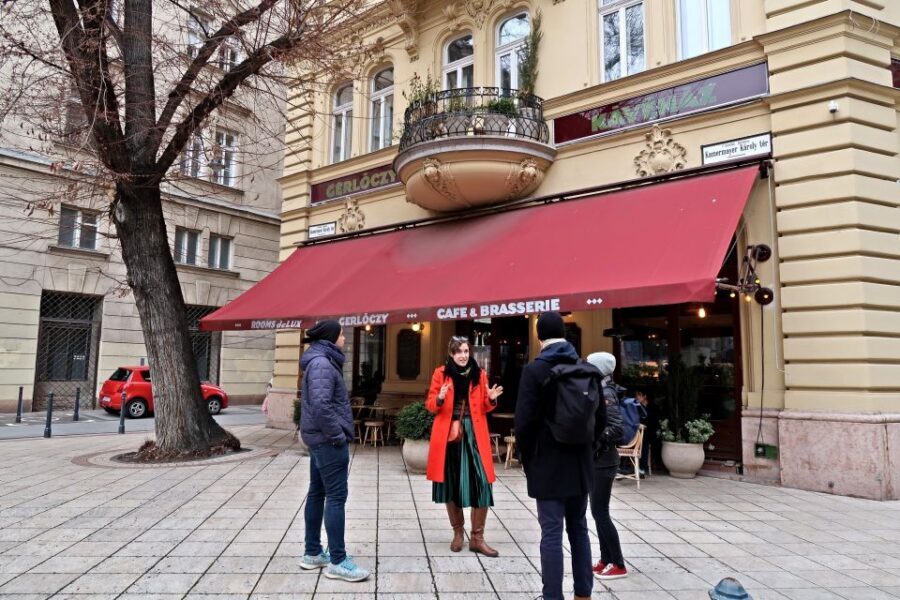
Budapest does big, dramatic things with architecture, but this tour gives you a smarter route to understand why. In only three hours, you move through iconic café interiors and learn how the cafés fit into the city’s 19th and early 20th century cultural life.
If you’re the type who looks at a building’s details and wonders who used to hang out there, you’ll get a lot out of this. You’ll also get time-efficient variety: major café stops, a ride by tram near the Danube, and then a finish at the Kazinczy Street Orthodox Synagogue.
You can also read our reviews of more tours and experiences in Budapest.



Vörösmarty tér to Gerbeaud: starting with Imperial Budapest swagger
You meet at Café Gerbeaud on Vörösmarty tér (Budapest 1051, Vörösmarty tér 7–8). It’s a fitting opener because Gerbeaud is presented as an entry point into what Imperial Budapest felt like when cafés were major social stages.
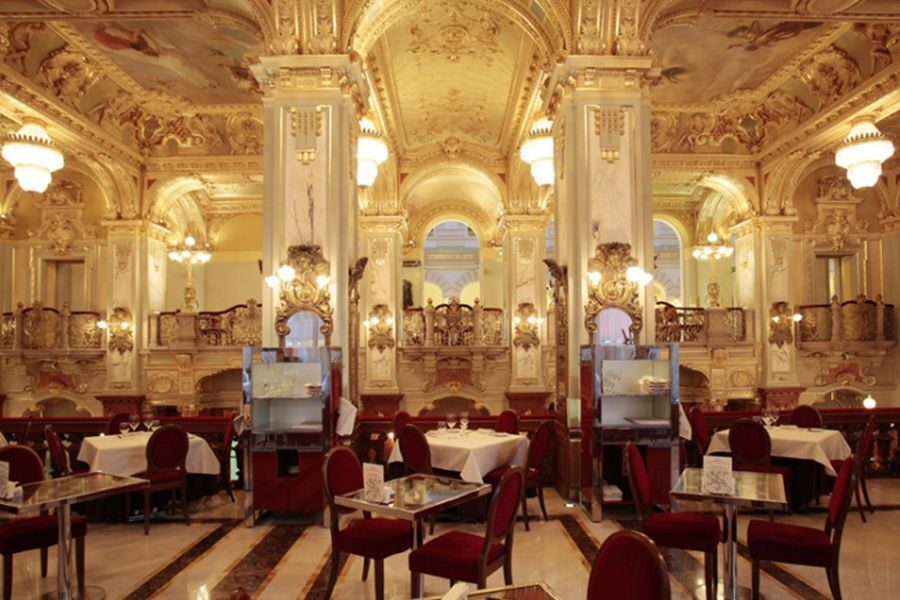
Gerbeaud’s interior is the first big “look closer” moment. The tour emphasizes that the place carries more than a century of history and was a central social hub for visitors and locals in the late 19th century. That matters because it explains the vibe you see in the room: it’s not decorative clutter, it’s part of a culture of public conversation.
I like that the guide doesn’t treat this as a photo stop only. With an art historian on board, you’re pushed to connect décor with the cultural function of the café—where people gathered, what kinds of ideas got discussed, and how status and taste were displayed in everyday spaces.
Tram along the Danube to Central Café and Restaurant 1887
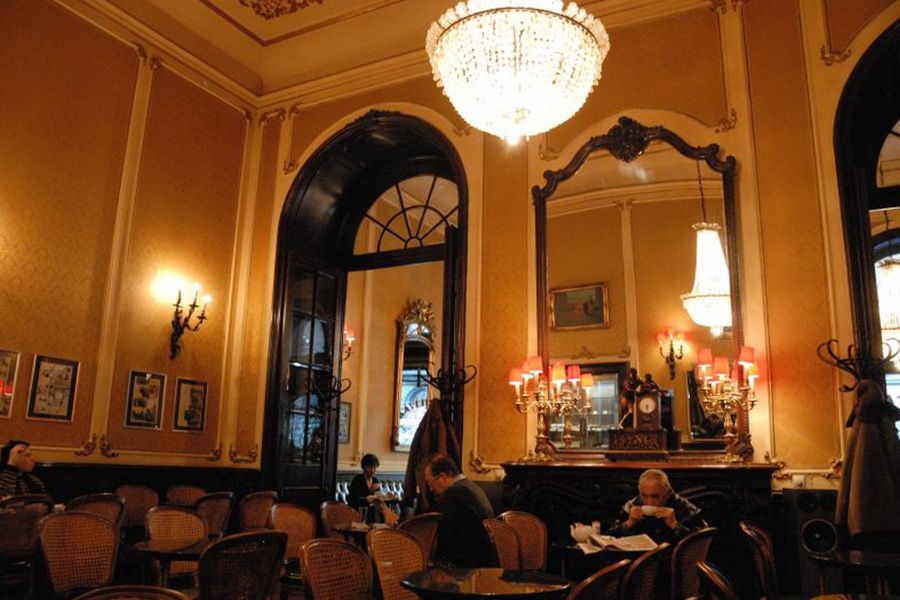
After Gerbeaud, the tour takes you by tram along the Danube to Central Café and Restaurant 1887. This is one of those practical details that makes the walk feel like a real city route, not just a string of unrelated sights.
Central Café is described as dignified, a space that epitomizes café-house culture at the pinnacle of the Habsburg Empire’s economic and cultural power in the 19th century. Your guide uses that framing to help you read the interior as a statement—both about prosperity and about the kind of public life the café supported.
There’s also a big cultural instruction built into the stop: you’re encouraged to notice how décor, meals, desserts, and drinks combine to create a sense of bygone atmosphere. In plain terms, the guide wants you to understand that the café experience is designed, not accidental. You can choose what you order later, but the point is to recognize how the entire place is meant to feel.
Gerbeaud to Astoria: two flavors of classic European coffee-house grandeur
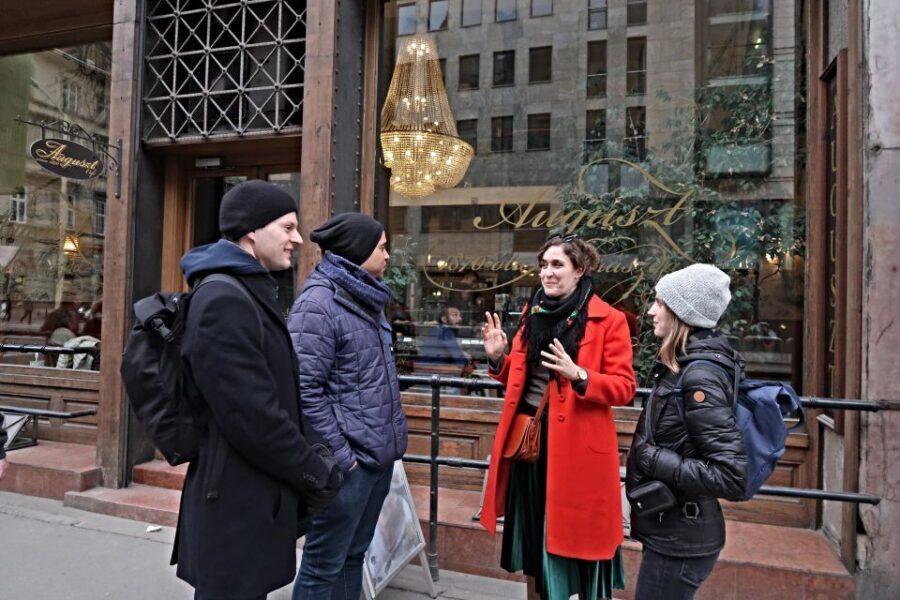
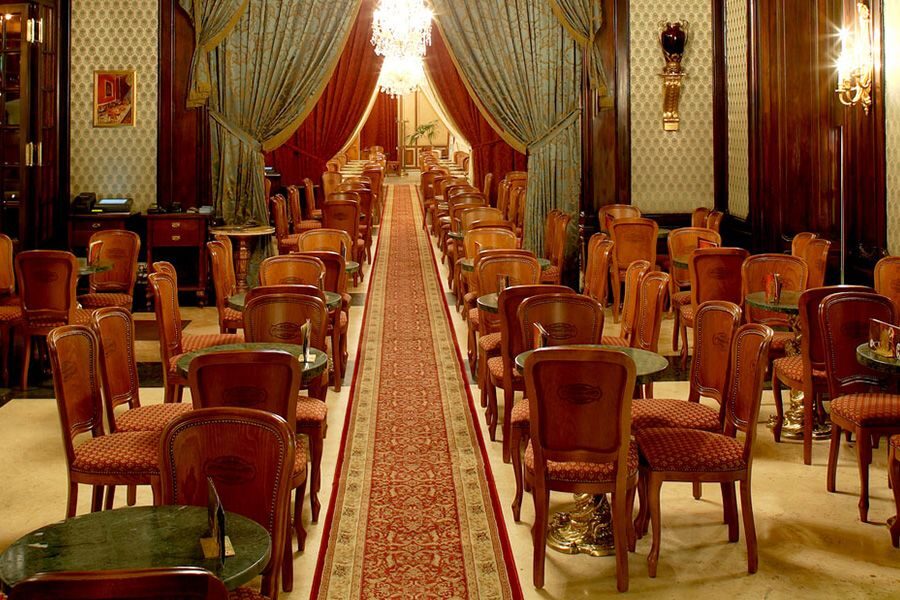
Next up is Café Astoria, known for its lavish look and its age—more than a century old. This stop is about scale and grandeur, in the way classic European coffee houses often tried to impress: the room feels like it belongs to a bigger story than a casual drink.
Your guide ties this into what people expected from cafés in that era. You’re not just admiring ornate surfaces; you’re learning what those surfaces were for—status, conversation, and a public stage for art and ideas.
If you like architectural contrasts, this is where the tour starts to feel really satisfying. Gerbeaud sets the early anchor, Central Café leans into Habsburg-era dignified prestige, and Astoria pushes the feeling toward theatrical classicism.
Művész Coffee House (Artist Café): where the creative crowd fits the décor
One of the more interesting parts of the tour is Művész Coffee House, also called the Artist Café. The name alone signals what you should pay attention to, but the guide’s art-historian angle helps you understand how café culture and creative circles fed each other.
This is a good stop if you enjoy the human side of architecture. You don’t just hear that cafés mattered—you learn how artists and writers used these spaces as meeting points, and how the rooms reflected that kind of social energy.
Practical note: because the tour is only three hours total, you won’t have time to fully “live” in each café. What you can do is use the time wisely—look first, then decide if you want to sit longer after the tour is over.






Urania Cafe on Rakoczi Street: film-theater culture and public lectures
On Rakoczi Street, you’ll get to Urania Cafe, which houses the oldest film theater in Budapest. That detail turns the stop into more than café décor—it links you to Budapest’s early cinema culture and the social scene around it.
Urania is also described as a place known for lectures given by prominent intellectuals before large audiences. That’s a key idea to walk away with: cafés weren’t only about coffee and cake. They were part of a broader “public life” system, where talks, ideas, and art events could happen in the same cultural ecosystem.
This stop also helps you understand why the tour spends time on stories. Architecture tells you what a society valued. Urania helps you see where those values were shared out loud.
New York Palace Café and the Asian motif clue designers loved
The tour continues to New York Palace Café, where you get a guided visit. This is where the experience leans harder into interior details—how designers built visual worlds inside everyday venues.
One highlight you’re specifically prompted to look for is the presence of Asian motifs and elements used by designers across the stops. Since the tour isn’t a museum crawl with a single exhibit, the best way to use this information is to treat it like a visual scavenger hunt. When you see patterns, stylized ornament, or decorative references that feel culturally specific, pay attention to how your guide explains their use in a Hungarian setting.
I find this kind of framing useful because it stops the tour from becoming only about “pretty rooms.” It becomes about taste in a period when European cities were exchanging design influences and showing them off in public spaces.
Kazinczy Street Orthodox Synagogue: the art nouveau curtain call
You finish at the Kazinczy Street Orthodox Synagogue, described as fascinating and tied to art nouveau style. Ending here works because it shifts you from café culture to spiritual architecture—same era energy, different purpose.
The synagogue is positioned as a strong finale, and that makes sense. After looking at the social stage of cafés, you get a moment where architecture takes on a different kind of meaning and symbolism. Even if you don’t know the religious details, you’ll likely enjoy how the design language feels of the same time period and still manages to be distinct.
If you’re someone who likes architecture as storytelling, this stop is your payoff. It turns the tour’s theme into a broader idea: how people expressed identity, community, and taste through the buildings they lived around.
What the guide style changes about your experience
This tour’s guides are described as art-history professionals—professors, doctoral students, historians, journalists, art critics, and published authors. That matters in a practical way: you’ll get explanations that connect the décor to the historical moment.
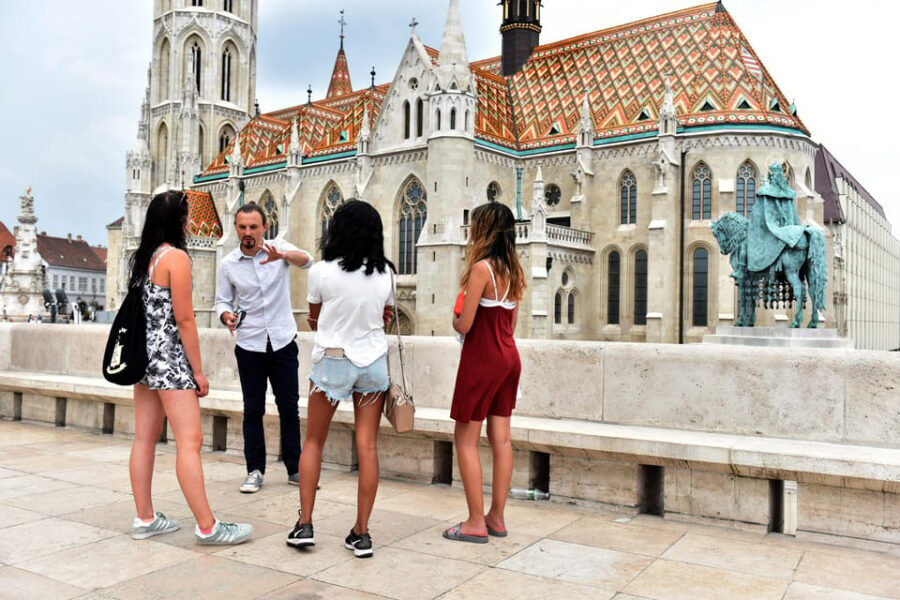
One small-group review highlights the guide Kota as excellent, which fits the overall promise. You’re in a group limited to 8 participants, which makes it easier for a guide to keep explanations clear instead of rushing. With a small group, you can also ask questions when something catches your eye.
English is the tour language, so you’re not translating in your head while trying to read decorative details. In a tour like this, clarity is half the value.
Price and value: what $123 buys in three hours
At $123 per person for a 3-hour guided walk, you’re paying for two things: a structured, expert-led route through several high-impact interiors and the historical interpretation that connects them.
Refreshments are not included, which is worth budgeting for. You can treat the café visits as primarily visual and interpretive during the tour, then decide whether you want coffee or cake later. If you expect multiple full tastings across the route, you’ll likely spend more than the base price.
Here’s the value angle that convinced me this is a smart use of time for the right person: you get several landmark café experiences plus the synagogue in one compact block. If you tried to do this independently, you’d spend time figuring out routes, timings, and what to actually notice in each interior.
Who Café Wandering fits best (and who should skip it)
This tour fits best if you want Budapest culture with a visual and historical backbone. You’ll probably enjoy it if you care about:
- architecture and interiors, not just exteriors
- café culture as part of everyday public life
- the way design styles can show up in unexpected places like cafés and cinemas
It’s less ideal if you want a long, food-centered evening with lots of sitting time at a single café. This is a walking tour with short stops, and the guide’s focus stays on interpretation rather than a full restaurant meal.
If you’re traveling with limited time but you still want a meaningful slice of Budapest’s Belle Epoque vibe, this is a clean option.
Should you book this tour?
I’d book it if your travel style includes looking carefully and learning as you go. The combination of Gerbeaud, Central Café, Astoria, artist-centered café stops, and the Kazinczy Street Orthodox Synagogue gives you a strong mix of social and architectural storytelling in just three hours.
Skip it if you mostly want a casual café crawl where the emphasis is on unlimited pastries and drinks. Since refreshments aren’t included and the pace is built for seeing multiple places, you’ll get more out of it by planning to treat cafés as part of the tour experience, not the whole experience.
FAQ
How long is the Café Wandering tour?
The tour lasts 3 hours.
Where does the tour start?
It starts at Café Gerbeaud, Vörösmarty tér 7–8, 1051 Budapest.
Is the tour guided, and what language is it in?
Yes. It’s a live guided tour in English led by an art historian.
How big is the group?
The group is small, limited to 8 participants.
What is included in the price?
The price includes the 3-hour guided walk and the art historian guide.
Are refreshments, cakes, or coffee included?
No. Costs of refreshments, cakes, and coffees selected at the cafés are not included.
What is the cancellation policy?
Free cancellation is available up to 24 hours in advance for a full refund.
Can I reserve without paying right away?
Yes. You can reserve now and pay later to keep your travel plans flexible.