
REVIEW · BUDAPEST
Hungary today: a no-taboo conversation
Book on Viator →Operated by Budapest Explorers · Bookable on Viator
Politics, but in plain human language. This Budapest experience turns a café stop into a no-taboo talk about Hungary’s recent past and tricky present, from Communism-to-democracy to today’s illiberal democracy debate.
What I like most is the format: small group size (max 6) and a host-led intro followed by an open Q&A where you can ask about controversial politics, the economy, and the future. One drawback to consider: this is not a sightseeing tour. If you want moving views and multiple photo stops, you may find the one-stop conversation style less satisfying.
In This Review
- One café stop, two layers of Hungary
- The 90-minute format: an intro, then your questions
- Communism to democracy: how the host frames the last 30 years
- Illiberal democracy in the conversation you actually want
- Budapest beyond the postcards: politics meets everyday life
- Why Bambi Café works so well for a no-taboo talk
- Price and value: what you’re really paying for
- Who should book (and who might skip it)
- Bringing the right mindset to a no-taboo conversation
- Should you book Hungary Today: a no-taboo conversation?
- FAQ
- How long is the experience?
- Where do we meet?
- Is it a mobile ticket?
- How big is the group?
- What topics are covered?
- Is cancellation free?
One café stop, two layers of Hungary

You meet at Bambi Café, address Frankel Leó út 2-4, 1027 Hungary. The cool part is that it’s described as a cult café that has changed close to none since the 1970s. So you’re not just sitting down somewhere convenient. You’re starting your conversation in a setting that fits the theme: continuity, memory, and how a place carries politics even when nobody says the word out loud.
This matters because the tour’s whole promise is to get past slogans. The host frames the discussion around Hungary’s modern era, especially the last 30 years, then opens the floor for whatever you’re really wondering about. You’re not stuck with a script only. You’re invited into a real exchange.
And since the café stop is the only planned stop, you don’t burn energy walking or scrambling between sites. You can focus on the conversation—what changed, what didn’t, and what it all means in everyday life.
The 90-minute format: an intro, then your questions
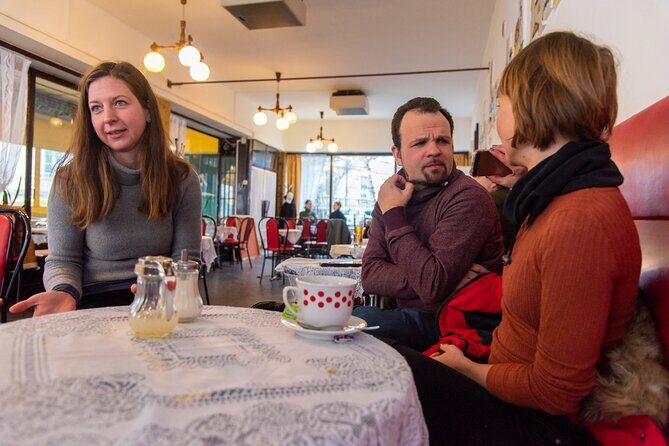
The experience is about 1 hour 30 minutes. It runs as a two-part flow:
First comes an intro that covers Hungary’s modern era, with attention to historical, economic, and political angles. The goal is not to overwhelm you. It’s to give enough context so that your later questions don’t float in the air.
Then the tone shifts. This is when the tour truly earns its name: it becomes a conversation where you can ask anything you want about Hungary—turbulent past, current controversies, the direction things might go, and the host’s personal opinions.
That second part is where this kind of tour pays off for you. In a group tour, you often spend your time listening. Here, you get a chance to steer. If you’ve been Googling and still feel confused, this is the moment to ask clearly: what’s misunderstood, what’s exaggerated, and what’s genuinely debated inside the country?
A practical tip: come with two or three questions you’d ask if you were talking to a smart friend at the next table. You can keep them simple. For example:
- What does people’s everyday life look like under the current system?
- Why do some people use the term illiberal democracy, and why do others reject it?
- How do economics and politics show up in real decisions, not just headlines?
No need to prepare a thesis. Just bring curiosity and a willingness to hear an honest answer.
You can also read our reviews of more tours and experiences in Budapest.



Communism to democracy: how the host frames the last 30 years
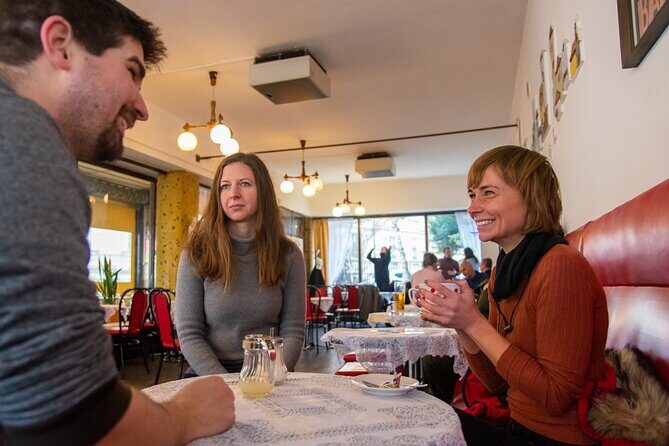
The tour is built around the idea that Hungary’s recent past still shapes today’s arguments. You’ll hear facts and opinions on the shift from Communism to democracy, and then how the conversation changed again in the past few years with the creation of “illiberal democracy.”
What I appreciate about framing like this is that it helps you stop treating politics as a separate topic from daily life. When you understand the logic of earlier transitions, the current debates start to make more sense. You don’t have to agree with any side. You just see the moving parts.
Just as important: the host doesn’t aim for comfort. The description calls out honesty and a willingness to answer questions—so you can expect the discussion to touch uncomfortable territory. That’s valuable if you’re the type of traveler who wants clarity, not a polished story.
Illiberal democracy in the conversation you actually want
The phrase “illiberal democracy” is the big hook in the experience title and overview, and it’s also the kind of topic that can turn into shouting if you’re not careful. Here, it’s handled as a guided conversation rather than a debate club.
You’ll likely get a balanced sense of how people talk about the current system: what supporters claim it solves, what critics fear it undermines, and why the word itself still triggers strong reactions. You also get the host’s opinions, which is part of what makes this different from a textbook-style lecture.
If you’re worried that this might be one-sided, that’s a fair concern for any politically focused experience. The best signal in the tour description is that it welcomes questions and aims to answer them directly. A tour like this works when you treat it like a two-way street: you ask, the host responds, and you compare what you thought you knew with what the other side actually says.
Budapest beyond the postcards: politics meets everyday life
Even though you’re in Budapest, the host’s intro is not limited to monuments or city views. The overview explicitly says the talk covers Budapest and beyond, and you’ll hear opinions on just about everything regarding the city and the wider country.
That matters because Budapest can feel like a “Europe postcard” if you only skim the surface. A conversation format helps you connect the big political story to the smaller, personal story: how people explain change, how they judge leadership, and how they interpret the economy.
One clue comes from how guests describe the experience: the discussions aren’t only about Hungary in isolation. They reach outward, linking what happens in Hungary to broader global questions. So if you came to Budapest wanting to understand not just the past but the present’s place in a wider world, this style is a good fit.
And since the group is capped at 6 travelers, the host can actually respond to what you bring up. That’s usually the difference between “interesting talk” and “I walked away thinking.”
Why Bambi Café works so well for a no-taboo talk
A lot of “themed” experiences pick a dramatic venue. This one uses something quieter and more stubbornly real. A café described as unchanged since the 1970s creates a built-in time machine.
You get two benefits from that:
- The setting matches the topic. You’re talking about modern history, political systems, and the way ideas evolve. A café with long continuity helps those themes feel grounded.
- You can stay focused. No constant movement means you’re not constantly refocusing your body and your attention. The conversation stays central.
Also, the stop is listed as admission ticket free, and the experience uses a mobile ticket. That combination is practical for you if you like low-friction activities: you can show up, check in, and get to the human part quickly.






Price and value: what you’re really paying for
The price is $40.52 per person for about 1 hour 30 minutes. On paper, that may sound high if you compare it to a standard walking tour.
But here’s the value logic I’d use: you’re paying for access—access to context, access to a local perspective, and access to a real Q&A rather than a one-direction lecture. A political conversation with a sharp host can save you hours of reading and chart-hunting, because you can ask direct questions in the moment.
This is especially valuable if:
- You’ve already seen a lot of Budapest and want meaning, not just motion.
- You understand some modern history but want the current situation explained in human terms.
- You want to compare your assumptions with another view without being talked down to.
If you’re hoping for guided museum tickets or a planned route full of sights, the price might not feel like the best deal. If you want a smart, honest conversation, it often feels like money well spent.
Who should book (and who might skip it)
This tour fits best if you like discussion and you’re comfortable with big topics. It’s built for a mindset: questions are welcome, controversy can appear, and the host will answer as directly as possible.
You’ll probably enjoy it if you:
- Want an insider’s angle on politics and economics, not just a summary.
- Like hearing how people interpret the last 30 years and what they think is changing now.
- Prefer a small group setting where you can speak up.
You might want to pass if you:
- Want an itinerary packed with attractions.
- Feel uneasy with political talk in close quarters.
- Prefer purely neutral, no-opinion sightseeing experiences.
One good sign from past guests is that people describe the host as giving deep discussion not only about Hungary but also about the world. If you’re the type who thinks in systems, you’ll likely feel that payoff.
Bringing the right mindset to a no-taboo conversation
This experience works best when you show up with a mix of curiosity and respect. No-taboo doesn’t mean rude. It means the conversation won’t dance around the hard parts.
Here are a few ways to get more out of the hour and a half:
- Ask for examples. When you hear a big claim, ask how it shows up day-to-day.
- State your assumption gently. For example: I thought X was the reason, but what’s the real story?
- Follow the thread. If the host mentions economics or politics links, ask how they connect.
And because the group is small, you’ll likely get more than one chance to ask. Even so, don’t worry about perfect wording. The host’s goal is to answer questions, not test your phrasing.
Should you book Hungary Today: a no-taboo conversation?
If you want Budapest to feel more than scenic, book it. This is one of the rarer tour types where the main attraction is a thoughtful, local-led conversation about the country’s recent transitions—from Communism to democracy, and into today’s “illiberal democracy” debate.
I’d especially recommend it to you if you’ve been to Budapest before or you’ve already started learning the basics and you want the contemporary picture explained in plain language. The Bambi Café meeting point, the low-friction mobile ticket setup, and the small group size all support the big idea: talk first, facts second, and your questions in the center.
Skip it only if you’re hunting for a classic sightseeing day. This is a conversation tour. If you treat it like one, you’ll likely leave with clearer questions of your own—and a better sense of what Hungary sounds like when you hear it from inside the discussion.
FAQ
How long is the experience?
It lasts about 1 hour 30 minutes.
Where do we meet?
You meet at Bambi Café, Frankel Leó út 2-4, 1027 Hungary.
Is it a mobile ticket?
Yes, it uses a mobile ticket.
How big is the group?
Maximum group size is 6 travelers.
What topics are covered?
The discussion includes Hungary’s recent past and present, focusing on changing from Communism to democracy and the idea of “illiberal democracy,” plus topics related to Budapest and beyond. A Q&A lets you ask about politics, the turbulent past, the uncertain future, the economy, and the host’s opinions.
Is cancellation free?
Yes. You can cancel up to 24 hours before the experience for a full refund.