REVIEW · BUDAPEST
Budapest Art Nouveau Walking Tour
Book on GetYourGuide →Operated by insightcities.com · Bookable on GetYourGuide
Budapest turns corners into style lessons. In this 3-hour Budapest Art Nouveau walking tour, you walk past facades that look like they were designed for postcards and then you learn what the details actually mean. I love how the Royal Post and Gresham Palace both let you step into the entrance hall areas, so you get to see real interior design thoughts, not just guesses from the sidewalk.
The best part is the explanation of Hungarian Secession, especially how Ödön Lechner used porcelain and Asian motifs to create a style that feels both local and internationally inspired. One thing to consider: a couple of top interiors can be closed on specific days (weekends at the Hungarian National Bank, and the Orthodox Synagogue on Saturdays), so your route may shift and optional paid stops can come up.
In This Review
- Key things I’d watch for on this tour
- Why Budapest’s Art Nouveau isn’t just decoration
- The 3-hour walk: pace, focus, and what you’ll actually see
- Meeting point options: Madal Café or your central pickup
- The Palace of the Royal Post: Ödön Lechner’s flamboyant lesson
- Gresham Palace: facades and interiors that reward close looking
- Bedö House and the Hungarian State Treasury: design ideas in civic spaces
- Zsolnay porcelain and the Pécs connection: more than a local brand
- Thonet House and the porcelain-tile detail spotting
- Paris passage and Rózsavölgyi utca: when the style turns into a street-level show
- Kazinczy Street Orthodox Synagogue: the finish that locks it all together
- Price and value: what $123 buys you in Budapest terms
- Planning tips: closures, day-of-week changes, and smart flexibility
- The guide experience: how it feels on the ground
- Who should book this tour?
- Should you book this tour?
- FAQ
- How long is the Budapest Art Nouveau Walking Tour?
- What does the tour cost?
- Is the tour a walking tour?
- What language is the guide?
- Are tram and metro tickets included?
- Where do we meet if pickup isn’t chosen?
- Which Art Nouveau buildings are the main focus?
- Are entrances included inside the buildings?
- What happens if the Hungarian National Bank or the synagogue is closed?
Key things I’d watch for on this tour
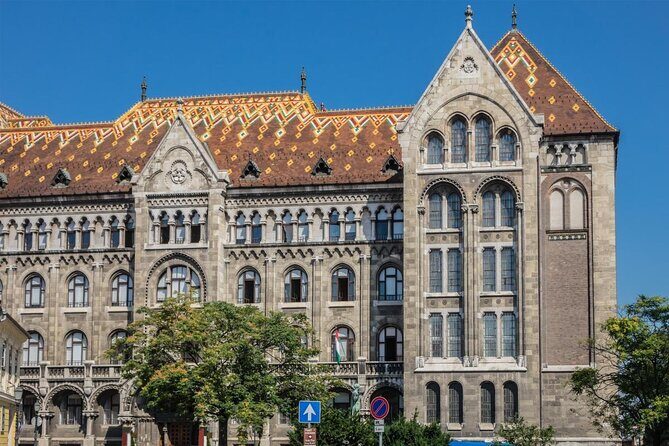
- Royal Post by Ödön Lechner: the flamboyant statement you’ll hear compared to Hungary’s Gaudí
- Entrance-hall access: you can take in exterior details and then get a peek inside
- Zsolnay porcelain tiles: you’ll connect ceramic art from Pécs to what you see on facades
- Asian motifs explained: you’ll learn how both Eastern-inspired ideas and European Orientalism shaped the look
- Gresham Palace interiors and facades: it’s one of the best places to see Belle Époque glamour up close
- Kazinczy Street Orthodox Synagogue finish: a satisfying ending when it’s open
Why Budapest’s Art Nouveau isn’t just decoration
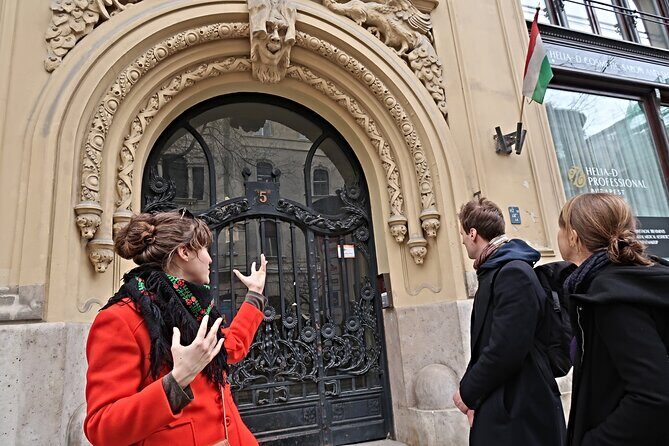
Budapest doesn’t treat Art Nouveau like an outfit you wear for a season. It treats it like identity. The city’s turn-of-the-century design scene is tied to Hungarian Secession, the local version of the broader Art Nouveau wave across Europe.
What makes this tour click is that it doesn’t stop at pretty lines. You get an explanation of how Hungarian designers, led by Ödön Lechner, used materials and symbols—especially porcelain and Asian motifs—to build a look that feels modern and ambitious. The city’s story is part architecture, part applied arts, part culture. You’ll come away with a sharper eye for why the buildings look the way they do, and what designers were trying to say with patterns, ceramics, and ornament.
You can also read our reviews of more walking tours in Budapest

The 3-hour walk: pace, focus, and what you’ll actually see
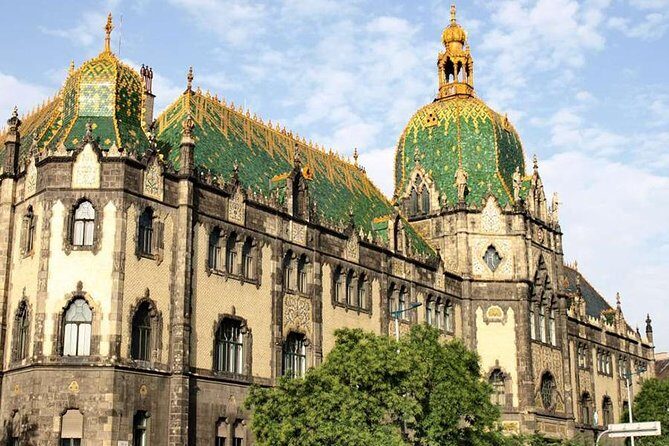
This is a 3-hour walking tour, and it’s built around short, high-impact stops. You’re not touring one giant museum after another. Instead, you’re moving through an urban gallery of buildings and interior spaces, with a historian guide keeping the design connections clear.
You’ll spend time at major addresses and then connect them to smaller Art Nouveau moments along the way: a flower shop with an original interior, a department store, several bank offices, a small Art Nouveau museum, and a coffee house stop. That matters because Hungarian Secession shows up not just in “fancy buildings,” but in everyday commerce too.
Also note one practical detail: tram and metro tickets aren’t included. You’ll be doing the walking as planned, but you’ll want to have a plan for getting to the start point.
Meeting point options: Madal Café or your central pickup
If you choose the pickup option, the start point can be arranged to match your hotel or holiday flat. If you prefer to meet centrally instead, you’ll gather at Madal Café, Budapest, Alkotmány u. 4.
Either way, you’ll want to show up a few minutes early. For walking tours that include entry-hall time in specific buildings, timing is everything—especially on days when closures force route adjustments.
The Palace of the Royal Post: Ödön Lechner’s flamboyant lesson
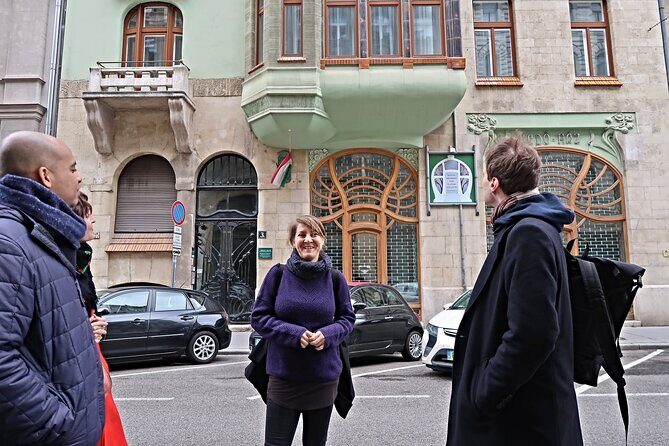
One of the tour’s big attractions is the Palace of the Royal Post, also called the Postal Bank. This is the famous Ödön Lechner work people describe as Hungary’s Gaudí, and that comparison isn’t just marketing fluff. You can see the playful energy right on the facade and in the way the design feels built to impress.
What I like most: you can actually get inside the entrance hall area. That means you’re not stuck playing guess-the-detail from the street. You’ll look at the same kinds of design choices—line, surface, and decorative structure—and then hear how Art Nouveau thinking gets translated into real space.
Even if you only love architecture for the visual payoff, this stop gives you a framework for the rest of the walk. After the Postal Bank, the other buildings make more sense.
Gresham Palace: facades and interiors that reward close looking
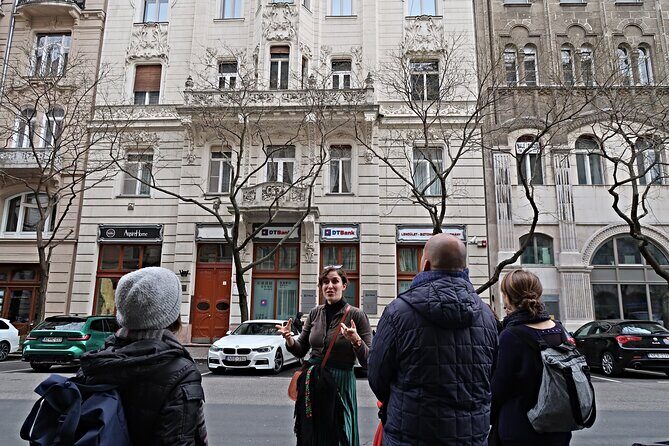
Then you move to Gresham Palace, another major highlight. The outer look is the obvious draw: elegant, dramatic, and very much “early 20th century Budapest.” But the real win is that you can admire the interior design as well, at least via the entrance hall area, while your guide explains the Art Nouveau elements.
This stop is where you can practice what the guide teaches. Notice how ornament isn’t random. It follows a design logic: how surfaces are framed, where attention is pulled, and how decorative choices support the building’s identity.
If you’re wondering why Art Nouveau matters beyond beauty, Gresham Palace is a good answer. It shows how style can signal wealth and cosmopolitan confidence—exactly the vibe Budapest was selling to the world at the time.





Bedö House and the Hungarian State Treasury: design ideas in civic spaces
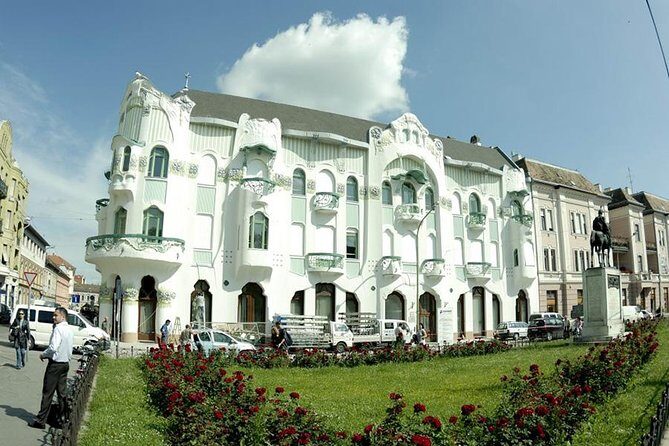
The tour includes Bedö House and the Hungarian State Treasury. These aren’t just “pretty” stops. They’re a reminder that Hungarian Secession wasn’t limited to grand hotels and theaters. It appears in institutions and addresses tied to money, administration, and public life.
That’s important for your perspective. When you only look at Art Nouveau facades, you can miss how the movement worked across different types of buildings. In these stops, the guide helps you connect the visual language to where the building fits in city life.
If you’re the kind of person who notices craftsmanship—how materials are used, where emphasis is placed, how decoration behaves—you’ll likely enjoy these stops even if they aren’t as famous as the Postal Bank.
Zsolnay porcelain and the Pécs connection: more than a local brand
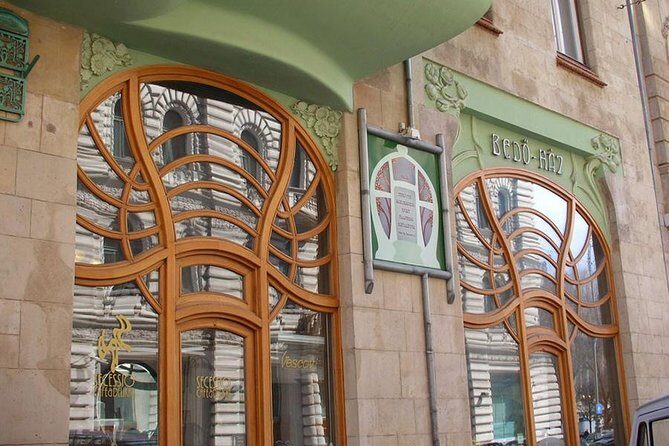
Here’s where the tour becomes educational in a useful way. Hungarian Art Nouveau is strongly associated with Zsolnay porcelain tiles, and you’ll examine ceramics linked to the renowned Zsolnay factory in Pécs.
This isn’t just trivia. Seeing Zsolnay design language helps you interpret what you’re looking at outdoors. Porcelain tiles can handle complex patterns, resist weather better than many materials, and let designers create glossy, sculptural-looking surfaces. That’s why these buildings can look so crisp years later.
The tour also uses this theme to explain broader influences. You’ll hear about the use of Asian motifs and elements, often connected to perceived eastern origins of the Hungarian nation. You’ll also get the other side of the story: European-wide Orientalism, which shaped Art Nouveau across the continent.
So you’re not only learning what’s on the building. You’re learning why designers reached for those symbols.
Thonet House and the porcelain-tile detail spotting
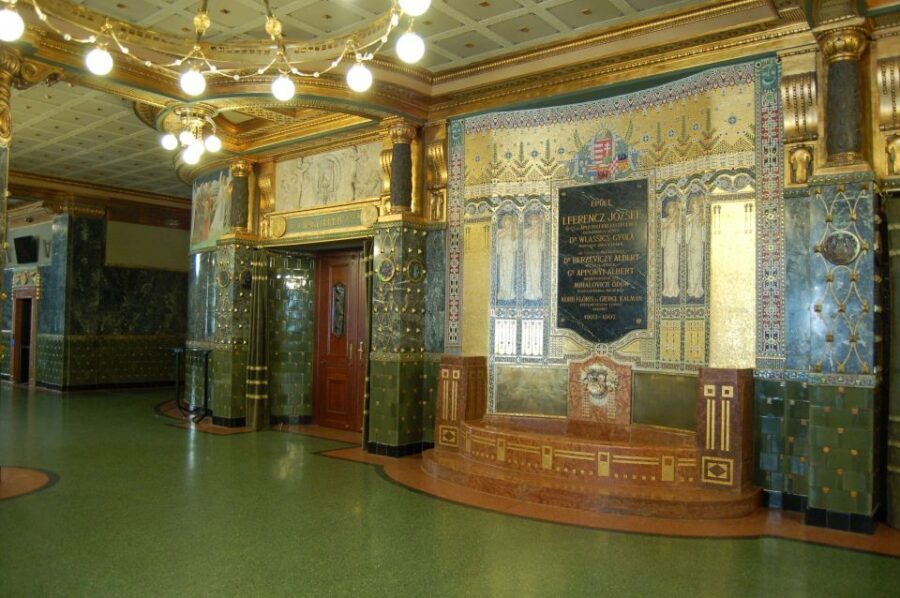
Along the route, you’ll also see work connected to Thonet House, including the use of Zsolnay porcelain tiles on the facade.
This is the kind of stop where your eyes should slow down. Porcelain tile design can include repeating motifs, decorative borders, and surface transitions that look almost like the building is wearing jewelry. If you’re used to plain stone or stucco facades, this feels different right away.
The tour’s explanation helps you interpret the design choices, including Asian-inspired elements used by the designers. Whether you view those motifs as cultural references or as a style trend influenced by Orientalism, you’ll be better able to recognize them and connect them to Hungarian Secession.
And because the walk includes other smaller Art Nouveau interiors—a flower shop, a department store, and bank offices—you’ll start seeing the same design vocabulary across different kinds of urban spaces.
Paris passage and Rózsavölgyi utca: when the style turns into a street-level show
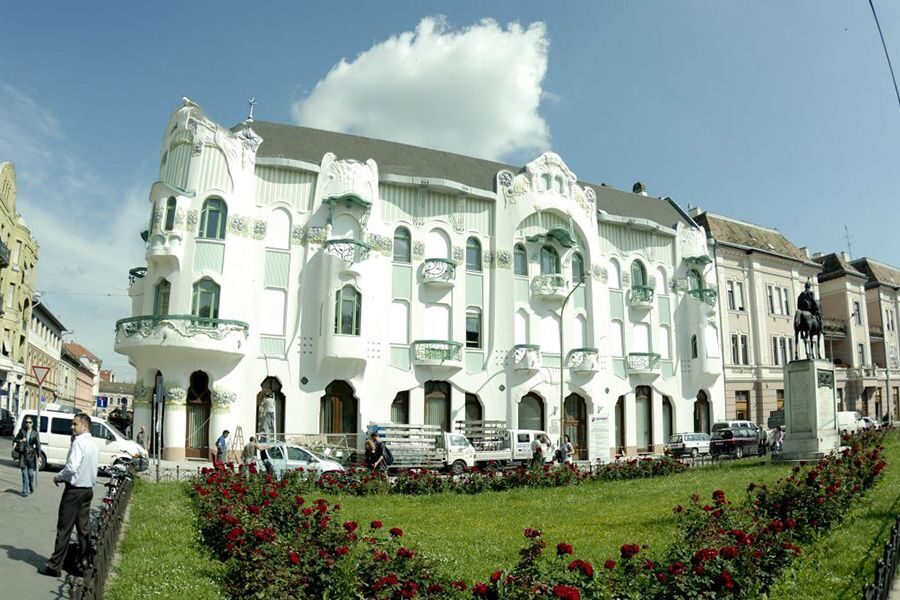
Not every Art Nouveau moment is a standalone monument. The tour also takes you through spaces like Paris passage and Rózsavölgyi utca, where you can spot the style in a more everyday setting.
These are good stops for practical vision skills. You’ll see how ornament and design details can thrive in narrow, commercial areas, not just wide plazas. That’s also why this tour feels like a city experience rather than a checklist.
One of the small delights is that the itinerary includes a small Art Nouveau museum and a coffee house. Those breaks keep the pacing humane and give you chances to reset your brain between architectural heavy hitters.
Kazinczy Street Orthodox Synagogue: the finish that locks it all together
The tour is designed to end at the Kazinczy Street Orthodox Synagogue, and when it’s open, the Art Nouveau interior helps you make sense of everything you saw earlier. It’s one thing to admire facades. It’s another to see how the style works inside a space with its own ritual purpose.
You should know the timing caveat: the synagogue is closed on Saturdays. If your day falls there, the tour can be adapted to match your interests or extended to include other Art Nouveau-related stops around the city.
If the synagogue is open on your day, expect an ending that feels purposeful. By then, you’ve already learned the big design themes—porcelain tiles, Hungarian Secession ideas, and the motif language—so the interior can hit harder, not just impress.
Price and value: what $123 buys you in Budapest terms
The tour costs $123 per person and runs about 3 hours with a historian guide. That’s not a “cheap and cheerful” add-on, so the value comes from a few concrete factors.
First, you get design context from an expert who’s there to connect buildings and symbols. You’re paying for clarity, not just walking time. Second, the tour includes entrance hall access for two important buildings, so you’re not limited to exterior photos.
Third, the stops include a mix of major monuments and smaller interiors (including an Art Nouveau museum and coffee house stop), which helps you understand the style in real city life.
What could affect your total cost: additional entry fees may apply if extra sites are included on your day. The House of Hungarian Art Nouveau can require 1000 HUF per person (about $3.50), and the Kazinczy Street Orthodox Synagogue can require 2000 HUF per person (about $7.00). Also remember tram and metro tickets aren’t included.
So yes, $123 is a decision. But if you care about architecture and want to understand the why behind what you see, it feels like money spent well.
Planning tips: closures, day-of-week changes, and smart flexibility
Budapest is great, but certain interiors depend on the calendar. On weekends, you can’t enter the Hungarian National Bank, which contains fine examples of Zsolnay porcelain. And the Orthodox Synagogue is closed on Saturdays.
The good news is the tour can adapt. If those sites aren’t available, you can get alternative Art Nouveau stops, such as the Gellért Bath Hotel, the Museum of Applied Arts, and the Geology Museum.
If you want to keep your plans smooth, think about scheduling this tour for a day when the synagogue is likely open and when the Hungarian National Bank entry isn’t the main attraction. But don’t stress too much if your day is tricky; the whole point of the design is flexible routing based on access.
The guide experience: how it feels on the ground
This tour is led by an English-speaking historian guide, and the quality matters here because the style is detail-heavy. When your guide connects Ottoman-inspired motifs, Hungarian Secession goals, and the material choices behind the facade work, the tour becomes more than sightseeing.
One review highlighted a guide named Anna as friendly and very educated in art and history of Budapest. Another mentioned very good German skills. Even if your tour language is English, it’s a good sign that guides can handle questions with confidence.
If you like asking why a building looks the way it does, you’ll likely enjoy this format. If you prefer zero talking and only photos, you might find you want to spend more time outside each stop on your own.
Who should book this tour?
Book it if you love architecture, design, and symbolic details. You’ll get the most from it if you enjoy looking closely at surfaces and patterns and want help translating what you see.
This also works well if you’re a first-timer in Budapest who wants a tight, smart “style map.” In three hours, you’ll see major works and learn how Hungarian Secession connects to wider Art Nouveau trends.
I’d skip it (or pair it with something else) if you only want broad sightseeing and don’t care about materials, ornament, and historical context. The tour is designed for people who like the art and the design logic.
Should you book this tour?
I think it’s a solid choice if your interest leans toward architecture and applied arts. The price makes sense because you’re not just walking—you’re getting a guide who can explain Hungarian Secession, Ödön Lechner, and the material language of Zsolnay porcelain tiles while you get real entry-hall looks at key buildings.
If your schedule lands on a Saturday or on a weekend when certain sites are closed, plan to be flexible. Even then, the tour can be adapted with other Art Nouveau stops, so you’re not left with wasted hours staring at facades without context.
If you’re choosing between a generic “old town” walk and a design-focused one, I’d pick this.
FAQ
How long is the Budapest Art Nouveau Walking Tour?
It runs for about 3 hours.
What does the tour cost?
It is listed at $123 per person.
Is the tour a walking tour?
Yes, it’s a 3-hour walking tour.
What language is the guide?
The tour is offered with a live English guide.
Are tram and metro tickets included?
No, tram and metro tickets are not included.
Where do we meet if pickup isn’t chosen?
If you prefer a central meeting point, you meet at Madal Café, Budapest, Alkotmány u. 4.
Which Art Nouveau buildings are the main focus?
Key highlights include the Postal Bank (Palace of the Royal Post) by Ödön Lechner, Gresham Palace, and the Kazinczy Street Orthodox Synagogue at the end of the tour.
Are entrances included inside the buildings?
You can take in details outside and enjoy a peek into the entrance hall areas of the Palace of the Royal Post and Gresham Palace. Some other stops may require additional entrance fees if included.
What happens if the Hungarian National Bank or the synagogue is closed?
On weekends, the Hungarian National Bank cannot be entered, and the Orthodox Synagogue is closed on Saturdays. In these cases, the tour can be adapted to your interests or extended to include other Art Nouveau sites, which may involve additional costs.