REVIEW · BUDAPEST
Life Under Communism” with optional visit to the House of Terror
Book on Viator →Operated by Fungarian · Bookable on Viator
Budapest has old politics in every corner. This walk maps the communist era onto real streets you can still see today. You start at Liberty Square, then move through squares tied to 1956, plus surviving relics and the ideas behind them.
Two things I really like: you get clear, human explanations from guides such as Miklós or Baláz, including first-hand, question-friendly context about what life under the Iron Curtain felt like. And you also get a proper pause at Bambi Presszó, described as a last stronghold of communist culture, so you’re not just sightseeing—you’re tasting the atmosphere too.
One drawback to factor in: the tour has optional add-ons (Memento Park and House of Terror), so you need to make sure you’re picking the correct option before you go. Also, if your group is sensitive to sound, keep an eye on how clearly the guide is able to speak on the day.
In This Review
- Key things to know before you go
- Liberty Square to Szabadság tér: propaganda that still shows up on your walk
- Kossuth Square and Hungary’s Parliament: why the 1956 firefight still matters
- Petőfi Statue and Március 15. Square: symbols meet everyday Budapest
- Corvin köz: resistance as a neighborhood story, not a slogan
- Crossing toward Gellért Hill: a skyline view with political meaning
- Bambi Presszó coffee break: the comfort of staying in theme
- Optional add-on: Memento Park for the communist-statuary afterlife
- Optional add-on: House of Terror Museum for repression-era detail
- Price and logistics: is $280 per group actually good value?
- Who should book this communist-era walk
- Should you book? My honest take
- FAQ
- Where does the tour start?
- How long is the tour?
- Is the tour in English?
- Is it a private tour?
- What optional stops are available?
- Are tickets included for the optional visits?
- Is pickup included?
- Is there a café stop during the tour?
Key things to know before you go
- Liberty Square’s Soviet memorial sets the tone fast, with the Siege of Budapest backstory
- Kossuth Square and Parliament connect 1956 street violence to the country’s later turning point
- Corvin köz shows resistance as a neighborhood story, not a textbook one
- Gellért Hill viewpoint gives you a visual anchor: Liberty statue in 1947 and the Buda skyline
- Bambi Presszó coffee stop adds a lived-in feel to the political theme
- Two optional museums let you choose between communist statuary (Memento Park) or repression-era exhibits (House of Terror)
Liberty Square to Szabadság tér: propaganda that still shows up on your walk
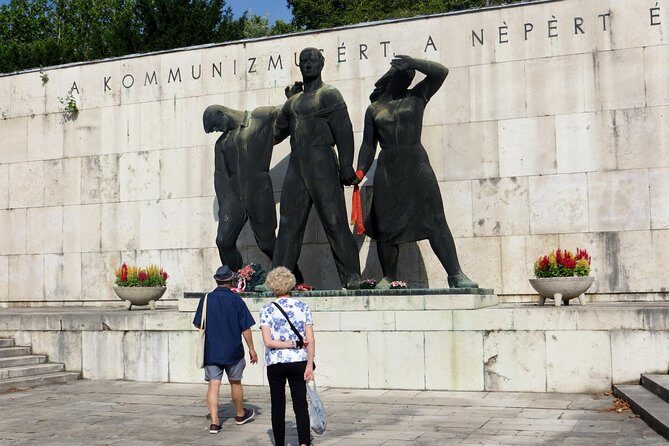
This tour is built for pattern-spotters. You don’t just read plaques. You look at scale, placement, and what certain monuments were meant to communicate.
It starts at Liberty Square, where you’ll see the memorial tied to the Siege of Budapest. The story here is heavy but specific: a 50-day encirclement of Hungary’s capital near the end of World War II. You’ll also hear how Soviet power was framed through grand, official stone. That’s the trick of communist-era public art—sometimes it doesn’t look like propaganda. It looks like civic architecture.
Next comes Szabadság tér, one of Budapest’s grand central squares. The open space isn’t accidental. It traces back to the Habsburg era, when the Bastille-like Újépület stood here. Today, it’s a broad, peaceful green area—great if you need to stretch your legs and reset. It’s also the kind of spot where you can notice how new ideologies reuse old geography.
Practical note: bring comfortable shoes and expect to be on your feet for the full walking part. This is history you experience with your legs, not a “sit and listen” format.
You can also read our reviews of more tours and experiences in Budapest.


Kossuth Square and Hungary’s Parliament: why the 1956 firefight still matters
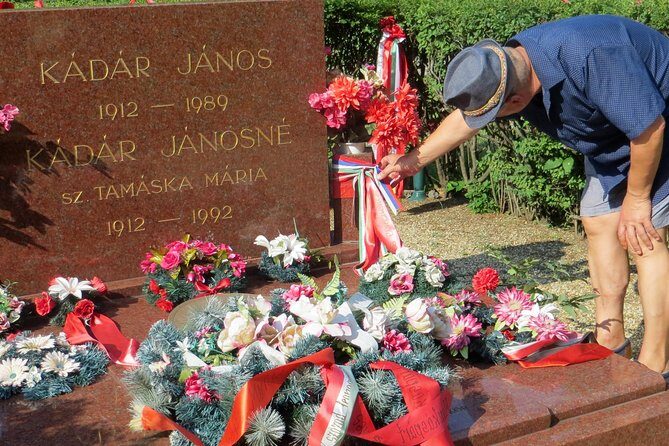
At Kossuth Square, you’ll face the Hungarian Parliament building. The square’s main draw is obvious, but the tour’s value is how it links the building to the 1956 uprising.
In 1927, the square was renamed in honor of Lajos Kossuth. Before that, it had other names, including Parliament square. On the day-to-day level, it’s a stately civic landmark. In the tour’s telling, it becomes a political stage.
You’ll hear what happened in 1956: a firefight began in front of the Parliament building, and the number of demonstrators who died isn’t known with certainty. Even more important is how the crowd was described—mixed civilians rather than a single group. Men, women, children, and the elderly were part of the gathering. The massacre that followed helped push the public toward revolution and armed struggle.
This is one of the most affecting parts of the walk. It’s also where you’ll likely ask questions, because it’s easy to wonder how a city moves from protest to chaos so quickly.
If you want a quick takeaway: the point isn’t only the tragedy. It’s how public spaces become charged during political breaks—and how those same spaces keep shaping memory afterward.
Petőfi Statue and Március 15. Square: symbols meet everyday Budapest
From Kossuth Square you shift into a different mode: still historic, but more human-scale.
You’ll visit the Petőfi Statue and Március 15. Square, located at the foot of Erzsébet Bridge. This area also sits near the front of the oldest church of Budapest, so you get an interesting contrast: political memorialization in the foreground of older spiritual identity.
A notable detail here is the renovation in 2011, which turned the place into a popular scene of social life. That matters for this tour’s theme. Under communism, public life was often tightly framed. Here you’re seeing how the same kind of public space can become normal and lively again once control changes.
The practical upside: this is a good moment to look around and notice who’s using the squares now. It’s a quick way to measure how much everyday life has replaced political performance.
Corvin köz: resistance as a neighborhood story, not a slogan
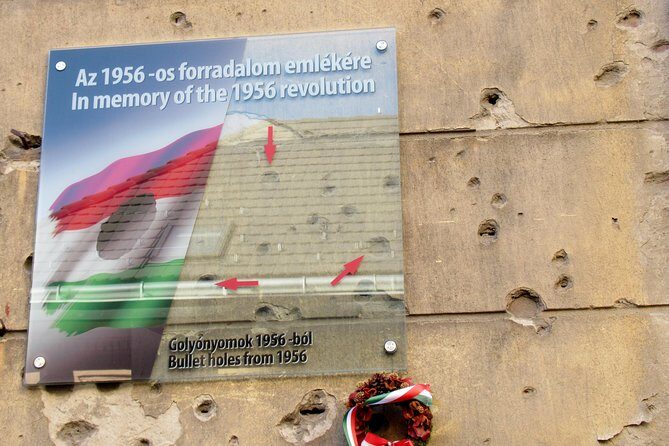
Then you move to Corvin köz, in the southeast part of Budapest. This is one of those places where the history feels unusually close, because it’s tied to street-level action.
Corvin köz is described as a major resistance center in 1956. Local youngsters fought the invading Russians using Molotov cocktails, and they also stole guns from soldiers to take on Soviet tanks. The tour stops so you can see reminders of those battles and talk through the invasion and what followed.
A strong point here is how the guide frames resistance as both spontaneous and desperate—less movie-style heroics, more people grabbing whatever they can and trying to survive the next hour. If you’re into history that feels grounded, this is where you’ll lean in.
Walking tip: this is also where you may want to slow down and take photos carefully. The architecture and street layout matter, and rushing through can cause you to miss the “map” the guide is building in your head.
Crossing toward Gellért Hill: a skyline view with political meaning
The tour then takes you across one of Budapest’s most beautiful bridges, moving you toward Gellért Hill.
On the way, you get that classic Budapest “oh wow” moment. But the guide turns the viewpoint into an interpretive stop, not just a photo break. You’re heading to St Gellért Square in Buda.
St Gellért Square is named after Bishop St Gellért, also called the Martyr for Hungarian Christendom. From here, you’ll have an excellent view of the Liberty statue. That monument was erected in 1947, and it commemorates Soviet liberation of Hungary—an example of how even memorials can carry competing narratives depending on who is telling the story.
If you want to understand the communist era in Budapest, this stop is a good checkpoint. You’re seeing how power physically marks a city, then how that marking can be seen from a distance as part of everyday sightlines.


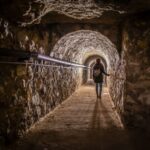
Bambi Presszó coffee break: the comfort of staying in theme
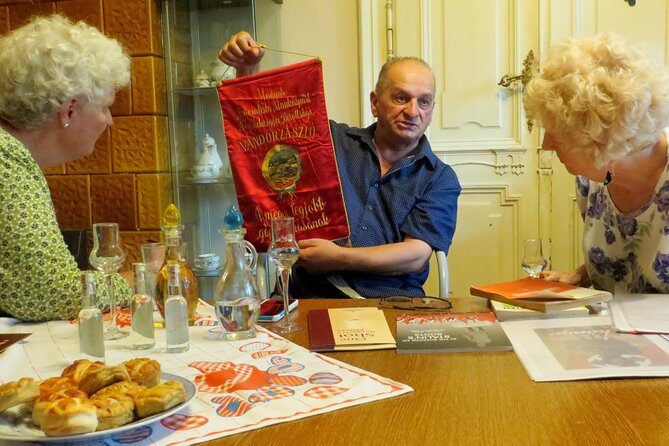
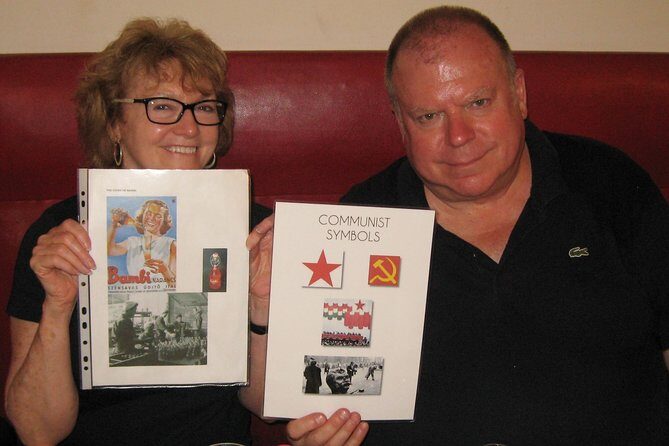
One of the highlights is the time for coffee at Bambi Presszó, described as the last stronghold of communist culture.
This is a clever pacing move. After the emotional weight of 1956, the coffee stop gives you time to regroup. It also gives the guide space to talk in a more conversational way, often the moment when questions come fast and answers land better.
Practical tip: it’s a café stop, so treat it as a chance to recharge, not a meal plan. If you order more than planned, that’s on you, since additional food and drink aren’t listed as included.
This pause is also the part that makes the tour feel like a lived experience rather than a checklist.
Optional add-on: Memento Park for the communist-statuary afterlife
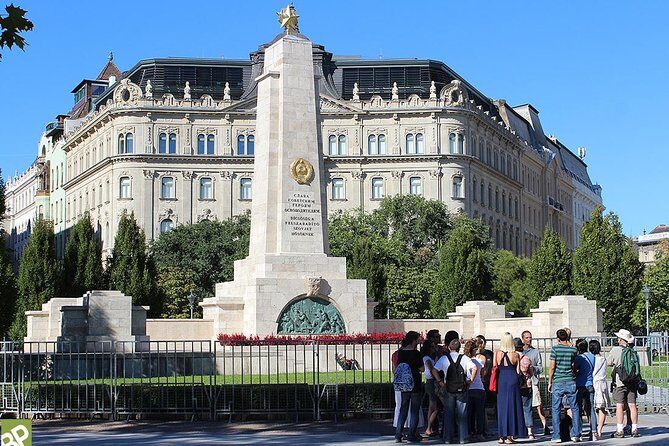
If you choose it, Memento Park is a 1-hour visit with the admission included.
The basic idea is simple and smart: when communism collapsed in Hungary in 1989, Budapest was left with many public artworks that celebrated that era. In 1993—four years later—the city decided to save the statues rather than destroy them. That decision gave birth to the park.
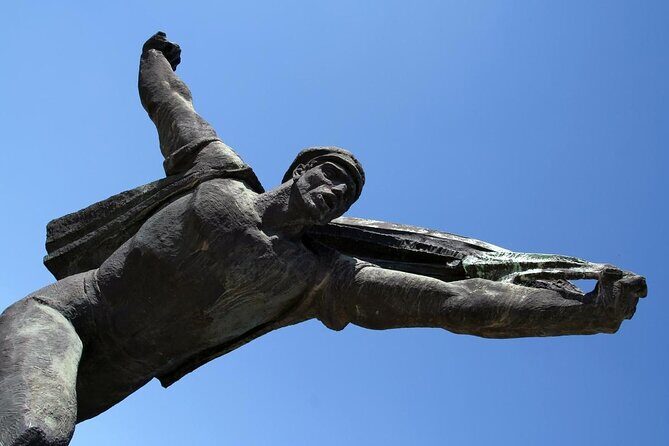
So instead of treating these objects as only something to erase, Memento Park treats them as historical artifacts. The tour approach helps you see them in context: how monumental scale was used to send messages, and how today those same forms become less about authority and more about interpretation.
If you like learning through visuals, this option is a strong match. It’s also a good fit if you want a less intense follow-up than House of Terror.
Optional add-on: House of Terror Museum for repression-era detail
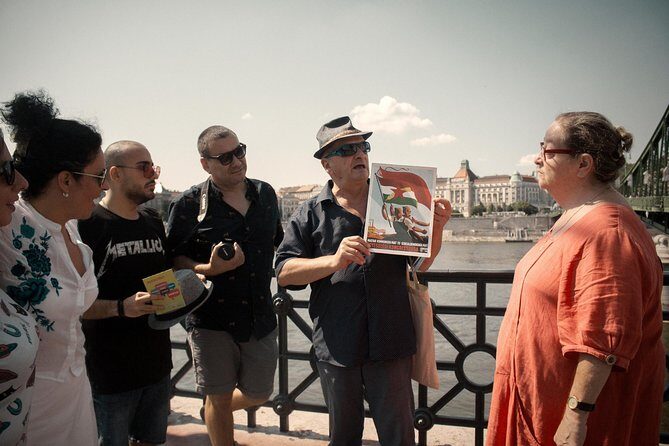
If you choose it, the House of Terror Museum is another 1-hour stop with admission included.
This one is emotionally heavier. The building itself is described as having a black exterior structure that frames the museum and makes it stand out sharply on Andrássy Avenue. Inside, you’ll see a T-54 tank displayed.
The tour also notes the reconstruction detail: the renovation work redesigned the building based on plans by architects János Sándor and Kálmán Újszászy, turning the exterior into something more like a monument.
Here’s the practical takeaway: plan your energy. This museum is not a quick “walk-through and forget.” You’ll get more out of it if you stay present, ask questions if the guide offers them, and give yourself a little time after to decompress.
Price and logistics: is $280 per group actually good value?
At $280.33 per group (up to 5) for about 3 hours, this isn’t a bargain-bin walk. It’s priced like a guided, private-style experience with included extras.
What you’re getting for that price:
- A local guide and informative handouts
- Entrance tickets for whichever optional museum/park you select
- A mobile ticket
- An English-speaking guide
- A coffee stop included in the experience highlights (you still might pay for extra items)
What helps the value:
- Private group time means you can ask your questions without feeling rushed.
- The tour covers multiple major squares, not just one neighborhood.
- The optional add-ons expand it into a longer, more complete “communism to aftermath” story without you needing to line up separate tickets.
What to watch:
- This tour has multiple option formats. If you select House of Terror or Memento Park, double-check that your booking matches what you actually plan to do that day.
- If you’re the kind of person who wants every minute maximized, know that a walking tour plus an optional museum is a lot to absorb. You’ll get more value by going in with realistic expectations.
In short: if you want guided context—especially about 1956 and daily-life under the regime—this price can feel fair. If you’re looking for a lightweight “see the sights” stroll, you might feel the cost more than the payoff.
Who should book this communist-era walk
This works best if you:
- Want Budapest history tied to real squares and street geography
- Like guides who answer questions and keep the story human
- Want at least one museum addition, either Memento Park or House of Terror
- Prefer a private group setting where your pacing can be more flexible
It may feel less ideal if you:
- Don’t want to spend time on emotionally intense events connected to 1956
- Are very sensitive to audio clarity outdoors (a couple of guide-experience reports mention being hard to hear)
- Expect a loose, casual sightseeing vibe rather than guided interpretation
If you’re traveling with kids, the tour notes that children must be accompanied by an adult, so plan accordingly.
Should you book? My honest take
I’d book this if you want more than monuments. The tour’s strength is connecting ideology to specific places: Soviet memorials, the Parliament area, Corvin köz, and then either the statuary afterlife at Memento Park or the repression-focused detail of House of Terror.
I’d hesitate only if you’re unclear about the option you selected. Make sure your day matches your ticket choice. Then go in ready to listen, not just look.
If you do that, you’ll come away with a clearer sense of how power shaped Budapest—then how Budapest learned to live with the leftovers.
FAQ
Where does the tour start?
It starts in Liberty Square.
How long is the tour?
The walking tour is about 3 hours.
Is the tour in English?
Yes, it’s offered in English.
Is it a private tour?
Yes. It’s a private tour/activity, and only your group participates.
What optional stops are available?
You can add Memento Park or House of Terror Museum as options.
Are tickets included for the optional visits?
Yes. Entrance ticket is included for the listed options.
Is pickup included?
Pickup is offered, but hotel pickup and drop-off is listed as not included, so it’s best to confirm the exact arrangement before you go.
Is there a café stop during the tour?
The highlights include sipping coffee at Bambi Presszó.