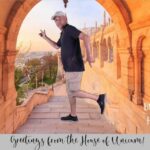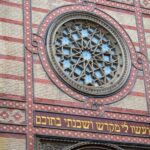
Budapest has a style of beauty you can’t fake. This private tour walks you through Art Nouveau and Hungarian Secession landmarks with a pro guide, and I especially like two things: the way you get time inside key interiors and the stop for a complimentary coffee in an authentic Art Nouveau setting. One thing to consider: you’ll spend a good chunk on foot, so plan for uneven sidewalks and wear shoes that can handle a few museum-to-street transitions.
I like that this is built as a true private experience (for your group only) with hotel or port pickup and drop-off, rather than a scramble with the crowd. It’s about 4 hours, in English, and it runs in all weather conditions, so the itinerary is designed to keep moving even if it’s chilly, rainy, or windy.
What makes it feel worth the money to me is the mix: iconic facades plus the decorative “slow looking” details inside—mosaics, passage interiors, and the kind of architectural symbolism that turns a photo into a story. And yes, you’ll get a mobile ticket and a smart-casual dress code, which makes it simple to show up ready.
In This Review
- Key highlights I think you’ll care about
- Art Nouveau in Budapest: what you’re actually seeing
- Price and value: $243.53 per group for up to 15
- The 4-hour flow: how the tour stays efficient
- Stop 1: Parisian Passage Café and the Art Nouveau passage effect
- Stop 2: Liszt Academy and the Seccession-style music hall
- Stop 3: Váci Street and Art Nouveau palaces on a fashion-and-shopping lane
- Stop 4: Torok-Bankhaz building and the Art Nouveau → Art Deco transition
- Stop 5: Postatakarek Bank and Lechner’s Hungarian National branch
- Stop 6: House of Hungarian Art Nouveau and the Secession period focus
- Stop 7: Budapest Zoo buildings and the Applied Arts Museum facade
- Coffee in an Art Nouveau setting: included, and it changes how you look
- Who this tour is best for (and who should skip it)
- Should you book Private Art Nouveau Tour Budapest?
- FAQ
- FAQ
- How long is the Private Art Nouveau Tour Budapest?
- Is this tour private?
- What language is the tour offered in?
- Do you offer hotel or port pickup?
- Is coffee included?
- Are there admission tickets included for the stops?
- What should I wear?
- Does the tour run in bad weather?
- Can I cancel for a full refund?
Key highlights I think you’ll care about
- Hotel/port pickup and drop-off to save time and stress in the center of Budapest
- Art historian guide who connects design details to Hungarian culture and music
- Multiple stops with free admission noted, so you’re not constantly paying at each place
- Coffee in an Art Nouveau café passage, where the setting is part of the lesson
- Art Nouveau to Art Deco transition explained through standout buildings and architects
Art Nouveau in Budapest: what you’re actually seeing
Budapest is one of Europe’s best cities for Secession-style architecture, and this tour is the practical way to make sense of it. Instead of treating Art Nouveau as a single look, you’ll see how the city’s architects pushed style forward and then shifted again over time—particularly through the Hungarian National Style of Secession, often tied to designers like Ödön Lechner and Miksa Roth.
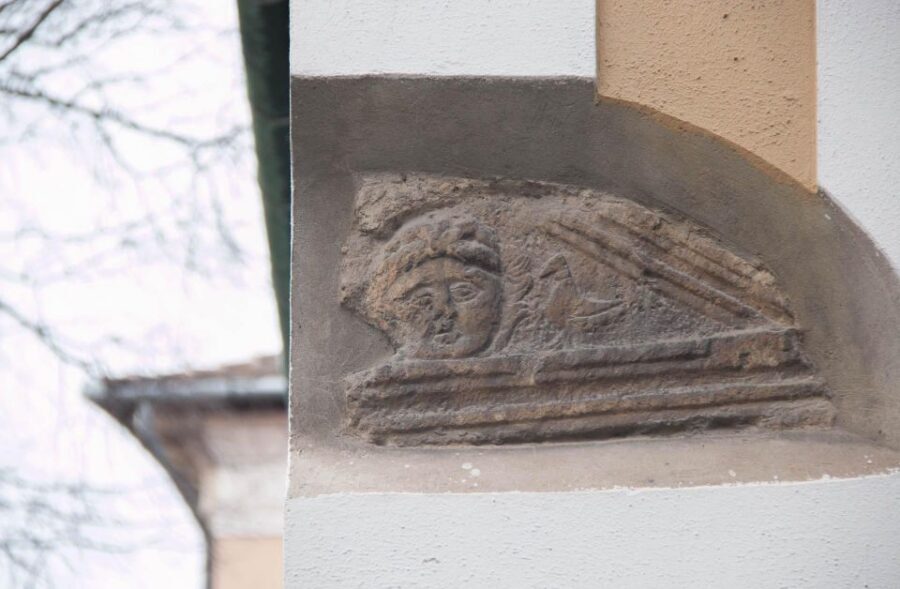
The big win here is that you’re not just looking at pretty exteriors. The tour is planned so you can spend time where the decoration lives: interiors and halls, plus passageways and bank buildings where the design is basically a speech in stone and metal. If you enjoy architectural details—mosaics, patterns, stained-glass effects, and the idea of symbolism—you’ll get more out of this than a quick photo stop.
And since it’s private, the guide can adjust pacing. If your group wants more time to stare at mosaics or compare facades, you can usually slow down without the tour snapping back to rigid timing.
You can also read our reviews of more private tours in Budapest

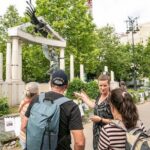

Price and value: $243.53 per group for up to 15
This costs $243.53 per group (up to 15 people), which can be a smart deal if you’re traveling with friends or family. The math is simple: if you have 6 people, that’s about $40 per person; if you fill it with 10, it’s about $24 per person; at the full 15, it lands closer to $16 per person.
So the value depends on your group size. If you’re a solo traveler, you may feel this is priced like a small private experience rather than a budget walking tour. If you’re a couple, it can still be fine if you value the pickup, the coffee stop, and the time inside buildings. If you’re a small group, it becomes one of those “this is actually cheaper than it looks” situations.
Also, the tour includes a professional Art Historian Guide and coffee and/or tea, which reduces the usual add-ons that build up on walking tours.
The 4-hour flow: how the tour stays efficient
The experience runs about 4 hours, and the rhythm matters. You’re given several focused stops, most around 15–30 minutes, which is a good match for architecture sightseeing. You get enough time to walk, look closely, and hear the story without burning your feet into museum-floor regret.
You can expect:
- Pickup from your hotel or a port you specify (they use your chosen locations)
- A private guide leading your group in English
- A mobile ticket, which makes it easier to show up cleanly
- A schedule that works in all weather conditions (so you’ll want a rain layer and something that can handle wet stone)
The biggest practical tip I’d give you: plan for shoes that don’t punish you. Budapest’s streets can be charming and also slightly chaotic underfoot. If you’re bringing people who tire fast, mention it early; a private guide can often manage pacing better than a fixed group tour.
Stop 1: Parisian Passage Café and the Art Nouveau passage effect
Your first serious architectural lesson lands at the Parisian Passage Café—a location described as recently renovated, with a passage interior that gives you that “wandering through design” feeling.
This is a great early stop because it sets the tone fast. You’ll explore both the lush exterior and the passage interior, and this kind of space is where Art Nouveau shows off its best tricks: decorative curves, patterned surfaces, and the way a building can guide your attention.
Admission is noted as free for this stop, which matters because you’re paying for a guided experience, not a stack of entry fees. You’ll also get to sit and take in the atmosphere later as part of the complimentary coffee and/or tea included in the tour.
Why I like this as a starting point: after 10 minutes of coffee in a designed interior, you start seeing Art Nouveau everywhere else. You begin to notice how buildings frame movement—how they choreograph your walk, not just their view from the street.
Stop 2: Liszt Academy and the Seccession-style music hall
Next comes the Liszt Academy, which the tour frames as a homage to Hungarian music and a major example of the international secession style. The time here is shorter—about 15 minutes—but it’s used for what matters: stepping into the hall to look at the mosaics and interior details.
This is one of those stops where the architecture behaves like a soundtrack. Even if you’re not hearing music in the moment, the room is designed to feel like a concert space—organized, symbolic, and carefully decorated.
And since this stop also has free admission noted, it’s a strong use of your time. You’re getting a key interior without being nickel-and-dimed for tickets.
A practical tip: if your group has people who get impatient in indoor spaces, explain that this is a “look-with-a-guide” stop. Once they understand what to find (mosaic work, hall design, and decorative themes), it usually goes smoothly.





Stop 3: Váci Street and Art Nouveau palaces on a fashion-and-shopping lane
Then you hit the city’s most famous shopping stretch: Váci Street. Here, you’re not just window shopping. You’re walking through a historic commercial corridor where the guide uses the urban palaces to talk about Art Nouveau heritage.
This stop is about 30 minutes, which is enough for a real walking explanation without turning into a slog. The advantage of doing this after interiors is that you can compare. In the café and music hall, details are curated inside. On Váci Street, those same design ideas show up on the street-facing skin of buildings—balconies, facades, ornamentation, and proportions you’d otherwise ignore.
Admission is noted as free, and that’s useful here because the value comes from interpretation, not from an entry gate.
Stop 4: Torok-Bankhaz building and the Art Nouveau → Art Deco transition
The tour then moves toward the stylistic pivot between major pre-war styles: Art Nouveau and Art Deco. The highlighted stop is the Torok-Bankhaz building, with Miksa Roth called out by name.
This is a smart mid-tour shift. Early stops teach you what to look for; this stop helps you understand why the design world changed. Even if you’re not a design nerd, you’ll feel the difference in what the building emphasizes—less about flowing organic forms and more about the direction styles started taking next.
Time here is about 15 minutes, and that’s enough if your guide is focused. The key is to listen for the “what’s different and why” explanation rather than trying to read every detail yourself in the street.
Stop 5: Postatakarek Bank and Lechner’s Hungarian National branch
Next is Postatakarek Bank, linked to the Hungarian National branch of Secession style, with Lechner specifically mentioned.
This stop is also about 15 minutes, so again: the guide’s job is crucial. Bank buildings tend to be heavy on symbolism and craftsmanship—ornament that’s not just decoration, but part of how the building communicates stability, identity, and civic pride.
If you love architectural symbolism, this is one of the places you’ll likely enjoy most. You can stand back and look at the overall composition, then step closer and notice patterns and “language” in the design.
Admission is noted as free here as well, keeping the focus on your guide’s explanation and not on ticket logistics.
Stop 6: House of Hungarian Art Nouveau and the Secession period focus
Then you’ll visit the House of Hungarian Art Nouveau, positioned as a dedicated site for the period of Secession in Hungarian architecture, and described as providing insight into the Hungarian National Style and its influences.
Time is about 15 minutes. That means it won’t feel like a long museum stay, but it should give you a conceptual anchor: what defines this Hungarian take on Secession, and how local influences shaped the look.
I like this kind of stop because it helps you connect the dots. When you’ve just seen multiple buildings, you might start wondering how they fit together. A quick focused “here’s the definition and the influences” stop makes the earlier sightseeing feel less random.
Stop 7: Budapest Zoo buildings and the Applied Arts Museum facade
At this point, the tour expands into a “journey through diversity” using buildings of the Budapest Zoo. It’s another quick visual lesson, about where the style appears and how Secession and related architectural ideas show up across the city beyond the most famous landmarks.
Finally, you’ll reach the Museum of Applied Arts. Here, there’s a practical twist: it’s still under renovation, so you can only explore the facade. Time is about 15 minutes, and the stop is used to discuss the Secession-style trademarks seen on the building’s exterior.
This is actually a decent way to handle renovation. You don’t waste time trying to see what’s closed; you still get the architectural discussion, which is the core value of this tour.
Coffee in an Art Nouveau setting: included, and it changes how you look
One of the best parts of this experience is the complimentary coffee and/or tea in an Art Nouveau atmosphere. It’s included, and it’s not an afterthought. Sitting in a designed space helps you switch gears from “walking photos” to “slow noticing.”
The tour structure makes this more than a snack stop. After you’ve heard the guide’s explanation about how buildings communicate through ornament and style, sipping coffee turns those details into something you can feel. You notice how decoration shapes your eye, how symmetry and curves guide your attention, and how the room’s scale affects the look of everything around you.
If you’re the type who learns best by combining storytelling with a sensory pause, this is a genuinely useful addition.
Who this tour is best for (and who should skip it)
This tour is a great match if you:
- Want a private guide who can interpret architecture while you walk
- Enjoy details—mosaics, passages, ornate facades, and the differences between styles
- Like city sightseeing that feels cultural, not just touristy
It might be less ideal if:
- You prefer long museum time with zero street walking
- Your group doesn’t want architecture explanations and would rather do a casual walk with no stops inside
It’s also worth knowing that the tour operates in all weather conditions, so you’ll be outside even if it’s damp. Pack accordingly.
Should you book Private Art Nouveau Tour Budapest?
If you’re planning Budapest with an eye for design—and you want a guide who can connect what you see to Hungarian style choices—this is an easy yes. The combination of hotel/port pickup, interiors plus exteriors, and a built-in Art Nouveau coffee stop gives you more than the typical “stand outside and point” experience.
The only time I’d pause is if you’re traveling solo or as a couple and the price-per-person feels too close to a private luxury outing for your budget. In that case, check whether your schedule allows a group-based architecture tour instead.
FAQ
FAQ
How long is the Private Art Nouveau Tour Budapest?
It runs for about 4 hours.
Is this tour private?
Yes. It’s a private tour/activity, and only your group participates.
What language is the tour offered in?
The tour is offered in English.
Do you offer hotel or port pickup?
Yes. Pickup is offered from the hotels or ports you specify.
Is coffee included?
Yes. Coffee and/or tea is included.
Are there admission tickets included for the stops?
For the listed sites on the itinerary, admission is noted as free at each stop. Public transportation tickets are not included.
What should I wear?
The dress code is smart casual.
Does the tour run in bad weather?
It operates in all weather conditions, so dress appropriately.
Can I cancel for a full refund?
Yes. Free cancellation is available, and you can cancel up to 24 hours in advance for a full refund.