REVIEW · BUDAPEST
Past and Present of Budapest Jewish District Tour
Book on Viator →Operated by Triptobudapest.hu - Free Budapest Walking Tours · Bookable on Viator
Budapest’s Jewish story starts at a square. This 1 hour 45 minute walk through District VII gives you a clear before-and-after timeline, from the Belle Epoque era to the destruction, with stops tied to real buildings you can still point to today. You’ll end in the middle of the city’s modern renewal at Szimpla Kert, so the area doesn’t stay stuck in the past.
Jewish Quarter.
What I especially like is how the guiding feels structured and responsive. Guides such as Eszter and Gary are repeatedly praised for pacing, clear explanations, and answering questions without rushing you off to the next corner. Second, you get a strong sense of place even without going inside buildings, since the walk focuses on major sites like the Great / Central Synagogue area and other restored synagogues from the outside, plus key context like Neologue vs Orthodox life and the role of Zionism.
One consideration: this is not an inside-synagogue tour. The route keeps you outdoors—so if you want to sit inside and tour the interiors, you’ll need to plan separate synagogue visits (and possibly deal with opening hours). The good news is you still see key memorial and cemetery areas from outside, but the experience won’t replace an interior visit. No synagogue entry.
In This Review
- Quick hits before you go
- A 90-minute walk that actually gives you bearings
- Erzsébet tér: Belle Époque glamour to destruction
- Deák Ferenc Square: Gaudiopolis and the logic of exclusion
- Great / Central Synagogue area: Neolog, Orthodox, and Zionism from the outside
- Rumbach Street Synagogue: restoration, murals, and street-level memory
- Gozsdu Udvar: entertainment culture and the last trace of a ghetto wall
- Kazinczy Street Synagogue area: Orthodox community life and ritual details
- Szimpla Kert finish: murals, orientation, and what to do next
- Price and value: why it’s so low
- What you’ll feel during the walk
- A note on guides, pace, and language
- Who this tour is best for
- Should you book this Jewish District Past and Present tour?
- FAQ
- How long is the Past and Present of Budapest Jewish District tour?
- Does the tour enter the synagogues?
- Where does the tour start and end?
- What’s included in the price?
- Is tipping included?
- What language is the tour offered in, and how large is the group?
Quick hits before you go
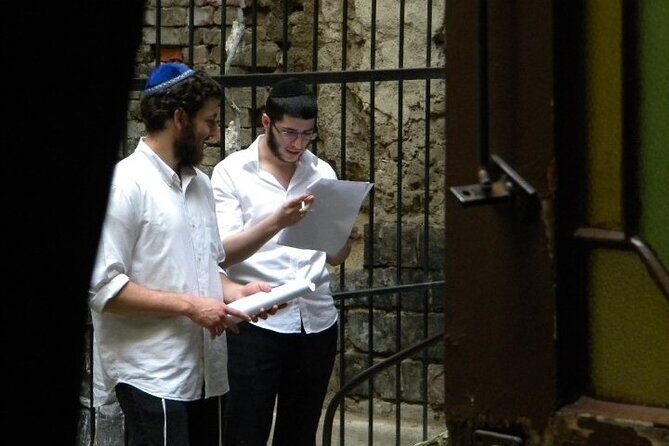
- A tight 90-minute arc that moves from the Belle Epoque era to catastrophe and then to today’s Jewish District
- Major landmarks, mostly exterior views, including the Great / Central Synagogue area, memorial courtyard, and cemetery you can see from outside
- Guides who handle questions well, with multiple guides named like Eszter, Ester, Dora, Gary, Edith, and David
- District VII street-level storytelling, including restored synagogue streets, murals, and visible traces of the ghetto wall
- An easy-to-follow route with a start at Erzsébet tér (right by the Ferris Wheel of Budapest) and an end at Szimpla Kert
A 90-minute walk that actually gives you bearings
If Budapest is your first stop in Hungary, this tour helps you place District VII on the map in your head. You’ll start in a public square, move along the streets where Jewish community life shaped the neighborhood, and finish at a modern ruin bar so you can see how the area is used today.
The biggest value for me is the pacing of the story. You’re not just collecting trivia about synagogues. You get themes—community life, exclusion and walls, organized religious directions, political currents like Zionism, and then the horror of Nazi occupation and how Hungarian Jews were targeted—connected to corners you can point to after the tour.
And yes, it’s a walk. You’ll want comfortable shoes, because you’re outside for the whole experience. Still, multiple reviews mention that guides kept things manageable even for seniors, which matters when you’re dealing with an emotionally heavy topic.
You can also read our reviews of more tours and experiences in Budapest.



Erzsébet tér: Belle Époque glamour to destruction
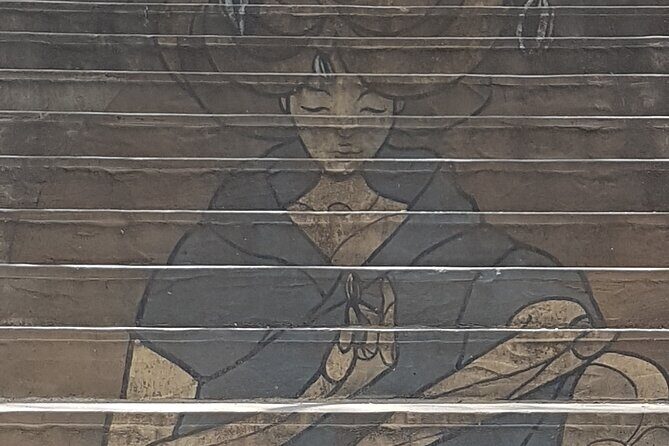
Your tour opens at Erzsébet tér (Elizabeth square), with the meeting point set at the Ferris Wheel of Budapest. From there, your licensed local guide starts by sketching the route and highlighting the major sights as you go. It’s a smart move: you’re less likely to feel lost later, because you’ll know what you’re seeing and why it matters.
This first stretch is where the timeline gets set. You’re looking at the Jewish community’s rise and influence during Hungary’s Belle Epoque or Golden Age, then the narrative turns toward the destruction that followed. If you care about understanding cause and effect—how a community went from public presence to persecution—this opening section is doing the heavy lifting.
Also keep an eye on the way guides frame the era. In past tours, guides like Eszter and Ester were praised for being friendly and professional while still handling sensitive history respectfully. Expect a tone that treats the subject as more than sightseeing.
Deák Ferenc Square: Gaudiopolis and the logic of exclusion
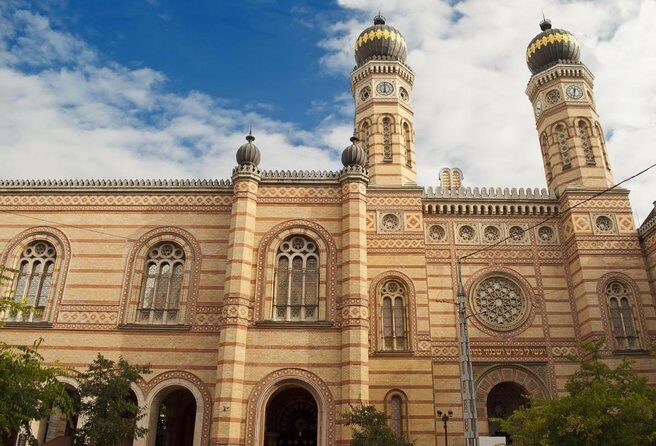
Next up is Deák Ferenc Square, where the tour connects place to ideas. You’ll hear about Gaudiopolis—the City of Joy in Latin—and how that concept fits the Jewish community’s visibility and cultural life in the area.
Then the story gets darker. You’ll learn about Schutzpass, described as something that saved thousands of Jewish lives. This isn’t just a name-drop. It’s part of the larger point that survival, bureaucracy, and shifting rules mattered even as danger grew.
You’ll also see what remains of former medieval city wall ruins that restricted Jewish people’s trade to within certain city limits. That physical boundary detail helps the history click. When you can look at what’s still there—or what’s left—you get a more concrete sense of exclusion than you would from a museum label alone.
Great / Central Synagogue area: Neolog, Orthodox, and Zionism from the outside
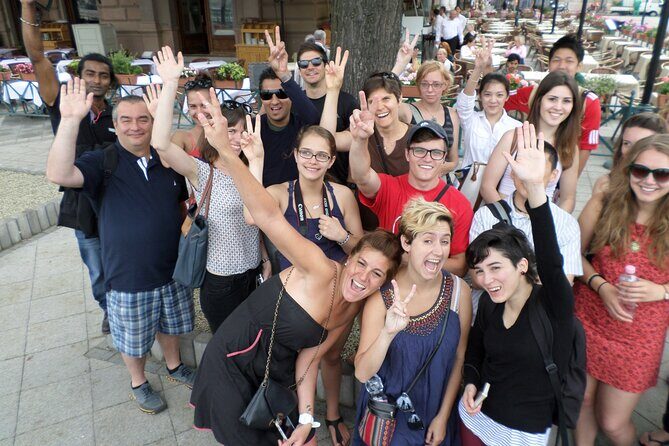
The largest stop on paper is the Great / Central Synagogue (Nagy Zsinagóga) area. This is where Budapest’s Jewish story is tied to one of the most famous synagogue buildings in Europe.
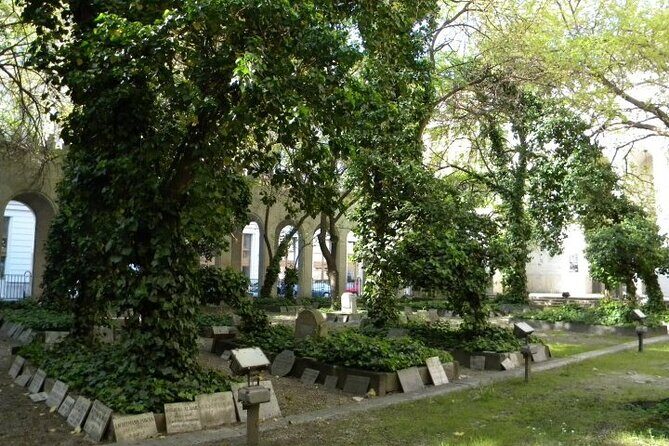
A key point upfront: the tour does not enter the synagogue. Instead, you’ll see the Memorial Courtyard and cemetery from outside. For me, that works well if your goal is orientation and context. You’re not trying to do a full building visit in 90 minutes; you’re learning what to look for when you visit later on your own.
This stop also covers the major religious and political currents you’ll keep hearing about in Budapest Jewish history: Neologue and Orthodox movements, plus Zionism. Even if you don’t consider yourself religious, understanding these directions helps you understand why community life took the shape it did—and why it varied from one neighborhood moment to the next.
Rumbach Street Synagogue: restoration, murals, and street-level memory
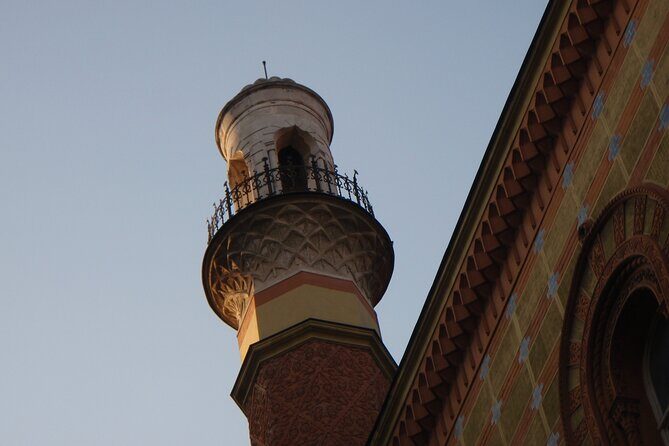
After the main synagogue focus, you shift to a different flavor of Jewish Budapest at the Rumbach Street Synagogue. Again, this is an exterior-focused moment. You’ll learn about the synagogue’s restoration and you’ll also see the murals and urban street art around it.
Why this stop matters: the Jewish Quarter isn’t only monuments and old stone. It’s also modern layers—art on building surfaces, new uses for old areas, and a visible community conversation happening in public.
If you’re the type who likes your history with texture, this part gives you that. And if you’re into photography, the mural-and-facade combination usually makes for standout shots—without needing tickets or extra entry lines.






Gozsdu Udvar: entertainment culture and the last trace of a ghetto wall

Next you pass Gozsdu Passage / Gozsdu Udvar, and the tour ties the neighborhood’s past to what you can experience today. You’ll learn about its past and present, with the passage described as mixing entertainment, gastronomy, culture, and market life.
This is where the tour’s title—Past and Present—shows up in the street. You’re literally walking through an area that has been remade, while still hearing how it connects to the old Jewish Quarter.
You’ll also see the last piece of the ghetto wall. Even without going into a museum, that kind of physical remnant is powerful. It’s the moment where the neighborhood stops being just a “nice walk” and starts feeling like a record.
Kazinczy Street Synagogue area: Orthodox community life and ritual details
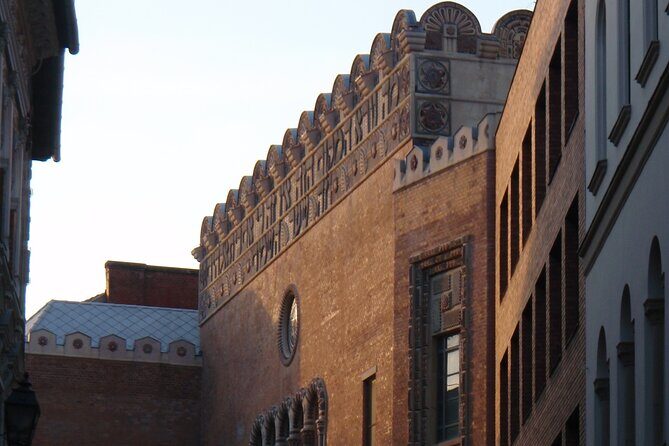
The tour then stops just outside the Kazinczy Street Synagogue, connected to the Orthodox community of about 50–60 families. Like the other synagogue moments, you don’t go inside, but you do get specific details about daily religious life.
You’ll hear about kosher food and Jewish ritual bath traditions, and you’ll connect them to what Orthodox community life can look like in a small community scale. This is a helpful contrast to the scale and fame of the Great Synagogue area. Different settings, different rhythms, same city story.
If you’re building a mental map, this stop also helps you see how District VII wasn’t one single type of Judaism or one single institution. It was a range of communities and practices living side by side.
Szimpla Kert finish: murals, orientation, and what to do next
You finish at Szimpla Kert on Kazinczy u. 14. The tour frames this as a place to regroup and get your final orientation, with more murals and urban street art in view.
Szimpla Kert is a ruin bar, and the tour includes the practical tip that there’s no entry fee to get in. You can also expect pop-up elements like small exhibitions, which makes the stop feel less like an ending and more like a handoff to your own exploring.
If your plan after the tour is to keep walking District VII on your own, ending here makes sense. You’re in the middle of where people actually hang out, not at some distant landmark with nothing around it.
Price and value: why it’s so low
The listed price is $3.63 per person, and that sounds almost too good to be true—until you look at what you’re actually getting.
This tour is short, focused, and mostly outdoors. It also explicitly states that the booking fee supports administration and does not contribute to the guide’s earnings, and guides depend on donations at the end. In plain terms: you’re paying for a guided introduction and organization, not a ticketed museum-style day.
For value, this is where it lands: if you want a structured orientation in 1 hour 45 minutes—with a clear historical arc and help seeing what matters—the price is a bargain. If you expect an all-inclusive, ticket-heavy synagogue interior day, you may feel under-served.
That’s the tradeoff, and it’s fair.
What you’ll feel during the walk
This tour doesn’t shy away from tragedy. The program includes discussion of the destruction of Hungarian Jews during Nazi occupation, and the tone can feel heavier than many lighter sightseeing walks.
That’s a drawback only if you’re looking for an upbeat history stroll. If you want context and respectful narrative, this is exactly the kind of tour that helps you avoid shallow history.
One thing I appreciate is that guides were praised for their professionalism and their ability to answer questions. That matters when a group has different levels of background and different sensitivities to what’s being discussed. Still, keep in mind that the experience is mostly standing and listening, so bring stamina.
A note on guides, pace, and language
The tour is offered in English, and the guide you get can affect the experience.
Multiple guides are named in feedback, including Eszter, Ester, Dora, Gary, Edith, Edi, Jude, Judith, David, Andy, and Christine. Many reviews highlight friendliness, strong structure, and good question handling. A few notes also suggest that when accents are strong, some people find listening harder—so if that’s a concern for you, consider arriving early so you can settle in and get comfortable with the pace.
On pace: one review specifically mentioned comfort for seniors, and the group size is capped at 25. That’s a good sign for staying together on a short walk.
Who this tour is best for
This is a great fit if you:
- Want a first-pass orientation to District VII in about 90 minutes
- Prefer street-level history tied to specific sites you’ll see again later
- Like learning the basics of religious directions and political ideas tied to the community’s life
- Want a guide to help connect the past to what the neighborhood looks like today
It may not be the best match if you:
- Expect to go inside the synagogues, since the tour does not enter them
- Want a fully story-driven, personal anecdote style experience rather than a structured historical walk
- Need a very low-emotion, light tone, since Holocaust-era content is part of the narrative
Should you book this Jewish District Past and Present tour?
If you’re short on time, this is an excellent way to get oriented fast, especially for a first visit to Budapest. I’d book it if your goal is to understand why District VII looks the way it does now—and what changed, step by step, leading up to catastrophe.
Book it with the right expectations: you’re getting an outdoor, context-heavy overview, not an interior synagogue tour. If you want inside access, plan one or two follow-up visits on separate days.
Finally, come with questions. This format works best when you engage, because the guides are repeatedly praised for answering in a way that makes the history feel usable for your next stops.
FAQ
How long is the Past and Present of Budapest Jewish District tour?
The tour lasts about 1 hour 45 minutes.
Does the tour enter the synagogues?
No. The tour focuses on exterior views and the area around the synagogues. For example, at the Great / Central Synagogue (Nagy Zsinagóga), you will see the Memorial Courtyard and cemetery from outside.
Where does the tour start and end?
It starts at the Ferris Wheel of Budapest at Erzsébet tér, 1051 Hungary and ends at Szimpla Kert, Kazinczy u. 14, 1075 Hungary.
What’s included in the price?
The price includes the booking fee, and you receive a mobile ticket. The stops listed are marked as admission ticket free.
Is tipping included?
No. Tips to the guide are not included. Guides depend on donations at the end, and the amount is your choice.
What language is the tour offered in, and how large is the group?
The tour is offered in English and has a maximum group size of 25 travelers.