REVIEW · BUDAPEST
Pest side stories with a Historian
Book on Viator →Operated by Budapest Explorers · Bookable on Viator
Budapest’s Pest side tells the story fast. This 3-hour walking tour uses an historian guide to connect major landmarks—politics, culture, and everyday life—into one easy route. You get a small group (max 10) and metro tickets plus refreshments, so you spend more energy looking around and less energy figuring things out.
What I like most is the pace and focus. You visit the heavyweight classics (Heroes’ Square and St. Stephen’s Basilica) and also the spots that usually get missed, like Vajdahunyad Castle and Millennium Underground, with an actual guide-led explanation for why each place matters.
One thing to consider: it is a lot of walking in a few tight hours. Even with a pace kept easy, you will cover ground and you’ll want comfortable shoes, especially on a hot day.
In This Review
- Key highlights you should care about
- Pest side stories with a historian: what kind of tour this is
- A good fit for you if
- Less ideal if
- Meeting point and timing in central Pest
- Stop 1: Elizabeth Square (Erzsébet tér) and how squares change
- Stop 2: St. Stephen’s Basilica (Szent István Bazilika) and the big-picture church
- Stop 3: Heroes’ Square (Hősök tere) as a history primer
- Stop 4: Vajdahunyad Castle (Vajdahunyad vára) and the surprise origin
- Stop 5: Andrássy Avenue and UNESCO in real life
- Stop 6: Vorosmarty Square (Vorosmarty tér) and old Pest commerce
- Stop 7: Millennium Underground (Millennium Földalatti) and the oldest metro story
- What’s included, and why it adds value
- Guide impact: why the stories land
- Walking and comfort: what to plan for
- How to blend this tour with the rest of your Budapest day
- Should you book this Pest historian walk?
- FAQ
- How long is the tour?
- What is the group size?
- What language is the tour in?
- Where is the meeting point?
- Where does the tour end?
- Which stops are included?
- Is entry included for St. Stephen’s Basilica?
- Is a mobile ticket provided?
- Are metro tickets included?
- Is it okay if I travel with a service animal?
- Is cancellation free?
Key highlights you should care about
- Small-group cap of 10 keeps the stories personal and the questions manageable
- Historian guide style connects statues, squares, and buildings to real events and change over time
- Frequent major-photo stops without the stress of a big-bus crowd
- Metro tickets included, so hopping between central Pest stops feels straightforward
- Millennium Underground gets real context, not just a name-drop
- St. Stephen’s Basilica entry only if the group is interested, so you can match time to interests
Pest side stories with a historian: what kind of tour this is
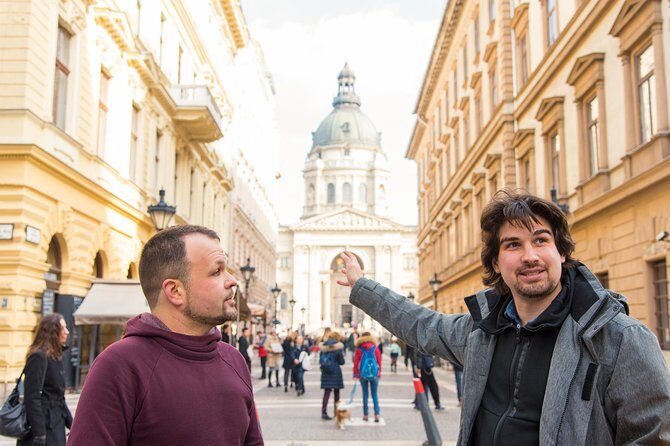
This is the kind of tour that helps you read Pest like a page, not a scavenger hunt. The route leans into places that show how Hungary’s story changed across centuries—through invaders, wars, politics, and daily public life. Instead of rattling facts, the guide uses the built environment as a map: squares tell you how crowds moved, monuments tell you what mattered, and even “local hangout” corners can reflect older layers.
I like that you’re not stuck in one theme. Yes, there’s a heavy dose of history, but it stays practical. You’ll learn why an avenue is UNESCO-listed, why a castle looks medieval even though it has a different origin, and why a former market square turns into a young party zone today.
The tour is also built for comfort. You get refreshments and you’re supplied with metro tickets, which matters because Pest can eat time if you’re constantly buying or debating transit. It’s offered in English, and the group is capped at 10—so you’re not just hearing your guide from the back row.
You can also read our reviews of more tours and experiences in Budapest.



A good fit for you if
- You want a history-led walk but don’t want to sit still
- You like seeing the “why” behind major sights
- You’d rather talk with a guide than follow a crowd
Less ideal if
- You hate walking or you have limited mobility and can’t manage a few hours on foot
- You prefer off-the-beaten-path tours with zero big landmarks (this one includes several major icons)
Meeting point and timing in central Pest
The tour starts at Kempinski Hotel Corvinus Budapest, Erzsébet tér 7-8, 1051 Hungary, with the meeting at 2:00 pm. Most days, you’ll end at St. Stephen’s Basilica, Szent István tér 1, 1051 Hungary. On some runs, the endpoint may be another central spot near where you began, so you’re not stuck far away when you finish.
Duration is about 3 hours. That’s a sweet spot: long enough to feel like a real orientation, short enough that you still have time for dinner plans or a separate museum visit after.
A detail that’s easy to overlook but helpful: confirmation happens when you book. And you get a mobile ticket, which reduces the “where is my paperwork” stress.
Stop 1: Elizabeth Square (Erzsébet tér) and how squares change
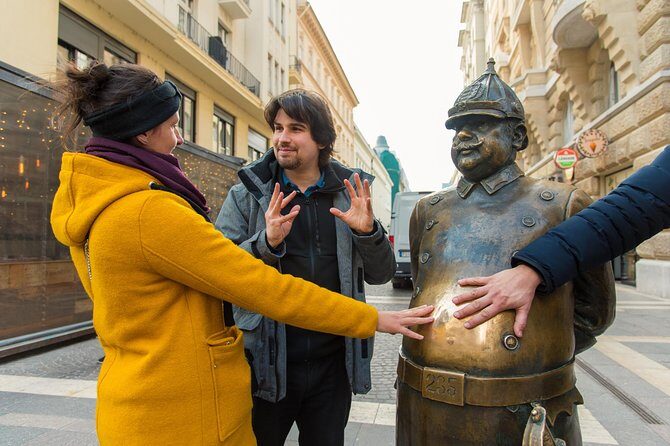
Your first stop is Elizabeth Square, a location with multiple identities layered over time. In the modern day, it reads as a lively youth hangout zone—statues and public art show up in your field of view fast. But the guide frame helps you see it as more than scenery.
What I like about starting here is the mental setup. The guide helps you notice how public space evolves: a square can shift from formal functions to social energy, while still holding older echoes. That makes the next stops easier, because you learn to “listen” for past roles hiding behind present-day use.
What you should watch for: the statue placements and the way the area is used now. These small cues become story anchors.






Stop 2: St. Stephen’s Basilica (Szent István Bazilika) and the big-picture church
Next comes St. Stephen’s Basilica, the largest church in Budapest. It’s an icon for a reason. Even if you don’t go inside, the sheer presence sets a tone for the rest of the walk.
Here’s the practical part: the tour notes that if the group is interested, you can enter. That choice matters because it affects how much time you spend indoors versus outdoors. If you’re the kind of traveler who wants atmosphere and architecture, you’ll likely appreciate the option.
One reason this stop works well in a small-group format is that the guide can steer based on interest. In tours that feel rigid, you either miss the indoor context or you’re pushed through too quickly. This one aims for flexibility.
Stop 3: Heroes’ Square (Hősök tere) as a history primer
Then you hit Heroes’ Square, one of the main introduction points for Hungarian history. The scale is designed to impress, but the value here is the guide-led explanation of what you’re looking at—how the monument language reflects more than art.
This is where an historian guide really pays off. You get the narrative behind the visuals: who is represented, why the layout matters, and what the square is trying to communicate about national identity across more than a thousand years.
Practical note: plan on taking photos, but also take a moment to just stand and look. Heroes’ Square is one of those places where the composition makes more sense after the guide tells you how to read it.
Stop 4: Vajdahunyad Castle (Vajdahunyad vára) and the surprise origin
Most people know the famous castles, but this tour puts Vajdahunyad Castle on your radar. It’s often described as a medieval-looking castle—and that look is part of the story—but the tour also clarifies why it was built in 1896.
That year is a clue. It’s a reminder that what you see today can be a crafted image of the past. The guide helps connect that to broader cultural moments: when nations want to show heritage, buildings often become statements.
Why this stop is worth your time: it gives you a lesson in how history gets represented in architecture. You’ll leave seeing the building as a message, not just a picturesque photo.
Stop 5: Andrássy Avenue and UNESCO in real life
Next is Andrássy Avenue, often considered the pride of Budapestians. It’s also a UNESCO World Heritage site since 2002, and the tour helps you understand why it earned that label.
This is a “look up and notice details” stop. The avenue isn’t just a straight line of buildings; it’s a statement about urban design and how a city chooses to represent itself. In a big tour, you might simply pass through. Here, you’re given time to absorb what makes it special.
If you like walking through places where the layout itself teaches you something, this is a highlight.
Stop 6: Vorosmarty Square (Vorosmarty tér) and old Pest commerce
From Andrássy, you move to Vorosmarty Square, focused on commerce and high-end products in the heart of historical Pest. It shifts the tone a bit. After monumental history at Heroes’ Square and the symbolic storytelling of a castle, you get a slice of life: how the city operated, shopped, and displayed status.
Even if you’re not shopping, you’ll notice how central squares operate like social engines. The guide’s framing helps you connect the square’s function to the broader story of Pest as a place where people gathered, spent, and signaled identity.
Tip: if you’re thirsty or hungry, this is a natural moment to re-check your energy and plan your next step.
Stop 7: Millennium Underground (Millennium Földalatti) and the oldest metro story
The final major stop is Millennium Underground, described as the oldest underground on the European continent. That alone is a reason to care, because it’s one of those “modern now, historic back then” landmarks.
The guide helps you understand why it exists in the city story—how the concept of underground transit ties to modernization and how Budapest chose to solve the movement problem. It’s not just a cool tube line. It’s a marker of ambition.
This is also a stop where you’ll feel the advantage of having transit included in your tour day. The walk-and-transit rhythm stays smoother, so you’re less likely to burn your time and patience on logistics.
What’s included, and why it adds value
The tour includes a guide, refreshments, and metro tickets. It’s also ticket-light for sights: each stop lists admission free in the tour plan, and you avoid the hassle of chasing paid-entry schedules mid-day.
That matters because $58.94 per person is easier to justify when you’re not paying extra on the spot. You’re paying for interpretation and time management—someone who knows which details to point out and how to connect the stops into a coherent route.
And the small-group format is part of the value. A cap of 10 changes the whole experience. You can ask questions. You can hear answers. You’re not stuck listening through a crowd.
Guide impact: why the stories land
The reviews you can’t ignore here are about the guide’s storytelling. Names that come up include Steven, Andrew, and Greg. One reviewer even calls out following Steven the Tall for the way the tour ties together the waterfront and downtown, including references like the financial district and a previous grain exchange.
That kind of guiding style matters because it shifts your experience from “I saw places” to “I understood what I saw.” Instead of memorizing dates, you learn patterns: why invasions and wars left visible marks, why statues and building choices matter, and how Hungarian endurance shows up repeatedly in public symbolism.
If you’re the type who likes to ask one question and then get ten more ideas out of it, this tour’s format supports that.
Walking and comfort: what to plan for
This is a walking tour with a few stops that feel like real orientation beats. The time is about 3 hours, and it is designed to be doable for most people.
Still, plan for movement:
- Wear comfortable shoes
- Bring water on warmer days
- Keep a light layer handy, since you’ll be outside for most of the route
One of the most useful practical touches from the guide approach is that the pace is kept easy. That helps you enjoy the details rather than just surviving the schedule.
How to blend this tour with the rest of your Budapest day
A 2:00 pm start means you can do a relaxed morning, then use the afternoon to get your bearings in Pest. After you finish near St. Stephen’s Basilica, you’re ideally placed for:
- an early evening meal in central Pest
- a quick follow-up visit to nearby sights (if you’re curious)
- a slower walk where you now know what you’re looking at
If you’re also visiting Buda, this Pest tour helps you compare the feel of the city. You’ll notice contrasts faster: where grandeur is staged, where daily life dominates, and how transit connects neighborhoods.
Should you book this Pest historian walk?
Book it if you want a well-paced introduction to Pest that goes beyond surface sightseeing. The combination of small group size, historian-led storytelling, and included metro tickets plus refreshments is exactly the kind of structure that makes a city feel easier on day one.
Skip it if you want a very slow, low-walking experience or if you only want totally off-the-grid places. This tour includes major landmarks, and that’s part of its strength.
One more practical nudge: if your priority is understanding why Budapest looks the way it does, this is a strong choice. You’ll leave with a mental map of symbols—squares, statues, and buildings—that will keep making sense long after your photos are uploaded.
FAQ
How long is the tour?
It runs for about 3 hours.
What is the group size?
The tour is capped at a maximum of 10 travelers.
What language is the tour in?
The tour is offered in English.
Where is the meeting point?
The start is at Kempinski Hotel Corvinus Budapest, Erzsébet tér 7-8, 1051 Hungary.
Where does the tour end?
It ends at St. Stephen’s Basilica, Szent István tér 1, 1051 Hungary. The tour might also end at another central point of Pest close to the start.
Which stops are included?
The tour includes Elizabeth Square, St. Stephen’s Basilica, Heroes’ Square, Vajdahunyad Castle, Andrássy Avenue, Vorosmarty Square, and Millennium Underground.
Is entry included for St. Stephen’s Basilica?
It’s listed as free admission, with entry depending on whether the group is interested.
Is a mobile ticket provided?
Yes, the tour uses a mobile ticket.
Are metro tickets included?
Yes, metro tickets are provided.
Is it okay if I travel with a service animal?
Service animals are allowed.
Is cancellation free?
Yes, free cancellation is available up to 24 hours in advance for a full refund.