REVIEW · BUDAPEST
Budapest Historical Sightseeing – Free Walking Tour
Book on Viator →Operated by Perfect European Tours - Budapest FREE Walking Tours. · Bookable on Viator
Budapest tells its story in footsteps. This tip-based walk gives you a Pest-side orientation plus real context for the Communist era, all the way to Danube views and the Shoes on the Danube memorial. I love how the route connects monuments to everyday life, and I also love that the entry cost is tiny while the guide earns through tips. The catch: you’re in motion the whole time, and it’s not ideal if you can’t handle roughly 3 miles on streets that can be uneven.
It lasts about 2 hours 30 minutes and runs in English, starting near Kálvin tér 12–13 and finishing by the Chain Bridge at Lanchid. You’ll walk with an in-person guide (often people like Peter or Victoria), and you’ll get plenty of chances to ask questions as you go.
This is also a smart choice if you want more than photo stops. You’ll hear why places matter, including the 1948 uprising, the long shadow of World War II in the Jewish Quarter, and how the city reuses old spaces for modern culture.
In This Review
- Quick highlights before you go
- Price and value: why a $3.63 walking tour still matters
- Where the tour fits in your trip (and how it moves)
- Stop 1: Hungarian National Museum gardens and the turul symbol
- Stop 2: Kálvin Square (Kalvin tér) and the people-watching pause
- Stop 3: Unger’s House and Miklós Ybl’s style-mixing brilliance
- Stop 4: Elizabeth Square, the Budapest Eye, and nightlife geography
- Stop 5: Astoria’s French Empire style and film-history connections
- Jewish Quarter: community life, WWII ghetto reality, and today’s creative streets
- Stop 6: St. Stephen’s Basilica outside, and why the name matters
- Stop 7: Szabadság tér and the Communist memorial
- Stop 8: Stock Exchange Palace and why size signals status
- Stop 9: Ronald Reagan statue and the Cold War echo near Parliament
- Stop 10: Parliament Building views and the square’s extra landmarks
- Fisherman’s Bastion views from the Pest side and the tile-roof detail
- Chain Bridge (Széchenyi Lanchid): history and the reconstruction story
- Shoes on the Danube Bank: simple design, heavy memory
- What to bring, and what will cost extra
- Is this tour worth booking for you?
- FAQ
- What language is the tour offered in?
- How long is the Budapest Historical Sightseeing tour?
- How much does the tour cost?
- Is there an admission fee for the stops?
- Are refreshments provided during the tour?
- Do I need cash for toilets?
- Where does the tour start and end?
- Is the tour suitable for everyone with mobility issues?
- Are dogs allowed?
- Is free cancellation available?
Quick highlights before you go
- A tip-based route that’s a bargain for first-timers, with a small starting price and guide-driven storytelling
- Danube “wow” moments at the Parliament, Fisherman’s Bastion views, and the Chain Bridge
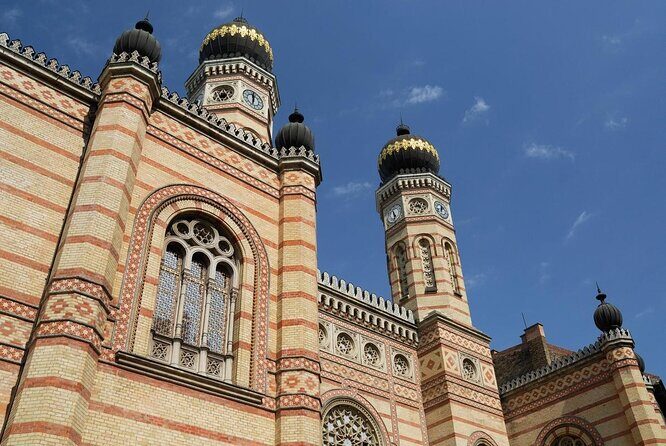
- History you can feel in your feet, from Communist memorials to the Shoes on the Danube Holocaust memorial
- Design and architecture stop-ins, including Miklós Ybl’s style-mixing Unger’s House
- Jewish Quarter context that spans community life, the WWII ghetto era, and today’s creative scene
Price and value: why a $3.63 walking tour still matters
Yes, this is priced low. But the real structure is simple: you pay the small listed amount, then you’re expected to tip the guide for the time and effort. For budget travelers, that’s the whole point. You get a guided overview without sinking money into a bus tour or multiple museum tickets.
For me, the best value here is direction. In a city like Budapest, a bad plan turns your day into backtracking. This walk is built to give you bearings across major Pest landmarks, so you can explore the rest of your trip with confidence.
One more value point: you’re not just hearing facts. You’re getting the “why” behind places. The guide links politics, architecture, and daily life, so the city feels less like a checklist and more like a living timeline. That kind of framing is what you usually pay a lot more for.
You can also read our reviews of more walking tours in Budapest

Where the tour fits in your trip (and how it moves)
Aim to do this early. The tour ends near the Chain Bridge, which puts you in a great position to keep walking, hop onto transit, or cross over for Buda sights on your own schedule.
The group can be up to 50 people. That’s not tiny, so it can get loud in busy areas. If you have trouble hearing, it helps to speak up right away so the guide can adjust for the moment. And since parts of the route go through areas where crowds naturally form, coming with a plan to stay patient is smart.
The walking is steady. They explicitly note it’s not recommended if you can’t walk about 3 miles, and you’ll be on real street surfaces. Comfortable shoes are not optional. Cobblestones and uneven pavements can turn a “2.5-hour stroll” into a sore-foot day if you show up in the wrong footwear.
Stop 1: Hungarian National Museum gardens and the turul symbol
You start with a classic Budapest “story in stone” moment: the gardens by the Hungarian National Museum. From there, you’ll see the turul bird statue in the museum grounds. It’s the kind of symbol that pops up in national storytelling, and the guide uses it as a doorway into bigger themes.
This stop also sets the historical tone. You’ll hear about the museum’s collections and its founder, then the guide brings in the 1948 uprising. That matters because the tour keeps returning to how political shifts shape what people build, remember, and argue about.
There’s also local color tied to the VIII district. The guide points to what used to be a neighborhood of grand palaces, and you’ll get a sense for how the city’s class map changed over time. Even if you don’t enter the museum, you still walk away with context for what you’ll notice later in Pest.
Stop 2: Kálvin Square (Kalvin tér) and the people-watching pause

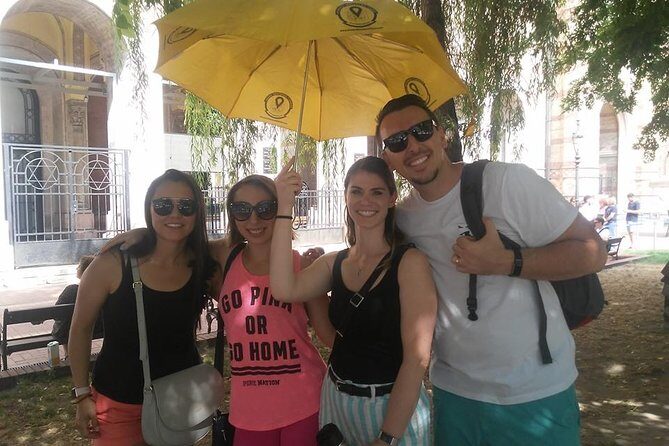
Next comes Kálvin Square, meeting near 12 Kalvin ter, with guides identifiable by yellow. It’s a small but useful break in the walk because the square includes places to sit and areas that can offer shelter from the elements.
The guide ties this spot to John Calvin, the French Protestant Reformer the square is named for. Even if you’re not a theology person, you’ll see how Budapest’s street names reflect the older layers of European influence.
Practical tip: if weather is bad, this kind of square stop is where you’ll notice who prepared for it. Bring water, and be ready to adjust your layers quickly.
Stop 3: Unger’s House and Miklós Ybl’s style-mixing brilliance
Then you’ll stand in the courtyard of Unger’s House, a creation linked to architect Miklós Ybl. This is one of those Budapest buildings that rewards close attention, because the design mixes styles: Byzantine, Gothic, Moorish, Renaissance, and Romantic elements all show up in one composition.
That mix is more than decoration. The guide uses it to show how Budapest attracted different influences and how taste can change across time periods. It also works as a mental reset after the political-heavy beats earlier in the route.
If you like architecture and want your tour to include more than monuments, this stop is a high point.
You can also read our reviews of more historical tours in Budapest





Stop 4: Elizabeth Square, the Budapest Eye, and nightlife geography
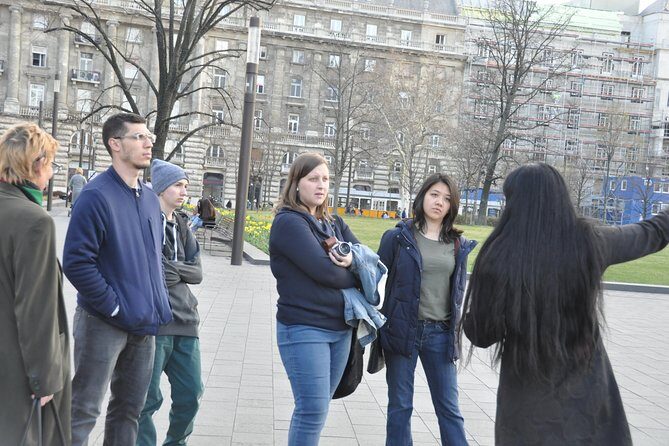
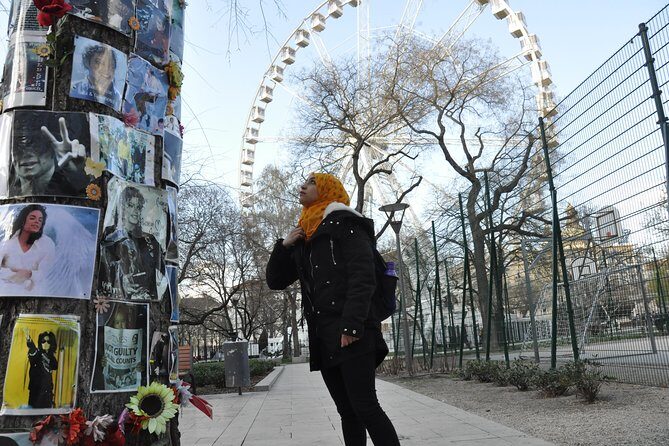
At Elizabeth Square, you’ll get a quick look around, including the Budapest Eye. The guide also talks about the history of the square and points out where some of the city’s most popular bars and nightlife cluster.
This is the moment where the tour connects the past to your actual weekend plans. You don’t just learn what the square was for. You learn where people go now, and that can save you from wandering around hungry and unsure.
It’s a short stop, so don’t expect a long break. But it’s still useful because it helps you map the city’s “fun zones” to the landmarks you’re seeing.
Stop 5: Astoria’s French Empire style and film-history connections
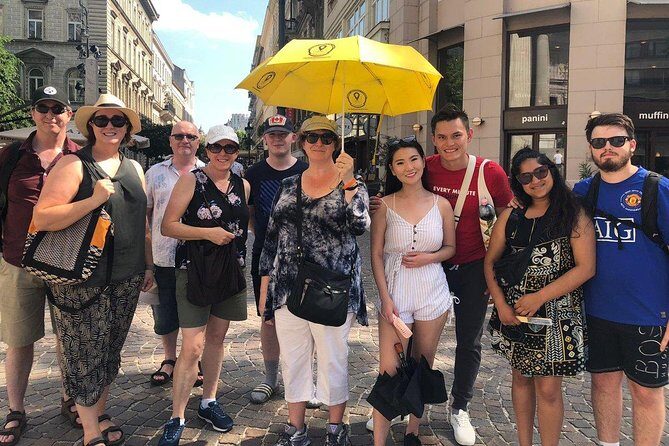
You’ll pass by Danubius Hotel Astoria, an elegant grand building in French Empire style. The guide adds a specific kind of detail you don’t get from a normal sightseeing bus window: Astoria’s cosmopolitan reputation drew international stars and appeared in cinematic productions, including the Josephine Baker story, directed by Brian Gibson.
This stop is a reminder that Budapest isn’t stuck in one era. Even a hotel façade can be a clue about global connections, media attention, and how the city brands itself.
If you’re the type who likes to understand how a place got its reputation, you’ll enjoy this one.
Jewish Quarter: community life, WWII ghetto reality, and today’s creative streets
Mid-tour, you move through the Jewish Quarter. The guide gives you a straightforward historical arc: it was home to a vibrant Jewish community, then became a ghetto during the Second World War, and in more recent years the area has welcomed artists and students.
What I like about how this is handled is that it doesn’t freeze the neighborhood in trauma-only mode. You’ll hear what it became after the war, and you’ll see the energy of independent shops, designers, and bars today. That blend matters. It keeps the story human and current, not just archival.
One practical note: this area can be busy. Keep your group positioning in mind and be ready for quick movement.
Stop 6: St. Stephen’s Basilica outside, and why the name matters
Next is St. Stephen’s Basilica (Szent István Bazilika). You’ll stand outside and learn why it’s named after Hungary’s first king. The basilica is one of those landmarks people recognize instantly, but the guide’s focus here is the meaning behind the name, not just the photo.
Admission isn’t included for this stop, so if you plan to go inside, you’ll need to handle that separately.
Even just from outside, this stop works as a “cultural anchor” in the middle of the walk: it shifts your attention from political history toward the story Hungary tells about its early monarchy.
Stop 7: Szabadság tér and the Communist memorial
At Szabadság tér (Liberty Square), the emphasis is on the Communist memorial. You spend a bit more time here, about 15 minutes, which is plenty for the guide to explain what you’re looking at and why it’s located there.
This stop is where the tour earns its name. The guide ties the visual reminders of the Communist era to how those memories still shape public space. It also helps you understand why Budapest sometimes feels like history is layered directly onto sidewalks.
Bring your best listening skills here. This is a “pause and interpret” moment, not just a pass-through.
Stop 8: Stock Exchange Palace and why size signals status
Then you’ll see the Stock Exchange Palace, described as the largest privately owned historic landmark in Budapest. The guide also gives a key detail: the palace covers about 50,000 m².
That number is useful. Big buildings in big cities weren’t just built for utility. They reflect who had money, who had influence, and what kind of future people expected. Even if you don’t go inside, the size and presence help you read the city’s priorities over time.
Admission isn’t included for this stop, so treat it as a street-level viewing experience unless you choose to add something later.
Stop 9: Ronald Reagan statue and the Cold War echo near Parliament
As you move toward the Parliament area, you’ll stop for the Ronald Reagan statue. The guide explains why Reagan is walking away from Parliament and also mentions the Bush statue nearby.
This stop is small, but it gives you a clean link between Budapest’s political story and international Cold War symbolism. It helps you see the neighborhood around Parliament as more than local architecture. It’s also a stage for global narratives.
Expect a quick hit here. It’s designed as a moment for meaning, not a long photo session.
Stop 10: Parliament Building views and the square’s extra landmarks
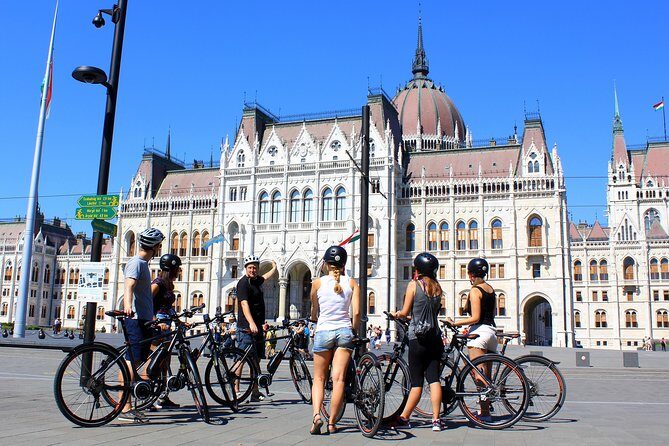
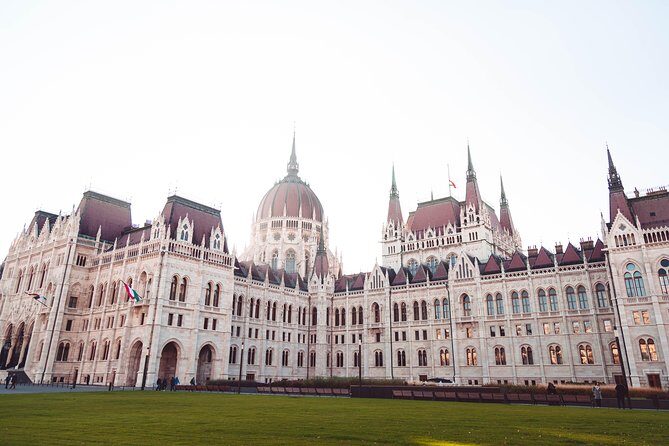
You’ll stand outside the Hungarian Parliament Building and take in the neo-Gothic exterior and the view of the Danube. This is one of those moments where the city rewards you for arriving with patience. Even if you’ve seen Parliament in pictures, seeing it in real scale hits differently.
The guide also points out other important nearby buildings, including the chocolate museum, the former ministry of Justice, and the agricultural museum. Those details matter because the square isn’t empty between landmarks. It’s a dense pocket of institutions.
Admission isn’t included for this part. But you still get the exterior impact and a sense of how the square functions as a hub.
Fisherman’s Bastion views from the Pest side and the tile-roof detail
As the route swings back across river views, you’ll see Fisherman’s Bastion from the Pest side. That means you get postcard energy without crossing over yet.
The guide calls out nearby sights visible from that vantage point, including St. Matthias Church with its stunning colored tiled roof and the Hungarian National Palace from afar. You’ll also look toward St. Margaret’s Island and Gellért Hill.
The value here is perspective. Budapest’s beauty often comes from seeing one side framed by another. This stop teaches you how to spot those relationships quickly, so your own wandering has structure.
Chain Bridge (Széchenyi Lanchid): history and the reconstruction story
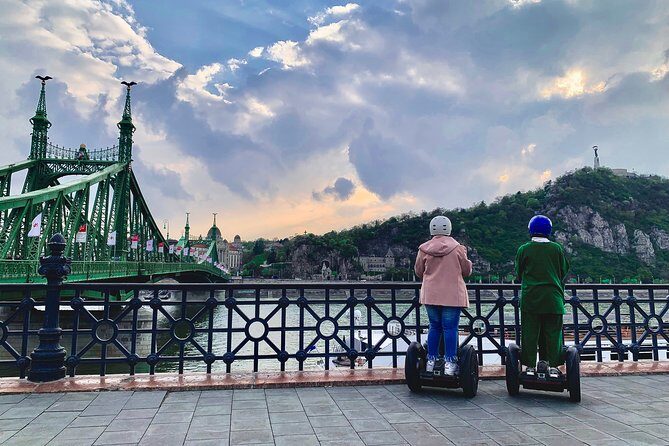
Next is Széchenyi Lanchid, the Chain Bridge. You’ll learn about the bridge’s history and its reconstruction.
This matters because the bridge isn’t only a “pretty crossing.” Bridges are practical decisions. They show how engineers and city planners answered the question: how do we connect, grow, and survive change.
The route’s pace keeps you moving, but this is a good anchor point before your final stretch.
Shoes on the Danube Bank: simple design, heavy memory
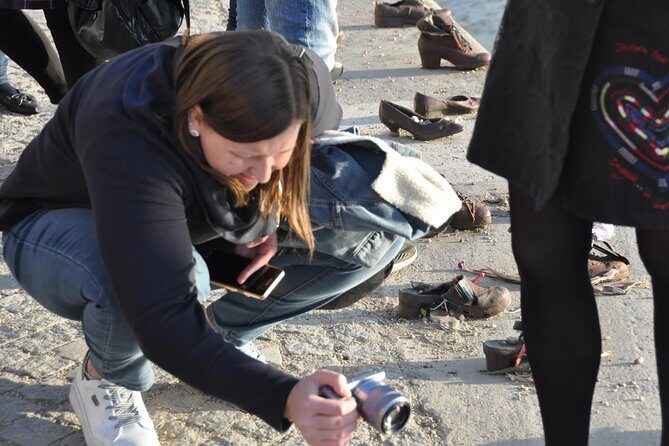
Then comes one of the most powerful stops on the entire walk: Shoes on the Danube Bank. It’s described as a haunting monument with 60 pairs of shoes dedicated to Holocaust victims who were lined up and shot on the banks.
The design is intentionally basic. That’s what makes it hit. This stop works as a moral pause during a tour that covers everything from architecture to nightlife. You don’t leave here with a funny story. You leave with a clearer understanding of why memorials matter in public space.
It’s a quick stop, about 5 minutes, but it deserves your attention. If you rush it, you’ll miss the point.
What to bring, and what will cost extra
The tour doesn’t serve coffee or food. There’s a short break, about 5 minutes, where you can buy drinks and use the toilet. Public toilets cost extra, roughly 100huf to 500huf.
So I’d plan like this:
- Bring water and a snack you can eat later, especially if you’re walking all morning or afternoon.
- Pack warm layers. Reviews and guidance both point out that winter cold can be intense.
- Bring sunscreen in clearer weather, and an umbrella if rain is possible.
Also, the guide can’t carry guest luggage or equipment. If you’re traveling with big bags, consider how you’ll manage them on foot. Dogs are not permitted on the tour, but service animals are allowed.
If you’re sensitive to sound or need special audio equipment, note there’s no hearing induction loop.
Is this tour worth booking for you?
Book it if you want a fast, organized way to understand Budapest’s big themes in a single outing: Communist-era memory, the layered story of the Jewish Quarter, and major Pest landmarks that you can build the rest of your trip around.
Skip or rethink it if you hate long walks or you know you can’t manage about 3 miles on streets with uneven ground. Also consider that group size can reach 50, so if you have hearing challenges, you may want to choose a smaller-group option when possible.
If you’re visiting for the first time, doing this early is smart. You’ll leave with a mental map that makes the city easier to enjoy on your own.
FAQ
What language is the tour offered in?
The tour is offered in English.
How long is the Budapest Historical Sightseeing tour?
It lasts about 2 hours 30 minutes.
How much does the tour cost?
The price is listed as $3.63 per person, with tips expected for the guide.
Is there an admission fee for the stops?
Some stops list admission as not included, like St. Stephen’s Basilica and the Hungarian Parliament Building areas. Many other stops are free to view, and you typically remain outside for the major sights.
Are refreshments provided during the tour?
No. There is a short break to buy drinks, but no coffee or tea is served and no food is provided.
Do I need cash for toilets?
Public toilets cost extra, and the guide notes that there is a restroom break where you’d pay for your own use. The listed cost range is 100huf to 500huf.
Where does the tour start and end?
It starts at OTP Bank Budapest, Kálvin tér 12–13, 1085 Hungary, and ends at Id. Antall József rkp. 1, 1052 Hungary near Lanchid (the Chain Bridge).
Is the tour suitable for everyone with mobility issues?
Most travelers can participate, but it’s not recommended if you are unable to walk about 3 miles.
Are dogs allowed?
Dogs are not permitted, but service animals are allowed. Guide dogs are permitted if the owner carries the required official papers.
Is free cancellation available?
Yes. You can cancel up to 24 hours in advance for a full refund, based on the experience’s local time.