REVIEW · BUDAPEST
Budapest City Landmarks Walking Tour in 2 Hours
Book on Viator →Operated by Triptobudapest.hu - Free Budapest Walking Tours · Bookable on Viator
Two hours, and you’ll read Budapest fast. This walk ties together the big-name sights with small street stories, food advice, and even basic Hungarian, all at an easy pace. I love the economical price for how many key areas you cover, and I love the way the route gives you a map-level overview you can use the rest of the day. One watch-out: you mostly see famous places from the outside, and the tour does not enter St. Stephen’s Basilica.
If you’re new to town, this is a smart way to get your bearings without burning your whole first day on transport. The guide meets you clearly (small blue flag near the Budapest Eye), and the tour ends with practical pointers for restaurants and what to do next. Just be ready for a brisk walk with several short stops rather than long, sit-down visits.
In This Review
- Key points worth knowing before you go
- A smart first-day plan: 2 hours from Erzsébet tér to Parliament
- Erzsébet tér kickoff: big-picture Budapest with a small blue flag
- From St. Stephen’s Basilica to St. Stephen’s Square food stories
- József Nádor tér ceramics and Vorosmarty Square at the end of Váci utca
- Danube Embankment UNESCO views plus Chain Bridge history
- Little Princess wishes and Vigadó Square’s coronation-era music
- Gresham Palace Art Nouveau and the Hungarian Academy’s Nobel angle
- Shoes on the Danube and the Parliament finale you plan around
- What guides do best here, and how to get more value from the small price
- Should you book this Budapest City Landmarks walking tour?
- FAQ
- How long is the Budapest City Landmarks Walking Tour?
- Where do I meet the guide and where does the tour end?
- What language is the tour offered in?
- Do I need to print anything, or is a mobile ticket enough?
- Does the tour enter St. Stephen’s Basilica?
- How many people are in a group?
- Is a tip included in the tour price?
- What happens if the weather is bad?
- Are service animals allowed?
Key points worth knowing before you go
- A tight 2-hour circuit that hits Budapest’s most recognizable landmarks, then leaves you time to roam on your own
- Clear meet-up at Erzsébet tér: the licensed guide holds a small blue flag near the Budapest Eye
- No inside visits for major stops like St. Stephen’s Basilica, so it’s built for orientation and exterior views
- Danube history with the Shoes on the Danube memorial, handled with a moment to reflect
- Food and culture tips you can act on quickly, including what to eat and how to dodge tourist traps
- Frequent photo moments, especially along the Danube embankment and near the Chain Bridge
A smart first-day plan: 2 hours from Erzsébet tér to Parliament
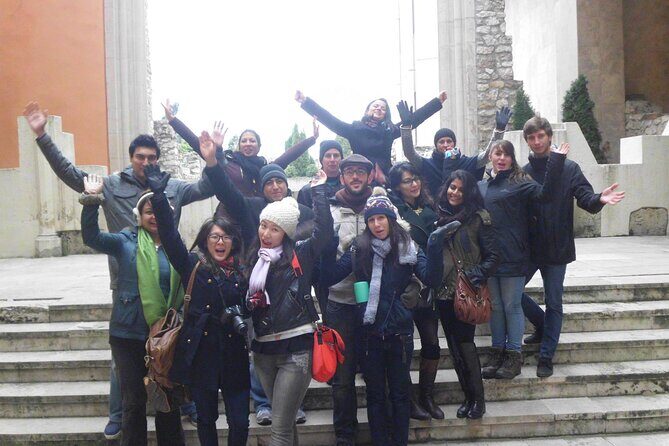
This walking tour is built for the classic first-day problem in Budapest: you want to see a lot, but you don’t want to waste daylight figuring out where everything is. At around 2 hours (some people experience it closer to 2.5 with the storytelling pace), you cover a cross-section of Pest’s highlights and major sightlines down to the Danube.
For value, the price is strikingly low for the amount of guidance you get. You’re not just walking from one photo spot to another—you’re getting the story thread that connects architecture, politics, public art, and everyday life. And you finish at the Hungarian Parliament Building, which makes it easy to plan dinner nearby or keep exploring without backtracking.
One more practical note: this is weather-dependent. If conditions are poor, the tour can be rescheduled or refunded, so don’t book this as your only outdoor plan for the day.
You can also read our reviews of more walking tours in Budapest



Erzsébet tér kickoff: big-picture Budapest with a small blue flag
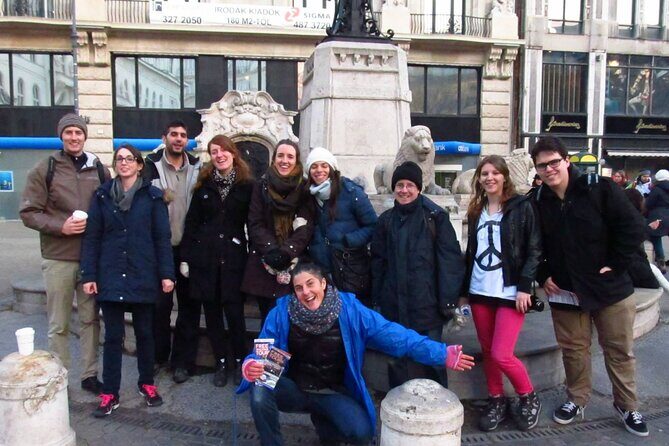
Your start is at the Ferris Wheel of Budapest on Elisabeth Square (Erzsébet tér). The guide meets you about 20 meters from the Budapest Eye, holding a small blue flag, so you’re not left guessing where to stand.
In that first chunk (about 15 minutes), you get what I think of as the tour’s “GPS layer.” The guide introduces the city through a mix of history, architecture, public art, and society—plus basics of Hungarian language and what daily life feels like for Hungarians. You’ll also learn how the rest of the route fits together, since the guide will point out the iconic landmarks and some less obvious backstreet views along the way.
This “get the big picture first” approach is why the rest of your Budapest day tends to go better. You can walk into places later with context instead of treating everything like a postcard.
From St. Stephen’s Basilica to St. Stephen’s Square food stories
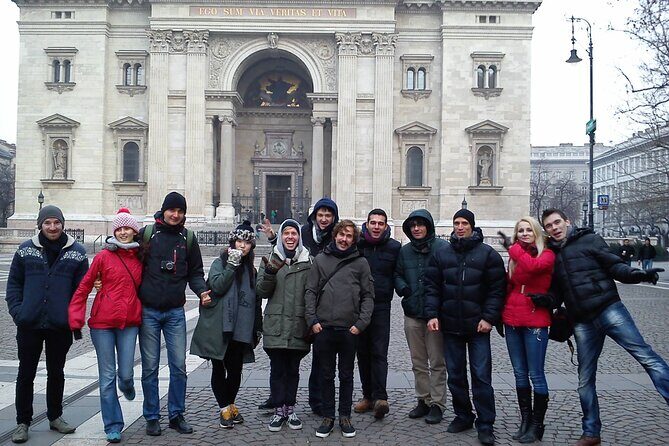
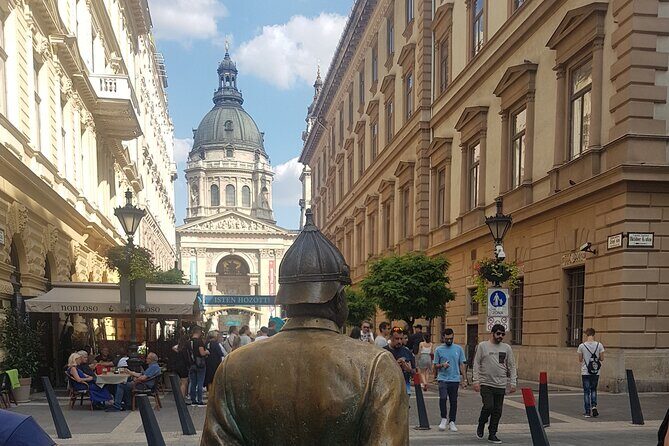
The tour heads next to St. Stephen’s Basilica, and this is an important expectation to set: you won’t enter. You’ll learn about it as the largest church in Budapest, designed to seat about 8,500 people, and you’ll hear how its architecture reflects different periods of splendor—similar to how Budapest itself grew through changing eras.
Even outside, the area around the basilica is great for orientation. You’ll also notice the pedestrianized space and nearby buildings, which gives you a feel for how the historic center moves when crowds thin out.
Then comes St. Stephen’s Square. Here, the tour leans into public art and local food culture. You’ll see the public art with fat policemen and shiny bellies, and you’ll get a practical lesson in Hungarian cooking: what locals eat in Budapest, how cooking developed, and what to watch for if you want to avoid tourist traps.
If you like tours that don’t stop at monuments—if you want “what should I actually eat?”—this stop is a reason to choose this tour early.
József Nádor tér ceramics and Vorosmarty Square at the end of Váci utca
Next up is József Nádor tér, a short stop that still packs personality. You’ll hear about the Hungarian Habsburg connection, and then you’ll spot what the area is famous for visually: Herendi hand-painted porcelains and Zsolnay glazed colorful ceramic masterpieces. Even without shopping, this is the kind of local detail that makes Budapest feel specific instead of generic.
After that, you move to Vorosmarty Square (Vorosmarty tér) at the end of Váci utca, where people watching is the main activity. This is where the tour connects architecture and daily rhythm: you’ll see neo-classical-style buildings and talk through the vibe of landmarks like the posh Gerbaud café.
Then you get a neat fact that also helps you understand the city: this area sits near a terminal for one of the world’s earliest underground lines (the tour notes it as the second oldest underground in the world). You also learn about Christmas markets and seasonal traditions—useful even if you’re visiting outside winter, because it helps you read what you’ll see later in the year.
This section is short, but it makes you more aware of Budapest’s layers: shopping streets, elegant façades, and everyday movement all at once.
Danube Embankment UNESCO views plus Chain Bridge history
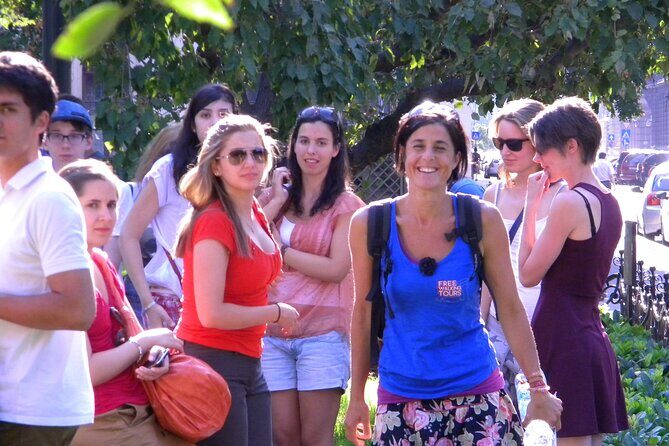
One of the biggest payoff sections is Korzo / the Danube Embankment (Dunakorzo). You’ll focus on panoramic city views and then anchor them with stories. The tour points out the first non-Communist statue in Budapest, talks about the tram line with big viewing value, and sets you up to see the riverside buildings as part of the city’s identity.
From here, the view toward Castle Hill is a major highlight: Matthias Church, Fisherman’s Bastion, Buda Castle, and Gellért Hill with the Citadel. The tour notes that many of these are UNESCO World Heritage sights, which helps you understand why people return here again and again.
A little later you stop at Széchenyi Lánchíd (Chain Bridge) for a short story-driven moment about the history of Pest and Buda, explained through the bridge’s role as the first permanent bridge built in the city.
If you only do one Danube-related thing on your Budapest trip, this tour is a smart way to get the “why” behind the skyline—then you can choose later whether to do a longer cruise, a Buda Castle day, or a photo-focused walk.
You can also read our reviews of more city tours in Budapest






Little Princess wishes and Vigadó Square’s coronation-era music
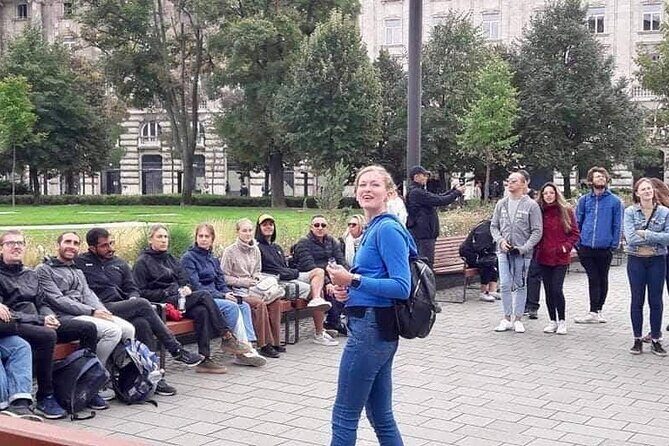
After the big skyline and bridge story, the tour slows down for small, playful moments. First: the Little Princess Statue. You stop for a quick secret wish while touching the shiny knees—fast, silly, and exactly the kind of break that keeps a short walking tour from feeling like a lecture marathon.
Then you head to Vigadó Square (Vigadó tér). This stop ties Budapest to European royalty and the arts. The tour explains that this is where Franz Joseph and Sisi’s coronation banquet took place in the 19th century, and it links the square to major musicians like Franz Liszt, Debussy, and Brahms.
It’s a short 2-minute stop, but it changes how you look at the place. Instead of seeing another open square, you start seeing it as a stage for events and ideas.
Gresham Palace Art Nouveau and the Hungarian Academy’s Nobel angle
Next comes Gresham Palace, where the tour focuses on architectural style—specifically Seccessionist/Art Nouveau design from Budapest’s golden age around the turn of the century. You’ll hear about the building’s history and major ornaments, which is helpful because Art Nouveau can be easy to miss if you only glance at façades.
Then you move to the Hungarian Academy of Sciences for a more “Budapest facts you’ll actually use” stop. You’ll learn some Hungarian words and phrases meant to impress, and you’ll hear why Hungary is said to have the largest Nobel Prize awards per capita. The guide also shares famous Hungarian-origin figures and inventions you might not realize come from Hungary.
This section works well because it shifts from buildings you can see to ideas you carry. It also gives you talking points for dinner conversations.
Shoes on the Danube and the Parliament finale you plan around
Near the end, the tour becomes more serious. At Shoes on the Danube Bank, you’ll see the 60 pairs of shoes placed to commemorate the 60th anniversary of the Holocaust. The guide explains World War II deportations and the more recent history of Hungarian Jewish communities tied to this place.
You’ll also have a moment to close your eyes and imagine the people affected, from synagogue-goers to assimilated Jewish families, from factory workers to factory owners. This stop is powerful, and I’d treat it as a “slow down” moment, not just a photo stop.
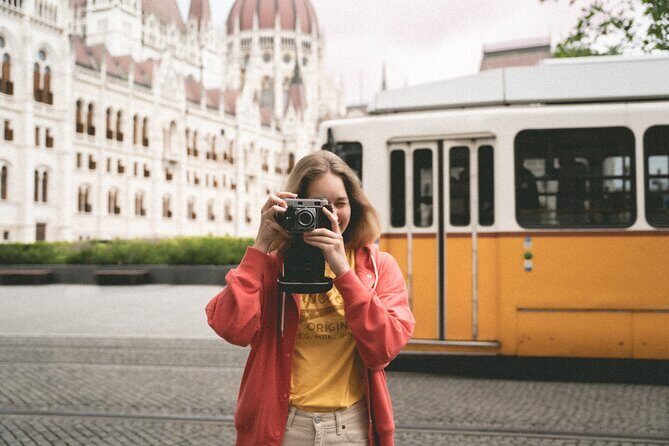
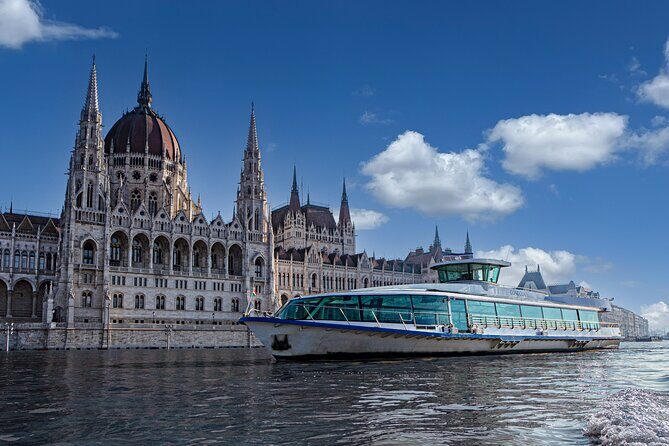
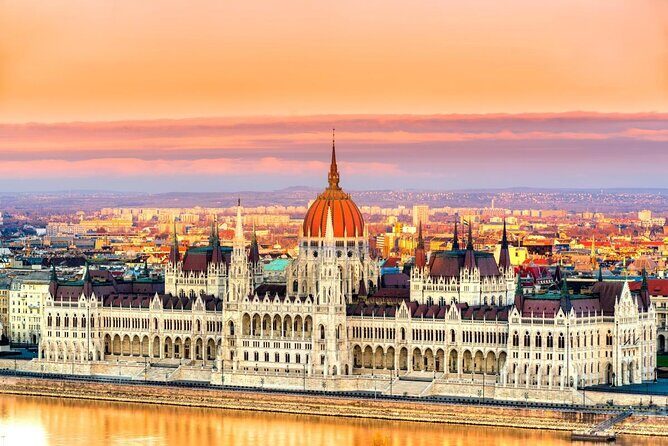
Finally, the tour ends at the Hungarian Parliament Building on Kossuth Lajos tér. You’ll learn about recent history, elections, and the neo-gothic architecture of the building—plus you get final orientation help. The guide provides restaurant and nightlife recommendations and helps you map out what to do on your next days.
Finishing here is a smart choice for your itinerary. You’re already at one of the city’s strongest landmarks, and you have enough energy left to keep exploring, rather than ending at a far-off starting point.
What guides do best here, and how to get more value from the small price
One reason this tour has a strong reputation is guide personality. In the experiences people shared, names like Balázs and Sofia show up for Pest/Buda coverage, and others like Esther, Marton, Andy, Sophie, Endre, Dora, Emmy, Gary, Judith, and Rita are credited for being engaging, friendly, funny, and easy to follow.
A practical detail: some guides use tools like a speaker so it’s easier to hear throughout the group, which matters when you’re moving and stops are short. Also, the route design gives you time to ask questions. In several guide styles described, questions were welcomed and the guide would go deeper when something sparked your curiosity.
About payment: the price you pay reserves your spot, and the booking fee goes to administration rather than the guide’s earnings. Tips or donations are how guides are supported at the end, so plan to budget for that. Even a small donation feels fair when you think about what you’re getting: a walking “explain the city” service for two hours, plus food and culture context that can save you money later by steering you away from bad choices.
If you do this on day one, you’ll likely find the tour’s biggest value isn’t what you see—it’s what you understand. And that understanding turns into better choices: where to eat, what to revisit, and what to skip.
Should you book this Budapest City Landmarks walking tour?
I’d book it if:
- You want a first-day orientation that connects major landmarks with real-life context.
- You like tours that include food tips, basic language, and local stories, not just dates and dates again.
- You’re aiming to finish with enough daylight left to explore on your own, since you won’t be tied up in long museum-style stops.
I’d skip it if:
- You’re only interested in inside visits and guided entry into big sites (this walk focuses on exterior views and does not enter St. Stephen’s Basilica).
- You can’t handle walking for about two hours with many short stops, especially if weather isn’t cooperative.
If you’re flexible with timing and you’re okay with a “see it and understand it” format, this is one of the best ways to start your Budapest trip with momentum.
FAQ
How long is the Budapest City Landmarks Walking Tour?
It’s listed at about 2 hours.
Where do I meet the guide and where does the tour end?
You start at the Ferris Wheel of Budapest on Erzsébet tér, 1051 and end at the Hungarian Parliament Building on Kossuth Lajos tér 1-3, 1055.
What language is the tour offered in?
The tour is offered in English.
Do I need to print anything, or is a mobile ticket enough?
A mobile ticket is included.
Does the tour enter St. Stephen’s Basilica?
No. The tour includes viewing and learning about the basilica, but it does not enter.
How many people are in a group?
The tour has a maximum of 30 travelers.
Is a tip included in the tour price?
Tips are not included. Guides depend entirely on donations at the end, and the amount is at your choice.
What happens if the weather is bad?
This experience requires good weather. If it’s canceled due to poor weather, you’ll be offered a different date or a full refund.
Are service animals allowed?
Yes, service animals are allowed.