REVIEW · BUDAPEST
Art Nouveau Treasures of Budapest – Exclusive Private Tour
Book on Viator →Operated by Fungarian · Bookable on Viator
Art Nouveau in Budapest changes how you see the city. This private tour gives you more than photo stops: it pairs expert art history with a tight route through the buildings that defined the style around the turn of the 1900s. You’ll also get a rare look at stained glass by Miksa Róth, including one you’re able to view in a private apartment setting.
I especially like the private group format (up to 5) and the chance to get design-focused explanations from an art historian guide. The guide in these reviews, Miklós, comes across as articulate and genuinely passionate, and he doesn’t just point at façades—he helps you notice why details matter.
One thing to consider: this is a walking + public transport style tour, and it doesn’t include a public transport ticket. Also, Central Market Hall requires an admission ticket you’ll pay separately, so build that into your planning.
In This Review
- Quick hits: what makes this tour worth your time
- Art Nouveau and Secessionist Budapest, in a short and focused tour
- How the route works: pickup, mobile ticket, and the walk
- Central Market Hall to the hidden stained glass finish
- Crossing bridges toward Gellért Hill: the view part you’ll remember
- Hotel Gellért Thermal Bath: Secessionist style meets real life
- The bank buildings on Hold utca: tiles, folk motifs, and Ödön Lechner
- Gutenberg Square and the lead-glass stairway moment
- What you actually get from the expert guide
- Price and value: $261.67 for up to 5 people
- Who should book this private Art Nouveau tour
- Should you book this Art Nouveau Treasures of Budapest tour?
- FAQ
- Where does the tour start?
- Where does the tour end?
- How long is the tour?
- Is pickup available?
- Is this a private tour?
- What language is the tour offered in?
- Do I need admission tickets for the stops?
- Is food included?
- Is private transportation included?
- Is a mobile ticket used?
Quick hits: what makes this tour worth your time
- Private apartment stained glass time: you end with a real Miksa Róth window you can actually observe up close.
- Style-by-style guidance: you’ll learn what to look for in Art Nouveau and Secessionist design, not just where to stand for pictures.
- Bank architecture with tile and folk motifs: Ödön Lechner’s influence shows up in a way that’s easy to spot and fun to compare.
- Gellért-area Secessionist vibe: Hotel Gellért is part of the story, not just a backdrop.
- Most admissions are free: only the Central Market Hall stop lists a ticket not included.
- Flexible start time and pickup: you can arrange a starting point that fits your day.
Art Nouveau and Secessionist Budapest, in a short and focused tour
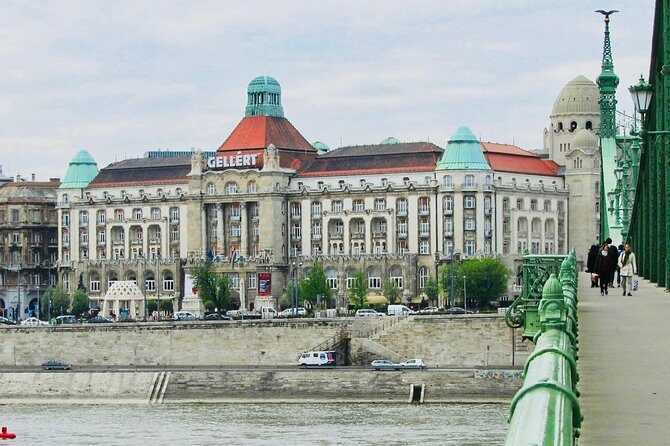
If you’ve ever seen Art Nouveau and thought it looked pretty but hard to interpret, this is the kind of tour that fixes that. Budapest has a special angle on the style because it mixes flamboyant design with civic pride—tiles, stained glass, ironwork, and ornament that all have a reason.
You’ll cover a handful of major stops over about 2.5 to 3 hours, and the pacing feels built for attention. It’s not a long museum slog. It’s more like getting your bearings fast, then learning what you’re actually seeing as you move through the city.
And since it’s private, you get the benefit of real questions. The guide’s delivery matters here. In the feedback I saw, Miklós was described as articulate and personable, and that’s a big deal when the goal is to notice design details, not just snap buildings from the sidewalk.
You can also read our reviews of more private tours in Budapest



How the route works: pickup, mobile ticket, and the walk
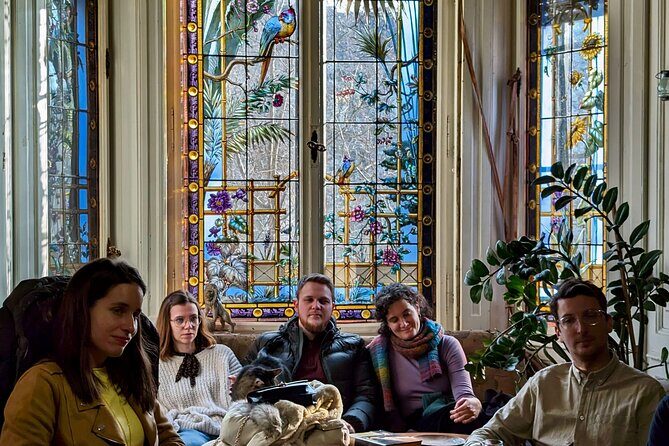
This tour is offered in English, and you get a mobile ticket. Pickup is available either from your hotel or from a central meeting point you agree on in advance, which helps if you’re staying outside the core.
You should plan on walking and using public transport. The tour doesn’t include a public transportation ticket, and it doesn’t use private car service. For many people, that’s part of the charm: you’re moving through Budapest like a local would, with stops clustered close enough to keep the time tight.
The route is designed so you can start at a time that works for your schedule, since the starting time is customizable on request. That matters in Budapest, where you might otherwise feel stuck with one rigid itinerary while you try to fit in baths, dinner, or another neighborhood.
Central Market Hall to the hidden stained glass finish

The tour starts at Central Market Hall (Budapest, 1093 Hungary). Even if you don’t spend much time inside, it’s a smart starting point because it puts you at the center of the city’s visual energy. From there, the route keeps nudging you toward Secession-era landmarks.
There’s one cost note here: Central Market Hall lists admission as not included, and the stop is about 20 minutes. So yes, you’ll want to budget a separate ticket for that segment.
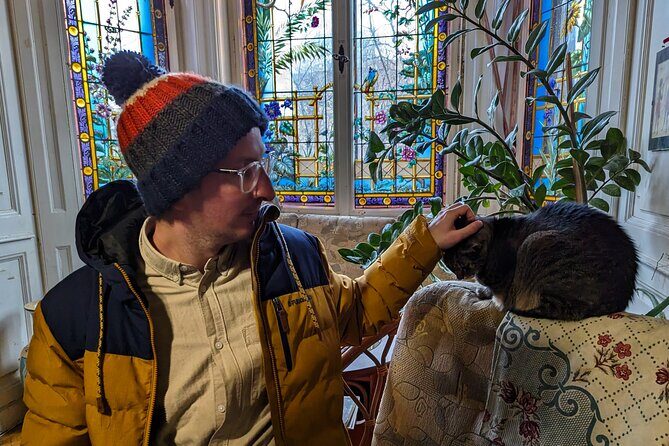
Then comes the most memorable shift: the tour finishes in a century-old private apartment. This isn’t a typical storefront stop. It’s a chance to observe and admire a real stained glass window by Miksa Róth, described as an invaluable treasure. That’s the kind of access you can’t reliably plan on your own, because stained glass at that level usually lives behind formal or restricted doors.
Even if stained glass isn’t usually your thing, this ending changes the way you understand the style. Art Nouveau loved light. Secessionists used color and pattern not as decoration, but as atmosphere—something that turns a building into a piece of lived art.
Crossing bridges toward Gellért Hill: the view part you’ll remember
Between stops, you’ll cross some of Budapest’s most beautiful bridges and head toward Gellért Hill. This is where the city’s geography helps you understand the architecture. You’re not just looking at buildings; you’re watching how they sit over the river and rise toward the hill.
On the way, the tour includes crossing a first stone bridge with a scenic view of the grand Hungarian Royal Palace. That’s a great break in pace: a few minutes to look, then back to design details. It also makes the photos better, because you’ll have context—where the buildings sit, how they relate to the skyline, and why certain structures look dramatic from specific angles.
Hotel Gellért Thermal Bath: Secessionist style meets real life
One of the key stops is St. Gellért Thermal Bath and Swimming Pool, located at Hotel Gellért. The time here is about 20 minutes, and the admission ticket is listed as free.
Hotel Gellért matters for architecture lovers because it’s not just a pretty building. It’s a working bath and hotel with a Secessionist identity. You’re stepping into a space where design is part of the daily ritual, not frozen behind museum glass.
What should you watch for during that short window? Look for how the building uses style as a form of atmosphere: decorative cues, the sense of line and ornament, and how the space feels when you move through it. Since the tour is guided by an art historian, you’ll get explanations that connect the visual features to the broader Secessionist goals.
Practical note: if you’re planning to swim or use the pool area, you might want to bring what you normally need for baths. The tour data doesn’t spell out dress rules, so check on-site rules before you go all in.






The bank buildings on Hold utca: tiles, folk motifs, and Ödön Lechner
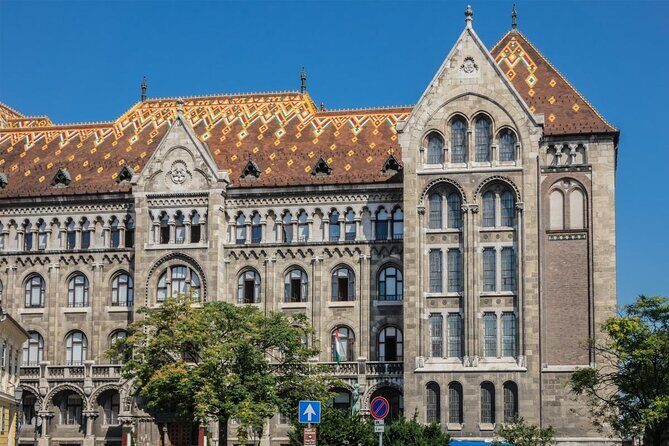
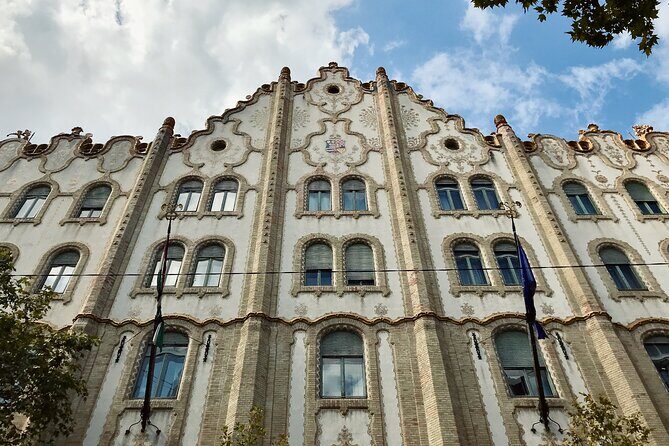
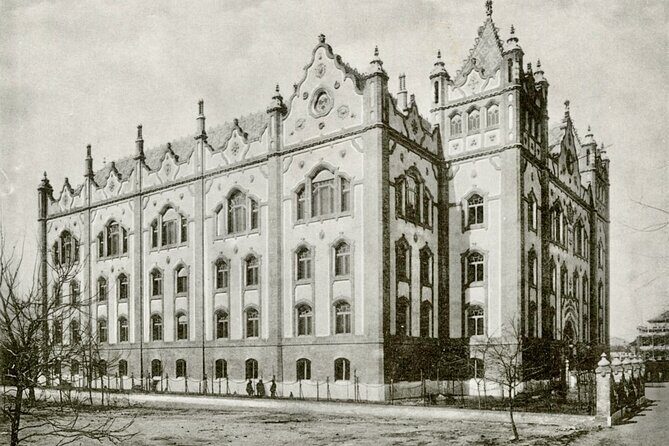
A big chunk of the tour is about Secessionist banking architecture, centered around the buildings connected with Ödön Lechner (1901). Two stops in the itinerary focus on these bank structures, including the Postal Savings Bank (on Hold utca) and a related named stop referred to as Nemzeti Bank.
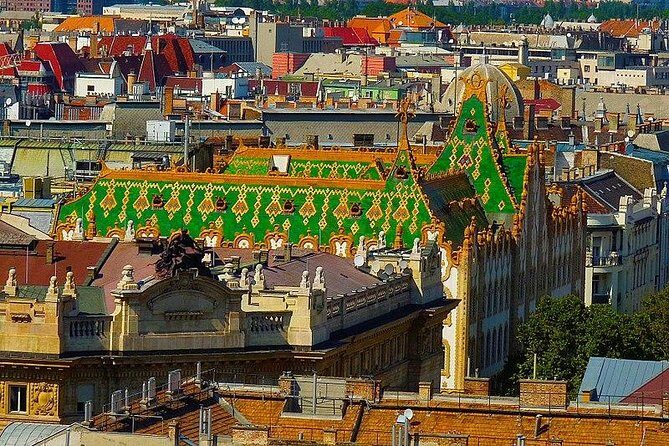
Here’s what makes it rewarding: you’re seeing architecture where the decoration isn’t random. It’s tied to identity and storytelling through materials. The Postal Savings Bank is described as an extravaganza of colorful tiles and folk motifs, and that’s exactly what you want your eyes to catch. Spend a few moments comparing tile patterns and ornamental themes across façades and entrances, because that’s where the design logic starts to become obvious.
Both the bank-related stops list admission as free, and each is around 20 minutes. That’s enough time to get detail-oriented guidance without turning it into a long detour.
One more thing: Lechner’s work is a great “bridge” between what you think Art Nouveau means and what Budapest’s version did with the style. You’ll likely leave with a clearer sense of how national imagery and modern design fused into everyday civic buildings.
Gutenberg Square and the lead-glass stairway moment
Another standout stop is Gutenberg Square in the 8th district, in the Palace area. This is a shorter segment (about 15 minutes), and admission is listed as free.
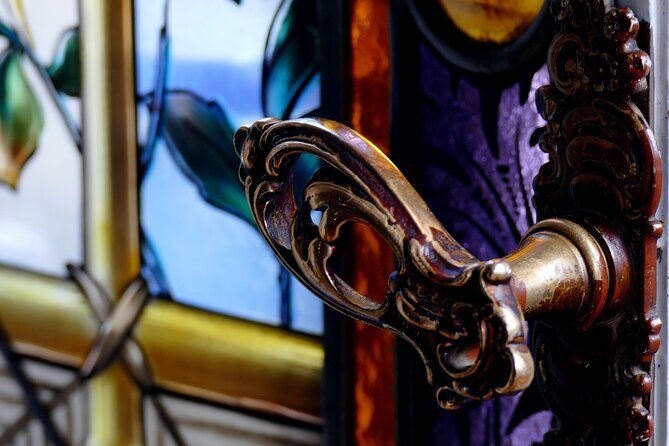
The focus here is an art deco historic building with a magnificent stairway lead-glass associated with Miksa. That detail matters because you’re not only tracing one style. You’re seeing how different design eras and decorative materials show up in the same city fabric.
In a short tour, these smaller moments are what keep it from feeling repetitive. A stairway or entrance detail can teach you just as much as a full façade—especially when you’re thinking about how light, pattern, and movement create drama.
What you actually get from the expert guide
This tour isn’t built around rushing you past landmarks. It’s built around interpretation.
You’ll have a local guide plus a professional art historian guide and a professional guide structure, which means you get both the narrative context and the design reading. That pairing is helpful, because you’ll often hear two kinds of info:
- what’s historically happening in Budapest around the Secession era
- what visual elements signal those ideas in the buildings themselves
In the reviews, the guide is described as passionate about the city and very well informed. That lines up with how a design tour works best: the guide is not just reciting dates. They’re helping you see patterns and make comparisons while you’re still looking at the building.
Price and value: $261.67 for up to 5 people
The price is $261.67 per group (up to 5), for roughly 2.5 to 3 hours. That’s important: you’re not paying per person in the way you would on a standard walking tour.
So the real value question is simple: does this feel like it would otherwise be hard to replicate on your own?
- Stained glass access in a private apartment is the kind of thing that usually costs more time than it’s worth to hunt down solo.
- Guided design explanations save you the guesswork. Instead of reading plaques afterward, you get the meaning while you’re standing there.
- Several sights are free on-site (the tour notes free admission for the bath/pool stop and for the bank and Gutenberg Square segments), which helps the total spend feel controlled.
A possible downside is that not everything is free. Central Market Hall is a ticket-not-included stop. But overall, the mix of guided time and included access still tends to feel like solid value if you’re serious about architecture.
Who should book this private Art Nouveau tour
You’ll get the most out of this if:
- you love Art Nouveau and Secession design and want help noticing specifics
- you want a guided route in a compact time window
- you prefer a private group experience, especially if you’re traveling with up to four people
- you care about architecture details like stained glass, tiles, and lead-glass elements
You might want to skip or look for a different option if:
- you hate walking or don’t want to use public transportation
- you’re only interested in outside views and don’t care about design interpretation
- you’re trying to do baths and architecture in a way that requires flexible, long time inside the thermal facilities (the stop is short)
Should you book this Art Nouveau Treasures of Budapest tour?
I’d book it if you want Budapest’s Art Nouveau and Secessionist side with expert guidance and a finish that’s genuinely different from a standard sightseeing circuit. The combo of stained glass access tied to Miksa Róth, plus design-focused stops around Lechner and the bank buildings, makes it feel like a specialty tour rather than generic architecture hopping.
If you’re going to spend money on one guided style tour in Budapest, this is the kind that rewards your attention. Just plan for Central Market Hall’s separate ticket, and plan your day around walking + public transport.
If you do that, you’ll come away with more than a list of buildings. You’ll leave with a mental checklist for how to read Budapest’s Secession-era design like a local.
FAQ
Where does the tour start?
It starts at Central Market Hall in Budapest (1093 Hungary).
Where does the tour end?
It ends at Rákóczi tér area, in a century-old private apartment.
How long is the tour?
The tour lasts about 2 hours 30 minutes to 3 hours.
Is pickup available?
Yes. You can be picked up either at your hotel or from a central meeting point you agree on.
Is this a private tour?
Yes. Only your group participates, and the group size is up to 5.
What language is the tour offered in?
The tour is offered in English.
Do I need admission tickets for the stops?
Central Market Hall lists admission as not included. The St. Gellért Thermal Bath and Swimming Pool, the bank-related stops, and Gutenberg Square are listed as free admissions.
Is food included?
Food and drinks are not included unless specified in the tour details (nothing specific is listed here).
Is private transportation included?
No. This tour is designed to be done on foot, with public transportation used along the route. Public transportation tickets are not included.
Is a mobile ticket used?
Yes, a mobile ticket is provided. Confirmation is received at the time of booking.