REVIEW · BUDAPEST
Private Budapest TukTuk Tour: Custom Route, Hotel Pickup
Book on Viator →Operated by Budapest TukTuk · Bookable on Viator
Budapest moves fast, but this ride keeps up. A private TukTuk tour with hotel pickup turns top sights into quick photo moments, plus a few less-frequent stops.
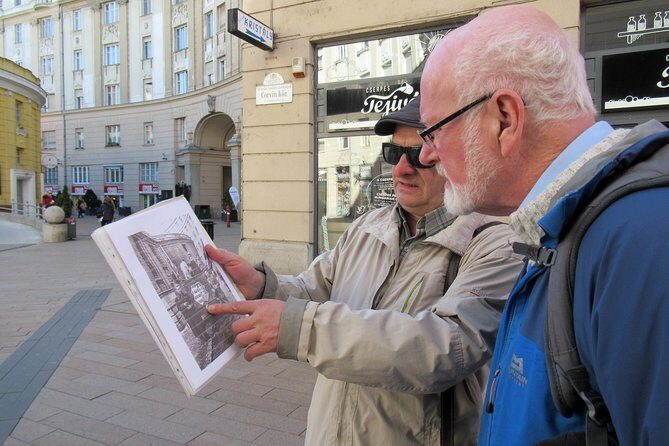
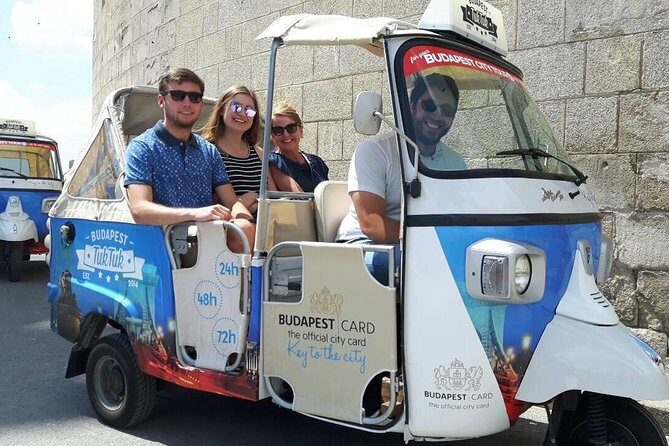
I love how the small vehicle slips into tight areas and parks closer than big buses. You also get real guidance from an English-speaking driver-guide who can steer the experience with stops that fit what you want to see.
Second, I like the human touch: guides such as Ben, Norbert, Dave, Paul, and Gabriel are described as friendly, energetic, and patient—exactly what you want when you’re trying to learn a new city fast. A possible drawback: it’s an open TukTuk-style setup, so weather matters (cold or rain is manageable, but you should dress for it), and entry tickets aren’t included for several key sights.
In This Review
- Key Highlights You’ll Feel Right Away
- Why a TukTuk Works So Well for Budapest
- The Route in One Glance: Andrássy to Castle to Parliament
- Andrássy Avenue and the Hungarian State Opera House: Budapest’s Prestige Boulevard
- Heroes’ Square and a Quick Taste of Széchenyi Baths and the Jewish Quarter Edge
- Great Market Hall and Danube Bridges: Where Budapest Becomes a Photo Story
- Gellért Hill Without the Hassle: Thermal Baths, Citadella, and Freedom Statue Views
- Castle District by TukTuk: Fisherman’s Bastion and Matthias Church Photos
- Hungarian Parliament Building Exterior: Big Views, No Interior Ticket
- Guides, Comfort, and What Private Really Changes
- Price and Value: What $99.89 Gets You in Real Time
- Practical Tips Before You Go
- Should You Book This Budapest TukTuk Tour?
- FAQ
- How long is the Private Budapest TukTuk Tour?
- Is hotel pickup included?
- Is the tour private or shared?
- What language is the guide?
- Are entry tickets included for the sights?
- Does the tour include the Parliament interior?
- What if I want to add a river cruise?
- How many people fit in one TukTuk?
- Is good weather required?
Key Highlights You’ll Feel Right Away
- Pickup and drop-off in wider downtown Budapest saves time on your first day
- Photo-first pacing with quick windows to stop, look, and take pictures without a bus crowd
- TukTuk access that can reach places bigger vehicles can’t, including Castle Hill areas
- A guide who handles history, street context, and practical timing in one go
- Comfort measures like blankets mentioned in colder months
Why a TukTuk Works So Well for Budapest
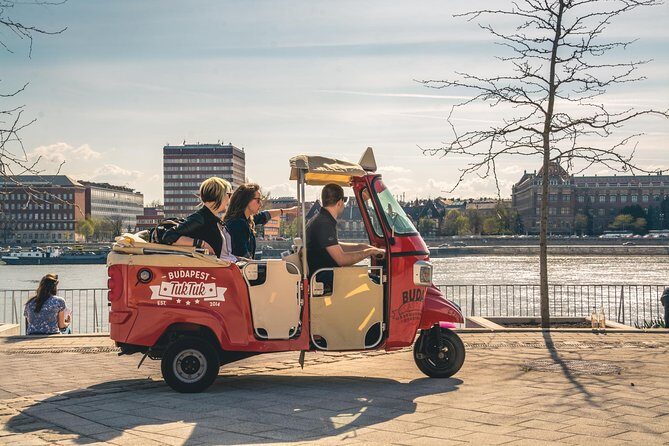
Budapest is built for walking, but it’s also built for layers. The city has major boulevards on the Pest side and dramatic viewpoints on the Buda side, and moving between them can eat up your day.
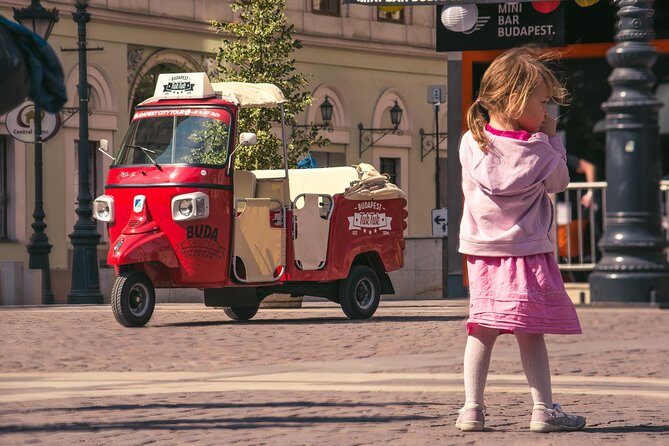
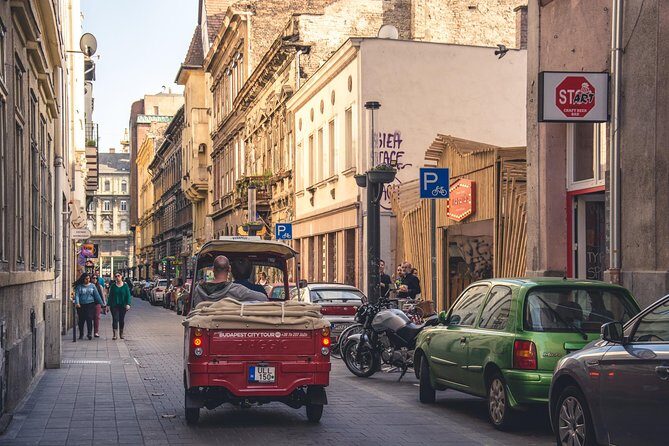
That’s where a TukTuk helps. The advantage isn’t just fun design—it’s the ability to handle narrow streets and get you near viewpoints for short photo stops. If you want an easy first impression of Buda and Pest without spending hours in transit, this format is a smart fit.
The experience is also truly private, so your route and stops can flex. If you’re the type who wants more time at a square or fewer picture stops, you’ll feel that control more than you would on a group bus.
You can also read our reviews of more private tours in Budapest



The Route in One Glance: Andrássy to Castle to Parliament
This is designed as an efficient loop that mixes landmark architecture with famous squares and Danube crossing views. The total time is about 2 hours 30 minutes, with multiple departure times available, and the operator notes that the scheduled time may shift by up to 1 hour.
You’ll start with big “main street” Budapest (Andrássy Avenue and the Opera area), then move through signature Pest stops like Heroes’ Square, the Market Hall, and Danube bridges. After that, the tour pivots to Buda with thermal bath views, Gellért Hill viewpoints, and the Castle District photo zone—then ends around the Parliament area exterior views.
Think of it as a guided “orientation ride.” You’re not paying for long ticket lines or museum deep dives. You’re paying for city understanding plus the right places to look.
Andrássy Avenue and the Hungarian State Opera House: Budapest’s Prestige Boulevard
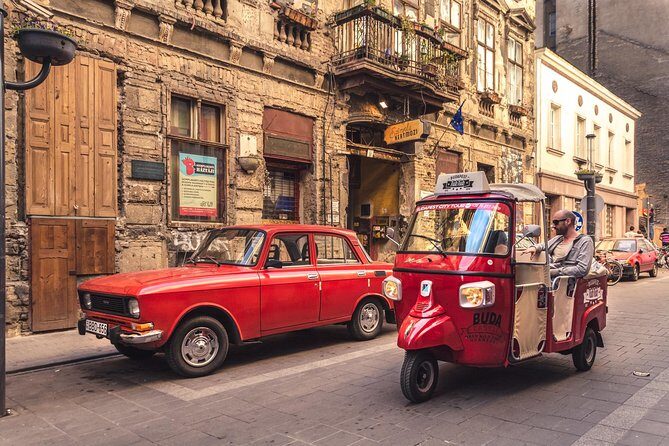
You begin on Andrássy Avenue, a grand boulevard dating back to 1872. It connects Erzsébet Square and Városliget, and it’s lined with Neo-renaissance mansions and townhouses with striking facades and interior detail. It was recognized as a World Heritage Site in 2002, and your guide will help you see what that means on the street level.
Next comes the Hungarian State Opera House on Andrássy út. It’s known for its Neo-renaissance design and was originally called the Hungarian Royal Opera House. The building was designed by Miklós Ybl, a major figure in 19th-century Hungarian architecture.
Practical takeaway: this is a great first stop because it sets the scale of Budapest quickly. You’ll see how elegant and formal the city can look—then you’ll get a contrast as the route moves into markets, synagogues, and thermal bath areas.
Heroes’ Square and a Quick Taste of Széchenyi Baths and the Jewish Quarter Edge
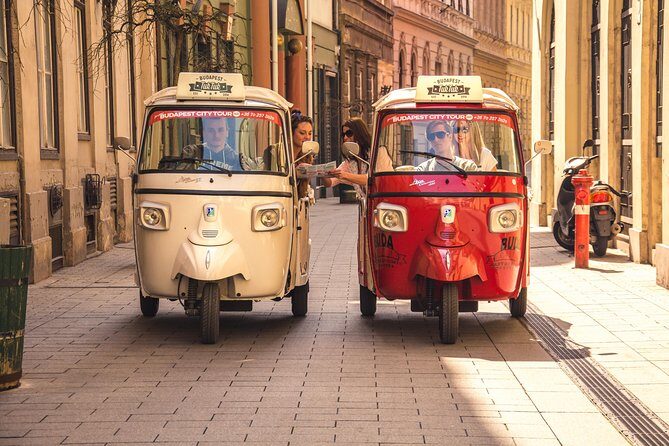
From the Opera boulevard area, you reach Heroes’ Square, one of Budapest’s biggest public squares. The photo centerpiece is the statue complex tied to the Seven chieftains of the Magyars, plus other national leaders and the Memorial Stone of Heroes. The tour’s framing helps you avoid common mix-ups, since people often confuse that memorial stone with the Tomb of the Unknown Soldier.
You’ll get around 15 minutes here, with no admission required. That short window is ideal for the classic wide-angle views where you can actually take in the whole composition.
After that, the route heads toward Széchenyi Medicinal Bath, described as Europe’s largest medicinal bath. Even if you don’t step inside (entry isn’t included), the stop still gives you a sense of how central thermal culture is to Budapest’s identity.
You’ll also pass through the area often called the party quarter, with restaurants and bars, and it serves as a northwestern boundary of the historic Jewish Quarter. This isn’t a “detour for shopping.” It’s a way to show you where social energy meets deep historical layers.
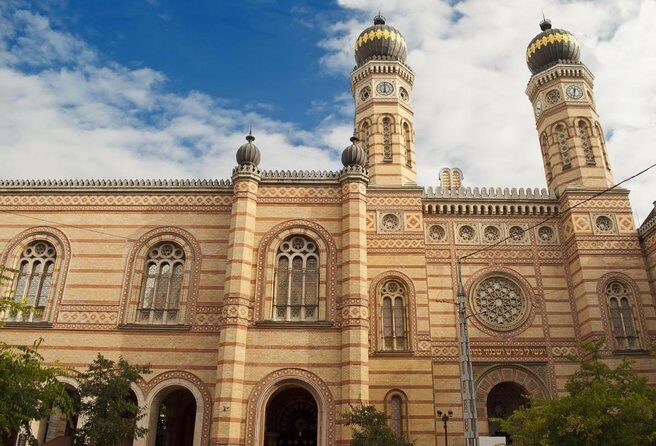
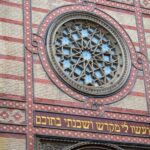
Then comes the Dohány Street Synagogue, also called the Great Synagogue. It’s the largest synagogue in Europe and a center of Neolog Judaism, with seating for 3,000 people. If you stop to look at it from outside, you’ll still get a powerful sense of the scale.
Great Market Hall and Danube Bridges: Where Budapest Becomes a Photo Story
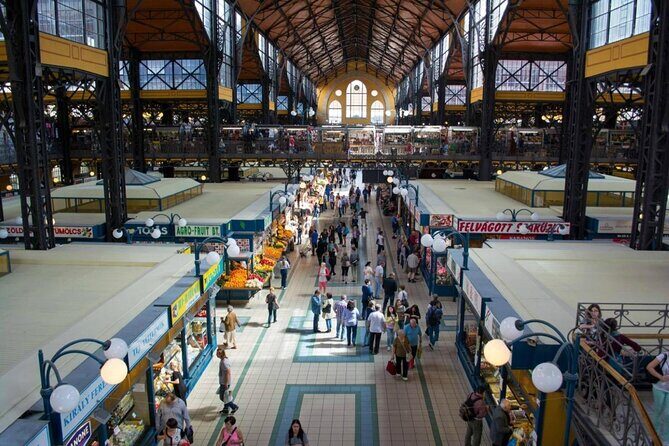
Next up is the Great Market Hall (Central Market Hall / Nagyvásárcsarnok), the largest and oldest indoor market in Budapest. Even without time for a long shopping session, it’s one of those places where the building itself signals daily life—produce, stalls, and the city’s food culture.
Then the tour crosses toward Danube bridge views, starting with the Liberty Bridge. It connects Buda and Pest and sits at the southern end of the city center. It was originally named the Franz Joseph Bridge, so if your guide mentions the name shift, that’s a useful clue about Hungary’s changing political eras.
Later, you’ll also see the Széchenyi Chain Bridge. It spans the Danube between Buda and Pest and was the first permanent bridge across the Danube in Hungary, opened in 1849. This makes it a key visual landmark—especially from a moving, stop-and-look angle where you can see the bridge’s role in connecting the city.
The tour also includes Margaret Bridge, linking Margaret Island to both banks. It’s the second-northernmost and second-oldest public bridge in Budapest, and it gives you another “Danube threading” perspective before you finish near Parliament.






Gellért Hill Without the Hassle: Thermal Baths, Citadella, and Freedom Statue Views
Once the route turns toward Buda, you get the dramatic viewpoint strategy that makes Budapest feel special. You’ll stop at Gellért Thermal Bath and Swimming Pool, part of the Hotel Gellért complex. This is a short stop in the plan, and entry isn’t included, but it’s still a great reference point for Budapest’s thermal culture.
Then comes Citadella, a fortification on top of Gellért Hill. You’ll have about 15 minutes for photos and sweeping views. Even if you’re not a fortress-history person, this stop helps you understand why Gellért Hill matters strategically—high ground in a city built around the river bends.
Nearby you’ll see the Statue of Elizabeth, Queen of Hungary, also referred to as the Freedom Statue. It commemorates those who sacrificed their lives for independence, freedom, and prosperity. This is one of the stops that benefits from a guide’s framing because the statue placement on the hill ties together viewpoint and meaning.
Optional in the plan: the Garden of Philosophy. It’s described as a calmer panorama point with a view of Budapest, and it includes a notable group sculpture with figures including Jesus Christ and Buddha. You’ll typically treat this as the “lighter-footprint photo option” in place of Citadella when the route is being adjusted.
Castle District by TukTuk: Fisherman’s Bastion and Matthias Church Photos
This is the part many people remember most. The tour explicitly includes time around Castle District, which sits on a limestone plateau about 170 meters above the Danube and is a UNESCO World Heritage Site. The area is also connected to a network of caves formed by thermal springs below.
A small, practical win: with a TukTuk, you can get closer to the Castle District viewpoints than with cars or buses that have stricter parking rules. One guide advantage that’s repeated in the feedback is that this kind of vehicle can reach up to the Castle Hill Buda side and park nearer to sightseeing points.
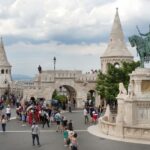
On the route, you’ll hit Fisherman’s Bastion (Halászbástya), a terrace area near Matthias Church. It’s described as neo-gothic and neo-romanesque in style, designed and built between 1895 and 1902. Admission isn’t included, and you’re likely there for the exterior and panoramic vibe more than an interior visit.
Then you’ll see Matthias Church (Mátyás-templom), located in front of Fisherman’s Bastion at the heart of the Castle District. The church is Roman Catholic, and tradition notes an early Romanesque origin (though there are no surviving archaeological remains). Admission isn’t included, so treat this as a look-around and photo-focused stop unless your schedule includes separate ticket plans elsewhere.
You’ll also pass the Castle Garden, described as a kind of jewel box where art and nature mix. It’s not the kind of stop you rush through. Even a brief pause here helps you feel how the Castle District is designed to be enjoyed, not just stared at from a distance.
Hungarian Parliament Building Exterior: Big Views, No Interior Ticket
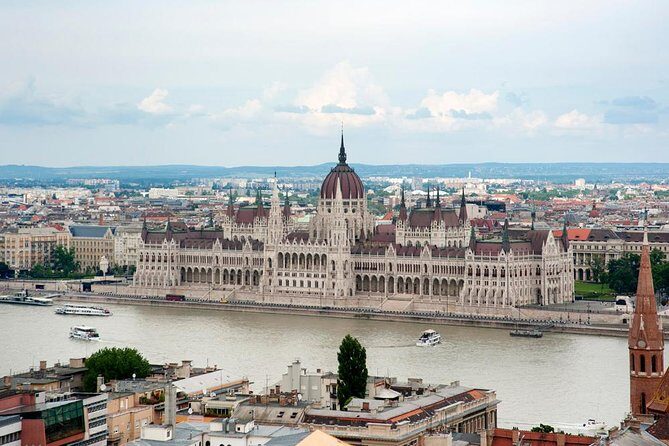
Your final landmark stop is the Hungarian Parliament Building on the Pest side. It’s the seat of Hungary’s National Assembly and one of Budapest’s most famous landmarks.
Important: this tour plan does not include visiting the Parliament interior. So if you’re hoping for grand halls and guided interior rooms, you’ll need a separate ticket experience.
Still, the exterior view is extremely worthwhile in daylight or near sunset, because the building’s symmetry and scale are made for “stand back and take it in” photos. A good guide can also help you understand what you’re looking at so it doesn’t feel like just another big government building.
Guides, Comfort, and What Private Really Changes
This tour lives or dies by the guide, and the feedback on this operator is strongly consistent: people describe guides as energetic, friendly, and patient, with strong local storytelling. Names that come up repeatedly include Ben, Norbert, Dave, Paul, Peter, Gabriel, and Gabriella.
What’s practical about that? In Budapest, the difference between a boring drive and a great experience is often pacing. A solid guide helps you choose the right photo angles, knows where to stop without wasting time, and explains what you’re seeing so your brain can place it later when you go exploring on your own.
Comfort-wise, the tour is open-air style. That means cold and rain can hit. The good news: blankets are mentioned in the experience notes for winter days, and guides work hard to keep you warm and dry when possible.
Group size works like this: one TukTuk is comfortable for 2–3 people. If you book an odd number, you’ll specify whether you want one traveler placed in a second TukTuk.
Also, the tour is offered in English, and it uses a mobile ticket. There’s also a Danube sightseeing cruise option if you select it, which can be a nice add-on if you want more river views after the city loop.
Price and Value: What $99.89 Gets You in Real Time
At $99.89 per person for about 2.5 hours, the value depends on what you want from Budapest on day one.
You’re paying for:
- Private guiding (not a shared bus lecture)
- Pickup and drop-off in wider downtown Budapest
- A format that reduces transit time and maximizes photo stops
- Flexibility, especially compared with rigid “hop-on hop-off” routes
What you aren’t paying for:
- Entry tickets for several stops (the plan clearly notes certain sights as not included)
- Food and drinks
So this is best viewed as a paid orientation and photo strategy. If you already know you’ll spend the rest of your trip on museums and interiors, this TukTuk tour is a smart way to decide where to return.
If you’re hoping to treat it like a full ticketed-sight program (many interiors, long museum time), you’ll likely feel the gaps because this route is built around exterior views and short stop windows.
Practical Tips Before You Go
Dress matters. The tour notes that you should dress for the weather, and the experience is subject to favorable conditions. If it’s cold, rainy, or windy, bring layers and a warm outer layer, then count on that blanket help when offered.
Bring comfortable walking shoes too. Even though it’s a ride tour, several stops include short walking windows like Heroes’ Square and viewpoint areas. Also, the plan notes it’s near public transportation, so if you’re late or need to adjust your timing, you have options.
Finally, plan your expectations about ticketed stops. Admission isn’t included for a handful of major sights (like Gellért Baths, Fisherman’s Bastion, Matthias Church, and Parliament exterior-only coverage). If you strongly want interior access at any one place, pair those plans with a separate reservation.
Should You Book This Budapest TukTuk Tour?
Book it if you:
- want a first-day Budapest overview without a crowded group vibe
- like short stops and photo angles more than long museum hours
- value pickup/drop-off and a guide who can tailor the pacing
- are traveling with kids or anyone who prefers seeing a lot quickly
Skip it or add extra planning if you:
- need Parliament interior or deep-ticket museum time inside major sites
- hate open-air sightseeing and would rather be fully indoors
- want a strict schedule with zero weather-related changes (the tour can adjust, and time may shift)
If you’re trying to figure out where to focus your remaining days, this tour is a strong start. It gives you a map you can actually use when you’re out walking, eating, and choosing what comes next.
FAQ
How long is the Private Budapest TukTuk Tour?
It runs about 2 hours 30 minutes (approx.).
Is hotel pickup included?
Yes. Free pickup and drop-off are offered in the wider downtown Budapest area.
Is the tour private or shared?
It’s private. Only your group participates.
What language is the guide?
The guide is offered in English.
Are entry tickets included for the sights?
No. Entry tickets are not included for the stops that require them.
Does the tour include the Parliament interior?
No. The tour includes the Hungarian Parliament Building exterior only.
What if I want to add a river cruise?
A Danube sightseeing cruise is available if you select the option.
How many people fit in one TukTuk?
One TukTuk is comfortable for 2–3 people. If your group has an odd number, you should specify seating preference.
Is good weather required?
Yes. The experience requires favorable weather conditions, and if it’s canceled due to poor weather you’ll be offered an alternative date or a full refund.