REVIEW · BUDAPEST
Budapest Private Tuk Tuk Half-Day Tour
Book on Viator →Operated by Budapest TukTuk · Bookable on Viator
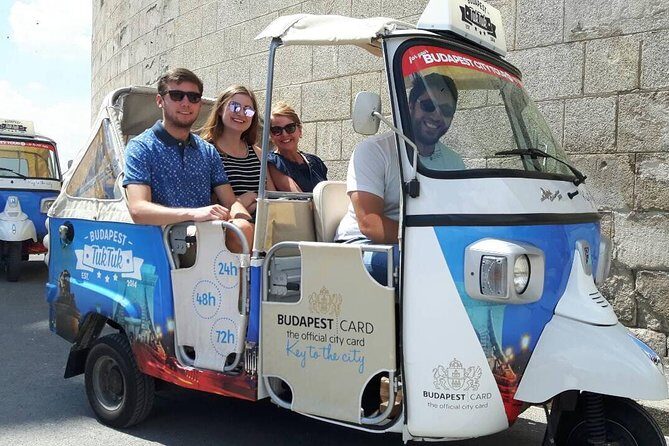
Budapest in a tuk-tuk feels like you’re getting a fast map. You’ll glide past major landmarks in Buda and Pest while your guide shapes the route to your pace. I especially like the private, flexible setup and the chance to hit big photo stops without the stress of crowded buses. One thing to consider: the ride is open-air, and the schedule can shift a bit with traffic and weather.
Expect a smart mix of “look at that” monuments and quick stops that help you understand the city’s layout. I love that you get English guidance plus pickup in the wider downtown area, so you don’t waste your first hours figuring out transport. The main drawback is simple: entry tickets aren’t included for the major sights, and some stops are brief—so this is about seeing and orienting, not deep museum time.
In This Review
- Key Things to Know Before You Go
- Why a Tuk-Tuk Works So Well for Half a Day in Budapest
- Price and Group Value: When This Tour Makes Financial Sense
- The 4-Hour Game Plan: Fast Orientation With Real Landmarks
- Buda Hill Views: Gellért Baths, Citadella, and Freedom on the Hill
- Castle Hill and the Fisherman’s Bastion Photo Circuit
- Pest Landmarks: St. Stephen’s Basilica, Andrássy Avenue, and Opera House Exteriors
- Széchenyi Baths and the Jewish Quarter: Culture Stops Without the Ticket Line
- Danube Moment Stops: Bridges, Shoes Memorial, and Parliament from the Road
- Guide Quality: Why Names Matter on This Tour
- Practical Tips: How to Avoid the “Tuk-Tuk is Bumpy” Problem
- Should You Book This Budapest Private Tuk-Tuk Half-Day Tour?
- FAQ
- How long is the Budapest Private Tuk-Tuk Half-Day Tour?
- Is pickup and drop-off included?
- Is this tour private?
- Is the guide available in English?
- Are entry tickets included for the main sights?
- Can I choose when to start the tour?
- What if the weather is bad?
Key Things to Know Before You Go
- Private tuk-tuk comfort with a guide who can adjust the route on the fly.
- Covers both river banks so you get Buda viewpoints and Pest icons in one half-day.
- Major photo stops like Heroes’ Square, the Parliament Building exterior, and Fisherman’s Bastion.
- Thermal bath context via Széchenyi Baths and Gellért Baths (no spa time included, but the settings are impressive).
- Danube cruise option if you add it, which pairs nicely with the sightseeing.
- Bring good weather expectations: it’s designed for favorable conditions, and poor weather can trigger an alternative date or refund.
Why a Tuk-Tuk Works So Well for Half a Day in Budapest
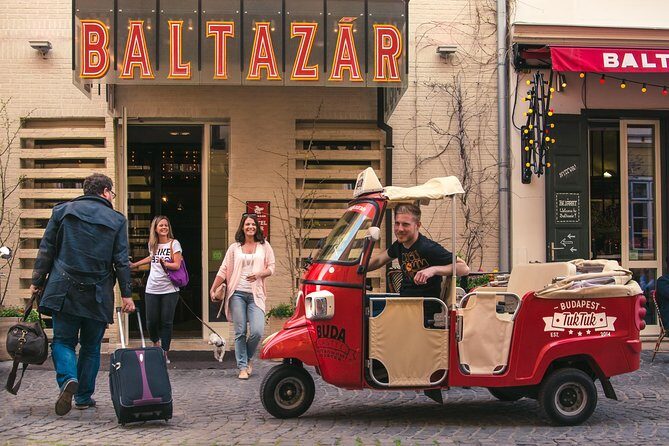
Budapest is split by the Danube, and it can feel huge on foot. A tuk-tuk helps you cover distance without losing the fun factor. You get the high points, the classic bridges, and the skyline views—without the tired-by-the-third-block feeling.
This tour is private, which changes everything. Your guide isn’t watching the clock for a big group. You can ask questions as you go, stop for better photos, and adjust the order if your priorities shift. In a city where many landmarks sit just far enough apart to be annoying, this is a practical shortcut.
You can also read our reviews of more private tours in Budapest



Price and Group Value: When This Tour Makes Financial Sense
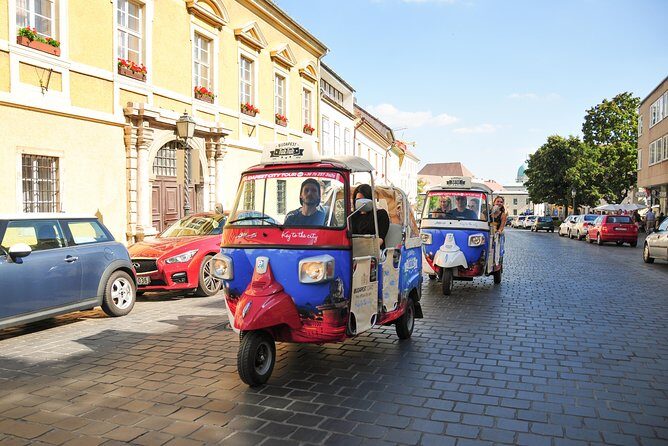
At $178.98 per person for about 4 hours, it sounds steep until you do the simple math of what a private, guided, round-trip experience gives you. The real value shows up when:
- you’re 2–3 people per tuk-tuk (that matches how the ride is set up)
- you want an orientation day that also gives you clear targets for the rest of your trip
- you’d rather pay to move efficiently than spend hours bouncing between neighborhoods
If you’re a larger group, plan on multiple tuk-tuks. The operator notes one tuk-tuk comfortably carries 2–3 people, and if you have an odd number, you may need to split across tuk-tuks.
The 4-Hour Game Plan: Fast Orientation With Real Landmarks
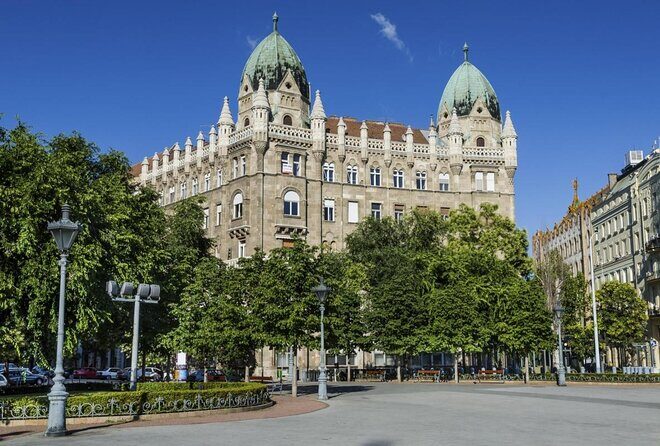
The tour is designed for first-timers or anyone who’s short on time. You’ll see a lot of Budapest’s “big names” rather than a long list of small streets. The route includes major stops in:
- Buda (Citadella area, Gellért Hill viewpoints, and the Castle District)
- Pest (churches, Andrássy Avenue, opera house area, market streets, and Danube memorials)
You’ll also notice a rhythm: quick photo time at several sites, longer context where your guide can explain what you’re looking at. Some stops are clearly timed—for example Heroes’ Square (about 15 minutes), the Citadella (about 15 minutes), and the Garden of Philosophy (about 5 minutes).
One more detail that matters: the operator says the advertised time may change, with a max change of 1.5 hours. That’s normal in a real city—just don’t book this as your only plan if you’re chasing a tight timed reservation right afterward.
Buda Hill Views: Gellért Baths, Citadella, and Freedom on the Hill
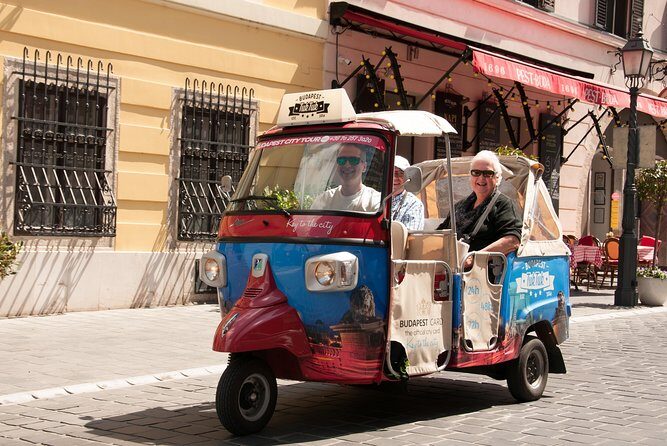
Buda is where Budapest starts to feel cinematic. Your tuk-tuk climbs into viewpoints that make the Danube look like a centerpiece instead of just a river.
You’ll pass by the Gellért Thermal Baths and Swimming Pool (Gellért fürdő), part of the Hotel Gellért complex. Even if you don’t go inside, the setting is a big clue to how Budapest treats wellness, architecture, and public life as one package.
From there, the tour hits the Gellért Hill fortification area:
- Citadella: expect a about 15-minute stop. The citadel sits on strategic high ground with a military past tied to the city’s defense story.
- Liberty Statue (Szabadság-szobor): another about 15 minutes, also on Gellért Hill. This monument is explicitly about people who sacrificed for Hungary’s independence, freedom, and prosperity.
Then you get a calmer, slightly offbeat break at the Garden of Philosophy. This stop is listed for about 5 minutes, free, with a view angle that helps you see how different parts of Budapest stack up against each other. It’s also known for symbolic sculptures, including a famous “meeting of ideas” theme represented by figures associated with Jesus Christ and Buddha.
Castle Hill and the Fisherman’s Bastion Photo Circuit
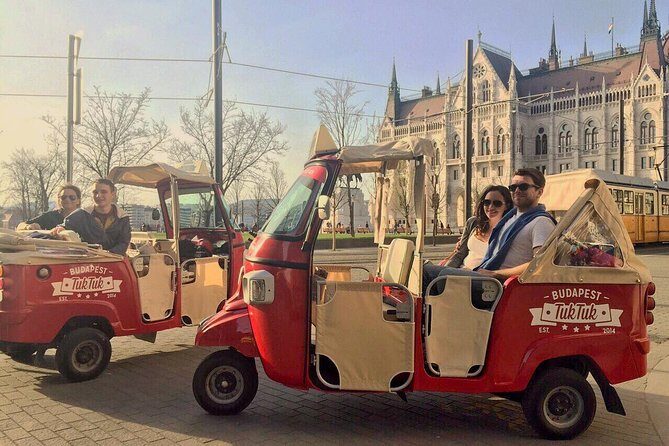
If you’ve only got a half-day, this is the part you don’t want to rush past with your eyes half-closed.
Budapest’s Castle Hill is a limestone plateau about 170 meters above the Danube, and it’s a UNESCO site. Even from a quick stop, you can sense why it’s so central: it’s one of the most dramatic medieval-and-royal pockets in the city.
You’ll also hear your guide point you toward the surrounding “garden” and architecture areas, including the Castle Garden space described as a mix of art and nature. Then comes the classic terrace moment:
- Fisherman’s Bastion (Halászbástya): about 10 minutes. This terrace sits near Matthias Church and is designed in a neo-Gothic/neo-Romanesque style. Even if you don’t go inside anything, it’s built for photos—and the angles are why people come.
Right nearby:
- Matthias Church (Mátyás-templom): another about 10 minutes with admission not included. The site is Roman Catholic, and tradition connects it back to an early 11th-century origin (with the important note that no archaeological remains exist for that early phase, according to the info provided).
This is where you’ll likely feel why people plan more than one trip to Budapest. In a short time, you get sweeping views plus an architectural “sense of place,” not just a single monument checkbox.
You can also read our reviews of more tours and experiences in Budapest





Pest Landmarks: St. Stephen’s Basilica, Andrássy Avenue, and Opera House Exteriors
Pest is where Budapest shows its grand boulevard face. The tour includes St. Stephen’s Basilica, Andrássy Avenue, and the area around the Hungarian State Opera House.
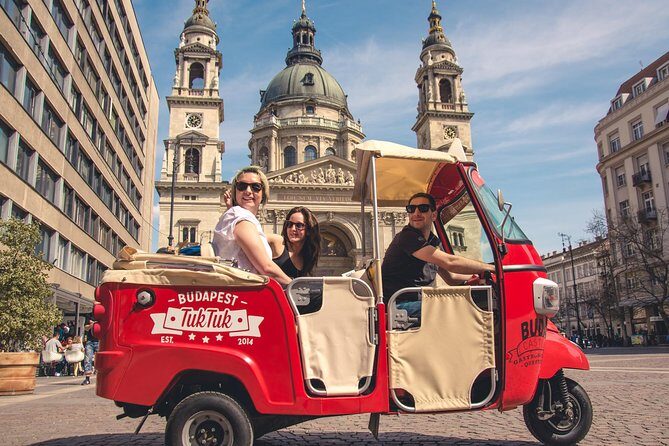
At St. Stephen’s Basilica, you’re seeing a major Roman Catholic church named for Stephen, the first King of Hungary. A detail worth knowing: the basilica is associated with Stephen’s supposed right hand, housed in a reliquary. The church also carried a reputation as one of the largest church buildings in Hungary before 1920.
Then it’s onto Andrássy Avenue, a boulevard dating back to 1872, linked between Erzsébet Square and Városliget. It’s lined with striking Neo-renaissance mansions and townhouses, and it’s recognized as a UNESCO World Heritage Site since 2002. If you like architecture, this stretch alone gives you the “Budapest got fancy” lesson.
Nearby, your route touches the Hungarian State Opera House, a neo-Renaissance opera house on Andrássy út. The tour notes it was originally known as the Hungarian Royal Opera House and designed by Miklós Ybl, a major 19th-century Hungarian architect.
And then you get a big national-symbol stop:
- Heroes’ Square: about 15 minutes, free. The iconic statue complex features the Seven chieftains of the Magyars plus other national leaders. You’ll also see the Memorial Stone of Heroes, often mistakenly called the Tomb of the Unknown Soldier. (Your guide can help you spot the difference so you don’t walk away with the wrong story.)
Széchenyi Baths and the Jewish Quarter: Culture Stops Without the Ticket Line
This part of the tour is about neighborhood context. You don’t need to buy spa or museum tickets to learn what this city values.
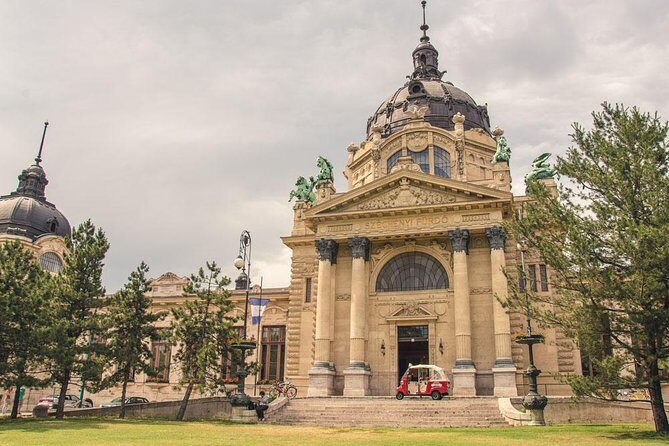
On the list is Széchenyi Medicinal Bath, described as the largest medicinal bath in Europe. The water is supplied by two thermal springs at 74°C (165°F) and 77°C (171°F). Even if you don’t enter the baths on this tour, seeing the landmark from the outside helps you understand why Budapest’s thermal-water culture is part of everyday identity.
You’ll also spend time in areas tied to the historic Jewish Quarter, including a focus near District VII (often where religious centers of Orthodox Jews have been since the 19th century). One major landmark included is:
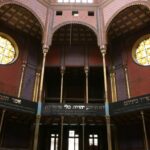
- Dohány Street Synagogue (Great Synagogue): highlighted as the largest synagogue in Europe, seating about 3,000 and associated with Neolog Judaism.
And the tour doesn’t ignore “life on the street.” It includes:
- Károlyi Garden in District V (described as the oldest remaining downtown palace garden in Hungary and well documented)
- University Church around Egyetem tér, near restaurants and cafés
- Kálvin tér, named after John Calvin, where a large Reformed Church sits
- Great Market Hall (Nagyvásárcsarnok), the largest and oldest indoor market in Budapest
If you want one practical takeaway: this route helps you spot where you might want to return later for a slower meal or a market browse.
Danube Moment Stops: Bridges, Shoes Memorial, and Parliament from the Road
Budapest’s Danube is the “glue” between Buda and Pest, and this tour uses it like a highlight reel.
You’ll cross or view:
- Liberty Bridge (Szabadság híd), a key connector between Buda and Pest. It was originally called the Franz Joseph Bridge. It’s described as the third southernmost public road bridge in Budapest, at the southern end of the city center.
- Margaret Bridge (Margit híd), connecting Buda and Pest and linking Margaret Island to the banks. It’s the second-northernmost and second-oldest public bridge in Budapest.
Then comes one of the most emotionally heavy stops on the list:
- Shoes on the Danube Bank. This memorial was conceived by film director Can Togay with sculptor Gyula Pauer, honoring the Jews killed by Arrow Cross militiamen during World War II. It’s placed along the east bank with stark simplicity—so it can hit hard, quickly.
Finally, you reach one of the biggest headline exteriors:
- Hungarian Parliament Building (Országház): about 10 minutes, with internal visit not included. The stop is purely exterior viewing in this tour format, but it’s still worth it because you’ll see the scale and position it holds in the city’s power story.
Guide Quality: Why Names Matter on This Tour
With a private tour, your guide is the product. And this operator clearly varies guide-to-guide, but the reviews point to a pattern: when the guide is sharp, the whole day feels easy.
I’d put extra attention on the experience if you happen to get one of these guides mentioned in past tours:
- Zoltán: praised for passion about Hungary, strong historical context, and pop-culture-style storytelling, plus taking great photos.
- Norbert: known for a personalized start to the trip and a strong recommendation to add a Danube river cruise afterward.
- Paul: noted for historical context, current event awareness, and picture-taking help.
- Martin and Robi: described as friendly, adaptable, and helpful—also with comfort considerations for seniors using canes.
- Greg and Gabriella: praised for keeping it light, adding humor, and being flexible with pacing.
- Peter: mentioned for winter comfort (including a wool blanket) and humor.
What this means for you: ask your guide what they’d prioritize if it were your first day. Then use their suggestions to plan your next stops. In Budapest, that’s often the difference between wandering and making a clear plan.
Practical Tips: How to Avoid the “Tuk-Tuk is Bumpy” Problem
Tuk-tuks are fun, but they’re still rides. One review noted the ride could be a bit jarring and audio could be hard if you’re sensitive. So I’d plan smart:
- Dress for wind and weather. This is an outdoor vehicle setup. In colder seasons, the company has provided blankets based on guest feedback.
- If you have back or mobility concerns, bring that up early. A good guide can often adjust the pace and route, but the physical ride still matters.
- Wear comfortable shoes for the walk-and-photo transitions. Even with minimal walking, you’ll step in and out at each stop.
- Bring phone storage. Multiple stops are “quick and beautiful,” meaning you’ll want photos right then.
Should You Book This Budapest Private Tuk-Tuk Half-Day Tour?
Book it if:
- you’re short on time and want both sides of the Danube covered
- you want an easy first-day orientation with a private guide
- you like big landmarks and quick neighborhood context more than long indoor visits
- you’d benefit from photo stops placed around major sights like Heroes’ Square, Fisherman’s Bastion, and the Parliament exterior
Skip it (or pair it differently) if:
- you need deep entry-ticket time at specific museums and churches. Entry tickets aren’t included here, and several highlights are exterior or brief viewing moments.
- you’re very sensitive to bumps or loud audio. A tuk-tuk ride may not suit everyone.
- you want a slow, lingering day with lots of walking. This tour trades “slow” for “cover a lot.”
If you do book it, do one smart thing: treat it like your city briefing. Then schedule your next day’s activities around what your guide shows you—especially the market areas and synagogue/quarter context where it’s easy to return on foot.
FAQ
How long is the Budapest Private Tuk-Tuk Half-Day Tour?
The tour lasts about 4 hours.
Is pickup and drop-off included?
Yes. You can request free pickup in the wider downtown area, and the tour ends with free drop-off back in the wider downtown area.
Is this tour private?
Yes. It’s a private tour/activity, and only your group participates.
Is the guide available in English?
Yes. The guide is offered in English.
Are entry tickets included for the main sights?
No. Entry tickets are not included, and several stops specifically note that admission is not included.
Can I choose when to start the tour?
Yes. There are choice of departure times throughout the day, and you should also indicate your preferred pick-up time and location.
What if the weather is bad?
The experience requires good weather. If it’s canceled due to poor weather, you’ll be offered an alternative date or a full refund.