REVIEW · BUDAPEST
Born Under The Red Star – Communist tour with Coffee in a Retro Bar
Book on Viator →Operated by Budapest Urban Walks · Bookable on Viator
Cold-war Budapest, with a soda break. This 3-hour Communist-themed walking tour links famous monuments to the political stories behind them, with English commentary that helps the street signs make sense. You also get a classic soda stop in a Communist-decor bar, plus maps and tips for what to tackle on your own after the walk.
One consideration: some stops deal directly with oppression and violence, and the shared pacing is fast—think short, focused visits rather than long museum time.
In This Review
- Key Points You’ll Actually Care About
- Where This Tour Fits in Budapest (and Why It Starts Where It Does)
- The Walk Through Soviet Memory: Soviet Heroic Memorial
- House of Terror Museum: The Part You Should Prepare For
- A Quick Stop for St. Stephen’s Basilica (and What You’ll Wish For)
- Liberty Statue on Gellért Hill: Why Independence Gets a Monument
- Szabadság tér (Liberty Square): Where Memory Battles Happen in Public
- The 1956 Revolution Memorial: Hungary’s Rebellion Has a Date
- Parliament Building Area: Finishing at a Symbol of Modern Hungary
- That Retro Bar Moment: Soda, Coffee/Tea, and a Different Kind of Break
- Value and Pricing for $90.31: What You’re Really Paying For
- Who Should Book This Tour (and Who Might Skip It)
- Quick Practical Tips for Getting More From the Walk
- Should You Book Born Under the Red Star?
- FAQ
- How long is the tour?
- How much does it cost?
- Is the tour in English?
- Where does the tour start and end?
- Is the group large?
- What’s included in the price?
- Do I need to pay for museum or church entry during the tour?
- Is this tour okay for kids?
- Does it run only with good weather?
- Can I cancel if my plans change?
Key Points You’ll Actually Care About
- English commentary that explains what you’re seeing, not just where to stand for photos
- A retro soda stop in a Communist-themed bar, plus coffee and/or tea
- Most of the major stops are free to enter, which keeps the cost from creeping
- A small group setup (up to 15) means you’re not lost in a crowd
- Heavier subject matter at the House of Terror, with a tight schedule overall
- Ends at Liberty Square, so you can keep exploring right away
Where This Tour Fits in Budapest (and Why It Starts Where It Does)
This tour runs through some of Budapest’s most politically loaded corners—places you can walk past on your own and still miss the meaning. The start point is the Hungarian State Opera area on Andrássy út (close to major transit), which is a practical way to begin: you get oriented fast, then move outward to the landmarks people argue about.
I like that the experience is designed for momentum. In about three hours, you cover several major stops—memorials, a key museum, and large public spaces—so you leave with a mental map, not just a handful of selfies.
If you want a gentle entry into the 20th-century story, you might find the pacing a little intense. Each stop is brief, and you’ll get the main ideas, but not the full depth you’d get from going solo with a full-ticket visit.
You can also read our reviews of more drinking tours in Budapest



The Walk Through Soviet Memory: Soviet Heroic Memorial
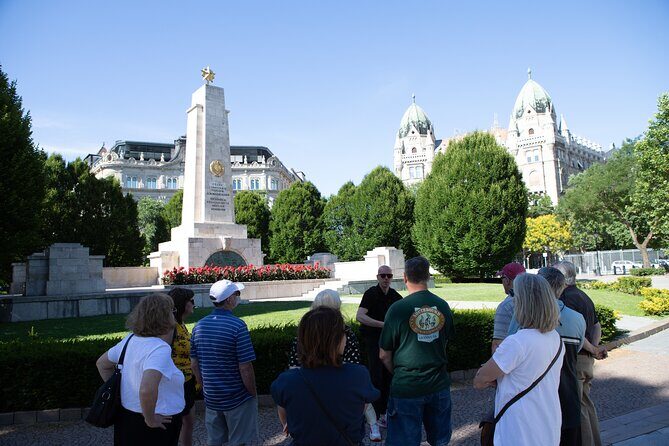
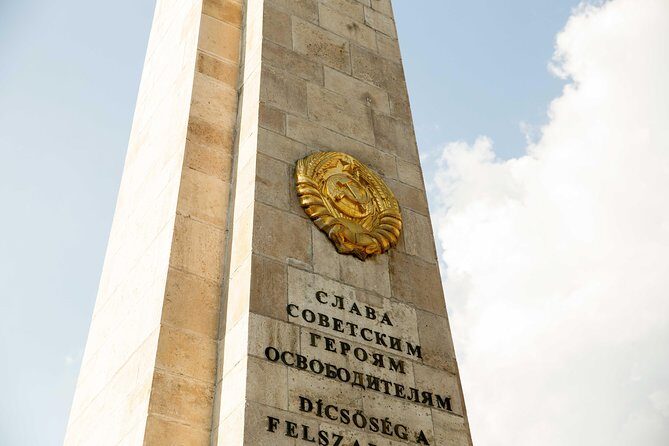
Your first stop is the Soviet Heroic Memorial: a white obelisk set in a landscaped park. It’s the kind of monument that looks straightforward from a distance, but the symbolism is the point. The guide’s commentary matters here, because you’re not only looking at stone—you’re reading how power wanted to be remembered after World War II.
This is also a good “warm-up” stop. Even if you’re new to Eastern European history, you get a sense of the style of commemoration used by the era: grand scale, clear messaging, and a clean visual story aimed at shaping public memory.
The drawback is simple: you only get around 15 minutes here. If you like lingering at memorials, treat this as orientation. You can always return later under your own schedule.
House of Terror Museum: The Part You Should Prepare For
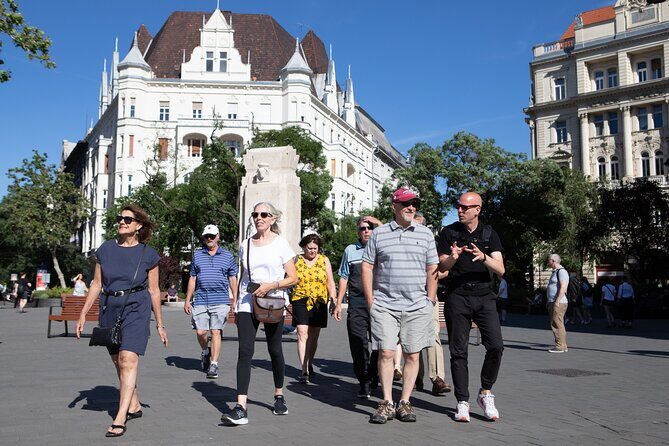
Next comes House of Terror Museum at Andrássy út 60. This is a serious site tied to fascist and communist regimes in 20th-century Hungary. The building also functions as a memorial to victims who were detained, interrogated, tortured, or killed there.
What you’ll get on the walk is the context you need to understand why this museum is different from a typical tourist stop. Instead of being a “look and move” photo moment, it pushes you to connect architecture and official narratives with human suffering. That’s why it’s worth going in with a calmer mindset.
Because your time is short, you won’t be able to absorb every exhibit deeply. Use the guide’s framing to identify what you want to read more about later. If you’re sensitive to intense subject matter, it’s smart to bring water, steady yourself emotionally, and plan for a slower follow-up museum visit if it affects you.
Admission here is free for this stop, which is a big win for value and accessibility.
A Quick Stop for St. Stephen’s Basilica (and What You’ll Wish For)
St. Stephen’s Basilica (Szent István Bazilika) is next, and even with a short stop it’s a striking change of tone. The basilica is named for Stephen, the first King of Hungary, and it’s known for the reliquary holding his right hand. You’re also near a major landmark that has been a centerpiece for Budapest’s religious and national identity.
Two things I like about this brief inclusion:
1) It reminds you Hungary’s story isn’t only communist-era politics.
2) It gives your eyes a break after heavier sites, so your brain can reset before moving to Liberty Square.
The consideration is also obvious: admission is not included for this stop. That doesn’t mean you can’t go inside—just means you should decide on the moment if you want to add it based on your time and interests. In a tour like this, that choice is on you.
Liberty Statue on Gellért Hill: Why Independence Gets a Monument
Then you’ll reach the Liberty Statue (Szabadság-szobor) on Gellért Hill. This monument commemorates people who sacrificed their lives for Hungary’s independence, freedom, and prosperity.
What makes this stop meaningful in the context of the tour is contrast. You’ve already seen how regimes wanted to be remembered. Now you see another kind of commemoration—one aimed at liberation and national survival. That push-and-pull between imposed authority and public longing is a theme running through the whole walk.
You’ll likely take photos from a viewpoint with strong city context. The tour keeps the stop time limited, so plan on quick observation rather than a long climb or extended photo session. (If you want a longer look, put that on your self-guided return list.)
You can also read our reviews of more tours and experiences in Budapest




Szabadság tér (Liberty Square): Where Memory Battles Happen in Public
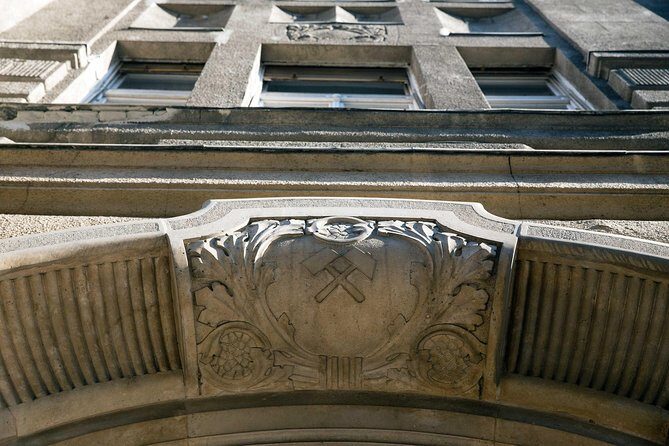
You end up at Szabadság tér, or Liberty Square, which is famous for controversial memorials connected to Hungarian Jewish Holocaust victims and Soviet soldiers who liberated Budapest in 1945. It’s a place where multiple narratives occupy the same ground, and the guide’s job is to help you understand why these locations matter to different groups.
This is also where the tour becomes practical for your independent plans. Liberty Square sits by major institutions: the United States Embassy in Hungary and the historicist headquarters of the Hungarian National Bank on the west side. Even if you don’t go inside anywhere, just being here helps you connect the political story to the real buildings and power centers that still shape daily life.
The stop is short, but the impact can be big. You’ll walk away knowing the square isn’t just “a nice open area.” It’s a living argument in stone and signage.
The 1956 Revolution Memorial: Hungary’s Rebellion Has a Date
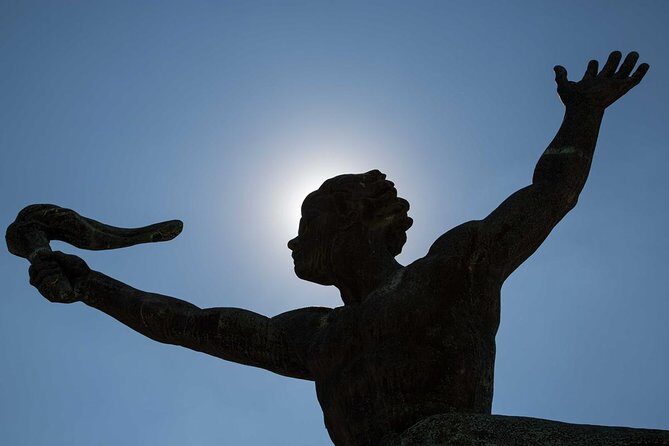
After that, you’ll visit the Memorial to the 1956 Hungarian Revolution and War of Independence. The date matters here. This is the kind of memorial that turns history into a clear marker on your mental timeline: there was resistance, there was a push for autonomy, and it left permanent traces.
This stop rounds out the tour’s storyline. You’ve moved from WWII-era commemorations into dictatorship memory, then to independence and liberation themes. By the time you reach 1956, you’re seeing the national struggle for self-determination, not just the international power play.
Admission here is free, which is another value point in a tour where several stops are paid by the visitor elsewhere.
Parliament Building Area: Finishing at a Symbol of Modern Hungary
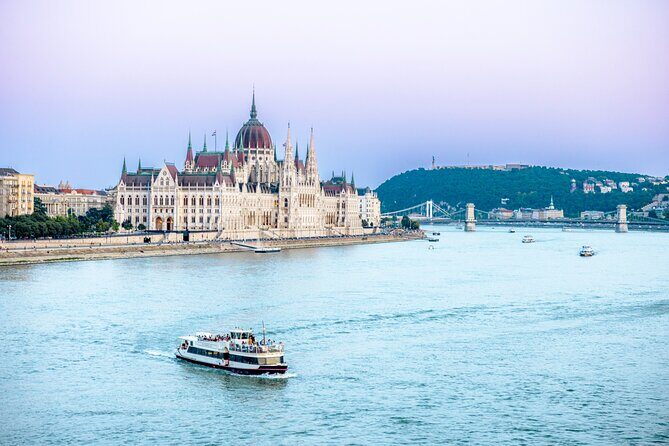
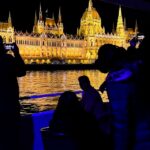
The final major stop on the walk is the Hungarian Parliament Building (Országház). The building is a major landmark and a popular destination, but the tour doesn’t include admission here—so you won’t be doing a full interior visit as part of the package.
Why this still works as a tour closer: you’re ending at a place that represents Hungary’s current national structure, after you’ve spent the earlier time talking about how regimes tried to control narratives. Even if you only see the exterior, you get a strong sense of where the story goes next.
The tour ends at Liberty Square, so after the walk you can keep going at your pace—either toward Parliament if you want to see more, or toward nearby sights in the same area.
That Retro Bar Moment: Soda, Coffee/Tea, and a Different Kind of Break
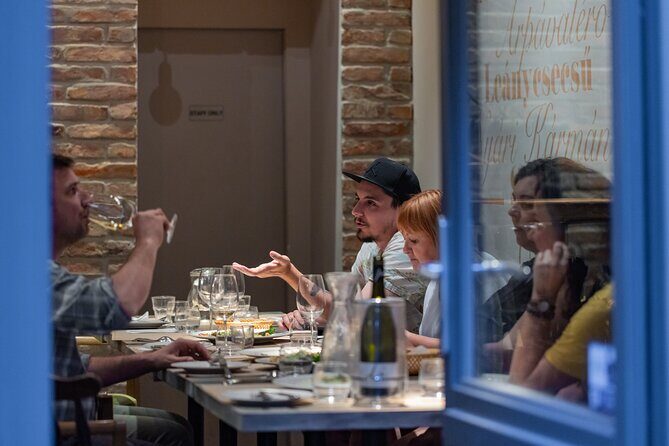
One included highlight that I think most people appreciate more than they expect is the retro soda in a Communist-themed bar. You’re not just getting a snack. It’s a tonal switch. After memorials and politically heavy buildings, a themed bar gives you a small breath of normal life—then brings you back to the idea that propaganda and identity show up in everyday design too.
You’ll also get coffee and/or tea, which is genuinely useful. Even in cool weather, three hours of walking adds up, and a warm drink helps you reset before thinking about your next stops.
If you’re someone who plans well, use this moment to ask your guide for practical follow-ups—places you can visit independently with the context the tour gave you.
Value and Pricing for $90.31: What You’re Really Paying For
The price is $90.31 per person for about three hours. That sounds steep until you break down what’s included and what isn’t.
Here’s what you do get:
- A guided walking experience with English commentary connecting multiple landmarks
- Free admission at the Soviet Heroic Memorial and House of Terror (included as part of the stops)
- A retro soda plus coffee and/or tea
- Maps and recommendations so you can keep exploring after the tour
And here’s what you don’t get:
- Food beyond the drinks
- Museum/church tickets for the basilica and Parliament (admission not included for those stops)
For me, the value comes from time and direction. You’re not spending your first day just “trying to understand what you’re looking at.” You get a framework. If you’re the type who likes to return later and go deeper, this guide time can save you hours of guesswork.
Small group size (up to 15) also helps the experience feel less generic. And if you get a lower turnout, the group can get very small—one booking ended up as just two people with the guide Ferenc, which is exactly the kind of setup where questions are easy and the pacing stays human.
Who Should Book This Tour (and Who Might Skip It)
This is a great pick if you:
- Want context for Budapest’s political monuments and memorial sites
- Like walking tours that end near major sights you can continue exploring
- Prefer a guided structure over trying to piece together meaning on your own
It might be less ideal if you:
- Want long time inside museums (this format is short-stop style)
- Get overwhelmed easily by accounts tied to detention, torture, and killings
- Expect a relaxed sightseeing day with lots of free wandering time (this one is structured)
Because it runs on good weather, it’s also best to plan it for a day when you don’t expect rain to ruin your walking pace.
Quick Practical Tips for Getting More From the Walk
- Bring a light layer. You’ll move between open areas and major landmarks.
- Keep expectations realistic: this is about big context in limited time, not deep museum study.
- At the intense site, it helps to take a breath before you start reading labels. Your brain needs time to adjust.
- Use the included maps and recommendations right after the tour while the information is still fresh.
Should You Book Born Under the Red Star?
Yes—if you want a fast, structured way to understand Budapest’s 20th-century political story, this is one of the better ways to do it. The combo of memorials, House of Terror, and then ends at Liberty Square gives you a coherent route you can build on.
I’d especially recommend it if you like tours that don’t just point at landmarks. This one gives you a reason to care about what you see, and the included retro soda break is a smart reminder that history lives in more places than just plaques.
Skip it only if you’re searching for a light, feel-good sightseeing loop or if heavy subject matter would be a dealbreaker for your mood that day.
FAQ
How long is the tour?
It runs about 3 hours.
How much does it cost?
The price is $90.31 per person.
Is the tour in English?
Yes, it’s offered in English.
Where does the tour start and end?
It starts at Hungarian State Opera, Andrássy út 22, 1061 Budapest, and ends at Liberty Square (Szabadság tér), Budapest.
Is the group large?
The tour has a maximum of 15 travelers.
What’s included in the price?
You get a retro soda in a Communist-themed bar, coffee and/or tea, plus maps and further recommendations.
Do I need to pay for museum or church entry during the tour?
Admission is free for the Soviet Heroic Memorial and House of Terror. St. Stephen’s Basilica and the Hungarian Parliament Building are not included, so admission isn’t covered for those.
Is this tour okay for kids?
Children must be accompanied by an adult.
Does it run only with good weather?
Yes. The experience requires good weather, and if it’s canceled due to poor weather you’ll be offered a different date or a full refund.
Can I cancel if my plans change?
You can cancel for a full refund up to 24 hours in advance of the experience’s start time.