REVIEW · BUDAPEST
Buda Castle’s Secrets with a Historian
Book on Viator →Operated by Budapest Explorers · Bookable on Viator
Budapest turns dramatic on Castle Hill. This 2.5-hour walk stitches together Hungarian history and real-world meaning of the sights, from Matthias Church to the Royal Palace terrace. I love the small-group feel (often very relaxed) and how guides use stories to make events click fast. One thing to plan for: only Matthias Church entry is included, while several other stops rely on what you choose to pay for on the day.
You’ll start at the Holy Trinity Column and end at the Fountain of King Matthias, with a smart mix of churches, courtyards, monuments, and viewpoints. The tour uses a mobile ticket, runs in English, and caps group size at a small number—great if you want to ask questions without feeling pushed along.
In This Review
- Key highlights worth your time
- Castle Hill in 2.5 Hours: What You Actually See
- Holy Trinity Column: Budapest’s Backstory Starts Here
- Fisherman’s Bastion: Pretty Vistas With a Real Job
- Matthias Church Inside: Where the Legends Feel Tangible
- National Archives Pass-By: The WWII Marks You Can See
- Sándor Palace Streets and Cobblestones: Power Behind the Walls
- Prince Eugene of Savoy Statue: A Shortcut to European History
- Buda Hill Funicular and Royal Palace Terrace Views
- Fountain of King Matthias: Closing With Legend and Meaning
- Value and small-group reality: the part that matters
- Who should book this tour (and who might want a different plan)
- Should You Book Buda Castle’s Secrets With a Historian?
- FAQ
- How long is the Buda Castle’s Secrets with a Historian tour?
- What language is the tour offered in?
- Is Matthias Church ticket entry included?
- Are other attractions’ admissions included?
- What group size should I expect?
- Where does the tour start and end?
- Is the tour near public transportation?
- Is it okay if I travel with a child or a service animal?
- What’s the cancellation window?
Key highlights worth your time
- Historian-led context for the castle complex, not just photo stops
- Matthias Church entry included, so you see the inside where the story gets visual
- World War II marks you can actually spot on a major government building
- Fisherman’s Bastion explained beyond the pretty skyline picture
- Royal Palace terrace panorama covering both sides of the river in one sweep
- Good pacing for a 2.5-hour hit on cobblestones and big views
Castle Hill in 2.5 Hours: What You Actually See
If you only have one afternoon (or you’re splitting time between Buda and Pest), this is a strong way to get oriented. You’ll cover the main Buda Castle District sights without getting stuck in a “collect the postcards” loop.
The tour moves at a moderate pace with a small group, and that matters on cobblestones. Castle Hill is beautiful, but it’s also uneven, so wear shoes you’re happy to walk in.
You’ll also appreciate the built-in balance of “eye candy” and “why it matters.” Fisherman’s Bastion isn’t just a lookout, Sándor Palace isn’t just a grand façade, and the Royal Palace terrace is more than a view platform once your guide frames what you’re looking at.
Finally, guides vary by day, but the consistent theme is clear communication and time for questions. People have specifically mentioned excellent guides like Petra, Monika, Judit, Gábor, and Rajmund/Raymond, with the kind of explanations that make the whole area feel less like a maze.
You can also read our reviews of more tours and experiences in Budapest.



Holy Trinity Column: Budapest’s Backstory Starts Here
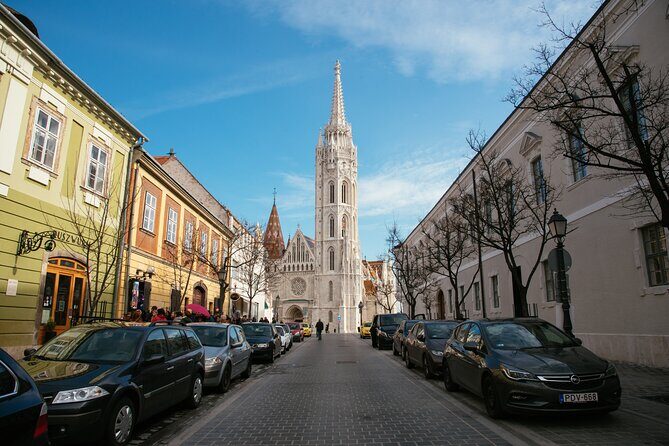
The tour’s first stop sets the tone: the Holy Trinity Column. This is one of those landmarks that can look like “just another ornate monument” until someone explains the layers behind it.
From here, you get a running thread about Budapest and Hungary—so when the route suddenly turns toward castles and churches, you already know the bigger frame. It helps you connect rulers, religious life, and national identity without memorizing a textbook.
You’ll also start surrounded by architecture that feels intentional, not random. Even before you reach the castle proper, the area teaches you a lesson: this hill was always about power, protection, and public symbolism.
Fisherman’s Bastion: Pretty Vistas With a Real Job
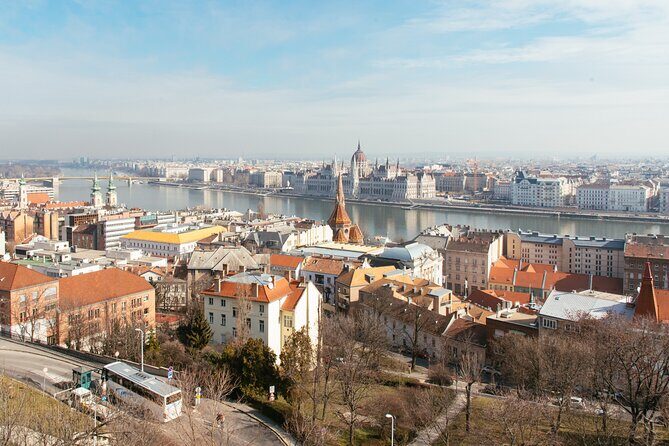
Fisherman’s Bastion is famously photogenic. The smarter part is learning its true function, not just what to photograph.
Your guide explains how the site relates to defense and the way city planning reflected political realities. Once you understand what you’re standing on, the stonework feels less like a scenic set and more like a clue to how Budapest defended itself.
You’ll have about twenty minutes here, which is enough time to get a few good views and still move on. If crowds are heavy, plan your photos quickly and trust the next stops for more breathing room.
The catch: Fisherman’s Bastion admission is not included. So if you want to go inside paid areas or viewpoints, budget a bit extra.
Matthias Church Inside: Where the Legends Feel Tangible
Matthias Church is the emotional center of the walk. It’s also the stop where the included ticket pays off, because you don’t just see the outside tiles—you go inside.
The inside visit is timed well, and your guide uses stories and legends to connect the building to the people who shaped it. You’ll notice how the church’s decoration, structure, and details reinforce the idea of a sacred place tied to national identity and royal presence.
A practical note: church time is never unlimited. You’ll want to keep your eyes moving—look up for structure and ceiling elements, then sweep across for ornament details—so you don’t miss the point while you’re still trying to get the perfect photo.
People who’ve taken this tour have praised Matthias Church specifically, including the way guides make the inside feel lively and easy to follow. That’s the difference between “we visited a church” and “we understood why this church mattered.”
National Archives Pass-By: The WWII Marks You Can See
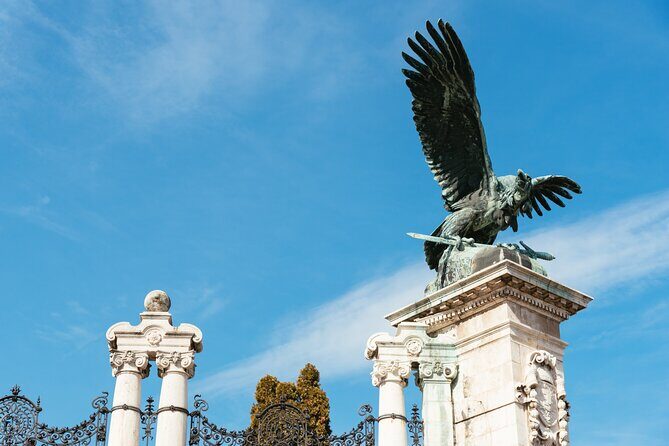
You’ll pass by the National Archives, an imposing building with visible scars from World War II. Even without a long stop, this is a powerful contrast to the royal and religious settings around it.
It’s one of the most effective “history reminder” moments on the route. The castle hill isn’t just about medieval grandeur—it also carries the memory of modern catastrophe, and you’ll feel that shift in mood as you look at the bullet holes.
This stop is short by design, which is good. You don’t need a lecture to understand the impact of what’s still there. A quick look, guided context, and then back to the route keeps the tour from turning heavy for too long.






Sándor Palace Streets and Cobblestones: Power Behind the Walls
As you walk through the castle complex lanes, the route becomes a lesson in how Budapest’s power has shifted over time. You’ll stroll along historic cobblestone streets and alleys, then move toward Sándor Palace, home to the Office of the Hungarian President.
This is mostly an exterior experience. You’ll learn what the building represents and how Hungarian governance connects to the broader story of the region.
The value here is how your guide links architecture to political identity. It’s easy to treat grand palaces as wallpaper; it’s harder when you understand the role they played and how they fit into the story of Hungary as it moved between influence, independence, and outside pressure.
One consideration: Sándor Palace admission is not included. If you’re hoping for an interior visit, you should set expectations accordingly and treat it as a guided exterior stop.
Prince Eugene of Savoy Statue: A Shortcut to European History
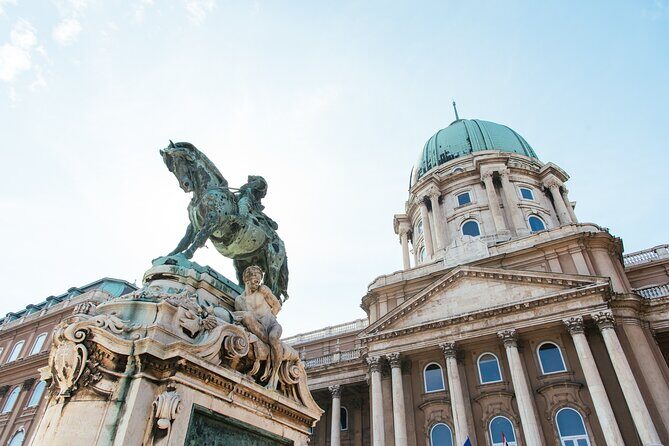
Another fast, memorable stop: the equestrian statue of Prince Eugene of Savoy. It’s a solid “Europe meets Hungary” moment, not just a random statue on a square.
Your guide explains a decisive military campaign that affected European history for centuries afterward. You’ll also get how the Habsburgs connect to Hungary, which helps explain why certain names, symbols, and power structures keep repeating throughout the castle district.
The best part is the timing. You’re building knowledge step by step, and then this stop gives you a sharp, understandable pivot point—suddenly you can place what you’re seeing into the wider continental story.
This one is free, which is always nice when you’re paying for other experiences on the day.
Buda Hill Funicular and Royal Palace Terrace Views
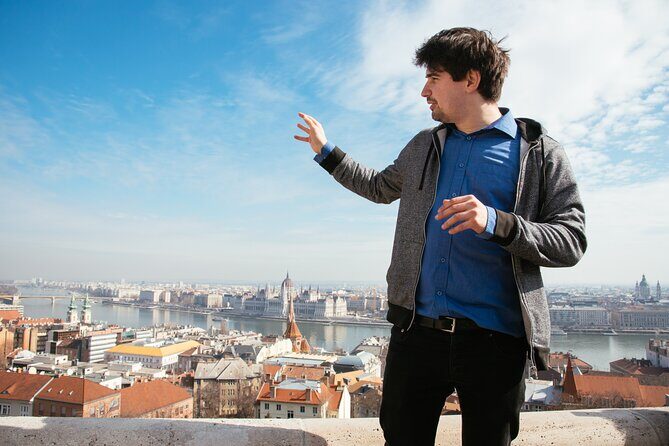
From Buda Hill Funicular, you get panoramic views toward the Parliament and the Pest side. It’s not just sightseeing—it acts like a map in motion. When you can see both sides of the river, history stops feeling abstract.
You’ll reach the top station for a quick but worthwhile view, and your guide points out key places so your photos line up with your understanding. It’s also a practical way to avoid unnecessary steep walking when your legs are already doing their job on cobblestones.
The funicular admission is not included. So add a small budget buffer if you want to ride.
Then comes the big payoff: the Royal Palace of Buda and the terrace panorama. You’ll be able to see Margaret’s Island, the Parliament, the Chain Bridge, St. Stephen’s Basilica, the Budapest Eye, and Elizabeth Bridge from the terrace viewpoint.
That list sounds like a brochure, but it becomes useful once you’ve matched landmarks to the story you heard earlier. You’ll feel how the castle hill acts like a command center—sightlines, symbolism, and governance all tied together in one view.
Your time here is about twenty minutes, so focus on the terrace sweep rather than trying to “fully explore” the palace grounds during the tour.
Fountain of King Matthias: Closing With Legend and Meaning
The tour ends at the Fountain of King Matthias. It’s a fitting finish because this point is all about how legends stay alive in everyday spaces.
Your guide explains why King Matthias is such a favorite figure in Hungary and how his story echoes in the city’s public memory. Ending here helps you tie the whole experience together—church, palace, monuments, and war scars all connect back to identity.
You’ll leave with more than photos. You’ll have an understanding of how Hungary tells its stories in stone, tile, and statues.
Value and small-group reality: the part that matters
At about $65.31 per person for roughly 2.5 hours, the value is strongest if you care about context and you want a guided path through a dense area. The tour includes entry to Matthias Church, which is the main ticket cost on the route.
Where your value really shows is in pacing and access to your guide. People have emphasized that the tours don’t feel rushed and that small groups can make the entire walk more conversational. In some cases, bookings have even resulted in tiny group numbers, which can turn the experience into more of a guided chat with a map.
Still, keep expectations practical. Not every stop includes admission, and some are exterior by nature. If you like deep museum-style time, you may find the shorter visits only whet your appetite—then you’ll know where to return later on your own.
Who should book this tour (and who might want a different plan)
I think this tour is ideal for you if:
- You want a guided orientation to Buda Castle District without over-planning
- You care about the “why” behind major sights like Matthias Church and Fisherman’s Bastion
- You like questions, because guides such as Petra, Monika, Judit, Gábor, and Rajmund/Raymond have been praised for answering them clearly
- You want a small-group walk with manageable time at each stop
You might want a different plan if:
- You’re hoping for lots of paid interior time beyond Matthias Church
- You want a slow, linger-at-every-doorstep style tour (this one is efficient by design)
- You’re sensitive to walking on cobblestones, even at a moderate pace
Should You Book Buda Castle’s Secrets With a Historian?
Yes—if you’re here for story, not just scenery. This is one of the better ways to make Castle Hill feel understandable quickly: Matthias Church inside, meaningful monuments, WWII marks, and a terrace view that ties Buda to Pest in a single glance.
Book it early enough to avoid frustration. The tour tends to fill in advance, and it’s easier on your schedule if you lock your preferred date rather than gambling on last-minute availability.
Go in with one mindset: ask your guide questions. This tour works best when you treat it like a historian’s guided walk through a living neighborhood of history—because that’s exactly what it turns into.
FAQ
How long is the Buda Castle’s Secrets with a Historian tour?
It runs for about 2 hours 30 minutes.
What language is the tour offered in?
The tour is offered in English.
Is Matthias Church ticket entry included?
Yes. Entrance ticket to Matthias Church is included.
Are other attractions’ admissions included?
Not all. Fisherman’s Bastion, Sándor Palace, Buda Hill Funicular, and parts related to Buda Castle are listed as admission not included.
What group size should I expect?
The experience has a maximum of 15 travelers, and it’s described as an intimate small-group tour.
Where does the tour start and end?
It starts at Holy Trinity Statue on Szentháromság u., 1014 Hungary, and it ends at the Fountain of King Matthias on Szent György u., 1013 Hungary.
Is the tour near public transportation?
Yes, it’s near public transportation.
Is it okay if I travel with a child or a service animal?
Children must be accompanied by an adult, and service animals are allowed.
What’s the cancellation window?
You can cancel for a full refund up to 24 hours before the experience starts.