REVIEW · BUDAPEST
Budapest: Buda Castle Walk with Saint Stephen’s Hall
Book on GetYourGuide →Operated by Buda Castle Walks · Bookable on GetYourGuide
Buda Castle history gets real fast. This English guided walk threads 800 years of Budapest into the stones of the Castle District, then brings you inside the freshly restored St. Stephen’s Hall. It’s one of those tours where the buildings stop feeling like scenery and start feeling like evidence.
I especially like the mix of outdoor wandering and big panoramic views from the Castle area. You also get headsets (not just shouting over crowds), so your guide’s stories land clearly while you walk cobbled courtyards.
One thing to plan for: the palace grounds have reconstruction work, so you may hear noise and see heavy vehicle traffic. Also, it’s not set up for wheelchair users or children under 12, so it’s best for able walkers with comfortable shoes.
In This Review
- Key reasons this walk is worth your time
- Savoyai Terrace start: where the tour gets you oriented
- Cobbled courtyards and the views from Várhegy Hill
- Hunyadi Court and Lion Courtyard: where the stories fit the stones
- How the palace went from royal age to WWII damage to restoration
- St. Stephen’s Hall: royal splendor you can walk through
- Value check: what you’re getting for about $29
- Getting around construction and handling rain like a pro
- Who this tour fits best (and who should skip it)
- St. Stephen’s Hall alone is impressive—this tour gives it meaning
- Should you book the Budapest Buda Castle Walk with St. Stephen’s Hall?
- FAQ
- How long is the Budapest Buda Castle Walk with St. Stephen’s Hall?
- Is the tour offered in English?
- Where do I meet for the tour?
- What is included in the ticket price?
- Do I need to bring anything?
- Does the tour run in bad weather?
- Is the tour suitable for children or for people with mobility impairments?
- What happens if I arrive late?
- Can I cancel or pay later?
Key reasons this walk is worth your time
- 800 years in 90 minutes: Golden Age to siege, communist era, and restoration
- Várhegy Hill views that actually help: you see why Buda’s defenses made sense
- Courtyards with story context: kings, queens, love, war, and power, tied to what you see
- St. Stephen’s Hall restored to royal splendor: opulence you can walk through
- Skip-the-line access: less waiting, more time with the guide
- Clear audio with headsets: a real quality-of-life upgrade on windy stone steps
Savoyai Terrace start: where the tour gets you oriented

You’ll start at Savoyai Terrace, in front of the Hungarian National Gallery, at Szent György tér 2. The guides mark the spot with a turquoise umbrella with the Buda Castle Walks logo—small detail, big help once you’re in a construction-heavy zone.
Do yourself a favor and arrive 15 minutes early. Finding the exact meeting point can be tricky when levels change, and with ongoing work nearby, routes can feel slightly different than you expect. The tour begins on time, and latecomers can’t be accommodated, so treat this like a timed museum visit, not a casual stroll.
This early moment matters more than it sounds. Your guide sets the thread of the day—where you’re walking, why it mattered historically, and what to notice—so the rest of the Castle District stops being a pile of impressive buildings.
You can also read our reviews of more tours and experiences in Budapest.



Cobbled courtyards and the views from Várhegy Hill

The outdoors part of this tour is built around two things: courtyard walking and city panoramas. You move through the Castle District’s outdoor spaces—cobbled courtyards, statues, fountains, and those dramatic sightlines down toward the Danube and across Pest.
And yes, you’ll get the classic viewpoint from Várhegy Hill. The reason this is worth it with a guide: you’re not just taking photos. You’re learning what you’re seeing and why these ridges and sightlines mattered when the city was constantly contested.
The tour runs rain or shine, and you’ll feel that in the pacing. If the weather’s bad, plan to keep your footing steady and stay in your outdoor layer—this is a walking tour, not a mostly-indoor museum circuit.
Hunyadi Court and Lion Courtyard: where the stories fit the stones

After the initial orientation, the route moves through major Castle District courtyards—especially Hunyadi Court and the Lion Courtyard. These spaces can feel like they’re just pretty backdrop when you wander alone. With a guide, they become a timeline you can walk through.
Expect your guide to connect what you see to people and events: kings and queens, love and power, and the way Budapest’s fate got tangled with shifting empires. In particular, the guide links the Golden Age of the Kingdom era to later crises, including the siege of Budapest during World War II.
A practical tip here: keep your eyes up as much as your feet. In a courtyard, details like coats of arms, statues, and architectural cues help explain the larger story. With headsets on, you can hear the explanation without freezing in place every two minutes—so you actually keep moving.
How the palace went from royal age to WWII damage to restoration

One of the most useful parts of this tour is the way it handles the Palace’s modern reality. You’ll hear how the building was shaped by the communist era that followed, and how restoration work has played a major role in what you can see today.
World War II is a big pivot point in the story: the Palace interior suffered looting and destruction, which helps explain why restoration matters so much in Budapest. Your guide also frames restoration not as a vague modern fix, but as a cultural repair—deciding what can be authentically brought back and why.
This is where a guided format beats a self-guided wander. Without context, it’s easy to treat damage and new work as random interruptions. With context, you understand what the Castle has survived and what restoration is trying to protect.
St. Stephen’s Hall: royal splendor you can walk through

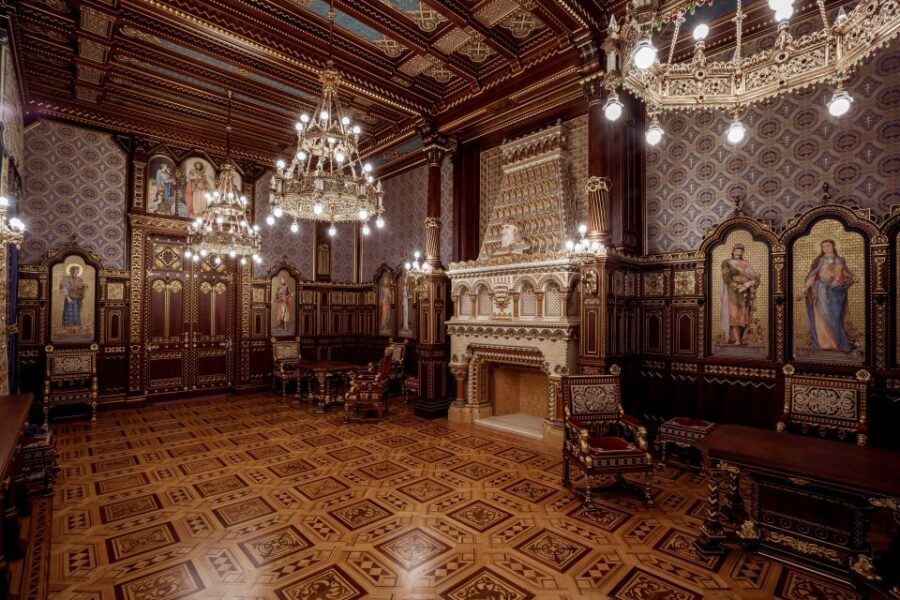
The highlight—really the heart of the tour—is St. Stephen’s Hall. This is the only part of the Palace interior that’s been fully and faithfully restored to its former glory after WWII damage. You’re given about 30 minutes inside, which is long enough to look carefully without feeling rushed.
This hall is opulent in a very specific way: it’s not just fancy decoration. It’s a showcase for Hungarian craftsmanship, done on a scale that makes you slow down. If you like interiors where materials, proportions, and craftsmanship tell a story, this portion delivers.
You’ll also notice the difference between “you’re in a space” and “you’re touring a space.” With a guide, your attention gets guided toward the elements that explain why the hall mattered in royal times—and why it matters again now.
And because this stop includes the St. Stephen’s Hall entry ticket and you can skip the ticket line, the logistics feel smoother than a typical museum add-on. Less waiting means more actual seeing.






Value check: what you’re getting for about $29

At about $29 per person for roughly 1.5 hours, this tour competes well with a lot of shorter city experiences. Here’s the value math that matters: you’re paying for a live English guide, headsets, and entry to St. Stephen’s Hall, with a format designed to keep you moving while you learn.
Could you do something similar by wandering the Castle District and then buying a ticket for St. Stephen’s Hall yourself? Sure. But you’d be missing the “why” behind the buildings—especially the timeline that runs from royal eras to war, to communist-era changes, to restoration.
It also helps that the tour is compact. For many people, the Castle District is a “sometime later” destination—big, spread out, and easy to feel overwhelmed by. This walk turns it into a focused afternoon plan without taking over your whole day.
If you’re traveling on a tight schedule, I’d put this in the “best first stop” category for first-timers who want context before they explore on their own.
Getting around construction and handling rain like a pro

This is a live, working heritage site, and right now there’s reconstruction work underway in the Castle Palace District. That means occasional noise and heavy vehicle traffic can happen during the walk.
Don’t let that scare you off, but do plan for it. Wear comfortable shoes with solid grip—stone courtyards and uneven edges are common here. Bring outdoor clothing because the tour operates rain or shine, and you’re outside for about an hour.
A smart add-on is using the on-site visit planner map, which shows real-time traffic and closure info within the Palace District area. If you’re trying to stitch together multiple sights on the Castle Hill, this kind of tool can save you from walking in circles around temporary barriers.
If you’re sensitive to noise, consider booking time when you feel the site will be calmer. One practical approach: aim for a morning start if your schedule allows. Mornings can feel less congested, which makes listening to your guide easier.
Who this tour fits best (and who should skip it)

This tour is built for people who enjoy stories with their sightseeing. If you like history but want it tied directly to what you can see—courtyards, hills, and restored interiors—this format works well.
It’s also a good fit for visitors who want English narration in a place where directions and signage can feel complicated by construction. The combination of headsets and a walking plan makes the time feel well used.
It’s not a match if:
- you need wheelchair access or mobility-friendly routes (it’s not suitable for wheelchair users)
- you’re traveling with children under 12 (not suitable)
- you can’t handle cobbled and outdoor walking for the full outdoor portion
If you’re in the “I want one strong Castle experience, not three random stops” camp, this tour usually scratches the itch.
St. Stephen’s Hall alone is impressive—this tour gives it meaning

A lot of people come to St. Stephen’s Hall just for the interior. That’s fair—it’s beautiful. The reason this guided walk keeps earning high marks is that it explains the building as part of a much bigger story.
You’re not only seeing restored splendor. You’re learning how Budapest got here: why Buda’s fortress hill mattered, how power shifted over centuries, how war changed what survived, and how restoration decisions shape what you can experience today.
If you’re the type who enjoys history as cause-and-effect—how one era sets up the next—this walk is a strong use of time.
Should you book the Budapest Buda Castle Walk with St. Stephen’s Hall?
Book it if you:
- want an English guided history walk rather than solo wandering
- care about how the Palace evolved, not just that it exists
- want guaranteed access to St. Stephen’s Hall with entry included and less waiting
Skip it if:
- you can’t manage outdoor walking or cobbled areas
- wheelchair access is a must
- you want a quiet, low-traffic experience right in the middle of an active reconstruction zone
If you do book, pick a time slot that gives you a calmer start, arrive early enough to find the turquoise-umbrella meeting point, and keep your expectations aligned: this is a compact, story-forward walk that ends in a restored interior you’ll likely remember long after the photos.
FAQ
How long is the Budapest Buda Castle Walk with St. Stephen’s Hall?
The tour lasts about 1.5 hours, with an outdoor component and an indoor component inside St. Stephen’s Hall.
Is the tour offered in English?
Yes, the tour is in English, and you’ll also have English audio support.
Where do I meet for the tour?
Meet at Savoyai Terrace, in front of the Hungarian National Gallery, at Szent György tér 2 (Szent György Square 2), 1014 Budapest. The guide will be holding a turquoise umbrella with the tour logo.
What is included in the ticket price?
You get a walking tour with a guide, St. Stephen’s Hall entry, and headsets so you can hear the guide clearly. The activity also notes you can skip the ticket line.
Do I need to bring anything?
Bring comfortable shoes and outdoor clothing, since you’ll be outside for part of the experience.
Does the tour run in bad weather?
Yes. It takes place rain or shine, so plan for outdoor walking regardless of conditions.
Is the tour suitable for children or for people with mobility impairments?
No. It’s not suitable for children under 12, and it is not suitable for people with mobility impairments or wheelchair users.
What happens if I arrive late?
The tour begins on time, and latecomers cannot be accommodated. It’s recommended you arrive 15 minutes early because the meeting point can be harder to find due to construction and changes in levels.
Can I cancel or pay later?
Yes. You can cancel up to 24 hours in advance for a full refund, and you can reserve now & pay later to keep your plans flexible.