REVIEW · BUDAPEST
Budapest: Virtual Reality Tour in 8 Languages
Book on GetYourGuide →Operated by VR Tours · Bookable on GetYourGuide
History changes fast in VR. This tour uses modern tech to time-travel you through key moments that shaped Budapest. I love the way the VR stops make the Buda Castle District feel like a living set, from medieval construction to World War II devastation. You’ll also get a local live guide to keep the story straight while you walk between scenes.
What really impressed me is the pairing of visuals with clear context. Each VR moment comes with an audioguide-style walkthrough that explains why events mattered in Hungarian history, and one stop gives you a bird’s-eye view over the city. The only real drawback to weigh is that you’ll wear a VR headset and you do a light hike—so if you have migraines, epilepsy, heart problems, or you’re afraid of heights, this likely isn’t for you.
In This Review
- Key Highlights You’ll Feel (Not Just See)
- Where the Tour Starts: Chain Bridge Area Meets the VR Setup
- Six Stops, Three Big Eras: The Castle District Time-Jumps
- Medieval Buda Castle Construction
- Battles and World War II Destruction
- The Hungarian Revolution of 1956
- Bird’s-Eye View Over Budapest
- How the Audioguide + Live Guide Keep It Understandable
- What It Feels Like in Real Life: VR Gear, Walking, and Timing
- Price and Value: Is $39 Worth It?
- Who Should Book This VR Tour (and Who Should Skip It)
- Practical Tips That Make the Headset Experience Easier
- Should You Book the Budapest VR Time-Travel Tour?
- FAQ
- How long is the Budapest VR tour?
- Where do I meet, and where does the tour end?
- What should I bring for the VR headset?
- What languages are included?
- Is the tour okay for people with migraines or epilepsy?
- Can I cancel and get a full refund?
Key Highlights You’ll Feel (Not Just See)
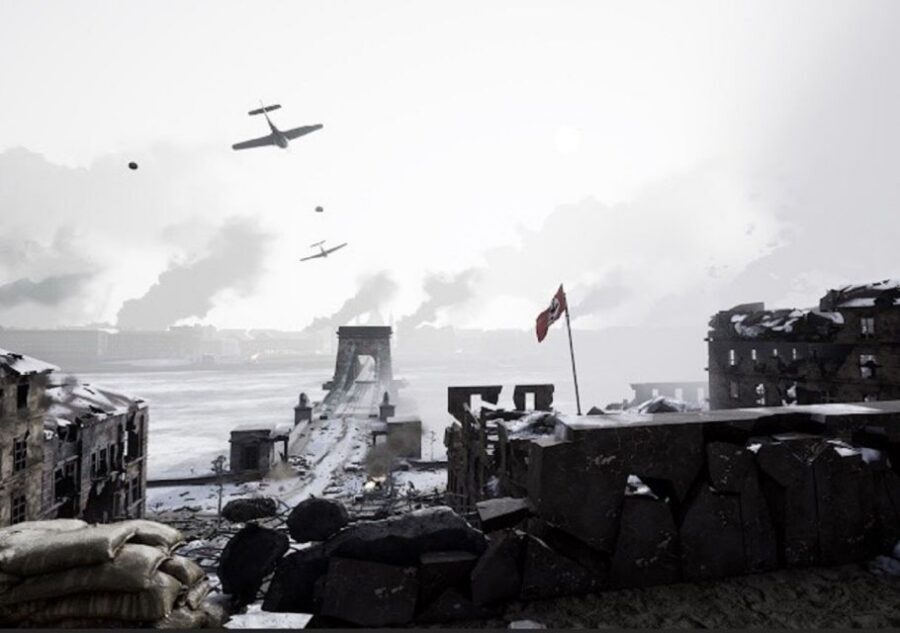
- Six VR time-jumps around Budapest, including medieval castle building, WWII, and 1956
- Buda Castle District focus, so you experience the story where it visually belongs
- A bird’s-eye view that’s only possible by mixing real city scale with VR perspective
- A live local guide who helps you navigate between stops
- 8-language audio support (English, Chinese, German, Hungarian, Spanish, Russian, Italian, French)
- Sterile headset option plus hygienic masks available upon request
Where the Tour Starts: Chain Bridge Area Meets the VR Setup
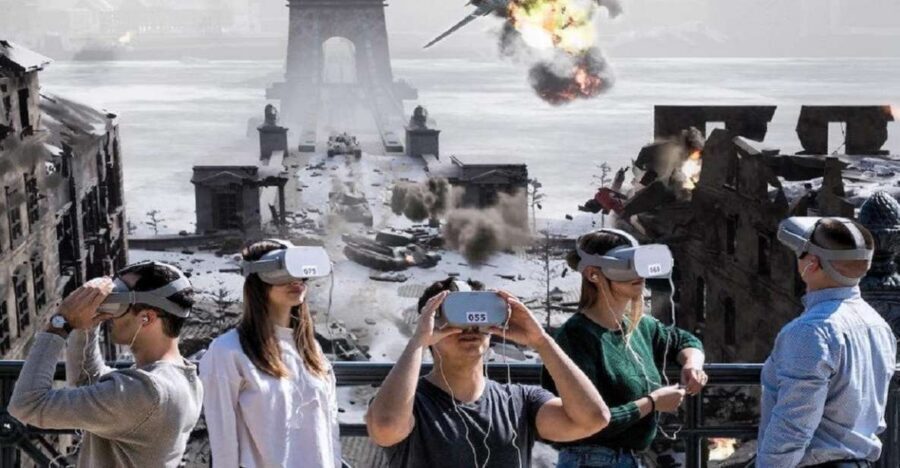
Your experience begins on the Buda side of Budapest, very close to the Chain Bridge and Clark Ádám Square. The meeting point is Budapest, Lánchíd u. 23, 1013, and you’ll want to look for the VR Tour flags facing the street. Arrive about 15 minutes early—this is one of those tours where a small delay can make the whole timing feel tighter once everyone’s ready for the headsets.
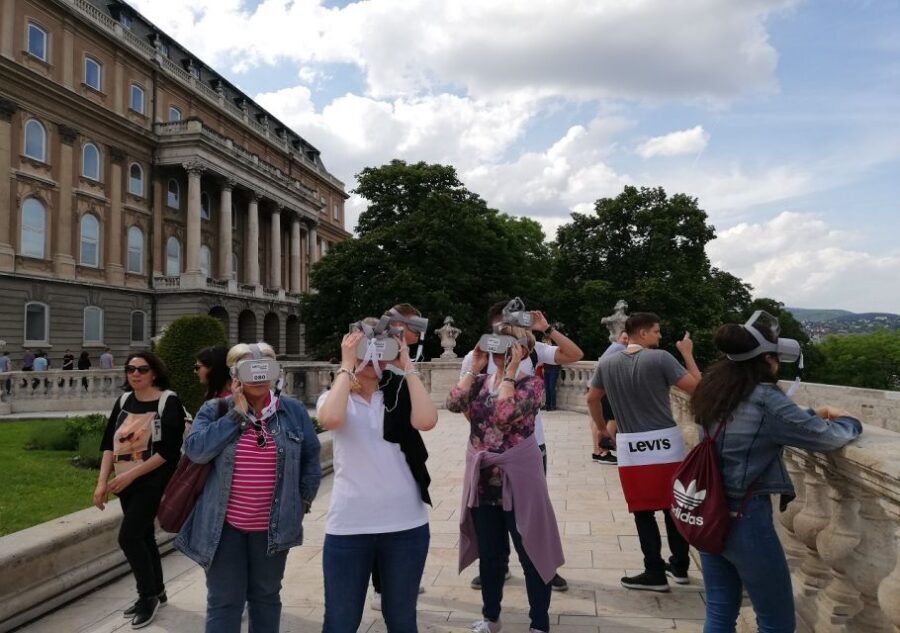
After you meet the guide, you’ll put on the VR gear. The tour provides the equipment and uses a sterile headset, and they can provide a hygienic mask upon request. That matters because VR tours are intimate—everyone’s face is in the same type of device, even if it’s cleaned and managed well. You’ll also bring along your ID or passport details because you may need to show documentation for the VR headset deposit.
Then you head into the Castle District. Even before the first scene starts, you’ll notice you’re walking in one of Budapest’s most historically loaded areas—so the jump into “then” feels less like sci-fi and more like history staged in front of you.
You can also read our reviews of more tours and experiences in Budapest.



Six Stops, Three Big Eras: The Castle District Time-Jumps
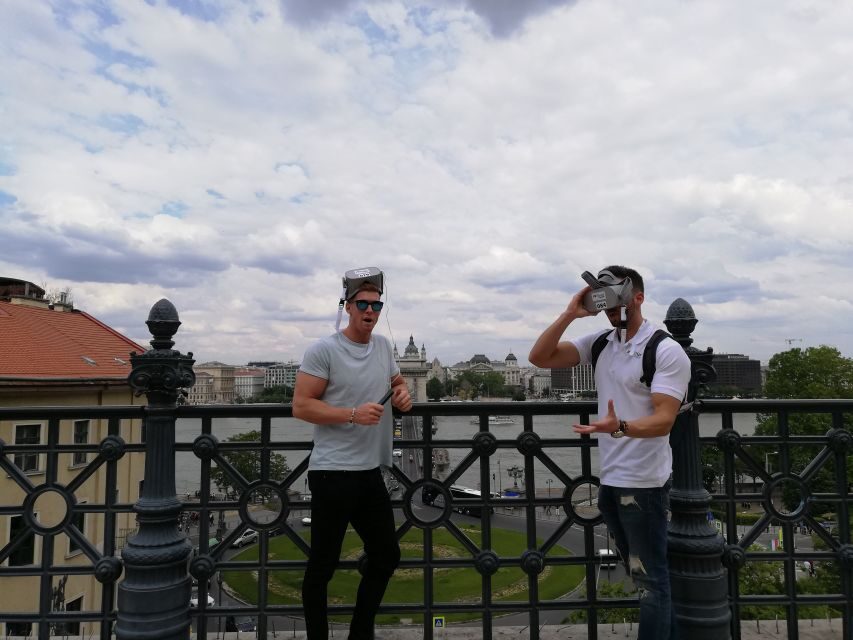
The tour runs roughly 1.5 hours (often paced like a roughly two-hour walk-and-watch), with you stopping about six times for VR displays. Between those stops, your guide leads you and helps you get around, so you’re not left figuring out routes while also wearing gear.
The VR content is organized around major turning points. Here’s how to think about it so you know what you’re buying:
Medieval Buda Castle Construction
One of the earliest VR moments rockets you back to the middle ages, specifically during the construction of the castle. This is where VR works best for first-time visitors: you’re not just reading about stonework and power—you’re seeing how the space likely looked when it was being shaped by people with real jobs, real urgency, and real stakes. It’s a fast lesson in “place,” which is huge when you’re standing around real ruins and reconstructions later on.
Battles and World War II Destruction
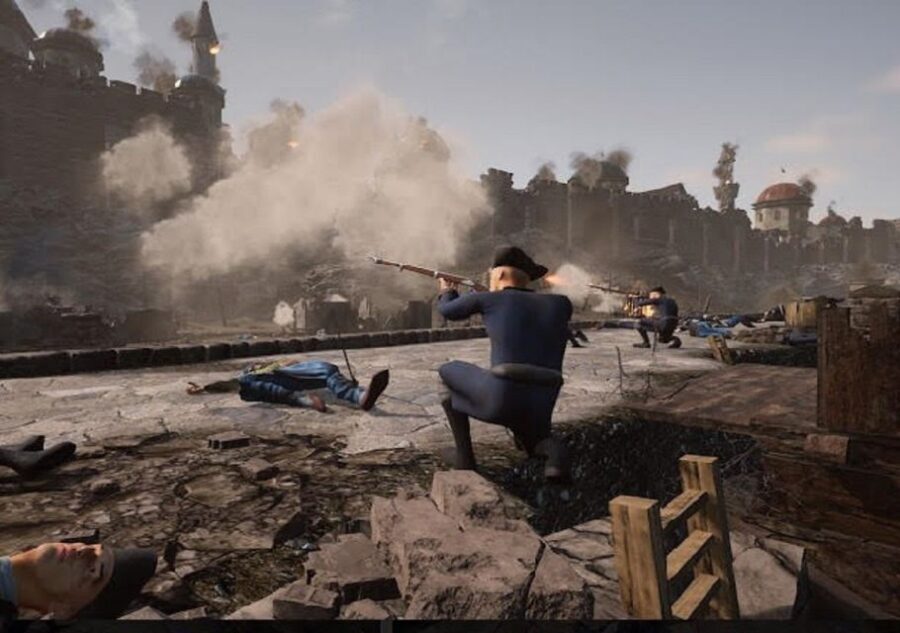
Another VR stop takes you into World War II, showing brutal battles and the destruction that followed. If you’ve ever felt that history gets too abstract, this part is the antidote: you’re watching the consequences in a way your eyes can organize. It’s intense, and it’s meant to connect the city’s physical scars to the events behind them.
The Hungarian Revolution of 1956
The tour also covers the Hungarian Revolution breaking out in 1956. This time-jump helps bridge the distance between modern Budapest and a period that’s still close enough in memory to feel human rather than “museum distant.” The audioguide-style narration helps you understand what you’re looking at, rather than treating it like a series of cool video scenes.






Bird’s-Eye View Over Budapest
You also get a bird’s-eye view over the whole city. This is one of the biggest practical wins of VR: the city is spread out, and standing at street level can hide the bigger picture. With VR, you can understand scale and layout without needing a ladder or a dramatic viewpoint hunt.
How the Audioguide + Live Guide Keep It Understandable
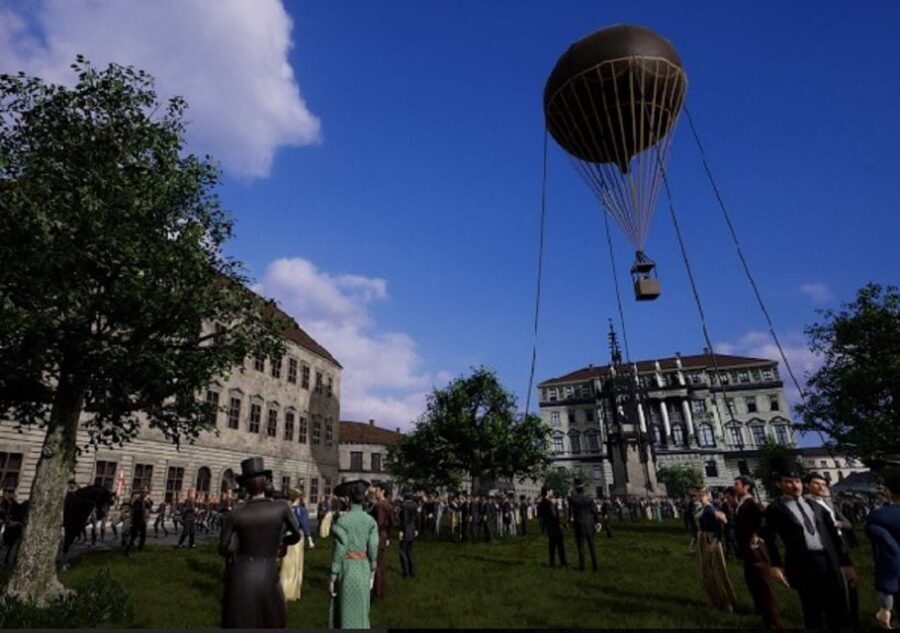
VR can be visually overwhelming if it isn’t guided. The tour avoids that problem by combining two layers of explanation: a guide with you in the real world, plus an audioguide-style walkthrough during the VR stops.
Your guide is there to help you connect the dots as you move between scenes. During each VR display, the audioguide explains what’s happening and contextualizes why it matters in Hungarian history. That context is exactly what you want, especially for Budapest, where layers of empire, conflict, and reform can feel like overlapping timelines.
One detail I appreciated from the feedback I saw is that the guidance feels genuinely helpful, not scripted and stiff. The guide isn’t only there to herd people from stop to stop—they’re there to make the experience make sense.
Also worth noting: live tour guide languages are English and Hungarian, while the included audioguide is available in eight languages: English, Chinese, German, Hungarian, Spanish, Russian, Italian, French. So you can travel with a group and still have everyone hear the story in a language they’re comfortable with.
What It Feels Like in Real Life: VR Gear, Walking, and Timing
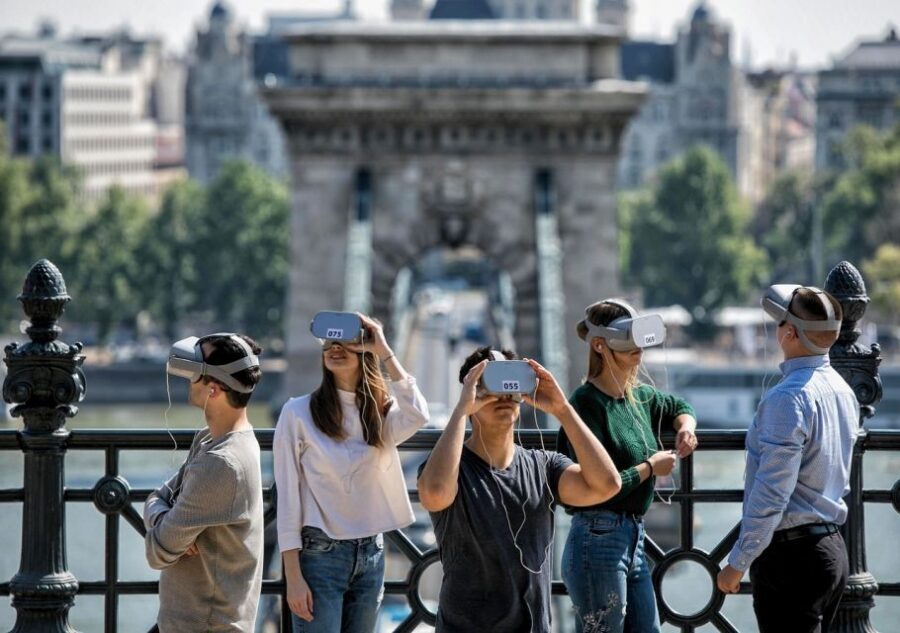
This isn’t a sit-down theater tour. You’ll put on VR equipment, then walk between about six VR moments in the Castle District area. The tour includes a light hike, and that matters more than people expect—especially if you’re traveling with stiff knees or you plan to stack this after a full day of sightseeing.
Also plan your body for the fact that VR headsets limit your peripheral vision and your awareness of your surroundings. The good news is you have the guide leading and helping you navigate between stops. The smart move is to wear comfortable shoes and keep your pace steady.
Hot weather? Bring water. The tour specifically advises you to bring something to drink during hot summer tours. That’s practical advice, not fluff—because you’re moving between stops while wearing tech that can make you feel warmer than usual.
Finally, if you’re sensitive to visual intensity: the tour isn’t recommended for customers who suffer from migraines. It’s also not suited for people with epilepsy. If you fall into either category, don’t assume “it’ll probably be fine.” VR can trigger symptoms even when you think you’re prepared.
Price and Value: Is $39 Worth It?
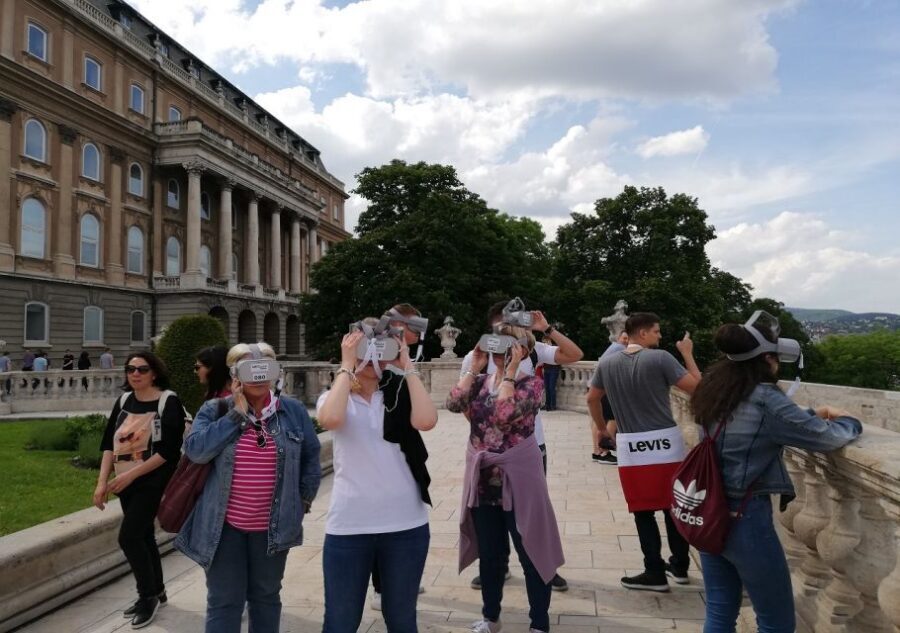
At $39 per person, you’re paying for three things at once: VR equipment, guided interpretation, and a structured route that gets you into the right physical setting on the Buda side. In other words, it’s not just a VR video—it’s a guided historical experience tied to Budapest’s real locations.
Here’s why that price can make sense:
- You get multiple VR scenes (about six), not one short presentation.
- You get a live guide during the walk segments, so the experience isn’t only one-direction entertainment.
- You get multi-language audio support for people who don’t speak English.
To judge whether it’s “worth it” for you, ask a simple question: do you like learning history through visuals and story pacing rather than reading captions? If yes, you’re likely to feel your money at work—especially because the content covers multiple eras (medieval, WWII, 1956) and adds that bird’s-eye city perspective.
If you’re hoping for long museum-style time in quiet halls, you might find the format more structured and time-limited. But if you want a high-impact way to jump-start your understanding of Budapest, this is built for that.
Who Should Book This VR Tour (and Who Should Skip It)
This tour is a strong fit if you:
- Want a clear, guided overview of major moments that shaped Budapest
- Enjoy VR visuals as a learning tool, not just a novelty
- Prefer structured stops with narration rather than wandering solo
- Appreciate the combination of city walking plus “then/now” storytelling
It’s also especially useful early in your visit because you’ll recognize more when you later explore the Castle District in real life. Seeing key moments in relation to the place can help you connect the dots faster than a guidebook alone.
On the other hand, skip it if you:
- Suffer from migraines
- Have epilepsy
- Have heart problems
- Fear heights (there’s an explicitly noted “not suitable” category for that)
- Have mobility impairments, since it isn’t suitable for mobility limitations
Practical Tips That Make the Headset Experience Easier
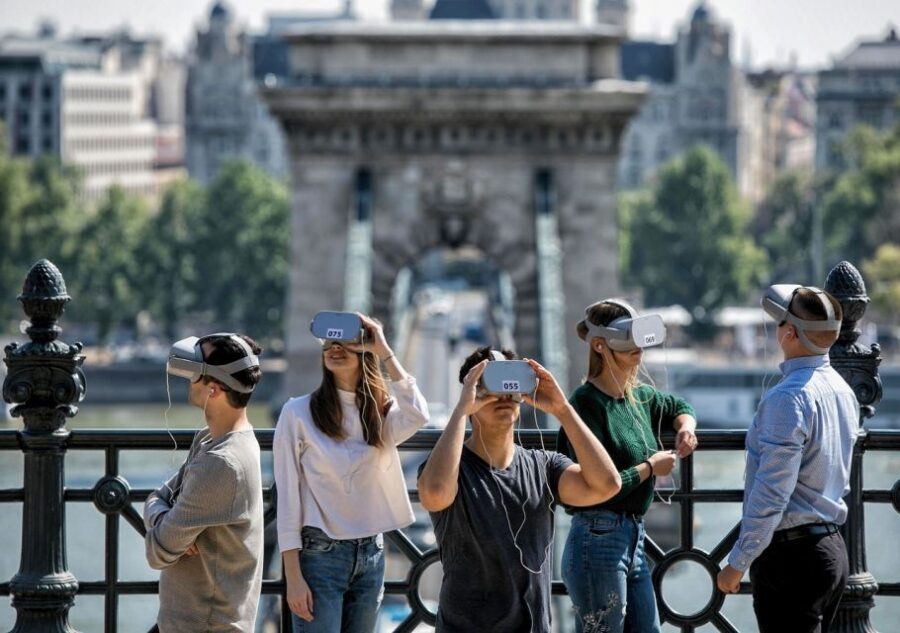
A few small choices can make this tour feel smoother and less annoying:
- Wear comfortable shoes. You’re doing a light hike and moving between stops.
- Bring something to drink on hot days. You’ll stay better focused.
- Bring your passport or ID card. The tour asks for this, and you may also need to provide 200 euros as a deposit for the VR headset.
- If hygiene is a concern, request the hygienic mask. The tour offers it upon request.
- Keep your schedule flexible. Tours start at specific times, and you’ll want to be there early to get fitted and ready.
Should You Book the Budapest VR Time-Travel Tour?
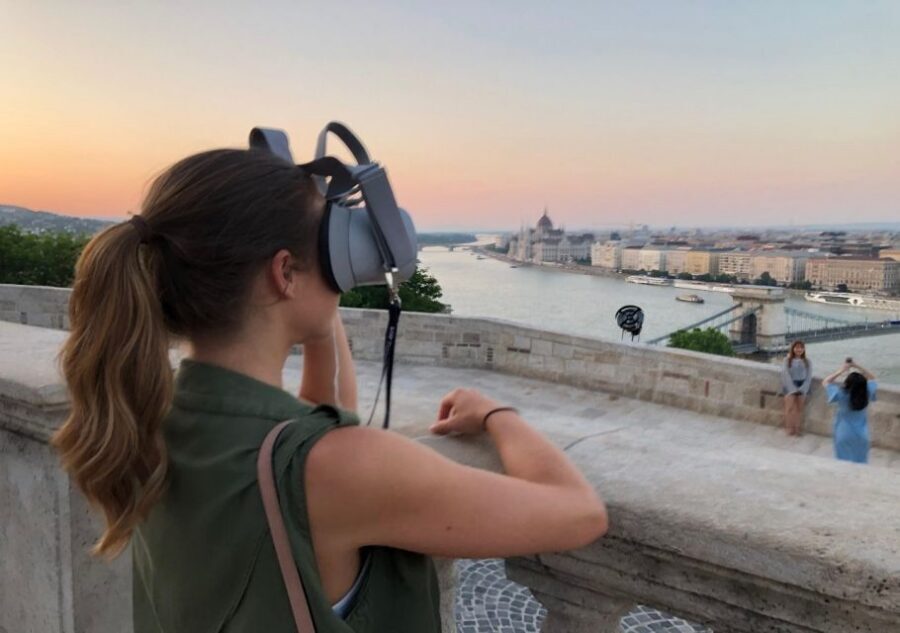
Book it if you want a fast, guided way to understand Budapest’s most famous area—the Castle District—through multiple time periods. The mix of six VR scenes, local guiding, and multi-language audio makes it a useful “history starter kit” that’s also entertaining.
Skip it if VR triggers symptoms for you or if your comfort depends on easy movement and clear sightlines. It also isn’t ideal for anyone with fear of heights, epilepsy, or migraines.
If your goal is to see Budapest differently—at street level and through a time-machine view—this is one of the more focused ways to do it for your money. And once you’ve experienced those time-jumps, the real Castle District tends to feel more legible when you go exploring on your own.
FAQ
How long is the Budapest VR tour?
The tour duration is listed as 1.5 hours, and it’s paced as a roughly two-hour walk with VR stops.
Where do I meet, and where does the tour end?
Meet at Budapest, Lánchíd u. 23, 1013 Magyarország. The tour ends back at the same meeting point.
What should I bring for the VR headset?
Bring a passport or ID card. The information also states that you may need to provide 200 euros as a deposit for the VR headset.
What languages are included?
The live guide is available in English and Hungarian. The audioguide included is available in English, Chinese, German, Hungarian, Spanish, Russian, Italian, and French.
Is the tour okay for people with migraines or epilepsy?
No. The tour is not recommended for customers who suffer from migraines, and it is also not suitable for people with epilepsy.
Can I cancel and get a full refund?
Yes. Free cancellation is available up to 24 hours in advance for a full refund.