REVIEW · BUDAPEST
Budapest: Hungarian Chimney Cake Workshop in the City Center
Book on GetYourGuide →Operated by Hungaricum Tanoda Kft. · Bookable on GetYourGuide
A chimney cake workshop beats snack shopping. In the heart of Budapest, you’ll learn the steps behind Kürtőskalács—sweet dough wrapped on a cone, sugar rolled for that shiny crust—and you’ll bake your own batch with English help from the chef. I love the hands-on make-it-yourself format and how the instructors like Betty and Vlatz keep things calm, clear, and patient.
This is a fun hour, but it comes with limits. It’s not for kids under 10, and you’ll want to travel light since no large bags are allowed.
In This Review
- Key things to look for in this Budapest chimney cake class
- Budapest chimney cake: what you’ll actually do in 1 hour
- Kató Néni Finomságai Downtown: the meeting point and first impression
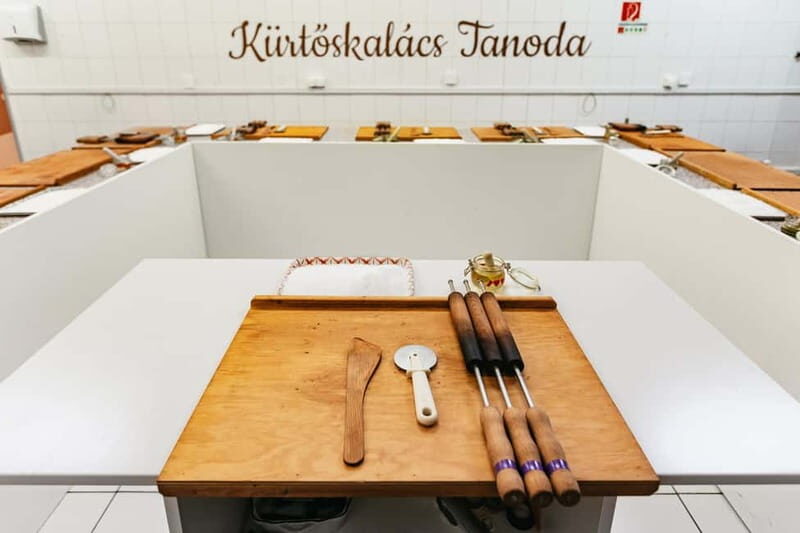
- The baking station: how the dough, cone, and sugar come together
- Wrapping the cone the right way: where beginners do surprisingly well
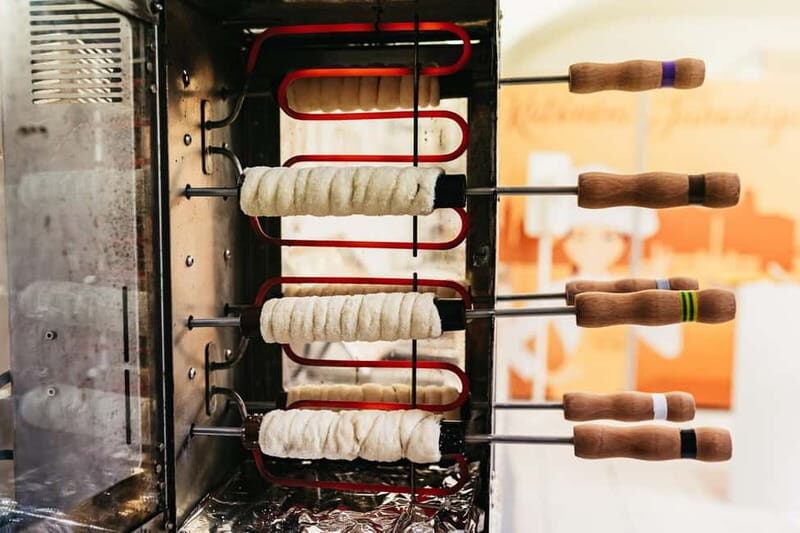
- The oven moment: watching sugar turn glossy and crisp
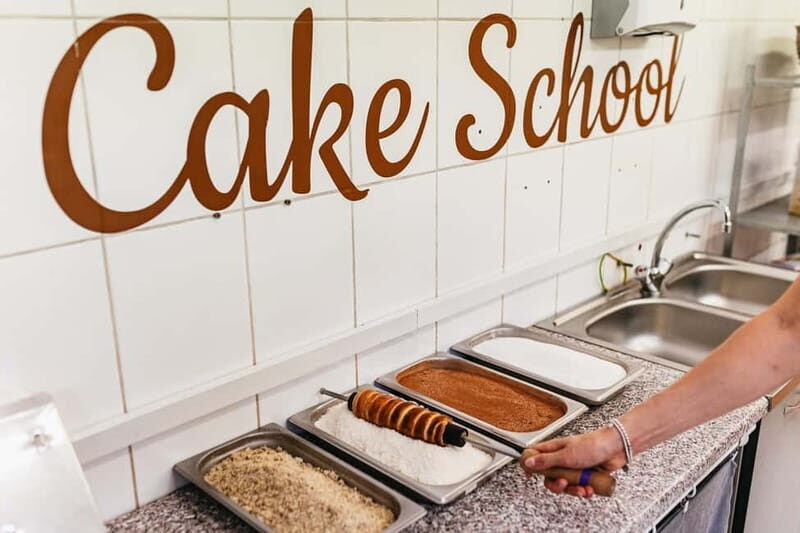
- Seasoning and eating: plain sugar, coconut, or cinnamon
- Taking home 3 chimney cakes, a certificate, and the recipe
- Price and value: is $40 really reasonable for this experience?
- Who should book this class, and who might skip it
- Practical tips for your visit (so nothing slows you down)
- Should you book the Budapest chimney cake workshop?
- FAQ
- How long is the Hungarian chimney cake workshop in Budapest?
- Where do I meet for the workshop?
- What will I make during the class?
- Can I take the recipe home?
- Is the workshop taught in English?
- What’s included in the price?
- Are drinks included?
- What should I bring or wear?
- Who can take the workshop?
- Is free cancellation available?
Key things to look for in this Budapest chimney cake class
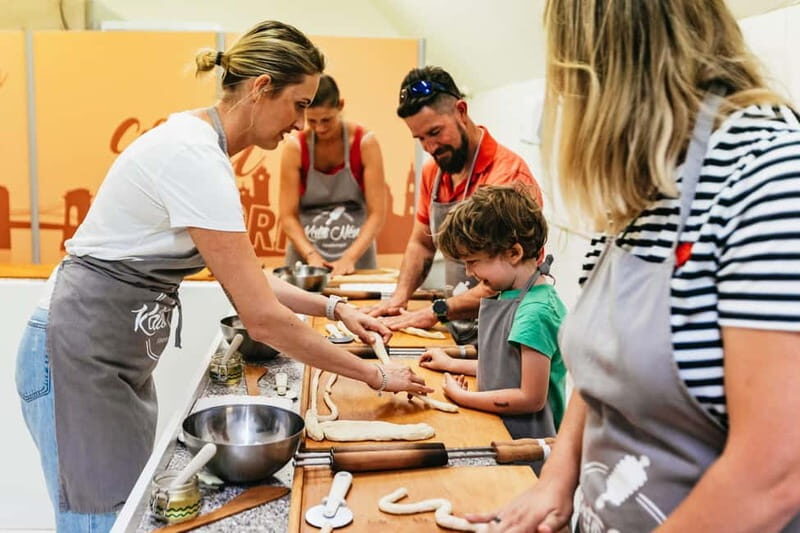
- You’ll shape and bake, not just watch: the whole point is doing it yourself, step by step.
- Make 3 chimney cakes with a secret-recipe approach and guided technique.
- Caramelized sugar is the wow moment: you’ll see it turn glossy, then crisp gold in the oven.
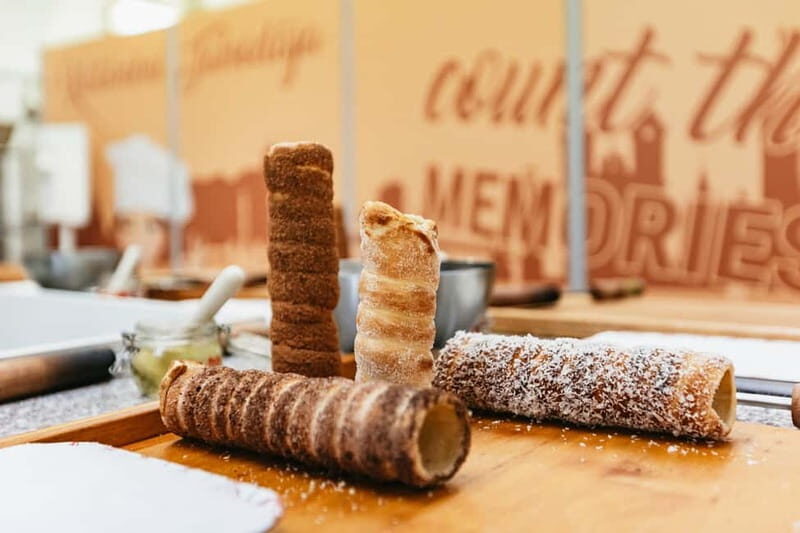
- Toppings are part of the lesson: plain sugar, coconut, or cinnamon get added afterward.
- You get a certificate and the recipe so the magic can continue at home.
- English instruction and patient coaching: the vibe is supportive, even if you’ve never baked before.
Budapest chimney cake: what you’ll actually do in 1 hour

This workshop is built around one classic Hungarian treat: Kürtskalács, often spelled Kürtőskalács, the famous chimney cake you see sold in Budapest streets. What makes this experience different from buying one warm pastry is that you do the work—forming the dough into strips, wrapping it around a cone, coating with sugar, and baking until the crust turns crisp and caramelized.
You also learn the tradition. You’ll get a short intro on why the chimney cake matters in Hungarian food culture and how the method became a signature. It’s not a long lecture. It’s the kind of history that helps you understand what you’re tasting and why the technique matters.
The best part for me (and the reason it feels worth it) is that you end up with a result you can hold, share, and remember—three finished cakes, plus a recipe to repeat at home.
You can also read our reviews of more city tours in Budapest



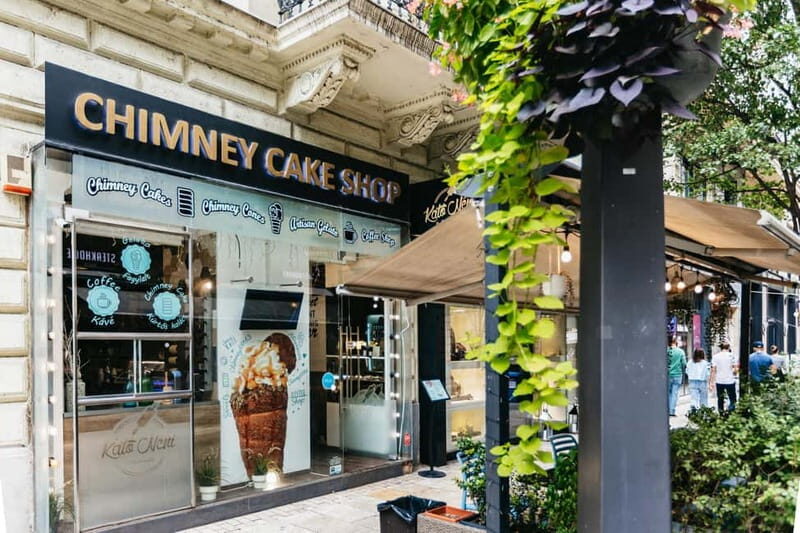
Kató Néni Finomságai Downtown: the meeting point and first impression
You start at Kató Néni Finomságai Downtown. Plan to walk in and ask for the workshop when you arrive. This matters because the experience is centered around the bakery setup, not a big hotel-style meeting room.
From the tone of the place, you can expect something simple and local. It’s the kind of setup where you quickly get organized, put your focus on the station you’re assigned, and get moving. You’re not juggling reservations and transfers. You’re showing up, checking in, and heading toward the baking area.
One practical note: bring comfortable shoes and clothes. You’ll be standing and working with dough and tools. Also, leave large bags elsewhere—the class doesn’t allow them.
The baking station: how the dough, cone, and sugar come together
Once you’re in the working area (this is typically a bakery prep space), you’ll get guidance from the chef instructor. The class is taught in English, so you’ll be able to follow the steps without guessing. And you’ll notice quickly that the teaching style is hands-on and friendly—clear direction, gentle correction, and lots of support if your first wrap looks a little uneven.
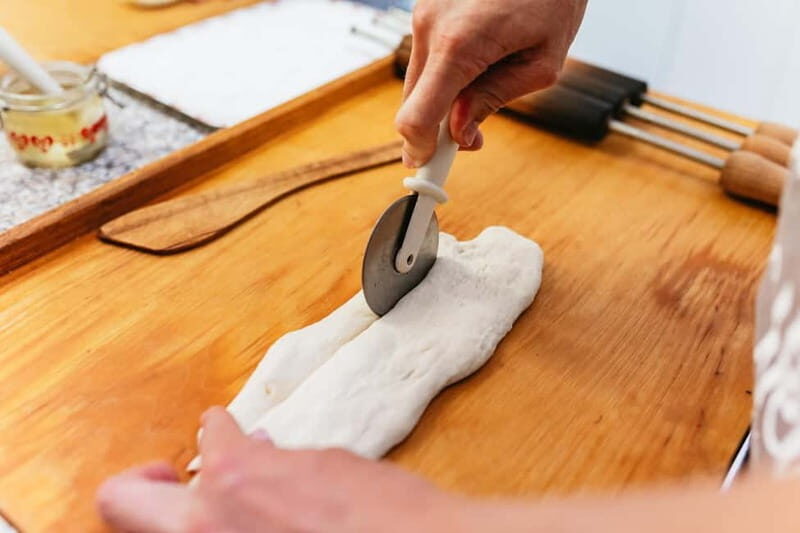
Here’s the core technique you’ll practice:
- Sweet dough is formed into strips.
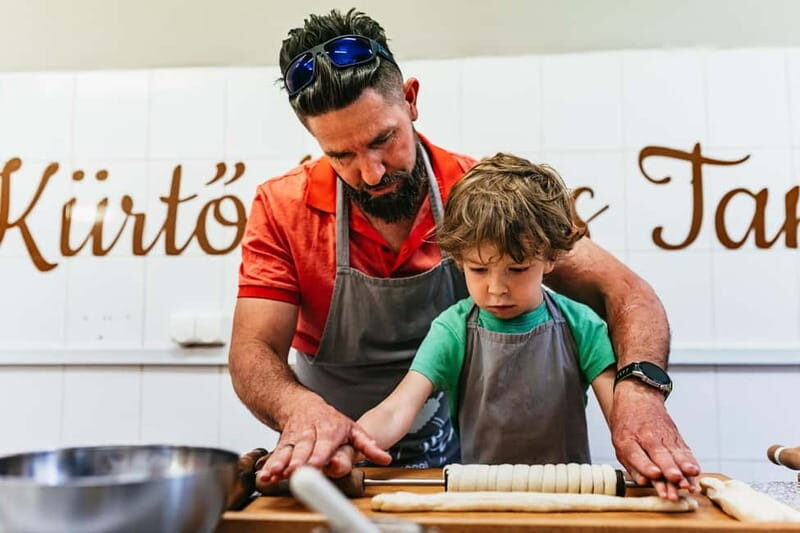
- The strips are wrapped around a cone.
- The cone-wrapped dough is rolled in sugar.
- The sugar caramelizes during baking into a shiny, crispy golden crust.
Even better, you’re not starting from raw flour and water. The dough is typically ready for you, so you’re mainly focused on shaping and baking—where the technique shows. That keeps the hour moving and prevents the class from turning into a long mixing lesson.
As you work, you’ll also get tips and tricks aimed at the baking part. That’s important, because with chimney cakes, the sugar crust isn’t just for flavor—it’s also a visual signal that you did the wrapping and coating correctly.
Wrapping the cone the right way: where beginners do surprisingly well
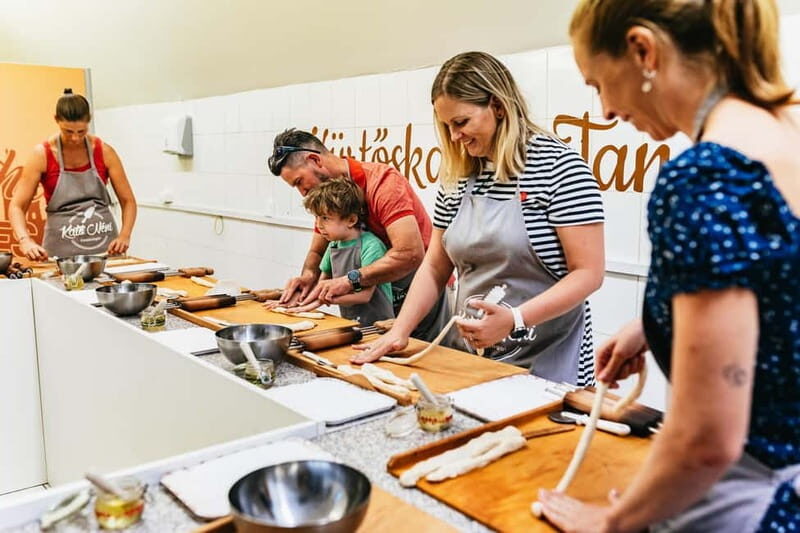
If you’ve never baked before, you might worry about making pastry that looks like it came from a display case. Don’t. The workshop is designed so you can succeed in a short time.
What you learn here is the practical stuff:
- How tight or loose the wrapping should be.
- How to keep the strips in place without tearing the dough.
- How sugar coating behaves—where it sticks, where it can fall off, and how that affects the crust.
That’s why the instructor’s role matters. You’re not just following instructions—you’re getting feedback as you go. This is where the experience earns its high marks. People consistently talk about patient teaching and easy-to-follow steps, with instructors guiding both first-timers and families through the process.
The oven moment: watching sugar turn glossy and crisp
There’s a specific point in the session where the lesson shifts from hands-on prep to baking reality. Once your chimney cakes are in the oven, you can see the transformation: sugar starts caramelizing, then turns into that shiny, crisp golden crust.
That moment is more than pretty. It tells you that the wrap, the sugar coating, and the baking process all lined up. It also helps you understand why the recipe matters. Small differences can change the crust texture, and the class gives you pointers so you can recreate the outcome later.
In other words: you’re learning by watching the physics of it. Hot oven. Sugar melting. Then crisping as the surface sets.
And yes, the mood can be fun in the room. One highlight from an earlier group was a pop-music playlist (Beyoncé came up). The point is you’re not stuck in silence with strangers. You’re baking.
You can also read our reviews of more tours and experiences in Budapest





Seasoning and eating: plain sugar, coconut, or cinnamon
After baking, you’re not done. You’ll finish the chimney cakes with toppings. The options included are:
- Simple sugar
- Coconut
- Cinnamon
This part is where the class becomes a tasting experience, not only a making experience. You’ll see how one baked cake can turn into different flavor profiles with an easy finishing step. It’s also a good way to keep the hour interesting, because you get at least a few different outcomes, not just one standard pastry.
Then you sit down and enjoy your own creation. This matters because it turns the class into a full food moment. You’re not rushing off to eat somewhere else. You get a chance to taste what you made while it’s at its best.
Taking home 3 chimney cakes, a certificate, and the recipe
A chimney cake workshop is only half the story if you can’t recreate it. This one gives you more than a memory.
You craft and bake three chimney cakes, and you take the results with you to enjoy later. Plus, you receive:
- A certificate of completion with your name
- The secret recipe so you can try again at home
That combination is surprisingly valuable. Many classes teach you technique but don’t help you repeat it. Having the recipe makes it easier to translate your hour of practice into a real kitchen win.
It also gives the workshop a keepsake feel. The certificate is small, but it’s also proof you finished the steps—and it’s fun to show later.
Price and value: is $40 really reasonable for this experience?
$40 per person might sound like a lot until you map it to what you actually get in the hour.
For that price, you receive:
- Chef instructor guidance
- All ingredients and utensils
- You make three chimney cakes
- A certificate with your name
- The secret recipe to take home
You don’t get drinks included, and there’s no hotel pickup. Still, the core value is solid: you’re paying for labor (real coaching), ingredients, and equipment access, and you leave with multiple baked pastries plus a repeatable recipe.
If you compare this to buying multiple chimney cakes and then trying to find a real method to recreate them, the workshop wins. You’re not just purchasing sugar-and-dough gratification. You’re buying the skills to make the dessert on purpose.
Who should book this class, and who might skip it
This workshop is a great fit if you:
- Want something more hands-on than typical food tours
- Enjoy learning a technique, not only tasting
- Prefer a short, focused 1-hour activity in Budapest’s city center
It may be less ideal if you:
- Need an activity that’s suitable for mobility impairments (it’s not suitable)
- Are traveling with kids under 10 (not suitable for children under 10)
- Are carrying a lot of luggage (large bags aren’t allowed)
For most people, it’s an easy win: friendly pace, clear steps, and a tangible result. Even beginners tend to do well because the dough is prepped and the instruction style is built around support.
Practical tips for your visit (so nothing slows you down)
Before you go, keep these things in mind:
- Wear comfortable shoes. You’ll stand and move around the working area.
- Choose comfortable clothes. Dough work can get a little messy.
- Travel light. No large bags are allowed.
- Plan to bring your own drink if you want one. Drinks aren’t included.
- Go with a hungry plan. The session ends with eating what you baked, and it’s hard to wait.
Also, if you’re the type who likes control, don’t worry—you’ll still be making decisions during the wrapping and finishing steps. But you won’t be left alone with the hard parts.
Should you book the Budapest chimney cake workshop?
I’d book it if you want a memorable Budapest food experience that’s short, guided, and genuinely practical. You’ll leave with three chimney cakes, plus the recipe and certificate, so it isn’t just a one-time taste.
Skip it if you’re not interested in baking or if the restrictions (age and mobility) don’t fit your group. And if you’re expecting a lounge-style sightseeing tour, this isn’t that. This is hands-on pastry work.
If you want an activity you can brag about that also produces something edible and repeatable, this one makes sense. The combination of patient instruction, visible baking results, and take-home value is exactly what turns a dessert into an experience.
FAQ
How long is the Hungarian chimney cake workshop in Budapest?
The class lasts 1 hour.
Where do I meet for the workshop?
You meet at Kató Néni Finomságai Downtown. Enter the shop on arrival and ask for the workshop.
What will I make during the class?
You’ll prepare, bake, and season 3 chimney cakes.
Can I take the recipe home?
Yes. You’ll take home the secret recipe to recreate the chimney cakes at home.
Is the workshop taught in English?
Yes. The instructor speaks English.
What’s included in the price?
The price includes the chef instructor, all ingredients and utensils, a certificate of completion, and the secret recipe.
Are drinks included?
No. Drinks are not included.
What should I bring or wear?
Wear comfortable shoes and comfortable clothes.
Who can take the workshop?
It’s not suitable for children under 10 years, and it’s not suitable for people with mobility impairments.
Is free cancellation available?
Yes. You can cancel up to 24 hours in advance for a full refund.