REVIEW · BUDAPEST
Budapest Jewish Heritage Tour
Book on Viator →Operated by György Rashad Salamon · Bookable on Viator
Synagogues, memorials, and stories in four hours. This private Budapest Jewish Heritage Tour threads together big-name sites like Dohány Street Synagogue and quieter stops such as Shoes on the Danube Bank, guided by György Rashad Salamon. You also get time in the surrounding Jewish quarter so it feels like a place people live in, not just a museum on a map.
I love how the route mixes solemn memorials with everyday Jewish life. Hotel pickup makes it easy to start on time, and the tour runs in English with a guide who keeps the story understandable, not just dates and facts. You’ll also like the pacing: it’s about 4 hours, with walking plus public transport legs so you don’t feel dragged across town.
One thing to consider: not every stop’s entry fee is included, and the Rumbach Street Synagogue is listed as under reconstruction. Admission fees can add up, so it helps to budget ahead if you plan to go inside every site.
In This Review
- Quick hits
- Why this Budapest Jewish Heritage Tour starts at Dohány Street Synagogue
- Hungarian Jewish Museum and Archives: short visit, standout artifact story
- District VII Jewish Quarter: why the neighborhood walk matters
- Kazinczy Street Synagogue and the quiet Orthodox contrast
- Rumbach Street Synagogue: a shorter stop with reconstruction in the background
- Shoes on the Danube Bank: respectful, guided, and unforgettable
- How the guide makes the difference: György’s pacing and tone
- What you’re paying for: price, group size, and extra entry tickets
- Timing and logistics: a 2:30 pm start with walking and transit
- Who should book this tour in Budapest
- Should you book the Budapest Jewish Heritage Tour?
- FAQ
- How long is the Budapest Jewish Heritage Tour?
- Is this tour private?
- What language is the tour offered in?
- What time does the tour start?
- Is hotel pickup included?
- Are entry tickets included for the synagogues and museum?
- Which stops are free?
- Is food and drinks included?
- Can I cancel for a full refund?
Quick hits
- Dohány Street Synagogue opens the tour with major memorials and exhibitions around the Holocaust era
- Jewish Museum and Archives fits in a short visit that still covers standout artifacts like an ancient Torah finial
- District VII Jewish Quarter combines history with the look and feel of today, from shops to galleries and ruin bar culture
- Kazinczy and Rumbach synagogues add contrast through smaller Orthodox spaces and a stop affected by reconstruction
- Shoes on the Danube Bank is a short, free stop that lands hard with guided context
- György’s storytelling is repeatedly praised, including thoughtful options if you’re traveling solo
Why this Budapest Jewish Heritage Tour starts at Dohány Street Synagogue
The tour begins at the Great / Central Synagogue on Dohány Street (Nagy Zsinagóga). It’s described as the world’s second largest synagogue, which already sets the tone: this is not a quick photo stop. It’s a place designed for worship, community, and remembrance, and the guide helps you connect what you see to what happened.
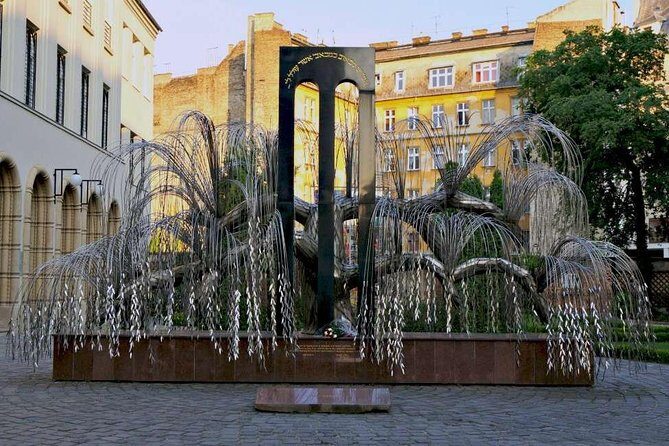
Inside and around the synagogue area, you’ll have exhibitions and memorials to explore. The listing specifically points to things like the Holocaust Memorial and the Cemetery of Heroes. There’s also mention of the Tree of Life and Wallenberg Memorial Park, which is a good reminder that Jewish history in Budapest isn’t only about one period—it’s about people, resilience, and who they honored afterward.
Practical note: the stop is listed as 1 hour, and admission tickets are not included. That means you should expect to pay for entry if you want to see the full set of memorials and exhibits. If you’re traveling on a tight schedule, this is the best stop to plan carefully because it’s the most structured one on the route.
What I like about starting here is that your guide can build a clear timeline. Once you understand the scale of the synagogue and the purpose of the memorial spaces, the later neighborhood walking makes much more sense.
You can also read our reviews of more historical tours in Budapest



Hungarian Jewish Museum and Archives: short visit, standout artifact story
Next comes the Hungarian Jewish Museum and Archives. This part is shorter—about 30 minutes—and the goal is to give you a meaningful sample without eating your whole afternoon.
The listing highlights a specific wow-factor: the world’s oldest Torah finial. That detail matters because it’s the kind of object that turns Jewish heritage from something abstract into something physical—craft, tradition, and continuity you can actually see.
Admission tickets are not included here either, so treat this like a “pay once, get value” stop. If you’re on the fence about museum time, consider this: a good synagogue and memorial visit can give you emotion and context, but museum time helps you understand how heritage is preserved—through archives, objects, and storytelling that outlives the moment.
Also, don’t rush it. Even with a shorter time window, you’ll get more from the visit if you let the guide explain what the collection means, instead of trying to read everything yourself at speed.
District VII Jewish Quarter: why the neighborhood walk matters
After the museums and synagogues, you move into District VII, often called the Jewish Quarter. This section is about 1 hour and it’s free to visit.
What makes this part valuable is that it’s not only about buildings. The area is described as a World Heritage site and also as one of Budapest’s most exciting and popular districts. You’ll see local art, famous ruin bars, eclectic boutiques, and avant-garde galleries. Even if you’re not there to shop, these details show you how the area has changed and what it looks like now.
This is also where your guide can connect past to present in a way that doesn’t feel like a lecture. The listing says you’ll talk about the long history of the Hungarian Jewish community, and that history becomes easier to grasp when you’re walking the streets where people still create culture and commerce today.
A small practical tip: for this portion, comfortable shoes matter more than anything else. The route is walking-heavy, and the interesting parts—shops, wall art, and the general street atmosphere—take time if you want to notice them. If you’re prone to fatigue, tell your guide early. A good guide will adjust how long you linger at each spot.
Kazinczy Street Synagogue and the quiet Orthodox contrast
From the larger memorial-and-museum feeling, you get a contrast: the Kazinczy Street Synagogue. It’s listed for about 20 minutes, with tickets not included.
Here you’re meeting a smaller orthodox community and learning about daily life habits and customs. That kind of stop can be a relief after the heavier memorial sites because it gives you a more human scale: routines, space, and meaning in everyday practice.
If you care about how communities function—how traditions shape daily behavior—this is a key stop. It also helps you avoid a common mistake in heritage tourism: only learning the dramatic chapters. This synagogue segment brings you back to how religious life continues and what buildings are for beyond history plaques.
Rumbach Street Synagogue: a shorter stop with reconstruction in the background
The final synagogue stop in the Jewish Triangle is the Rumbach Street Synagogue. It’s scheduled for about 15 minutes, and entry tickets are not included. The listing notes that it’s currently under reconstruction.
That detail matters. Reconstruction usually means you may not see the space the way you’d expect, and the guide may focus more on stories and context than on a full interior walkthrough. In other words, don’t plan for a perfect “museum-style” visit here.
Still, even in partial circumstances, a guided stop can be worth it. The point is to round out the triangle so you’re not only seeing the biggest-name synagogue. You’re also learning how the smaller sites fit into the wider web of Budapest’s Jewish heritage.
If you hate uncertainty, this is the only place I’d warn you to expect some limitation.






Shoes on the Danube Bank: respectful, guided, and unforgettable
Then you reach one of Budapest’s most sobering landmarks: the Shoes on the Danube Bank memorial. The stop is about 15 minutes and it’s listed as free.
The guide’s job here is crucial. The memorial is built around a story tied to the persecution and killings along the river, and the imagery is intentionally stark—empty shoes used to represent the people who were targeted. In a tour like this, you don’t just look. You understand why the memorial is placed there and what it’s trying to prevent from fading into silence.
This is also where you’ll feel the emotional weight of the tour. The good news is that you’re not left to process it alone. A strong guide typically gives you context and then gives you a moment to stand with it.
Practical advice: take photos only if you truly can do it respectfully. Otherwise, use your eyes and let the silence work. Also plan your time here so you don’t rush the last minutes—this stop is the emotional peak for many people.
How the guide makes the difference: György’s pacing and tone
This tour is led by György Rashad Salamon, and the reviews you can rely on repeatedly highlight his professional approach and storytelling skill. One pattern stands out: he tends to meet you at your hotel lobby, then builds the day step-by-step rather than treating it like a checklist.
Another recurring praise is how he manages balance. The tour covers serious subjects, but the delivery includes small human touches—like light conversation and even a mention of chimney cake in the mix. That doesn’t weaken the topic. It helps you stay present so the heavier parts land properly.
György is also described as flexible, especially for solo travelers. If you’re traveling alone, you might get choices or extra insights so you don’t feel like you’re stuck in a rigid script. For groups, his job is similar: keep the route tight, keep explanations clear, and make sure people don’t miss key moments.
Logistically, he may also use public transport during the tour so you get from point to point without losing time. One review notes a metro ride that connected the tour to the river bank and views including the Parliament building area. Even if your route slightly varies by departure and pacing, the big idea is the same: you see more than just synagogue exteriors.
If you’re choosing between doing this on your own versus with a guide, this is where the value lives.
What you’re paying for: price, group size, and extra entry tickets
The price is listed as $272.20 per group (up to 10 people) for about 4 hours. That means your per-person cost depends heavily on whether you fill the group.
Here’s a simple way to think about it:
- If you’re a full group of 10, it’s about $27 per person.
- If you’re only 2 people, it’s about $136 per person.
So the tour makes the most financial sense with friends or family, but solo travelers can still justify it if you want the guide-led context and convenience of pickup and transport tickets.
Included in the price:
- Local guide and a professional guide (your tour leadership)
- Hotel pickup
- Transportation tickets
- Mobile ticket
- English-speaking guide
- A private tour just for your group
Not included:
- Food and drinks
- Admission tickets for several key stops (Dohány Street Synagogue, the Jewish Museum and Archives, Kazinczy Street Synagogue, and Rumbach Street Synagogue)
What’s free:
- District VII / Jewish Quarter
- Shoes on the Danube Bank
That mix is important. You’re not paying for a walking tour plus one monument. You’re paying for structured guided time at the main Jewish heritage sites, with the museum and synagogue entries as optional add-ons you cover directly.
Timing and logistics: a 2:30 pm start with walking and transit
The tour starts at 2:30 pm and runs for about 4 hours. It uses a mix of walking and public transport, and the listing says you’ll be near public transportation for meeting/route points. You’ll also want a moderate physical fitness level.
This matters because the Jewish Quarter area is spread across streets, and the memorial stop is along the river bank zone. You’ll likely be on your feet for most of the time, with occasional breaks depending on the group and how long you spend inside.
If you’re choosing an afternoon start, it can be a good balance. Morning in Budapest can feel rushed because you’re competing with the city’s other top attractions. An afternoon start gives you time to settle first, then focus on this theme tour without feeling like you’re doing it between “must-see” landmarks.
Practical “bring” list based on what’s implied:
- Comfortable walking shoes
- A light layer (river areas can feel cooler)
- A way to pay admission fees at the paid stops
- Respectful behavior at memorial sites (it’s the kind of place where tone matters)
Who should book this tour in Budapest
I’d book this if you want a structured Jewish heritage experience without having to plan the connections yourself. It’s especially well-suited for:
- First-time visitors who want an efficient half-day route
- People who care about history but also want a sense of what the community looks like now
- Travelers who value a guide who can explain meaning, not just name locations
- Solo travelers who want someone to tailor options or pacing for a single person
It’s also a good choice if you dislike doing emotionally intense sites on your own. The memorial stop is heavy, and guided context can make it feel less confusing and more respectful.
If you’re mainly interested in casual sightseeing and photos only, you might find the memorial-focused tone less fun. And if you’re very cost-sensitive, the extra entry fees are worth factoring in early.
Should you book the Budapest Jewish Heritage Tour?
Yes, with clear eyes. This tour is a strong value when you’re splitting the group cost, and it’s an excellent choice if you want meaning at the major synagogue and memorial sites plus street-level time in the Jewish Quarter. The biggest reason to book is the human part: your guide’s storytelling and pacing, including the way he keeps the day organized from pickup through the final stop.
Skip or reconsider if:
- You’re not ready for emotionally serious memorial content
- You’d rather avoid paying extra admission fees at multiple stops
- You expect every synagogue interior to be fully accessible, since Rumbach Street Synagogue is noted as under reconstruction
If you match those expectations, this half-day tour gives you a lot of Budapest in one theme: community, memory, and the city you can still walk through today.
FAQ
How long is the Budapest Jewish Heritage Tour?
It’s about 4 hours.
Is this tour private?
Yes. It’s a private tour/activity with only your group participating, up to 10 people.
What language is the tour offered in?
It’s offered in English.
What time does the tour start?
The start time is 2:30 pm.
Is hotel pickup included?
Yes, hotel pickup is included.
Are entry tickets included for the synagogues and museum?
Admission tickets are not included for the Great / Central Synagogue, the Hungarian Jewish Museum and Archives, Kazinczy Street Synagogue, and Rumbach Street Synagogue.
Which stops are free?
The District VII / Jewish Quarter stop and the Shoes on the Danube Bank memorial are listed as free.
Is food and drinks included?
No, food and drinks are not included.
Can I cancel for a full refund?
Yes. Free cancellation is available up to 24 hours in advance for a full refund.