REVIEW · BUDAPEST
Budapest Historic Downtown Bicycle Tour in small groups
Book on Viator →Operated by BIKE & RELAX - Bike Tours and Bike Rental · Bookable on Viator
Budapest by bike turns history into something you can actually feel. In just about 3 hours 30 minutes, you cover the grand boulevards, the memorial sites, and the park highlights—using steady pedaling instead of long walks.
Two things I really like: the small group size (max 10) keeps the tour controlled and easy to follow, and the route focuses on major sights plus context, so you leave with more than photos. One thing to consider: it’s not designed for total beginners—traffic can be busy at times, and you’ll need comfort on a bike.
In This Review
- Key highlights I’d plan my day around
- Why this Budapest bicycle tour works so well in half a day
- Starting at Madách Imre út 12: what to expect before you ride
- Jewish Quarter first: Rumbach Street Synagogue and Liszt Academy
- Andrassy Avenue and House of Terror: the city’s big boulevard meets hard history
- Heroes’ Square: history you can see at once
- City Park circuit: ice rink/boating, Vajdahunyad Castle, and modern venues
- Andrassy-to-downtown classics: Opera and St. Stephen’s Basilica from the outside
- Szabadság tér and the Parliament area: memorials and world-famous views
- Buda-side highlights by bridge and bath exteriors: Rudas and Gellért
- Central Market and the synagogue finale: where you can snack after the ride
- Price and value: why $41.13 can make sense
- Bike comfort, traffic, and who should book (and who should skip it)
- Practical tips so the ride feels easy
- Should you book this Budapest Historic Downtown Bicycle Tour?
- FAQ
- How long is the Budapest Historic Downtown Bicycle Tour?
- How big is the group?
- What language is the tour offered in?
- Is this tour good for beginners?
- Are museum or synagogue entrances included?
- What’s included in the price?
Key highlights I’d plan my day around
- A tight, logical route that connects Jewish Quarter, Andrassy Avenue area, Heroes’ Square, and the riverfront in one go
- Top architecture without waiting in lines, since the tour does not include building entrances
- Helmets and bottled water included, plus free luggage storage so you’re not juggling bags
- City Park variety: ice rink/boating area, Vajdahunyad Castle, and modern venues like House of Music Hungary
- Danube storytelling on the move, including Parliament views and the Shoes on the Danube Bank
- Guides with strong on-street commentary, with names like Oliver and Tomas showing up in past guest feedback
Why this Budapest bicycle tour works so well in half a day
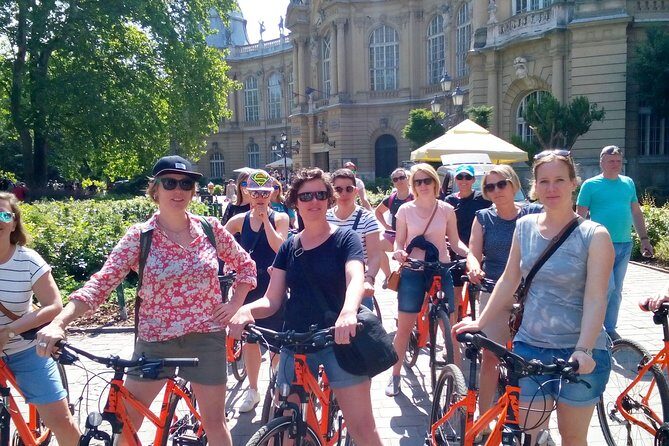
This is one of those rare tours where the time matches the city. Budapest is spread out in a way that punishes slow sightseeing—lots of viewpoints, big squares, and major landmarks tied to specific neighborhoods. Cycling lets you hit the highlights without turning your day into a marathon of heat, stairways, and detours.
The “small group + guide commentary” combo matters. When you’re moving at a bike pace, you can’t stop for long. A good guide keeps things flowing: quick context at the exact spot you’re seeing it. Based on feedback tied to guides like Oliver and Tomas, the pacing is often described as right—enough information to connect the dots, without dragging the group.
The tour also makes it easy to travel light. You get bottled water and free luggage storage, which helps if you’re arriving from a hotel check-in that’s not ready yet, or you’ve got a day bag you don’t want to carry the whole time.
You can also read our reviews of more historical tours in Budapest


Starting at Madách Imre út 12: what to expect before you ride
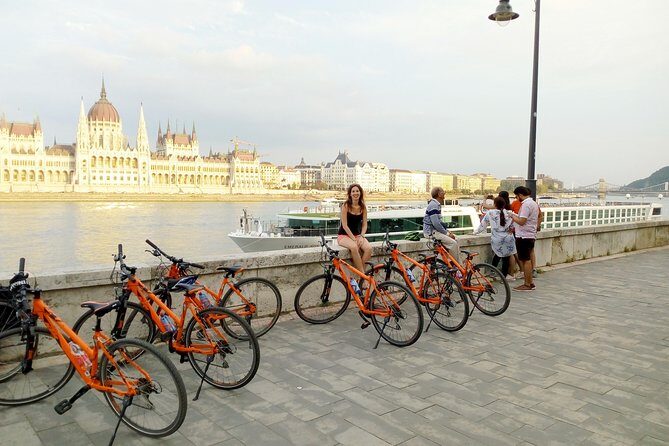
You meet at Budapest, Madách Imre út 12, 1075 Hungary, with a 10:30 am start. The tour ends back at the same point, so you don’t have to plan a later pickup or walk back on tired legs.
You’ll be given a bicycle and a helmet (helmets aren’t required, but they’re available). In practical terms: it’s one less thing to rent or worry about, and it reduces the stress of riding in a city you don’t know yet.
If you’re coming with a backpack or small suitcase, take advantage of free luggage storage. This is a genuinely useful inclusion, because it keeps you from spending the ride balancing stuff while you’re trying to take photos or keep a steady pace.
Jewish Quarter first: Rumbach Street Synagogue and Liszt Academy
The route begins with a quick check-in spot (Bike & Relax), then heads toward the Jewish Quarter area.
At Rumbach Street Synagogue, you get the visual punch of Budapest’s mix of old and new. You’ll see the art deco Rumbach Synagogue and nearby street-art scenes, but you don’t enter buildings—this is a pass-by stop. That’s a theme here: the tour is built for moving, not waiting.
Next is the Liszt Academy. This stop is short, but it’s still worth paying attention to. You’re looking at the music academy’s architecture next to the Jewish District, plus the idea of it functioning as a live student space with performance halls. Even without entry, it helps you understand why this area matters beyond being a backdrop.
If you’re the type who likes to “read” a neighborhood, this early sequence helps. You start with identity—community landmarks and cultural institutions—before the tour shifts into grand imperial-era monuments and memorial sites.
Andrassy Avenue and House of Terror: the city’s big boulevard meets hard history
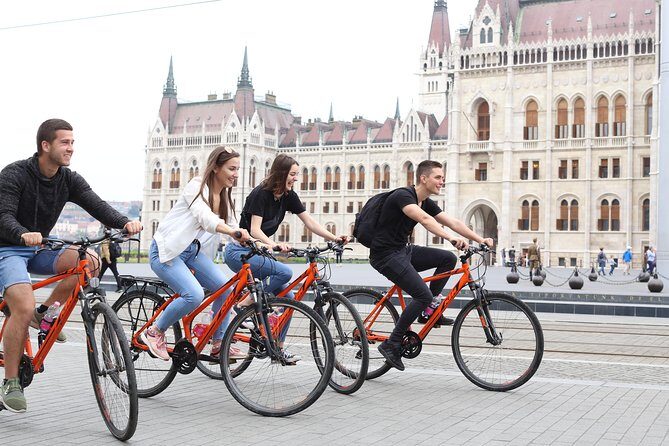
From here, you ride through a stretch described as the most famous street connecting the city center to Heroes’ Square, passing Nagymező Street (often called the Broadway of Budapest), Liszt Square, and the Ring Roads. You’ll also get reminders of the political atmosphere beneath the glamour.
Then you reach the House of Terror area (you won’t enter the museum). The building’s past as a GESTAPO headquarters and its role as a communist-era prison are part of the stop’s point. Even from outside, it’s an intense waypoint—one of those places where Budapest’s history hits you in plain sight.
A quick realism note: this section can feel more intense because you’re traveling along major corridors where traffic mixes in. Bike lanes may overlap with car lanes, and that’s where comfort on a bike matters most. Feedback also includes that traffic noise can make it harder to hear every detail if you’re not positioned well—so keep an ear open and don’t assume you’ll catch everything without guide repetition.
Heroes’ Square: history you can see at once
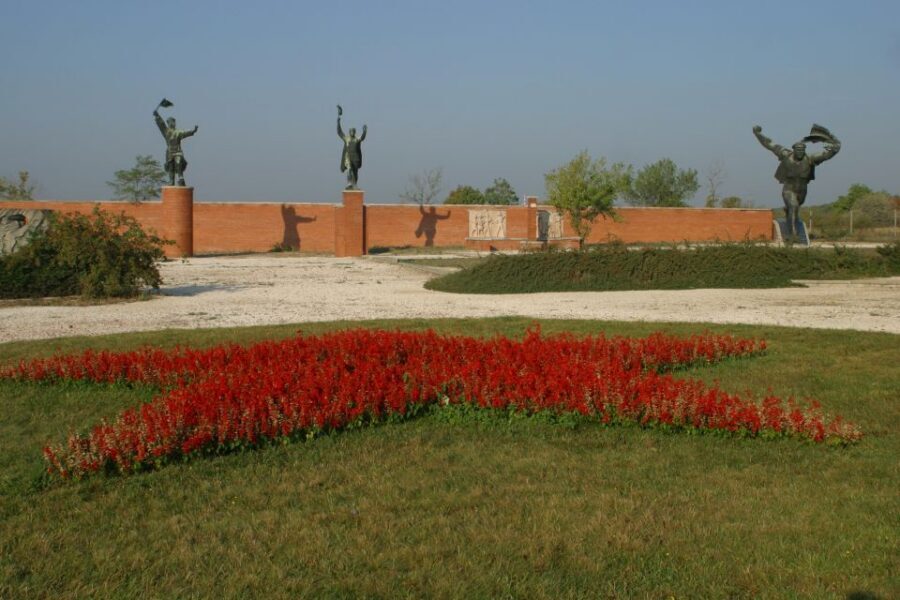
At Heroes’ Square, you get an easy pause that turns into a learning moment. The square was designed to celebrate the 1000-year anniversary of Hungary in 1896, and your guide connects the sculptures and layout to major figures, from King Stephen to later revolutionary Kossuth.
This is one of the best “payoff” stops on the route because it’s both visual and informational. You can stand in one place and take in a whole timeline. Since you’re not waiting around for entry tickets, you’re free to focus on what the monument is trying to communicate.
One smart tip: if you want photos without blocking others, aim for the moments when the group is already moving. In a stop like this, the first minute is usually the busiest. Use the time to look first, shoot second, and then rejoin.





City Park circuit: ice rink/boating, Vajdahunyad Castle, and modern venues
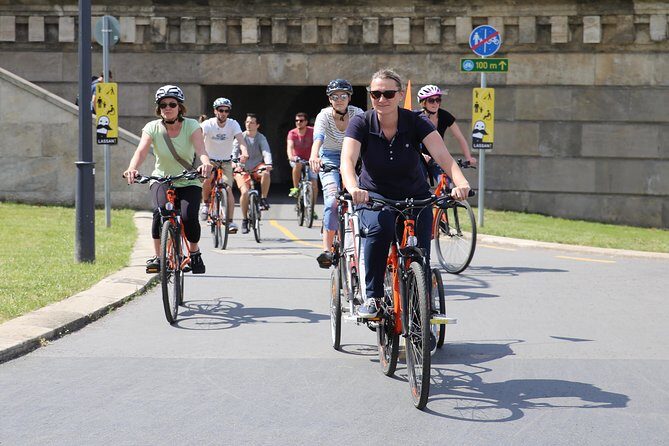
From Heroes’ Square, the tour enters City Park (Varosliget). This is where Budapest shifts from monumental history into recreation and architecture.
Seasonally, you pass the City Park ice rink in winter or see an artificial lake area in warmer months where boating may be possible. The stop list notes that City Park is popular for leisure, recreation, and sport—and it also mentions redesign work happening at the time of the tour, so some areas may look in-between.
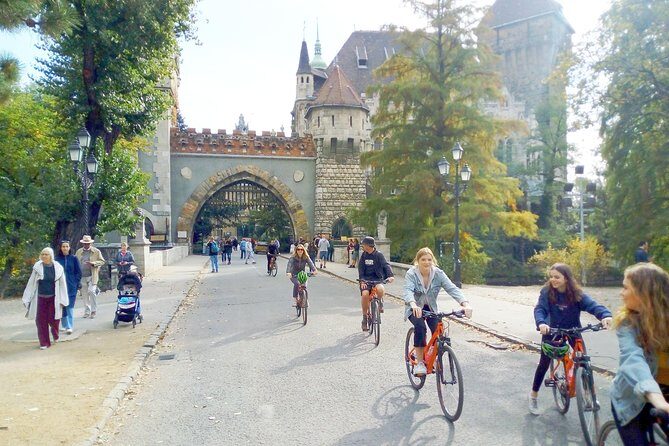
You’ll also get a highlight at Vajdahunyad Castle, described as a fake castle. That detail matters: it’s an intentional architectural choice, and your guide helps explain why. You’ll also spot a statue of Anonymous, which gives you a satisfying little story element rather than just a pretty structure.
The tour continues through modern additions:
- House of Music Hungary: modern architecture and a concert hall setting
- Museum of Ethnography: contemporary design with a distinctive shape and views from its edge of the park
These aren’t long stops, but they’re well placed. The route gives you a sense of Budapest in layers—imperial monuments, then park-era leisure, then contemporary design.
Andrassy-to-downtown classics: Opera and St. Stephen’s Basilica from the outside
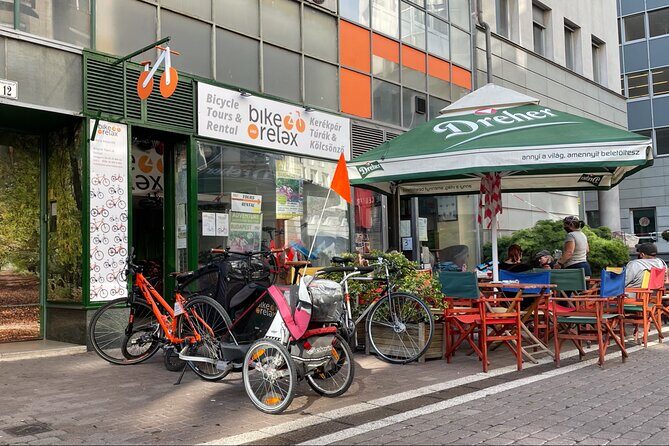
Back toward the central downtown stretch, you’ll pass Hungarian State Opera on Andrassy Street. The exterior is the star here: it’s tied to Michael Ybl and sits within the UNESCO-protected Andrassy Avenue ensemble. You’ll also learn about the historical M1 subway, which helps make the neighborhood feel planned rather than random.
Then there’s St. Stephen’s Basilica (Szent István Bazilika). You won’t enter, but you’ll see what’s notable from the outside and learn about the famous interior feature: St. Stephen’s right hand under glass (as described in the tour overview). Even without going inside, knowing what to look for changes the way you see the building.
If you’re hoping to go inside churches or operas, plan for that separately. This tour’s value is speed plus context, not ticketed access.
Szabadság tér and the Parliament area: memorials and world-famous views
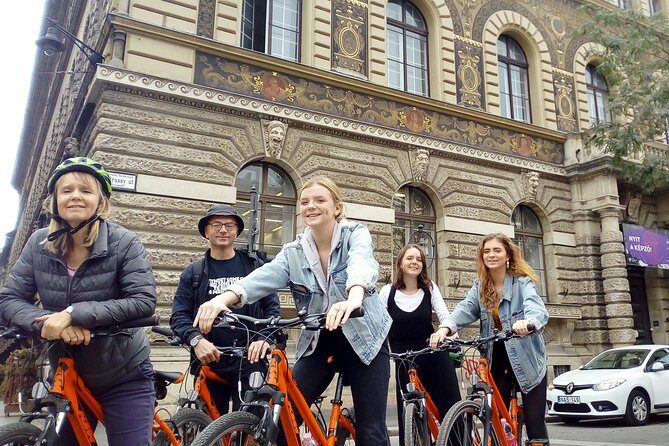
One of the most important stretches is Szabadság tér, described as both a Wall Street-like business area and a place marked by bloody history. The tour notes controversial memorials and a reminder-heavy message about the Holocaust and World War II in Budapest. This is where the “sightseeing bike ride” becomes a “remember this” ride.
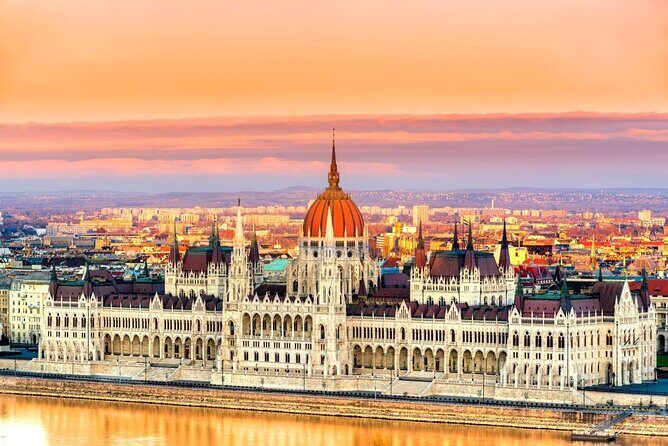
Next comes the Hungarian Parliament Building. You won’t enter, but the exterior and setting are the point. The tour emphasizes how it sits on the river bank and how the renovation has made it a must-see landmark. You’ll also get a wide panorama when you turn around the building, including views over the Danube toward the Buda side.
Then the ride continues along to Shoes on the Danube Bank. This stop is short and moving, but it’s one of the most emotionally direct memorials in the city. The tour also notes that direct access to the memorial can depend on traffic conditions, so if you don’t get a perfect spot at first, don’t panic—this is the kind of stop where the guide’s timing matters.
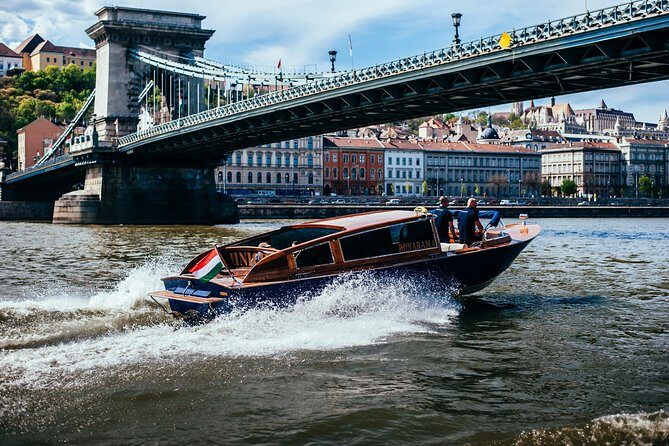
You’ll also pass the Chain Bridge, the oldest bridge across the Danube in Budapest. It’s not about stopping and entering; it’s about recognizing how the river ties neighborhoods together.
Buda-side highlights by bridge and bath exteriors: Rudas and Gellért
Crossing into Buda brings a change in feel. You’ll pass Rudas Baths, one of the oldest Turkish Baths in Budapest. If you want to bath, the tour notes to check the opening schedule because there are men’s and women’s days for the hammam. Again: no entry is included on the tour—this is a view-and-context stop—but it’s useful if you plan a proper soak later.
The last stop on the Buda side is at the Gellért Baths area. It’s mainly about seeing the riverside landmark. Then you’ll reach Liberty Bridge (Szabadság hid), formerly named after Austrian Emperor Franz Joseph and renamed after the end of the monarchy. This bridge is also a student and youth meeting spot, so you often get a lively atmosphere and strong photo angles.
If you’re trying to structure your day: think of this half as your “riverfront orientation.” After this, you can choose whether you want to return to the bridges, bath complexes, or the Central Market area.
Central Market and the synagogue finale: where you can snack after the ride
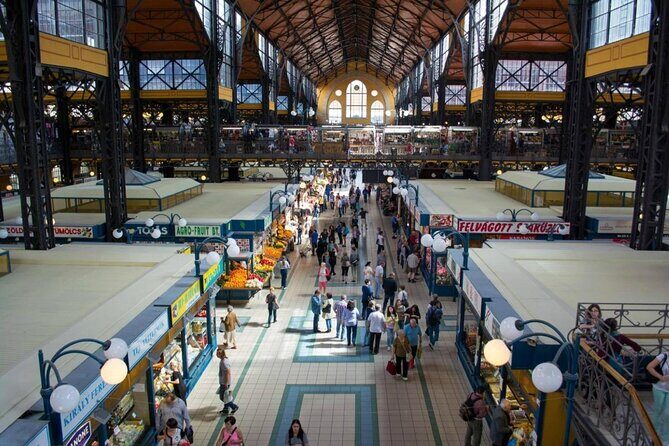
Near the end, the route includes passing the Central Market, with a clear hint to plan a return later for Hungarian food and atmosphere. That’s practical. You don’t want to fully commit to a sit-down lunch if you’re about to spend the next stretch cycling—so treating Central Market as your after-tour mission is smart.
You’ll also pass the National Museum, which is presented as a place to go if you’re deeply interested in the region and the peoples who lived in this area.
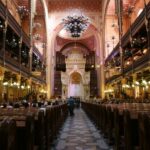
Finally, you end with a look at the Great/ Central Synagogue (Nagy Zsinagoga) at the border of the Jewish Quarter. It’s described in moorish style, and you’ll see it from outside—no entry.
Then you ride back to the starting point.
Price and value: why $41.13 can make sense
At $41.13 per person (for about 3.5 hours), this tour isn’t expensive compared to what you’d pay for separate museum tickets, transit, and time lost walking between neighborhoods. The “value math” here is simple:
- You get a live guide for a set route
- You get a bicycle, which changes what you can cover
- You get bottled water and luggage storage, which reduces hassle
- You see a lot of major sights, mostly from the outside, so costs don’t stack up on entry fees
You do need to adjust expectations: this isn’t a series of timed museum visits. The tour is built around viewpoint moments—Opera exterior, Parliament exterior, Basilica exterior, memorial pass-by stops. If you specifically want interior access, you’ll need to pair this with separate ticketed visits.
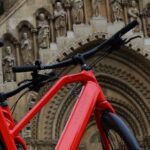
One extra value note from the experience feedback: some groups have been offered an e-bike upgrade, and wooden-frame e-bikes have been mentioned as a win when there’s even a little uphill stress. If e-bikes are an option for your booking, it can be a smart way to keep the ride comfortable.
Bike comfort, traffic, and who should book (and who should skip it)
This tour isn’t recommended for beginners. That doesn’t mean you must be a speed demon; it means you should already feel okay:
- steering in a group
- braking and starting smoothly
- riding where lanes can feel shared with cars
Your comfort matters most on major roads and around traffic noise. One review also mentioned hearing challenges due to sound levels, so keep your position in the group in mind and don’t assume every sentence will land perfectly at every stop.
A few other reality points from the tour details:
- Weight limit: 110 kg
- Not recommended for people with visual impairment
- Children must ride with an adult
- It requires good weather, so rainy days can change plans
If you like seeing a lot quickly, want structure, and enjoy learning while moving, this is a strong fit. If you prefer slow wandering with long indoor stops, you might feel rushed.
Practical tips so the ride feels easy
A bike tour works best when you prep for weather and wind, not for sightseeing fatigue.
Bring layers—you warm up once you start pedaling. If it’s breezy, use gloves and consider a hat for wind protection. Since you’ll be outside for the whole 3.5 hours and doing short stops frequently, comfort matters more than you think.
Also, take photos efficiently:
- look for the best angle as you approach
- shoot fast when the group pauses
- don’t stall the group with long lens work
And if you’re sensitive to traffic noise, know it can make hearing tougher at times. Don’t blame yourself—just keep expectations realistic and focus on the overall story the guide is building.
Should you book this Budapest Historic Downtown Bicycle Tour?
If you want a first-pass overview of Budapest’s “big names” with useful context, this tour is an easy yes. The small group size, guide-led stops, and route that strings together Jewish Quarter highlights, Andrassy Avenue, Heroes’ Square, City Park, and the Parliament riverfront gives you a strong mental map fast.
I’d skip it if you’re a brand-new rider, you hate riding near traffic, or you mainly want inside access to churches, museums, or synagogues. This ride is about moving, looking, and learning from the outside.
If you’re the kind of traveler who likes to start with orientation—then come back later to go deeper—this is a great early-day choice.
FAQ
How long is the Budapest Historic Downtown Bicycle Tour?
It runs for about 3 hours 30 minutes.
How big is the group?
The tour has a maximum of 10 travelers.
What language is the tour offered in?
The tour is offered in English.
Is this tour good for beginners?
It is not recommended for beginners, since you’ll need to feel comfortable riding in city traffic conditions.
Are museum or synagogue entrances included?
No. The tour is designed for sightseeing without entering buildings, so no entrance fees are included.
What’s included in the price?
The price includes a bicycle, live guide, helmet, free luggage storage, and bottled water.