REVIEW · BUDAPEST
Budapest: Mika Tivadar Secret Museum Entry Ticket
Book on GetYourGuide →Operated by Gozsdu hotel kft. · Bookable on GetYourGuide
Most people pass Kazinczy Street without noticing this place.
The Mika Tivadar Secret Museum turns a small footprint into a time-travel walk through late 1800s Budapest and the interwar years, with a free mobile audioguide in 8 languages that keeps the pace easy.
What I really like is the way it makes you connect the dots between the building you’re standing in and the broader story of District VII.
You’ll also appreciate the on-site cocktail bar and restaurant, so the museum isn’t just reading and walking—you can take a break right where the history is playing out.
One possible drawback: there’s no live guide in the traditional sense, and it’s not suitable for wheelchair users, so you’ll rely on your smartphone and the self-guided flow.
In This Review
- Key takeaways before you go
- Entering The Mika Tivadar Secret Museum: what you’re actually buying
- Where to start at Hotel Mika Downtown reception
- The mobile audioguide system (and why it works so well here)
- What you’ll see: Kazinczy Street through late-1800s and interwar Budapest
- Notable names you’ll meet inside the exhibits
- The district’s darker theater: brothels, cabaret, and wartime echoes
- Celebrity connections on Kazinczy Street: yes, really
- 1848 Revolution veterans and the Mexico Civil War
- A short visit with a real atmosphere: cocktails on site
- Practical value: $5 for 140 sqm, 8 languages, and built-in audio
- Who should book this museum (and who might skip it)
- Should you book the Mika Tivadar Secret Museum entry ticket?
- FAQ
- Where is the meeting point for the Mika Tivadar Secret Museum?
- How long does the museum visit take?
- Is there a museum guide included?
- Do I get an audioguide, and what languages are available?
- Is Wi‑Fi available inside the museum?
- Is the museum wheelchair accessible?
Key takeaways before you go
- Self-guided timing: a 30-minute visit that you can stretch based on how long you linger
- Phone audioguide in 8 languages: scan a QR code and listen with your own device
- 140 sqm specialty museum: compact space, but packed with chapters and themes
- Kazinczy Street in focus: the museum links the house to surrounding buildings and eras
- Bar on site: you can grab a drink while you explore the district’s darker, stranger corners
Entering The Mika Tivadar Secret Museum: what you’re actually buying
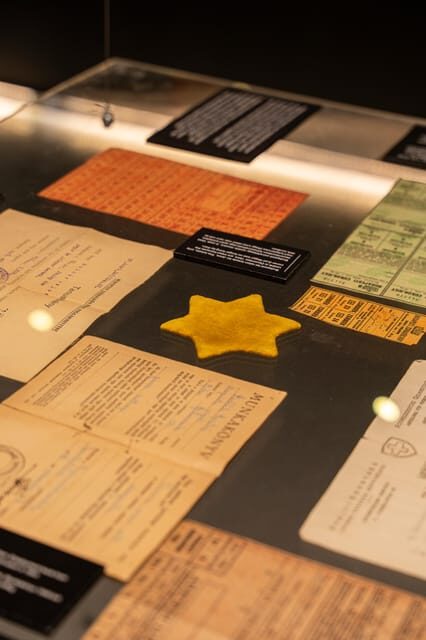
The ticket is simple: you’re paying about $5 per person for a short, story-driven museum experience in the heart of Budapest.
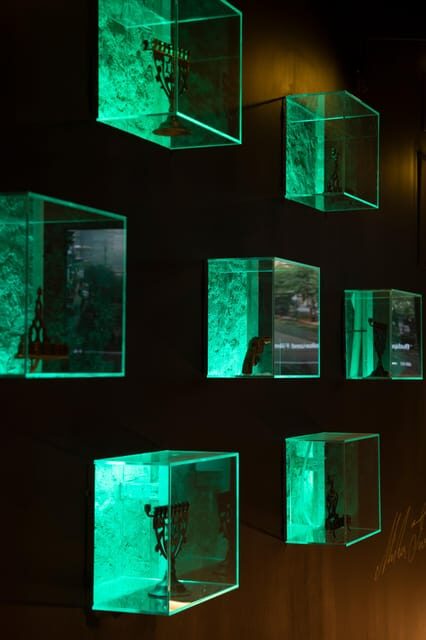
The space is only about 140 square meters, so don’t expect long galleries or a slow museum crawl. This is more like a guided-feeling walk where the content is delivered in “chapters” via audio and exhibits, and you control your own speed.
The museum’s core idea is also worth knowing up front: it doesn’t just tell you about the building. It uses that house to light up what was happening on Kazinczy Street, especially in the late 19th century through the years between the two world wars.
That time range matters because District VII changed fast—new entertainment venues showed up, political tensions grew, and different communities shaped the neighborhood’s look and character.
If you want a museum that gives context, story, and atmosphere without asking you to spend half a day, this fits that job.
You can also read our reviews of more tours and experiences in Budapest



Where to start at Hotel Mika Downtown reception
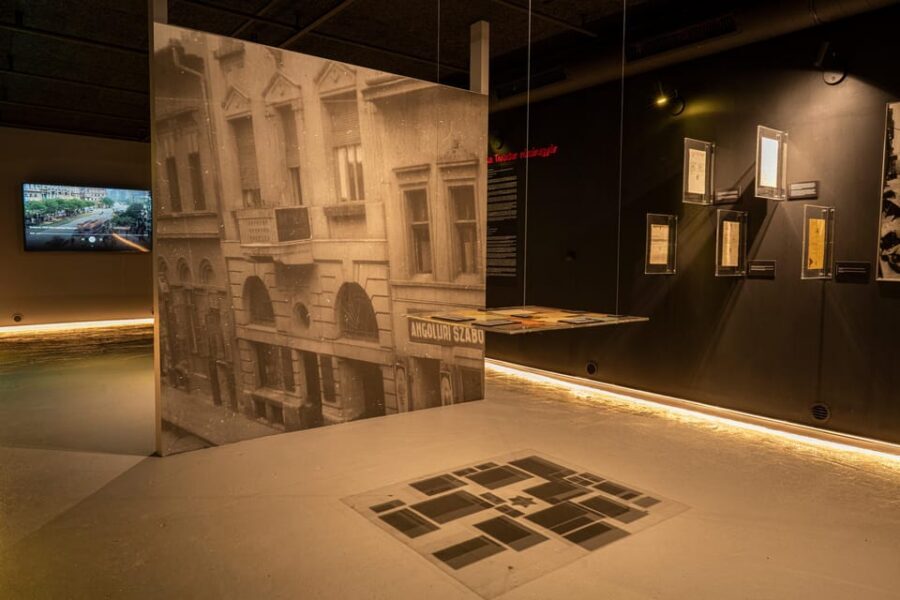
Your meeting point is Hotel Mika Downtown reception.
From there, you’re greeted and given a flyer with a brief explanation of what you’ll discover—no complicated check-in choreography, just a quick start so you can get moving.
This matters because the museum is self-guided. You’re not waiting around for a person with a lanyard; you’re setting yourself up for the audio chapters and letting the exhibits do their work.
Tip: bring a charged smartphone. The whole audio setup runs through your phone.
The mobile audioguide system (and why it works so well here)
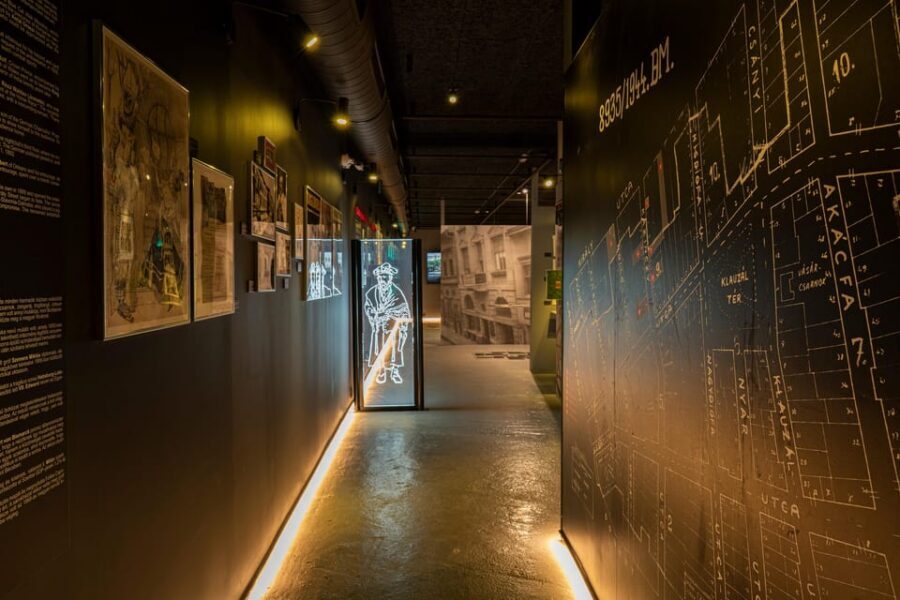
The museum includes voiceovers with voice effects, and you access each chapter using your mobile device.
The good news: free Wi‑Fi is available, and the audioguides are available in 8 languages.
So you don’t need a separate device, a paper booklet that gets lost, or a group audio schedule. You can stand still where something catches your eye, then move on when you’re ready.
Also, since there’s no museum guide included, the audio approach becomes the “guide.” The audio keeps you oriented in a small space—especially helpful if you like your history in story form rather than textbook style.
Timing-wise, the experience is listed at 30 minutes, but “30 minutes” in a compact museum often means you’ll finish quickly if you skim, and you’ll take longer if you stop for more detail. You’re in charge of that.
What you’ll see: Kazinczy Street through late-1800s and interwar Budapest
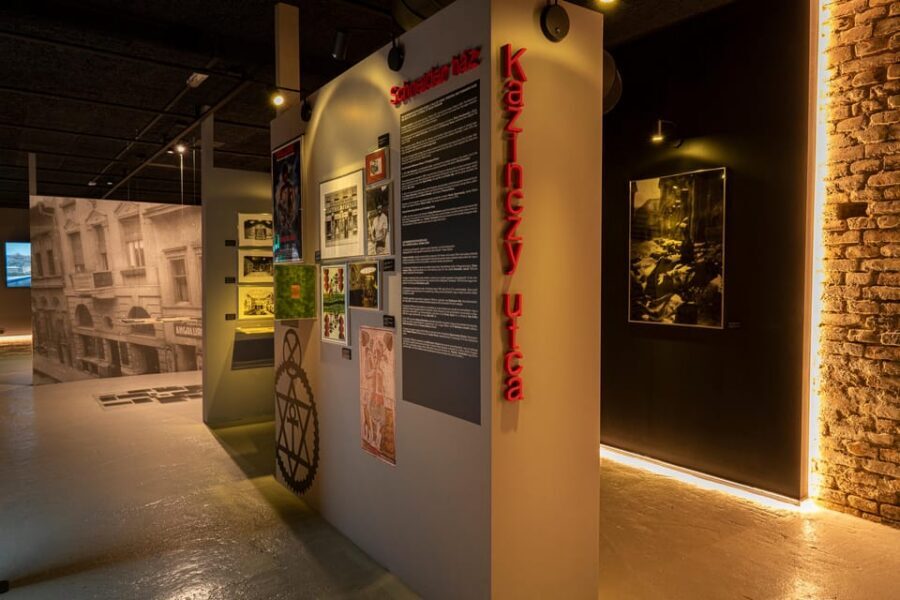
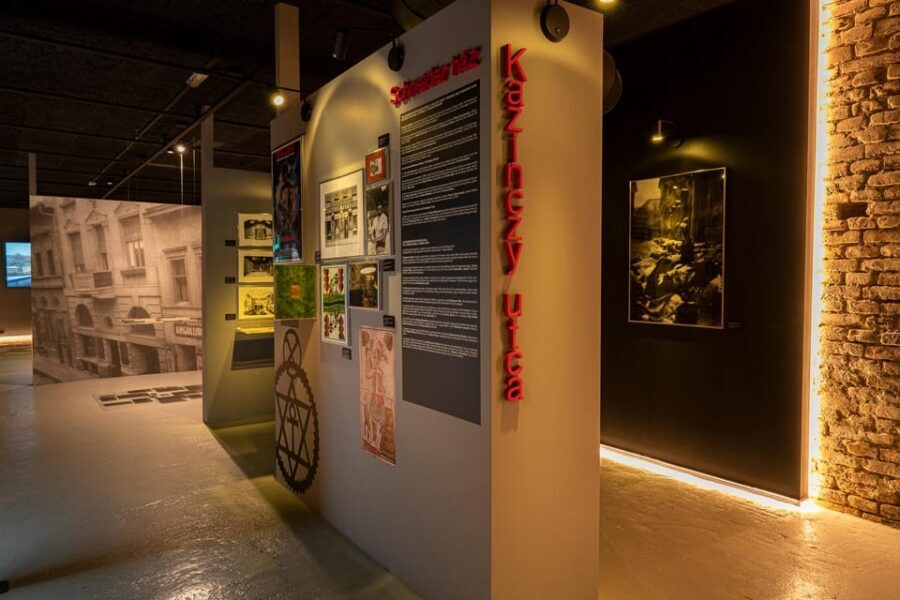
As you move through the museum, you’ll be walking through a curated snapshot of how Budapest lived from the late 1800s to the interwar years.
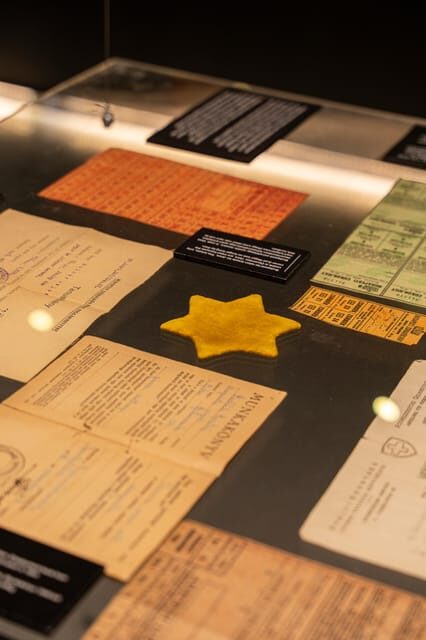
The exhibits use authentic installations, photographs, and written narratives to recreate the feeling of “then,” not just the facts.
One big theme is the building itself. The highlights call it the first Hungarian hotel museum, which tells you the venue isn’t pretending to be a generic museum space. You’re seeing how hospitality, city life, and architecture can act like a time machine.
Another theme is location. Instead of treating the museum as an isolated box, the experience brings in surrounding buildings along Kazinczy Street, so the neighborhood feels like part of the exhibit, not just the background.
And then there’s the way the museum frames the city in Europe’s bigger story. It connects Hungarian life to the continent’s great-power world, where politics, migration, and culture collided. In a space that’s only 140 sqm, it uses those connections to keep the story from feeling too local or too narrow.
A particularly thoughtful element is the emphasis on many ethnic communities living in Hungary. That makes the museum more than a single-national narrative. If you’re traveling from elsewhere, you’ll likely recognize parts of the story about identity, belonging, and change.
Notable names you’ll meet inside the exhibits
This is the kind of museum where a small display can lead to a big “wait, what?” moment.
The museum includes legendary guests tied to the era, such as King Edward VII of the United Kingdom, German statesman Otto von Bismarck, and Milan I of Serbia.
It also links entertainment and media history to this exact neighborhood. The Blue Cat, described as Europe’s most famous cabaret, once operated here.
And Hungary’s first cinema opened on this spot, where director Michael Curtiz—later famous for Casablanca—began his film career.
That’s a useful pairing for your visit: you’re not only learning what happened, you’re seeing how entertainment culture and politics overlapped in everyday city spaces. In other words, the neighborhood’s “party” reputation has a historical spine.
You can also read our reviews of more museum experiences in Budapest






The district’s darker theater: brothels, cabaret, and wartime echoes
District VII is known for nightlife today, but this museum explains how that reputation formed.
It covers the Budapest party district’s history, including a Budapest brothel scene featured among the museum’s content. It’s not sensational for shock value—it’s presented as part of the wider social reality of the era.
You’ll also encounter the wartime layer. One of the standout details from the on-site setting is that the space connects to a shop that was a copper shop during World War II, later transformed into a welcoming spot for visitors now.
That kind of “same walls, different purpose” story is exactly the reason small museums can feel smarter than larger ones.
If you like history that has scars and contradictions—how a city can be glamorous and brutal at the same time—this museum gives you both sides without turning it into a lecture.
Celebrity connections on Kazinczy Street: yes, really
Some of the museum’s surprises are designed to make you pause.
It includes connections between pop-culture figures—specifically, the museum points to a surprising link between Sylvester Stallone and Arnold Schwarzenegger connected to a tiny house on Kazinczy Street.
If you’re the kind of traveler who worries museums will feel like endless dates, this is one reason the audio chapters keep attention. It breaks up the straight-line history with connections that feel unexpected but still tied to place.
1848 Revolution veterans and the Mexico Civil War
Another “how is that connected?” moment comes from a historical thread that spans continents.
The museum explains how veterans of the 1848–49 Hungarian Revolution played a role in the Mexican Civil War.
That’s a strong example of what this experience does well in a small space: it refuses to treat Hungarian history as an isolated story. Instead, it shows how people, politics, and ideas moved and echoed outward.
If you’re short on time and still want context for how Central European events influenced the wider world, this museum delivers that in compact form.
A short visit with a real atmosphere: cocktails on site
One of the smartest choices here is that the museum is paired with an onsite cocktail bar and restaurant.
That means you can keep your evening flowing. You don’t have to treat the museum as a separate day-block; it works as part of your time in District VII.
This is also why the setting feels less museum-like and more like a neighborhood experience. Even if you only stay for the core 30 minutes, you’ll still likely want to linger afterward with a drink, especially if you came in during the day and District VII night energy hasn’t kicked in yet.
Important practical note: the ticket is for entry to the museum experience. You’ll still buy drinks and food separately at the bar/restaurant, unless something changes at the venue (the info provided doesn’t say drinks are included).
Practical value: $5 for 140 sqm, 8 languages, and built-in audio
Let’s talk value in real terms. At around $5, you’re getting:
- a compact but focused specialty museum (140 sqm)
- audio chapters with voice effects
- 8 languages
- free Wi‑Fi for the audio setup
- a printed flyer and an orientation from staff
For many museums in big European cities, the audio cost alone can be more than this ticket price. Here, the audio is the main ingredient, and it’s included.
The real tradeoff is the self-guided format. If you love having a human guide who answers questions, you might find this less satisfying. But if you prefer a faster pace with stories tailored to your own stops and starts, it’s a good match.
Also, the “skip the ticket line” option can save time when you’re trying to fit multiple stops into one evening.
Who should book this museum (and who might skip it)
You’ll probably love this if you:
- want a short, story-based museum that doesn’t eat your whole day
- like history tied to real places, especially District VII
- enjoy audio formats and reading less, listening more
- want entertainment history mixed with political and social context
You might skip it if:
- you need a wheelchair-accessible venue (the experience isn’t suitable for wheelchair users)
- you want a formal guided tour with a live expert moving you from room to room
- you hate phone-based audioguides, even with free Wi‑Fi
Should you book the Mika Tivadar Secret Museum entry ticket?
I think it’s a strong buy if you’re already in District VII and want something smarter than another generic photo stop. The ticket price is low enough that it feels like a low-risk add-on, and the content is dense for the size of the museum.
Book it when:
- you want a compact museum that still feels like a real experience
- you’ll bring a charged phone and use the QR audioguide
- you want a history-and-nightlife bridge before dinner or after cocktails
Don’t book it if:
- you need wheelchair access
- you’re uncomfortable doing the museum independently without a guide
If you fit the first group, this is one of those places where 30 minutes can turn into a noticeably better understanding of Budapest’s Kazinczy Street—without slowing your day down.
FAQ
Where is the meeting point for the Mika Tivadar Secret Museum?
You meet at Hotel Mika Downtown reception.
How long does the museum visit take?
The experience is designed for about 30 minutes. Check available starting times to plan your visit.
Is there a museum guide included?
No. There’s no museum guide or tour guide included. Staff greet you, give a flyer, and explain briefly what you’ll discover. The chapter audio is available on your phone.
Do I get an audioguide, and what languages are available?
Yes. Audioguides are included and available in 8 languages, accessed on your own mobile device.
Is Wi‑Fi available inside the museum?
Yes. Free Wi‑Fi is available.
Is the museum wheelchair accessible?
No. The experience is not suitable for wheelchair users.