REVIEW · BUDAPEST
Classic Walk in Budapest Historical Center
Book on Viator →Operated by Italiano a Budapest · Bookable on Viator
Budapest’s Pest tells its story fast. This classic 2-hour walk gives you a guided path through major sights—and the big Hungarian historical context that helps them click into place. You’ll focus on Pest, from the famous pedestrian shopping stretch to river views and major monuments, with live guiding in English.
I like two things most. First, the pacing feels thoughtful—especially with a smaller group (maximum 30). Second, the guide doesn’t just point; you get explanations you can use, plus practical food and drink suggestions that make the walk easier to turn into a full day.
One potential drawback: the tour format can mean longer pauses at certain stops. If you prefer faster sightseeing with less talk, you might wish for a bit more walking between highlights.
In This Review
- Key Highlights You’ll Care About
- A 2-Hour Taste of Pest: What You’ll See and Why It Works
- Meeting at Molnár’s Kürtőskalács: Start Simple, Start Easy
- Váci Street and the Blue Danube View: Classic Budapest in One Line
- Pesti Vigadó: The 1860s “Dance Palace” Moment
- A Café-Friendly Square and the Pedestrian Street Energy
- Elizabeth Square: Danube Fountain + Giant Ferris Wheel
- St. Stephen’s Basilica: Symbolism, Not Just Sightseeing
- Szabadság tér: Monuments of Occupation and a Fountain Season Detail
- Kossuth Lajos Square and the 1956 Revolution
- Hungarian Parliament Building: The Grand Finish
- Price and Value: Why Around $3.60 Can Still Be Worth It
- Pacing, Stop Length, and the Guide Style That Makes or Breaks It
- Tips to Get More Out of Every Stop
- Should You Book Classic Walk in Budapest Historical Center?
- FAQ
- How long is the Classic Walk in Budapest Historical Center?
- Where does the tour start and end?
- Is the tour offered in English?
- Is admission included for churches or museums?
- What sights are included in the route?
- How big is the group?
- Where can I find the meeting point?
- What is the price?
- What is the cancellation policy?
- Is it easy to get to the meeting point?
Key Highlights You’ll Care About
- A tight 2-hour route through Pest’s main attractions without museum detours
- Danube-side photo moments, including the Blue Danube view toward Buda Castle and bridges
- Major history signals, from the 1860s to WWII-era and Soviet-era monuments
- St. Stephen’s Basilica context that goes beyond the obvious facade
- Small-group comfort, with room for questions during the walk
- Great local guidance, including where and what to eat after the tour
A 2-Hour Taste of Pest: What You’ll See and Why It Works
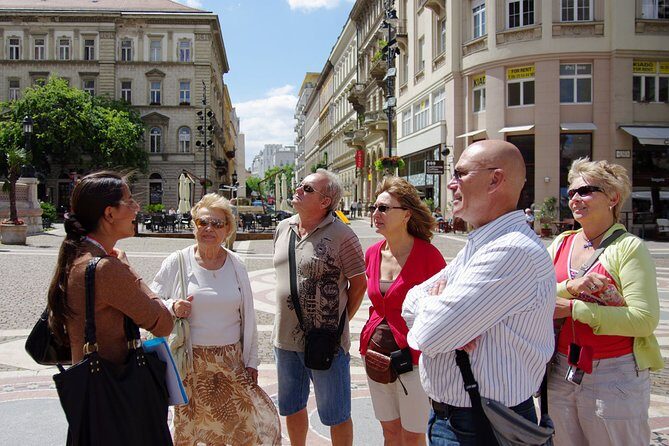
This tour is built for orientation. In about two hours, you get a guided sweep of Budapest’s Pest side that hits the landmarks you’ll keep seeing on postcards—and then adds the meaning behind them. That matters, because Budapest is one of those cities where the buildings and monuments feel dramatic, but they only fully register when you understand the timeline.
You start in the shopping-and-street-life heart of the city and end at the Hungarian Parliament area, so you finish with a strong visual anchor for the next day’s exploring. The route also mixes upbeat “street Budapest” moments (think riverside views and café culture) with heavier historical stops. That balance is good if you want the big picture without spending the entire day in formal sites.
Group size is another plus. With a cap of 30, the guide can keep it moving and still answer questions. In one standout case, the guide also adjusted for comfort—staying mindful about shade and a pace that works for everyone. That kind of care makes a short walking tour feel worth it.
You can also read our reviews of more historical tours in Budapest



Meeting at Molnár’s Kürtőskalács: Start Simple, Start Easy
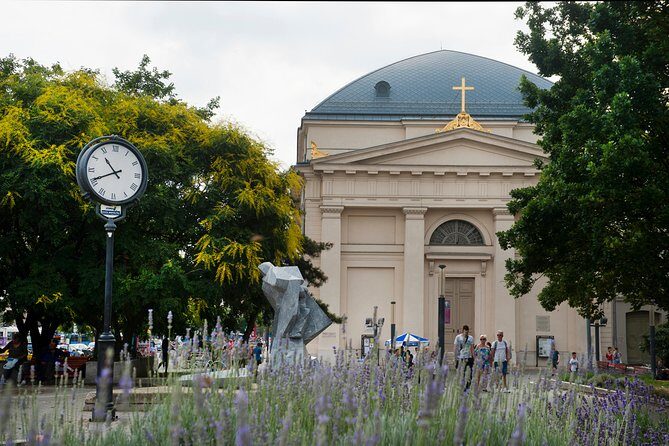
You meet at Molnár’s kürtőskalács, right on Váci Street at Váci u 31, 1052. It’s a handy starting spot because it’s already a “known place” in the area, and that reduces the stress of finding a meeting point. After that, you’re set up to follow the pedestrian flow right into the heart of Pest.
I’d plan on wearing comfortable shoes. It’s a walking tour, and even if stops aren’t long by museum standards, you’ll still be on your feet. Also, because it’s outdoors for the whole experience, check the weather before you go. If it’s sunny, you’ll appreciate the fact that the guides may actively consider shade as they plan pauses and movement.
And if you want to get value fast, treat the first few minutes like a warm-up. Ask a quick question early—what neighborhoods pair well with this route, or where people tend to eat around the big sights. That’s the kind of advice that makes the whole tour feel like more than just photos.
Váci Street and the Blue Danube View: Classic Budapest in One Line
Your first big “this is Budapest” moment is Váci Street, the famous pedestrian shopping street. Even if you’re not shopping, it gives you the texture of the city: storefront energy, street layout, and the sense that this part of Pest is designed for walking. For me, that makes it a smart start. You get into the walking rhythm immediately.
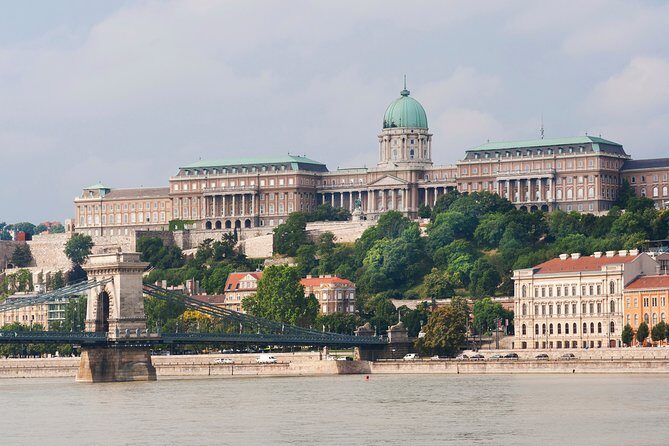
From there, you’ll reach the waterfront perspective—time for the Blue Danube view. This is one of the reasons people love Budapest’s skyline: you get historic bridges and you can see Buda Castle across the river. That combination is also why a guided explanation helps. Without context, you might just think postcard. With context, the view feels like a timeline—waterway, bridges, and power centers lining up across districts.
Practical tip: if you care about photos, look for steadier footing near the river edges and avoid blocking walk paths. The tour moves as a group, so you’ll want to step out just long enough to snap your shot, then rejoin quickly.
Pesti Vigadó: The 1860s “Dance Palace” Moment
Next up is Pesti Vigadó, a major highlight that gives you a different angle on Budapest architecture. You’ll see it described as a beautiful building from the 1860s, built in a Hungarian Romantic style. That matters because it’s not just a pretty facade. It signals a period when Pest was building cultural identity and prestige.
This stop is also a nice reminder that Budapest’s story isn’t only “monuments and revolutions.” It includes arts, social life, and the way the city wanted to be seen. A good guide helps you notice details you’d otherwise miss—things like how style choices reflect national pride and the era’s taste.
If you’re someone who likes architecture, you’ll probably enjoy this. If you’d rather keep moving, try to keep your questions short and focused here. The tour is short, so smart questions beat long conversations when you’re trying to see everything in two hours.
A Café-Friendly Square and the Pedestrian Street Energy
As you continue, you’ll reach the end of the pedestrian stretch and pause near a square surrounded by pastry shops and café terraces. This kind of stop is more useful than it sounds. It gives you a natural “reset” moment during a walking tour—your brain gets a break, and you can plan your next bite.
I think this is where the local tips shine. A guide can suggest what to try nearby without turning it into a food tour. Even if you’re not buying anything, you’ll leave knowing where to aim when hunger hits.
If you have dietary needs, you can use this break to ask what options are nearby. Since the tour includes live guiding in English, it’s a good place to get direct answers rather than guessing from menus later.






Elizabeth Square: Danube Fountain + Giant Ferris Wheel
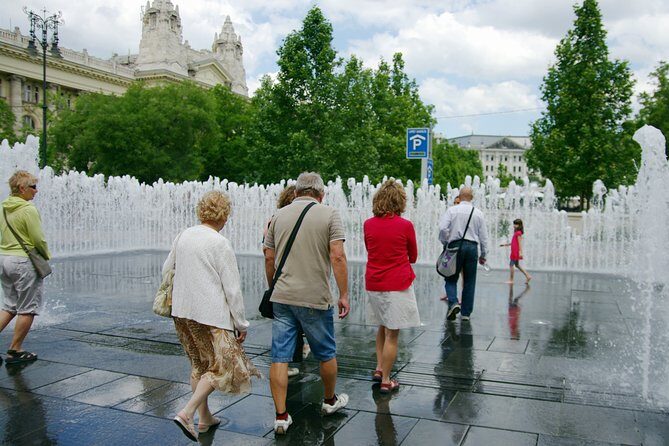
Then comes Elizabeth Square, where you cross through a park setting. This is a change in rhythm from street-shopping and river viewing. It feels like open space, and it gives the tour breathing room.
At Elizabeth Square, you’ll see the Danube Fountain monument and the giant ferris wheel. The fountain and the wheel together make it easy to understand why this area is a magnet for people. Even if you’re not riding the ferris wheel, the presence of those landmarks anchors the square visually.
Here’s the value of a guided walk: you don’t just learn what you’re looking at—you learn how to connect it to the rest of your day. For example, after a walk like this, Elizabeth Square is a strong “continue on your own” point. It’s scenic, it has practical amenities nearby, and it’s easy to blend into further sightseeing.
Possible drawback to keep in mind: because it’s open space and landmarks are obvious, the guide may spend extra time talking to make sure the meaning lands. If you prefer brisk movement, be ready for some pauses.
St. Stephen’s Basilica: Symbolism, Not Just Sightseeing
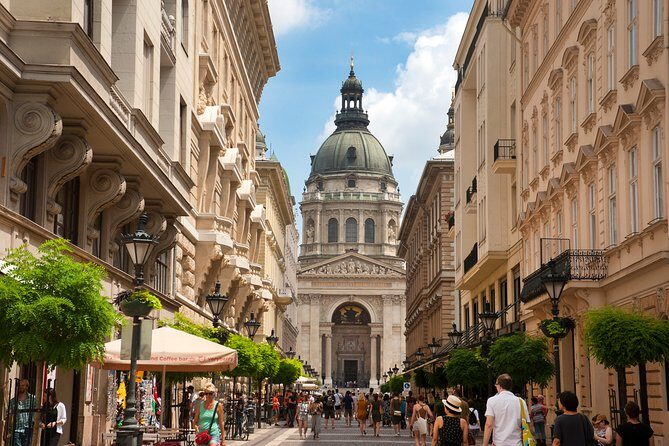
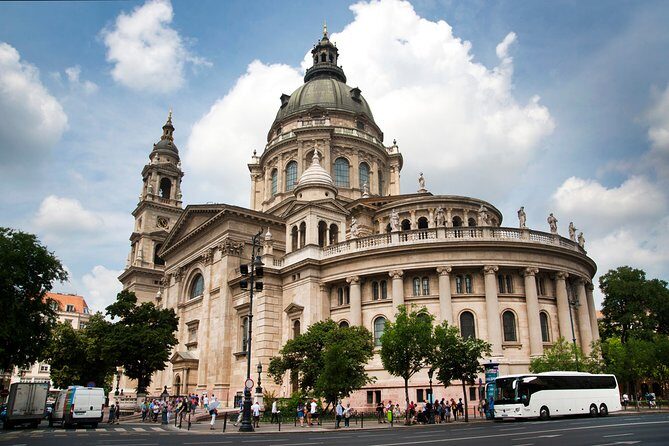
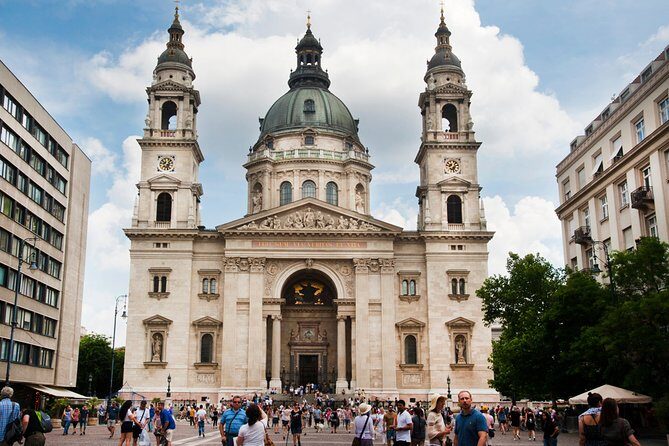
You’ll then admire St. Stephen’s Basilica (Szent Istvan Bazilika) and hear the story of its building and symbolism. This is a key “value” moment, because church exteriors can become background noise if you don’t know what you’re looking for.
The tour does not include entry to churches or museums, so you won’t go inside. Still, the exterior stop can be excellent when you get context: why it’s there, what its design signals, and how it fits into the larger national story.
If you’re the type who likes to understand why a place is important, this stop will land well. If you mainly want inside access, plan a separate visit later when you can spend time inside at your own pace.
Szabadság tér: Monuments of Occupation and a Fountain Season Detail
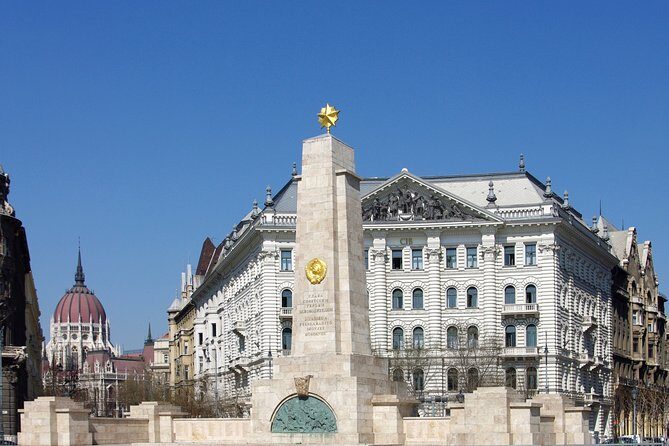
At Szabadság tér, the tour shifts toward the heavier side of Budapest history. You’ll see dramatic monuments related to the Nazi and Soviet occupations and the era’s dictatorships. This stop isn’t meant to be comfortable entertainment. It’s meant to make you look at the city’s layers—the way the past shows itself in public space.
You’ll also hear about the miraculous fountain, which works in the warm season. Even if you can’t confirm details on timing before you arrive, the guide’s mention helps you decide whether to come back at a better time. It’s one of those small, practical “planning hooks” that can improve a trip.
This is also a good place to ask a question about the timeline. If you leave not only knowing what you saw, but how it connects, then the whole tour has done its job.
Kossuth Lajos Square and the 1956 Revolution
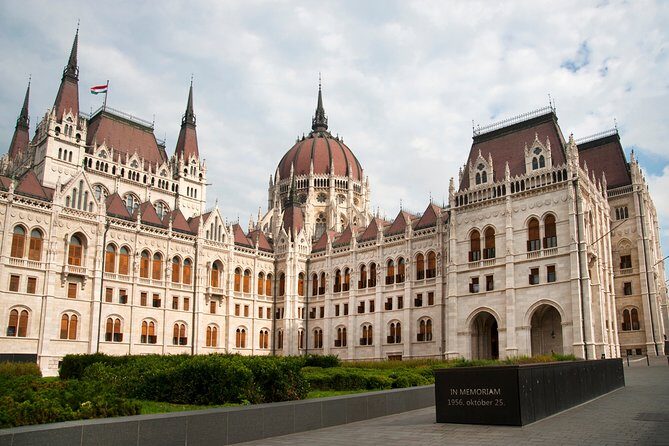
Next is Kossuth Lajos Square, where you’ll see memories of Hungarian freedom heroes and learn about the 1956 revolution against the Communist dictatorship. This stop is likely to be emotional, especially because it ties a specific event to visible public markers.
What I like about including this stop on a walking tour is that it changes how you experience the city. Without that context, many monuments read as generic stone statements. With the guide’s explanation, they become a map of struggle and change.
If you want to make this part more meaningful for yourself, pay attention to the guide’s framing. Then, later in your trip, you can connect it to other places you visit on your own.
Hungarian Parliament Building: The Grand Finish
The tour ends near the Hungarian Parliament Building at Kossuth Lajos tér 1-3. This is the payoff. Even without entering, the building’s scale and presence give you a “now I know where I am” feeling that’s perfect for a tour ending point.
Finishing here also helps you plan the next leg of your sightseeing. If you’re going to explore further around the Danube and Parliament area, you’ve just trained your eyes to notice what matters: national institutions, historical narrative, and architectural statements.
Since entry isn’t included, treat this as a guided exterior orientation. Then decide whether you want to add an inside visit later, depending on your interests and time.
Price and Value: Why Around $3.60 Can Still Be Worth It
At $3.60 per person, this tour is priced like a budget orientation walk. That’s a big deal in Budapest, where you’ll find both free sights and expensive guided experiences. Here’s the value logic: you’re paying primarily for live guiding plus a route that strings major Pest highlights together.
What’s not included is key. Entry to churches and museums isn’t part of the price, so you’re not paying for ticketed attractions. That makes the tour more efficient if you want to see a lot quickly without lining up for interiors.
Also, the group size cap and English guiding matter. A small group plus interpretation can be worth more than the ticket cost suggests—especially if you ask questions during the walk. One reviewer-highlight you should take seriously: the guide was careful to manage comfort and cover history in a way that felt thoughtful, and the pace worked for everyone. That’s the difference between a cheap walk that’s just movement and a cheap walk that actually helps you understand the city.
Pacing, Stop Length, and the Guide Style That Makes or Breaks It
The guide experience seems to be the main swing factor. Most praise centers on small-group comfort, careful pacing, and solid historical explanation. One guide name that comes through in the feedback is Oliver, described as friendly and attentive to interests—taking time to cover both requested themes and extra context.
That style is exactly what you want on a short walk. You get facts, you get answers, and you can steer the conversation toward what matters to you, like where to eat or what to look for next.
Still, there’s one fair caution: a different perspective complained about longer stops and wanting more walking with less explanation. That doesn’t mean the tour is slow all the time—it means the balance might not suit every preference.
My advice: if you want maximum motion, go in with a mindset of quick questions, not long discussions at every landmark. Also, wear shoes ready for walking, not for “stand and analyze” tours.
Tips to Get More Out of Every Stop
A few practical moves will help you make this tour pay off:
- Ask one good question per stop so the guide can tailor the story.
- Bring a small water bottle if the weather is warm; it helps you keep pace during park and square breaks.
- If you’re photo-minded, plan quick shots at the Danube view and at the Parliament finish point, then move on.
- When the route reaches café-territory areas, use that moment to decide on one meal plan instead of searching later.
- If you’re sensitive to heat, note that guides may consider shade and pacing—so don’t be shy about mentioning what you need.
This walk is short enough that small choices make a difference. You can use the guide to set up the rest of your day.
Should You Book Classic Walk in Budapest Historical Center?
Yes—if you want an efficient, history-informed overview of Pest without buying museum tickets. This is the kind of tour that helps you orient quickly: Váci Street for street feel, Danube views for the big skyline, basilica and monuments for meaning, and Parliament to end with a clear sense of place.
I’d skip it only if you strongly prefer a very brisk “walk-through” with minimal talking. Because the stops include interpretation, some people may want more motion and less explanation. If that’s you, you might still enjoy it, but consider bringing a short-attention strategy—ask your key questions early and keep moving.
If you like small-group comfort, English guidance, and leaving with a better mental map of Hungarian history, this one is a strong value choice for a first visit or a quick stopover in Budapest.
FAQ
How long is the Classic Walk in Budapest Historical Center?
It lasts about 2 hours.
Where does the tour start and end?
It starts at Molnár’s kürtőskalács, Váci u 31, 1052 Hungary. It ends at Hungarian Parliament Building, Kossuth Lajos tér 1-3, 1055 Hungary.
Is the tour offered in English?
Yes, it’s offered in English.
Is admission included for churches or museums?
No. Entry to churches and museums is not included.
What sights are included in the route?
You’ll see Pest highlights such as Váci Street, Pesti Vigadó, Elizabeth Square, St. Stephen’s Basilica, Szabadság tér, Kossuth Lajos Square, and the Hungarian Parliament Building area.
How big is the group?
The tour has a maximum of 30 travelers.
Where can I find the meeting point?
You meet at Molnár’s kürtőskalács at Váci u 31. The end point is near the Hungarian Parliament Building at Kossuth Lajos tér 1-3.
What is the price?
The price is $3.60 per person.
What is the cancellation policy?
You can cancel for a full refund up to 24 hours before the start time.
Is it easy to get to the meeting point?
It’s near public transportation, and service animals are allowed.