REVIEW · BUDAPEST
Concert on the Oldest Working Organ in Budapest
Book on Viator →Operated by Majestic Sounds Organ Concerts · Bookable on Viator
One hour of organ power in a real church. At St Michael’s Church, you get Budapest’s oldest working organ in a Baroque setting, with Hungarian performers such as Miklós Teleki or Tamás Lozsányi. It’s a focused Friday- or Sunday-evening program built around classic organ repertoire and, on many dates, extra voices or instruments.
What I like most is the way the concert gives you a real sense of the organ’s range. You’ll hear familiar names and composers like Bach, Vivaldi, Handel, Mozart, Purcell, Liszt, Franck, and Dubois, with the programme changing by date so it doesn’t feel like one repeat track.
One thing to plan for: this is a mobile ticket experience, so you’ll want your phone handy and charged for the entry scan.
In This Review
- Key things to know before you go
- St Michael’s Church: Budapest’s Oldest Working Organ Under One Roof
- Price and What You Get for $23.50
- Your Concert Plan at 7:00 pm in Downtown Budapest
- The Sound Journey: From Baroque to Romantic (and Back Again)
- A Sample Programme You Might Hear (Bach, Vivaldi, and More)
- Following the Organist: The Remote Camera Advantage
- Solo Organ or Chamber Music: What Changes by Date
- Who This Concert Is Best For
- Getting the Most Out of Your Evening (Quick Practical Advice)
- Should You Book This Organ Concert at St Michael’s Church?
- FAQ
- Where does the concert take place?
- What time does the concert start?
- How long is the concert?
- How much is the ticket?
- Who performs at the concert?
- What type of ticket do I get?
- Is there a sample programme I can look at?
- Are service animals allowed?
- Is the event reachable by public transportation?
- Can I cancel and get a refund?
Key things to know before you go
- Oldest working organ: St Michael’s Church is home to the city’s oldest working instrument.
- High-quality Hungarian artists: You’ll see Miklós Teleki or Tamás Lozsányi depending on the date.
- Big sound in 70 minutes: The show runs about 1 hour 10 minutes, so it fits neatly into an evening.
- Camera support: A remote camera helps you follow the organist’s playing from the balcony.
- Mixed repertoire: Expect Baroque to Romantic styles, often with voices and sometimes trumpet.
- Good value: At $23.50 per person, it’s a lot of music for one ticket.
St Michael’s Church: Budapest’s Oldest Working Organ Under One Roof
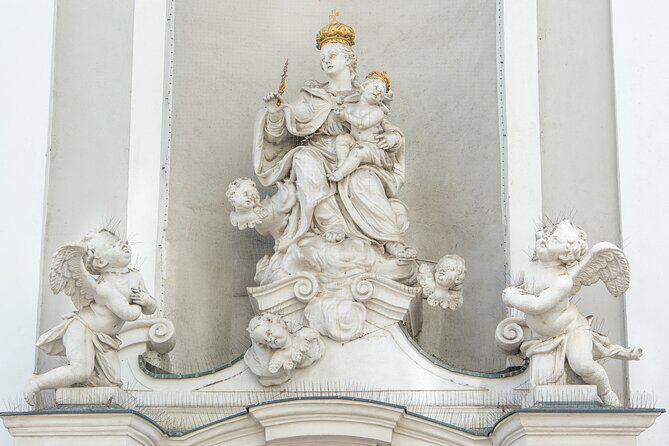
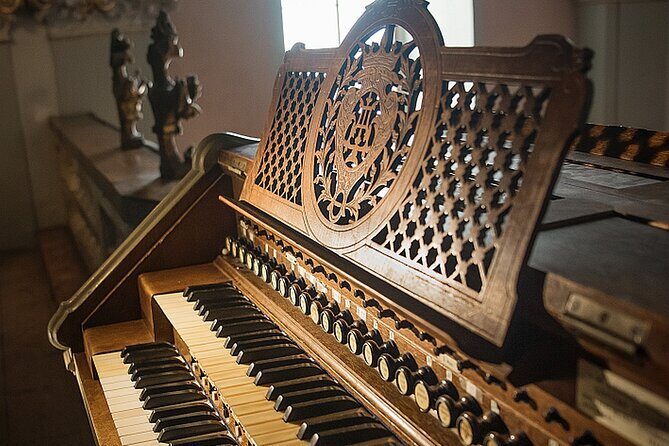
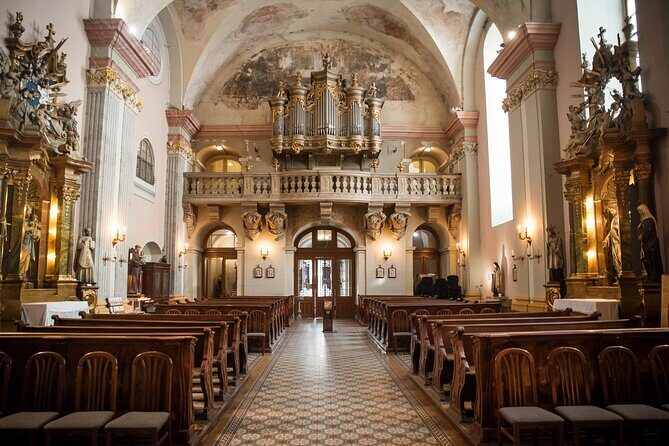
Budapest has plenty of church stops, but this one has a built-in reason to linger: St Michael’s Church is Baroque in style and it’s also where you’ll find the oldest working organ in the city. That means you’re not just hearing a “nice performance in a church.” You’re hearing a real instrument that has history baked into its sound.
The setting matters. Organ music isn’t just loud. It’s layered. When the sound travels through the architecture, the harmonies feel physical. In a place like this, you get the kind of resonance that makes slower passages float and faster ones feel razor sharp.
This is also why the concert works so well if you’re not a hard-core classical fan. The instrument does the talking. You can follow along even if you don’t know every composer name—though having a few familiar works in the mix (Bach, Vivaldi, Handel, Mozart) helps a lot.
You can also read our reviews of more tours and experiences in Budapest



Price and What You Get for $23.50
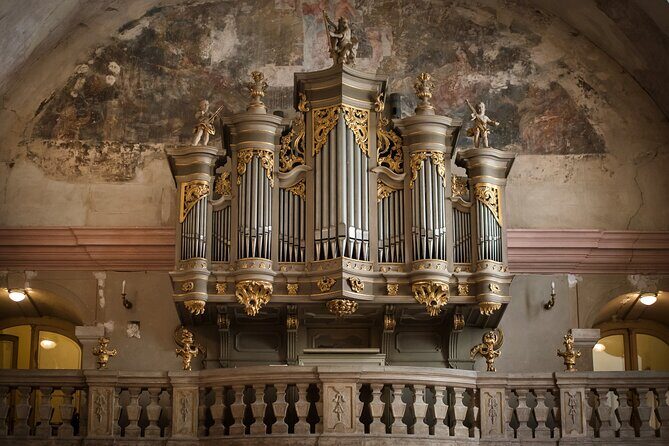
At $23.50 per person, this concert lands in the “easy yes” category for anyone who wants something cultural without a big time or money commitment. For that price, you’re getting a full-length organ program—about 1 hour 10 minutes—in one of central Budapest’s most characterful Baroque church spaces.
The value comes from two places.
First, you’re paying for the instrument and the venue combination, not just the performance. The organ here is a draw on its own, and the organisers clearly lean into that.
Second, the programming aims for variety. One date might highlight Baroque architecture-in-music with Bach and Handel. Another might lean more Romantic and virtuosic. That approach makes a single ticket feel like you’re getting a carefully chosen evening, not just background classical music.
If you’re deciding between this and another evening activity, this is one of the few options where the “weather-proof” factor is high. The concert is inside, and the experience doesn’t depend on nightfall plans or long walking routes.
Your Concert Plan at 7:00 pm in Downtown Budapest
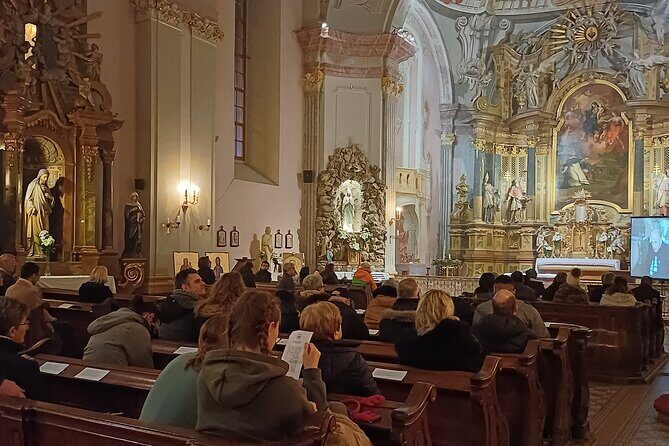
The concert starts at 7:00 pm at St Michael’s Church. There’s one main stop, so you can think of this as an evening commitment rather than a multi-part tour.
That’s a good thing. You don’t need to schedule like you would for a sightseeing loop. You can simply plan dinner earlier, then arrive with time to settle in before the music begins.
You’ll also want to keep the meeting time in mind because the experience runs on a tight schedule. With a concert length of roughly 1 hour 10 minutes, arriving late can take away part of the best listening time. Organ music really rewards being present from the first notes.
And yes, this is a mobile-ticket setup. If your phone battery is the fragile kind, charge it beforehand so you’re not scrambling at the entry point.
The Sound Journey: From Baroque to Romantic (and Back Again)
The programme is designed to show off different organ styles, not just repeat one mood. That’s key, because organ music can be mistaken as either one thing—slow and solemn—or one big wall of sound. This concert series tries to prevent that.
Depending on the date, you could hear:
- elegant Baroque organ writing (clear lines, strong structure)
- colourful, virtuosic Romantic pieces (more glow, more drama)
- works that shift between moods fast enough to keep your attention
The description of the series points to this idea directly: programmes can be solo organ or a mix of chamber music, with additional elements such as soprano voices and even trumpet on certain evenings. When extra performers are included, it also changes how you listen. You stop thinking only about the organ’s mechanics and start hearing the broader musical “conversation” happening in the space.
One practical tip: if you’re worried you won’t follow, pick one composer you recognize (Bach or Mozart are good bets). Even if you don’t know the piece title, hearing a familiar name gives your ears something to anchor on.
A Sample Programme You Might Hear (Bach, Vivaldi, and More)
Concert programmes can vary by date, but here’s a sample set of works for 4 April 2025:
- J. S. Bach: Prelude and Fugue in B minor BWV 544
- Bach: Trio Sonata in E-flat major BWV 525
- Antonio Vivaldi – J. S. Bach: Concerto in A minor BWV 593
- Bach: Pastorella BWV 590
- Prelude and Fugue in E-flat major BWV 552
Why this set works so well: it blends forms. You get big opening statements, dense fugue logic, trio sonata counterpoint, and a “concert” feel through the Vivaldi arrangement associated with Bach. Even if you only catch a few phrases, the structure makes it easier to perceive how the music is built.
If you like hearing how one composer can shift character, Bach is a smart place to start. His organ writing can feel both architectural and emotional. That’s exactly what an instrument like this is good at delivering.






Following the Organist: The Remote Camera Advantage
One of the smartest touches in the concert setup is that there’s a remote camera feed so you can see the organist playing from the balcony. That solves a real problem with organ concerts: the player can be hard to track if the instrument design and seating angles hide the hands.
When you can actually watch technique, the music becomes easier to read. You start noticing how the organist shapes phrases, changes registers, and controls momentum without it being a blur of sound.
This also helps for first-timers. You’re not forced to guess what’s happening at the keys. The camera turns listening into a slightly more visual experience without turning the show into something loud or theatrical.
Solo Organ or Chamber Music: What Changes by Date
The concert series offers different formats depending on the date. You might find yourself at a solo organ programme, or you might attend something closer to chamber music built around the organ.
The description you’ll see for this series also suggests the performers may add voices and instruments. In real terms, that can mean:
- a soprano voice appearing with organ pieces
- occasional trumpet moments
- or a focus on instrumental interplay within a chamber-style framework
The practical takeaway is simple: check the programme for your exact date before you go. If you’re choosing between evenings, this is how you decide whether you want pure organ focus or a mix of sound textures.
Who This Concert Is Best For
This is a great fit if you want a low-stress evening in Budapest that leans authentic and music-first.
You’ll especially like it if:
- you enjoy classical music but want something shorter than a full-length production
- you want a distinctive venue experience tied to a specific instrument
- you like the idea of hearing Baroque and Romantic styles in one sitting
It’s also a good option if you’re traveling with a mix of interests. One person can focus on the composers. Another can focus on the church setting and the instrument itself.
If you’re the type who needs lots of storytelling between pieces, this might feel more like a straight concert than a talk-and-walk event. That’s not a flaw, but it’s good to know what you’re buying.
Getting the Most Out of Your Evening (Quick Practical Advice)
Here’s how to make the concert feel like it was worth leaving your hotel for.
First, arrive with enough time to settle. Organ concerts tend to hit hardest when you’re seated and ready for the full start-to-finish arc.
Second, don’t overthink composer names. Use them like bookmarks. If you recognize Bach or Vivaldi, your brain will automatically start catching patterns faster.
Third, if the programme includes a soprano or trumpet, listen for how those voices interact with the organ. That contrast is often the most memorable part for people who don’t regularly attend classical performances.
Finally, remember the time commitment: 1 hour 10 minutes. It’s short enough to be satisfying, long enough for the organ to show its range.
Should You Book This Organ Concert at St Michael’s Church?
I’d book it if you want a classic Budapest evening that stays focused on sound and setting. St Michael’s Church gives you the kind of venue you can’t fake with a recording, and the fact that the series often includes extra performers (like soprano and trumpet) makes it feel more alive than a simple organ “stand and listen.”
At $23.50, the value is strong, and the remote camera detail is the kind of small improvement that makes a real difference for first-timers.
Skip it only if you’re looking for a big interactive tour with lots of commentary, or if you know you won’t enjoy being in a church setting for a steady hour-plus of music.
If you can, I’d choose your concert date based on the specific composer programme listed for that day, since the music varies.
FAQ
Where does the concert take place?
It takes place at St Michael’s Church in Budapest.
What time does the concert start?
The concert start time is 7:00 pm.
How long is the concert?
It lasts about 1 hour 10 minutes.
How much is the ticket?
The price is $23.50 per person.
Who performs at the concert?
Hungarian artists such as Miklós Teleki or Tamás Lozsányi perform, depending on the date.
What type of ticket do I get?
You receive a mobile ticket.
Is there a sample programme I can look at?
A sample programme is available for 4 April 2025, including works by J. S. Bach (BWV 544, BWV 525, BWV 590, BWV 552) and a Vivaldi–Bach Concerto in A minor (BWV 593).
Are service animals allowed?
Yes, service animals are allowed.
Is the event reachable by public transportation?
Yes, it is near public transportation.
Can I cancel and get a refund?
Yes. You can cancel for a full refund up to 24 hours before the experience’s start time.