REVIEW · BUDAPEST
Budapest: Auschwitz Birkenau Private Day Tour
Book on GetYourGuide →Operated by EuropaAdventure · Bookable on GetYourGuide
A hard day, organized with care. This private Budapest-to-Auschwitz outing is a long 16-hour day, but it’s built for one main goal: clear, guided understanding at a place you can’t really prepare for. I especially like the skip-the-line entrance to Auschwitz and Birkenau, plus the fact you get a live guide to walk you through what you’re seeing inside the camps.
You’ll also get extra support with an English audio guide, which helps if you want to slow down and replay details later. My second big plus is the structured time on-site (up to 3.5 hours) so you’re not left trying to figure things out while overwhelmed.
The only real drawback is the pace and duration. You’re looking at an early pickup, a long drive (about 6 hours each way), and just one hour of free time for lunch or personal reflection.
In This Review
- Key things to know before you go
- A long, moving day from Budapest to Auschwitz-Birkenau
- Skip-the-line entry and what it actually changes
- The drive setup: hotel pickup, air-conditioned comfort, and timing
- Auschwitz I: political prisoners and what the surviving spaces communicate
- Auschwitz II-Birkenau: barracks, watchtowers, and crematoriums
- What your guided walk covers (and why the structure matters)
- Lunch time and your 1-hour reflection window
- Price and value: what $550 per person really covers
- Driver and guide quality: the difference between chaos and clarity
- Who this Auschwitz-Birkenau private tour suits best
- Should you book this private Budapest Auschwitz day tour?
- FAQ
- How long is the Budapest to Auschwitz Birkenau private day tour?
- What’s included in the price?
- Is lunch included during the tour?
- Do you skip the ticket line for Auschwitz and Birkenau?
- What language is the guide and audio guide?
- Is free cancellation available?
Key things to know before you go
- Skip-the-line entry into Auschwitz and Birkenau to keep the day moving
- Up to 3.5 hours inside the camps with guided interpretation
- Auschwitz I and Auschwitz II-Birkenau coverage, including major surviving structures
- English support: live English guidance plus an English audio guide
- Hotel pickup and drop-off in Budapest to reduce stress on travel day
A long, moving day from Budapest to Auschwitz-Birkenau
This is not a quick side trip. Expect an early morning start with hotel pickup in Budapest and a packed day that ends back at your hotel. The schedule is set up around the reality that Auschwitz is far from the Hungarian capital, so you’ll spend a good chunk of time on the road in between the two camps.
I like that the plan gives you occasional breaks during the drive, because the on-site time is emotionally heavy and you’ll need a functioning brain for the explanations. Also, the vehicle is air-conditioned, which matters when weather gets warm and the day starts before you’re fully awake.
One smart detail: the day is designed around guidance, not just sightseeing. You’re not paying for “being taken there.” You’re paying for a guided walk through Auschwitz I and Auschwitz II-Birkenau, where context changes everything you see.
You can also read our reviews of more private tours in Budapest
Skip-the-line entry and what it actually changes
Skip-the-line can sound like a small perk, but on a day like this it’s more practical than it sounds. Auschwitz and Birkenau operate with a lot of visitors, and delays can wreck your schedule once you’re inside. Having skip-the-line entry helps you keep the flow: drive, arrive, then go straight into the guided experience.
You’ll also have entrance tickets included, so you’re not scrambling for last-minute purchases. That makes the experience smoother from start to finish—especially important if you’re traveling in a private group and want everyone to start together.
That said, I’d still use a little common-sense caution. One booking issue mentioned an unexpected additional charge (235 USD) and a driver who didn’t speak much English. I can’t confirm what caused it, but it’s a good reminder to confirm the full price and what’s covered before you go, so you’re not dealing with surprises on the road.
The drive setup: hotel pickup, air-conditioned comfort, and timing
The day begins with pickup from your hotel lobby, so you don’t have to hunt for a meeting point after a sleep-short night. Then you’re on a high-quality air-conditioned vehicle for the long transfer into Poland.
The key thing here is timing. With a total duration of about 16 hours, you’ll want to manage expectations: this is a full-day commitment, not a half-day tour. The upside is that the pacing is set by the tour itself—so you won’t be hunting for local transport, arranging tickets, or trying to coordinate multiple stops on your own.
What I’d do to get the most out of the day:
- Dress in layers (camp visits can involve open-air walking).
- Bring water and small snacks for the drive, since lunch isn’t included.
- Use the drive time to settle your mind; the first camp stop hits fast.
Auschwitz I: political prisoners and what the surviving spaces communicate
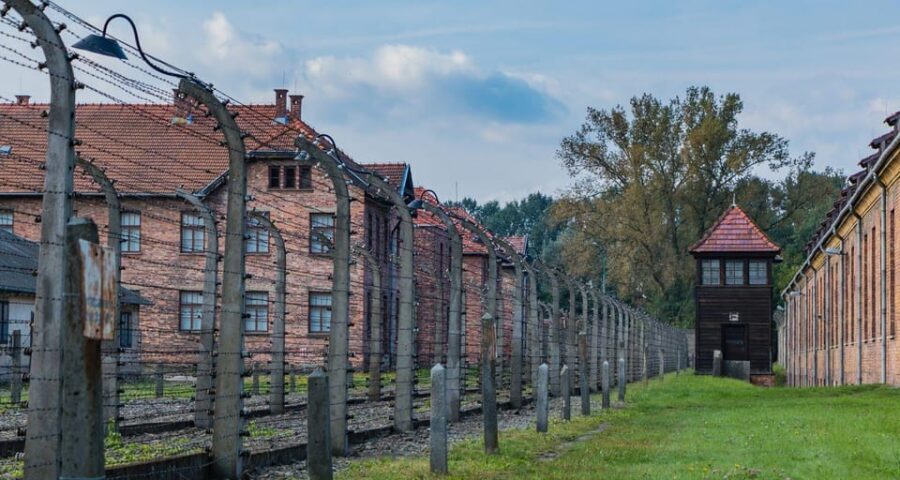
Auschwitz I is where the camp complex feels most like a prison system—earlier in the story, with structures that help explain how the Nazi machinery worked. In this part of the tour, you’ll spend guided time walking through key remnants and sites connected with political prisoners.
This matters because Auschwitz isn’t one single scene. It’s a network, and Auschwitz I helps explain the framework: how people were processed, where the prison logic lived, and why daily life inside became a system of control.
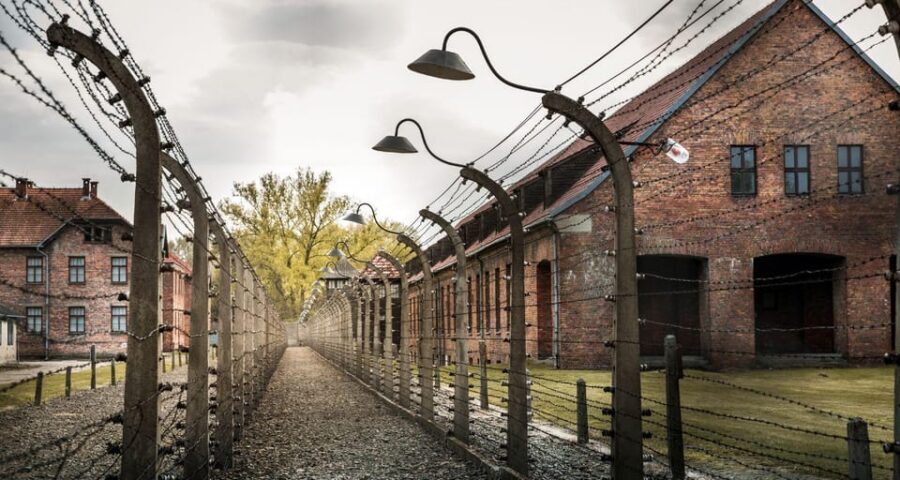
You’ll see remnants tied to camp life such as original barracks and other preserved elements, plus the atmosphere of a site where suffering was engineered. The tour guide’s job here isn’t to overwhelm you with dates—it’s to connect what you’re looking at to what it represented for those who were imprisoned.
One practical benefit of having a guide fluent in your selected language: you can ask questions without losing the thread. And since you also have an English audio guide included, you can double-check details at your own pace after the spoken explanation.
Auschwitz II-Birkenau: barracks, watchtowers, and crematoriums
Then comes the heavy hitter: Auschwitz II-Birkenau. This is the larger camp area, where Jewish and Romani inmates endured brutal conditions under the Nazi regime.
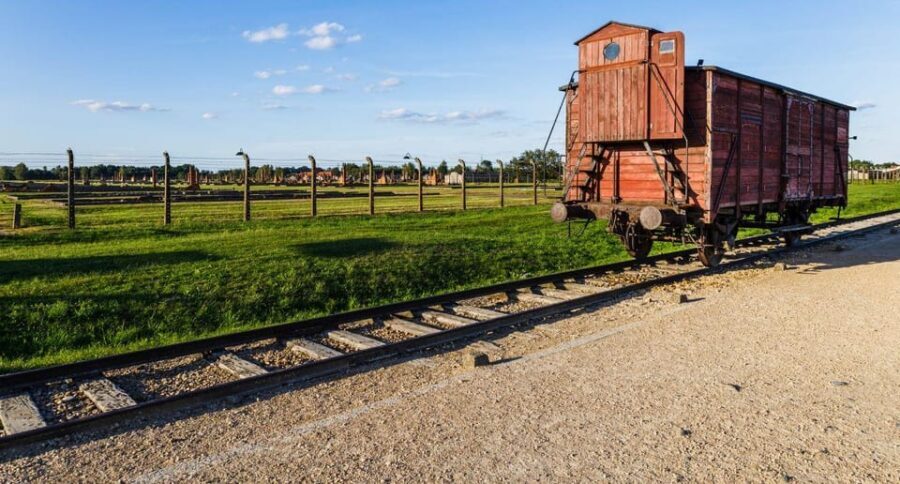
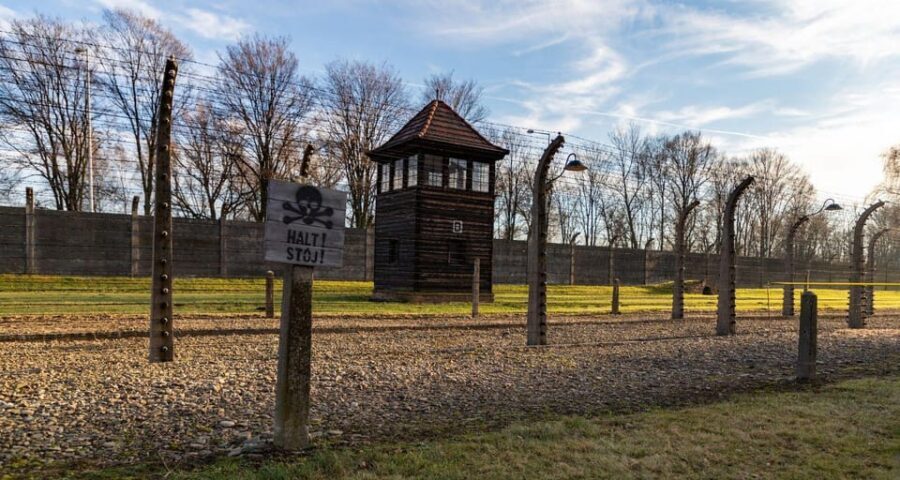
This is also where the landscape of the camp becomes the lesson. You’ll see remnants including watchtowers, barracks, and crematorium-related structures. The tour highlights the physical scale—how many people could be held and how the camp’s design supported surveillance and mass imprisonment.
In the camp itself, you’re given guided time for reflection and understanding. The tour includes up to 3.5 hours inside the camps, which gives you room to absorb the meaning of what’s left behind without feeling rushed from one corner to the next.
A note on emotional pacing: even when a tour is well-run, Auschwitz is exhausting in a way you can’t “tour” through. I like that the day includes a later free period for lunch or personal reflection, because it’s unrealistic to stay fully in “learning mode” for hours without a break.




What your guided walk covers (and why the structure matters)
Your guided sightseeing time is built to cover both camps—Auschwitz I and Auschwitz II-Birkenau—rather than choosing one “high points” approach. That’s a big deal for understanding Auschwitz because the experience of the camps differed by period and purpose.
The tour also focuses on the living conditions and remnants, not just monuments. That means you spend time looking at original barracks and other remains, with explanations that help you interpret what those spaces meant for prisoners.
You’re not just ticking off stops. You’re building a mental map:
- How the system worked (Auschwitz I)
- How it scaled into mass imprisonment (Auschwitz II-Birkenau)
- What remains today, and why those remnants matter
And because you have both a live guide and an audio guide in English, you get two “layers” of interpretation. The live guide can answer questions and manage pace; the audio guide lets you revisit details without interrupting the group.
Lunch time and your 1-hour reflection window
After the guided portion, you get about one hour of free time. That’s for lunch or personal reflection.
Keep in mind: lunch is not included, so plan to eat during that hour or grab something you brought with you for a quick reset. On a day like this, I’d prioritize getting something simple and keeping your energy steady for the drive back.
The reflection time can feel strange at first—like you’re back in the normal flow of a trip when the experience is anything but normal. Still, it’s valuable. The point isn’t to “move on fast.” It’s to give yourself space to process.
Price and value: what $550 per person really covers
At $550 per person, this is a premium-priced tour. The upside is that the price isn’t just for someone driving a car and handing you a ticket.
From the included items, you’re paying for:
- Hotel pickup and drop-off
- Transport in an air-conditioned vehicle
- English driver assistance
- Skip-the-line entrance to Auschwitz and Birkenau
- Entrance tickets
- Guided sightseeing inside the camps
- English audio guide
Put another way: you’re buying reduction in stress. You’re not coordinating transport, not managing ticket logistics under time pressure, and not piecing together two major sites on your own while dealing with a group schedule.
Who should feel comfortable paying this? If you want a private day, a guided structure, and fewer points where the plan can break, this pricing starts to make sense. If you’re the type who enjoys self-guided travel and already has your logistics nailed down, you might find cheaper options elsewhere—but those often trade away the “everything is handled” feeling.
One more practical value point: private pacing can help you ask questions and move at a rate that keeps you engaged instead of sprinting through a site you’ll struggle to interpret.
Driver and guide quality: the difference between chaos and clarity
This is where the experience often rises or falls. The tour depends heavily on the day’s driver and guide—especially for timing, and for whether you can understand explanations clearly.
In one strong example, a driver named Attila was praised for being patient and speaking both English and Hungarian. Another praised driver, Dani, was noted as prompt, polite, and accommodating. That kind of professionalism matters on a long day because it keeps logistics from stealing mental energy you need for the site.
If English clarity is important to you, make a simple request before departure: confirm the guide language is English and understand who you’ll be speaking with for the day’s driving and on-site parts. That extra bit of clarity can prevent the kind of frustration hinted at in one reported issue about limited English and an unexpected charge.
Who this Auschwitz-Birkenau private tour suits best
This fits best if you want:
- A private group experience rather than a large shared bus feeling
- English guidance with an audio guide backup
- A structured visit that covers both Auschwitz I and Auschwitz II-Birkenau
- Less logistical hassle than self-planning
It’s also a solid choice if you’re visiting from Budapest and you don’t want to manage trains, long-distance transfers, and on-site entry timing yourself.
If you’re someone who needs lots of quiet time with no talking, this might feel like a lot. The tour is guided and time on-site is scheduled, even though there’s free time later for reflection.
Should you book this private Budapest Auschwitz day tour?
I’d book it if you value guided interpretation, smoother logistics, and a private structure that keeps the day from becoming a scavenger hunt. With skip-the-line entry, hotel pickup/drop-off, and both camps included, this tour is designed to respect your time and your attention.
I’d think twice only if you’re sensitive to long days. This is a 16-hour commitment with significant driving time, and you’ll have just one hour for lunch and reflection. If you want more breathing room, you may feel rushed by the schedule.
Before you go, do one last practical check: confirm what’s included in the total price so you’re not surprised later. Then you can focus on the real reason you’re there—learning, remembering, and making sense of what you see.
FAQ
How long is the Budapest to Auschwitz Birkenau private day tour?
The tour duration is 16 hours.
What’s included in the price?
Included are hotel pickup and drop-off, transport in an air-conditioned vehicle, English-speaking driver assistance, skip-the-line entrance to Auschwitz and Birkenau, entrance tickets, and a guided sightseeing tour inside the camps. An English audio guide is also included.
Is lunch included during the tour?
No. Lunch isn’t included, and you’ll have about one hour of free time afterward for lunch or personal reflection.
Do you skip the ticket line for Auschwitz and Birkenau?
Yes. Skip-the-line entrance is included for Auschwitz and Birkenau.
What language is the guide and audio guide?
The tour guide and audio guide are in English.
Is free cancellation available?
Yes. You can cancel up to 24 hours in advance for a full refund.