REVIEW · BUDAPEST
Guided Tour of the House of Music, Hungary
Book on Viator →Operated by Liget Budapest · Bookable on Viator
A weirdly good place for music. The House of Music tour is a fast, thoughtful walk through Sou Fujimoto’s design—music is built into the building inside and out—and it’s made easy by a guide with flawless English. I especially liked the architecture explanation and how the visit connects the building’s shape to its sound focus. One thing to plan for: the guided walk doesn’t include entry to the exhibitions or the Sound Dome.
This is a small-group tour (max 15), so you’re not stuck in a big shuffle. You’ll meet at Olof Palme stny. 3 and circle back there, with time to head into the surrounding park afterward—if you still have energy for more fresh air and photos.
In This Review
- Key reasons this tour is worth your hour
- House of Music Budapest: Why This Building Becomes a Music Lesson
- What to know up front (so you don’t feel misled)
- The 1-Hour Route: Exactly What the Tour Covers (and What It Doesn’t)
- Sou Fujimoto’s Architecture: How the Building Blends Into Nature
- Music Is Part of the Building: The Sound-Themed Design Story
- Guide Quality and Small Groups: What Your Tour Experience Feels Like
- Price and Value: Is $14.20 Worth It?
- Meeting Point and Timing: How to Set Yourself Up for a Smooth Hour
- After the tour: don’t rush off
- Who This Tour Suits Best
- Should You Book the House of Music Guided Tour?
- FAQ
- How long is the guided tour of the House of Music?
- How much does the tour cost?
- Is the tour offered in English?
- Does the guided tour include entry to the exhibitions?
- Does the guided tour include entry to the Sound Dome?
- Where do I meet for the tour?
- Where does the tour end?
- Is this tour a small group?
- Are service animals allowed?
- Is there free cancellation?
Key reasons this tour is worth your hour

- Sou Fujimoto design focus: You’ll get the story behind the building sitting on the former Hungexpo Offices site and blending into nature.
- Music everywhere theme: The guide connects sound not just to what you hear, but to how the building looks and works.
- Fluent English guiding: Multiple reviews highlight prepared explanations and clear delivery.
- Small group size (up to 15): Easier pace, more chances to ask questions.
- Built for quick value: A short, structured visit at a very reasonable price.
- Great park time after: The building sits in a pleasant outdoor setting you can enjoy right after the tour.
House of Music Budapest: Why This Building Becomes a Music Lesson
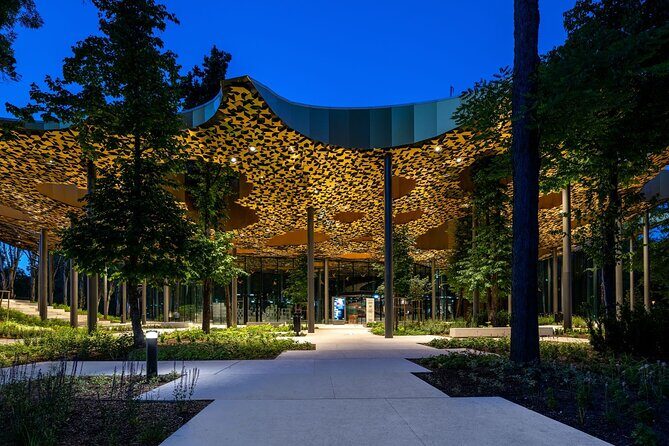
Budapest has its share of impressive architecture, but the House of Music is different. It isn’t just a concert hall-looking thing you pass by. The guided tour frames the building as an instrument of sorts—where music is part of the concept, not an afterthought.
Here’s the magic to watch for: the building is designed by architect Sou Fujimoto, and it was constructed on the former site of the Hungexpo Offices. From the first stop, the guide helps you see how the structure feels like it belongs in the landscape, not dropped into it. That design choice matters because it changes how you read the building. You start looking at edges, openings, and angles as if they were part of a sound system.
And then there’s the theme the guide keeps returning to: music is intrinsic to the building—inside and outside. That’s useful for you because it gives your brain a way to organize what you’re seeing. Instead of random facts, you get a line to follow.
You can also read our reviews of more guided tours in Budapest



What to know up front (so you don’t feel misled)
This tour is about the building and its story. It does not include entry to the exhibitions or the Sound Dome. So if your main goal is hands-on sound experiences or gallery time, plan to add those separately.
The 1-Hour Route: Exactly What the Tour Covers (and What It Doesn’t)
This is an approximately 1-hour guided experience. It’s structured around a single main stop: the House of Music Hungary itself. You’ll get narration on the innovative design and how it fits into the site and natural surroundings, plus an overview of the exhibitions and events that the venue hosts.
The practical takeaway is simple:
- You’re going to walk through the building’s concept and features with a guide.
- You’re not paying for exhibition time inside the museum spaces.
- You’re not included for the Sound Dome admission.
That matters because people often assume a “house” attraction includes the big indoor exhibits. Here, the tour is more like a smart introduction. If you’re the type who likes to understand a place first—then explore on your own—this format is a good match.
Also, the itinerary says the tour ends back at the meeting point. You can treat it like a clean, timed loop. In a day packed with sights, that’s a comfort.
Sou Fujimoto’s Architecture: How the Building Blends Into Nature
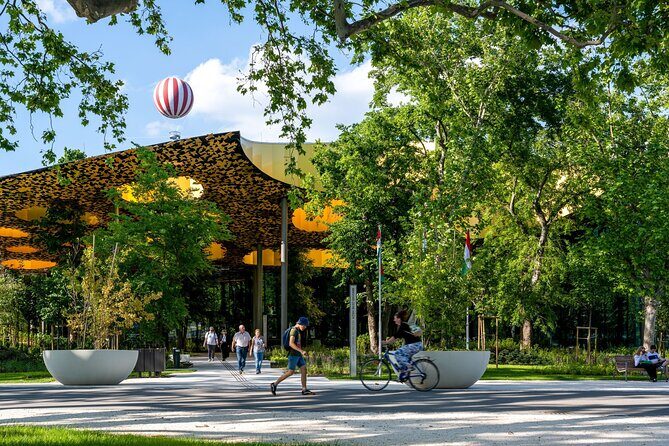
When a building is designed by someone famous, it’s easy to get stuck on the name. The payoff on this tour is that you don’t stay stuck. The guide explains how the design works and why it was imagined the way it was.
One focus is the building’s setting. It’s built on the former Hungexpo Offices site, but it’s not meant to feel like leftover office space repurposed into a venue. The explanation emphasizes that the architecture is intended to blend into nature, matching the vision of Sou Fujimoto.
So what should you do as you listen?
- Look for the way the structure seems to belong to the area, not just occupy it.
- Pay attention to how the guide links exterior design choices to the idea of music in the building.
- Keep an eye out for the “music everywhere” framing—because the tour keeps pointing you back to sound as a design principle.
This is one of the most praised parts of the experience. Reviews repeatedly call out the architecture as stunning and the guide as genuinely prepared. You’ll probably feel the same effect: when someone explains what you’re seeing with clarity, the building becomes easier to appreciate—and easier to photograph.
Music Is Part of the Building: The Sound-Themed Design Story
The House of Music isn’t selling you an abstract concept. The tour specifically talks about music as an element that shows up on both the outside and the inside.
That might sound like marketing until the guide gives you something concrete to hold onto. You start realizing that “music” here isn’t only about performances. It’s tied to the building’s concept—how spaces behave, how surfaces and openings can shape experience, and how design can communicate a theme even before you step deeper inside.
If you’re a first-timer to the venue, this framing is especially helpful. You won’t arrive confused or generic. You’ll have a mental checklist:
- Where does the design hint at sound?
- How do the spaces relate to the idea of music?
- How does the exterior language carry into the interior experience?
And since you’re not getting exhibition and Sound Dome entry in the tour ticket, this “concept first” approach is actually smart. You’re learning what to look for when you decide whether to spend extra time indoors on your own.






Guide Quality and Small Groups: What Your Tour Experience Feels Like
You’re in a small group—up to 15 travelers—and that changes the vibe. The tour runs about an hour, so you don’t want to waste time standing around or waiting for people to catch up. A smaller group usually makes pacing smoother and helps the guide keep the explanation coherent.
The reviews you have point to strong performance from the guide: multiple comments mention flawless English and a presentation that’s engaging and enjoyable. That’s not a small detail. In a venue where architecture and design ideas matter, language clarity is the difference between “I understood some words” and “I actually got the point.”
If you’re visiting Budapest and you’re trying to make the most of your English-speaking time, this is the right kind of tour. It’s short, structured, and guided in a way that doesn’t assume you already know the architecture vocabulary.
Price and Value: Is $14.20 Worth It?
At $14.20 per person, this is priced like an intro experience—one that gives you guided context rather than full attraction access. And that’s the deal you should judge.
Here’s what you get for your money:
- A guided walk focused on the architecture and why it was designed this way
- An explanation of how music connects to the building
- A quick overview of the exhibitions and events housed there
- A visit that lasts about 1 hour
Here’s what you don’t get:
- Exhibition entry
- Sound Dome admission
So the value is best if you want guidance to make the building intelligible quickly. If you’re the type who would be satisfied simply taking in the exterior and then wandering nearby, you might decide to self-explore instead. But if you like learning while you walk, you’re likely to feel this is fair for what it delivers.
A practical way to decide: treat this ticket as your “orientation.” After the tour, you’ll be in a better position to decide whether the exhibitions or Sound Dome are worth paying for separately.
Meeting Point and Timing: How to Set Yourself Up for a Smooth Hour
You’ll start at Budapest, Olof Palme stny. 3, 1146 Hungary, and the tour ends back there. That’s useful because you won’t get trapped in a long transfer or end up far from where you’re already heading.
The venue is described as near public transportation, so you should be able to plug it into a normal Budapest day without major route planning. Still, for a one-hour activity, I’d suggest arriving a bit early—just to avoid stress and to give yourself a minute to take a first look at the building before the guide starts.
Also, this is a small-group tour, and it uses a mobile ticket. Have your ticket ready on your phone so you can check in quickly.
After the tour: don’t rush off
A few reviews point out that after House of music, you can enjoy the park surrounding the venue. That’s a smart add-on. Even if the guided part is only about an hour, you can turn the visit into a longer, more relaxed block by spending time outdoors with your new understanding of the architecture.
Who This Tour Suits Best
This tour fits best if you:
- Like architecture tours but want them short and focused
- Care about “why” behind the look of a building, not just “what it is”
- Appreciate an English guide who explains clearly and stays prepared
- Want a manageable activity that works well even if your schedule is tight
- Plan to spend more time around the area afterward, like in the nearby park
It might be less ideal if your main goal is the exhibitions or Sound Dome experiences. Since the guided tour doesn’t include those entries, you’d need separate plans if those are your top priorities.
Should You Book the House of Music Guided Tour?
I’d book it if you want a quick, well-explained introduction to one of Budapest’s most talked-about modern venues. The strong points here are practical: architecture-focused storytelling, music-as-design framing, and a guide experience that stays clear and engaging even within an hour. At $14.20, you’re paying for direction—helping you understand what you’re looking at so the building feels meaningful instead of random.
Skip or reconsider if you already know you want only exhibition or Sound Dome time and you don’t care about the building’s design story. In that case, you might prefer spending your money directly on those indoor experiences instead of starting with an orientation tour.
If you’re on the fence, think of it like this: this is the part that helps the rest of the visit make sense.
FAQ
How long is the guided tour of the House of Music?
The tour runs for about 1 hour.
How much does the tour cost?
The price is $14.20 per person.
Is the tour offered in English?
Yes, it’s offered in English.
Does the guided tour include entry to the exhibitions?
No. The guided tour of the building does not include entry to the exhibition.
Does the guided tour include entry to the Sound Dome?
No. The guided tour does not include entry to the Sound Dome.
Where do I meet for the tour?
Meet at Budapest, Olof Palme stny. 3, 1146 Hungary.
Where does the tour end?
The tour ends back at the meeting point.
Is this tour a small group?
Yes. The tour has a maximum of 15 travelers.
Are service animals allowed?
Yes, service animals are allowed.
Is there free cancellation?
Yes. You can cancel up to 24 hours in advance for a full refund.