REVIEW · BUDAPEST
PÁNiQ-SZOBA | VR Escape Rooms by PANiQ ROOM in Budapest
Book on GetYourGuide →Operated by PÁNiQ SZOBA · Bookable on GetYourGuide
VR escape sounds fun on paper.
In practice, PÁNiQ-SZOBA’s VR escape rooms are a fast-moving 60 minutes of teamwork and problem-solving inside lifelike virtual worlds. I like how the experience is built for both VR newcomers and experienced gamers, with clear guidance from a game master before the clock starts. The big plus is the sense of physical realism—realistic physics and dynamic environments make puzzles feel less like menus and more like actions. One thing to consider: VR isn’t for everyone, especially if you have motion sickness, epilepsy, or fear of heights.
You’re also not stuck guessing what to do. I appreciate the structured start, with detailed instructions and ongoing support from the game master during your session, which helps most groups avoid that frustrating early-stage confusion. The overall value feels strongest when you treat it like a team sport—talk out loud, share ideas, and let the puzzles drive the momentum. The only drawback is that the overall rating is 3.8 out of 5, so your enjoyment will depend on which VR scenario and challenge style fits you.
In This Review
- Key things to know before you go
- VR Escape Rooms at PÁNiQ SZOBA: What you’re really signing up for
- The 60-minute flow: briefing, puzzle sprint, and escape attempts
- Teamwork in VR: how small groups change the experience
- Puzzles and realism: graphics, physics, and the feel of interaction
- Where it is in Budapest: meeting point and getting inside
- Cost and value: what $30 for 60 minutes really means
- Who should book (and who should skip) this VR escape room
- Tips to make your hour count
- Languages and how guidance works
- Booking notes that affect your experience
- Should you book PÁNiQ-SZOBA VR Escape Rooms?
Key things to know before you go
- Prebooking is required after you buy your voucher, so plan your time slot in advance.
- Small groups (max 6) keep the experience social, but still easy for staff to guide.
- 60-minute sessions are tight and designed for momentum, not lingering.
- Interactive puzzles with realistic physics make the VR feel more hands-on.
- Game master instructions help you get started quickly, even if you’re new to VR.
- Not suitable for several health/comfort needs, including motion sickness and epilepsy.
VR Escape Rooms at PÁNiQ SZOBA: What you’re really signing up for
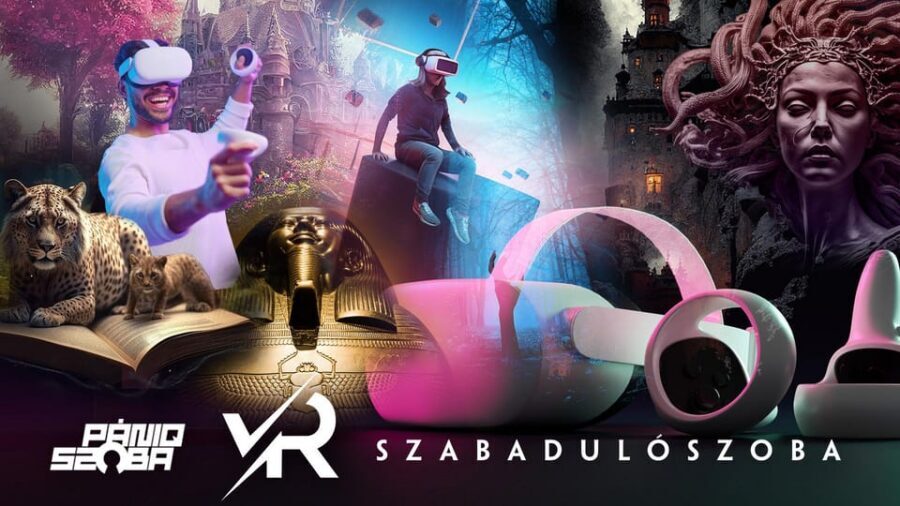
PÁNiQ SZOBA is offering VR escape rooms, not a slow walking attraction. That distinction matters. You’re going into a timed scenario where the goal is to solve puzzles, uncover the mystery, and escape your virtual predicament as a team.
The pitch is simple: you’ll see high-quality graphics and dynamic environments, then interact with the world through puzzles and challenges. The experience leans hard into “it looks real” and “it behaves real” through realistic physics simulation. For many people, that’s the difference between watching a VR video and actually using your brain inside a world.
The format is also designed to keep things friendly. The setup includes a game master who gives instructions before the adventure starts and then provides support during the session. That is a big deal if you’ve never worn a headset before. VR can feel disorienting, so having real-time help reduces the chance that you waste your first minutes just figuring out controls.
You can also read our reviews of more tours and experiences in Budapest.



The 60-minute flow: briefing, puzzle sprint, and escape attempts

You’re looking at a 1-hour total adventure time. In practice, that means the day is not about “arrive, relax, and browse.” It’s more like: get in, get briefed, then solve fast.
Here’s the rhythm you should expect:
- You arrive at the standalone storefront and ring the bell for entry.
- A game master gives detailed instructions so you know what to do before the scenario begins.
- You and your group work through puzzles and challenges as the virtual storyline unfolds.
- Support is available during the session if you get stuck or need help moving forward.
That structure helps you focus. The worst case in VR escape rooms is wasting time at the start because you’re still learning how to play. With staff guidance built in, you’re more likely to spend your time where it counts: communicating with your team and testing ideas on the puzzles.
Also note how the schedule works: you’ll need to pick a date and time slot when you prebook. The session length is fixed at 60 minutes, so show up with enough time to check in smoothly.
Teamwork in VR: how small groups change the experience

PÁNiQ limits groups to up to 6 participants. That matters more than you might think. In a bigger group, VR can turn into a waiting-room situation where only a couple people are actively engaged. Here, the group size supports actual collaboration.
To make the most of it, use a simple team method:
- Assign one person to lead the “what did we notice?” check.
- Assign another to handle “try this” actions in the VR world.
- Keep talking. Even quick updates help—what you noticed might be the missing clue for the next step.
The VR format also benefits from realistic physics. When things react in a believable way, you can test assumptions faster. It’s easier to think like a detective instead of a controller-pusher.
On balance, this setup works well for:
- friends who enjoy puzzles together
- couples who communicate well under pressure
- small groups who like competitive cooperation
Puzzles and realism: graphics, physics, and the feel of interaction
The big promises here are lifelike graphics and realistic physics. Those aren’t just marketing words. They affect how you solve problems.
When graphics are clear and environments are dynamic, clues are easier to spot. When physics is simulated realistically, your actions have more cause-and-effect. In a puzzle room, that makes your trial-and-error feel logical instead of random.
You’ll also deal with “interactive puzzles and challenges,” meaning the game expects you to do something, not just read a sign and wait. That’s why it’s useful that the game master gives instructions and stays available. If you need a quick reset, you shouldn’t lose the whole session.
One more detail: the experience is pitched for both novices and seasoned gamers. So expect controls and puzzle pacing that can work even if you don’t have a long VR background.
Still, let’s be honest: VR is a sensory experience. Some people love it immediately; others need a moment to adjust. If you’re sensitive to visual strain, headaches, or movement discomfort, you’ll want to take the health notes seriously.
Where it is in Budapest: meeting point and getting inside
The meeting point is convenient if you’re already exploring central areas. The storefront sits between Generali and Allin Pub, and it’s a standalone place. You’ll need to ring the bell for entry.
That last part is practical: treat it like an office-style door, not a big lobby with a line. Plan to arrive a little early so you’re not rushing during check-in. Since VR sessions are time-specific, arriving late can disrupt the flow.
Location-wise, this is an easy add-on to a day of sightseeing. You don’t have to build a half-day around it. You just need a slot that fits your schedule and a plan to get there on time.






Cost and value: what $30 for 60 minutes really means
The price is about $30 per person for a 60-minute session. In value terms, you’re paying for three things: VR equipment time, staff time (game master instructions and support), and the cost of producing interactive scenarios with puzzles and physics behavior.
So when does it feel like good value?
- When your group enjoys puzzles and communication games
- When you want something active instead of another indoor museum stop
- When you’ll actually play as a team (not just take turns for a few minutes)
When might it feel less worth it?
- If your group is mainly there for casual entertainment and expects something passive
- If VR itself makes you uncomfortable (motion sickness, dizziness, or similar concerns)
- If you’re hoping for a long, multi-hour adventure—this is a focused sprint
Given the overall rating of 3.8 out of 5, I’d frame it like this: it’s promising, and it can be a standout activity for the right group, but it’s not universally loved. The strongest predictor for satisfaction is whether VR gaming and puzzle logic are your kind of fun.
Who should book (and who should skip) this VR escape room
This activity clearly lists several “not suitable for” conditions. Take them seriously because the experience involves headsets and VR gameplay.
Not suitable for:
- Children under 12
- Pregnant women
- People afraid of heights
- People with epilepsy
- People with motion sickness
Also, there’s a basic rule: no alcohol and drugs.
If you fit the suitable profile, this can be a great group challenge. I especially think it suits:
- people who like escape-room style puzzles
- groups that enjoy solving mysteries by collaborating
- visitors who want a modern, high-tech activity without needing hours of commitment
If you’re unsure, ask yourself one question: can you comfortably handle VR visuals and the feeling of being in a simulated space for a full hour? If the answer is no, it’s better to choose something more stable for your body and comfort.
Tips to make your hour count
VR escape rooms reward quick thinking and steady communication. Here are the practical moves that usually help:
- Prebook your time slot right after buying your voucher so you don’t get stuck with limited options later.
- Plan to arrive calm and on time; your session is only 60 minutes.
- Bring your team in “problem-solving mode,” not spectator mode. The room’s success depends on shared attention.
- If you’re new to VR, use the game master’s instructions actively—repeat the control/puzzle approach back in your own words.
One small strategy: keep a running “clue list” as a team. Even if you can’t write it down, you can track what you’ve tried, what changed, and what seems connected. That saves time when you’re racing the clock.
Languages and how guidance works
The session includes instruction and support. The game master can work in Hungarian and English, so you should be able to get help in English when needed.
That matters because VR puzzles often have small steps: one interaction, one object sequence, one environmental clue. When you can understand guidance clearly, you avoid the frustration of misinterpreting what the game wants.
Booking notes that affect your experience
Prebooking is required after purchasing your voucher. You’ll select the VR game, date, and time slot using the online platform at www.paniqszoba.hu/vr (you can switch to English). Customer service can help if you need support with reservations.
Also keep your expectations aligned with the format:
- It’s one hour, not a half-day tour.
- Group size is capped at 6, so it won’t feel like a crowded attraction.
- The staff provides instruction before the session and support during it.
And yes, you should read the comfort restrictions in advance. VR experiences are strict about safety for good reasons.
Should you book PÁNiQ-SZOBA VR Escape Rooms?
Book it if you want a smart, time-boxed activity in Budapest that feels modern and interactive. The best reasons to choose it are the real-world style guidance (game master instructions and support), the small group format, and the promise of lifelike graphics plus realistic physics that make puzzles feel physical, not abstract.
Skip it if VR comfort is a question mark for you, or if any of the listed conditions apply (motion sickness, epilepsy, fear of heights, and so on). Also skip it if you’d rather spend your limited time in Budapest on slow, scenic activities—this is a focused puzzle sprint.
If you and your group love solving problems under pressure and you’re comfortable with VR, PÁNiQ-SZOBA is one of those activities that can genuinely change your day. Just make sure you book the right time slot and go in ready to cooperate.