REVIEW · BUDAPEST
Private Art Nouveau Budapest Tour
Book on GetYourGuide →Operated by CurioCity Budapest · Bookable on GetYourGuide
Budapest’s Art Nouveau hits different fast. I love how this tour connects Hungarian Art Nouveau to the bigger Secession story, from Vienna to Jugendstil, then lands you at the buildings you actually want to see. My other favorite part is the included café break, where the House of Hungarian Art Nouveau setting makes the architecture feel personal. One thing to keep in mind: the overall experience depends heavily on your assigned guide, and there has been at least one serious case of a guide not showing up.
You’ll spend four hours moving at a human pace, with a mix of walking and a short tram ride, plus hotel pick-up if you start from your accommodation. The route can flex based on where you meet, but the best anchor is usually the Museum of Applied Arts, tied to Ödön Lechner (often called the Hungarian Gaudí).
In This Review
- Key highlights
- Why Budapest’s Art Nouveau feels different from Vienna and Paris
- Museum of Applied Arts: starting with Ödön Lechner’s Hungarian Gaudí
- Váci Street area and a short tram ride back to the center
- Gresham Palace: stepping into a luxurious slice of the past
- Liberty Square and the House of Hungarian Art Nouveau coffee break
- Hungarian State Treasury: getting close to the rooftop you miss from street level
- The practical side: timing, transit, and what to wear
- Price check: $377 per group up to 25 and when it feels like value
- Who should book this Art Nouveau tour, and who should skip it
- Should you book the Private Art Nouveau Budapest Tour?
- FAQ
- How much is the Private Art Nouveau Budapest Tour?
- How long is the tour?
- Where do we meet for the tour?
- What is included in the price?
- What languages are available for the live guide?
- Is free cancellation available?
Key highlights
- Hungarian Art Nouveau, explained clearly: you see how European Secession branches fed into a distinct national style.
- Museum of Applied Arts as the starting point: Ödön Lechner is the early landmark that sets the tone for everything else.
- A short tram ride plus smart walking: you get efficient coverage without feeling rushed.
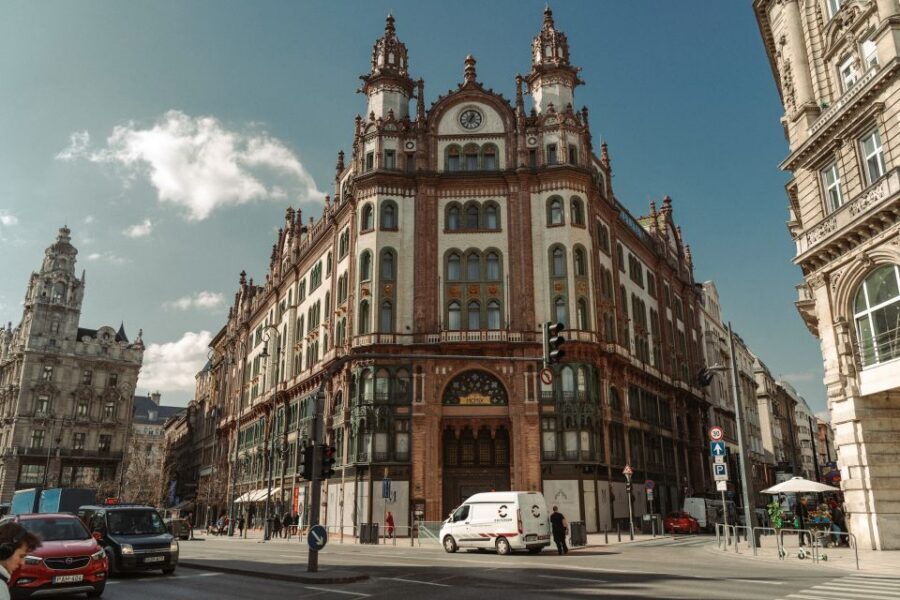
- Gresham Palace as a step-back-in-time moment: pop inside and feel the old-world luxury.
- Liberty Square in one architectural era: buildings from the same period make it easier to spot patterns.
- State Treasury rooftop access that surprises: you get close to a rooftop you typically would not notice from street level.
Why Budapest’s Art Nouveau feels different from Vienna and Paris
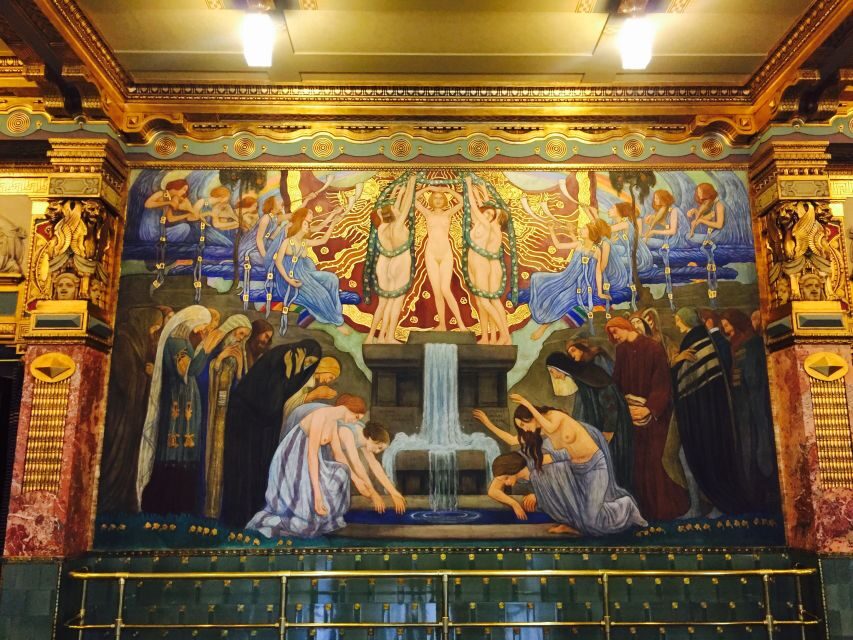
Art Nouveau in Budapest is often described through details: rounded stained-glass windows, wavy facades, uneven textures, and colorful roof tiles. This tour helps you read those details instead of just admiring them. You’ll learn how the movement grew quickly toward the end of the 1900s, with major work happening in only about 20 years.
Here’s the fun part: the guide doesn’t treat Budapest as a copycat of other European styles. You’ll hear how the look traveled through branches like Viennese Secession, Jugendstil, and French and Belgian Art Nouveau, and then how Hungary created its own “national style” in that same burst of creativity.
If you care about architecture, you’ll feel the payoff when the buildings start matching a story. If you don’t, you’ll still enjoy it, because the streets are simply more interesting when you know what to watch for.
You can also read our reviews of more private tours in Budapest



Museum of Applied Arts: starting with Ödön Lechner’s Hungarian Gaudí
Most versions of this tour aim to start at the Museum of Applied Arts, commonly linked to Ödön Lechner, nicknamed the Hungarian Gaudí. Even if you know nothing else about Art Nouveau, this start works because it gives you the “why” before the “wow.” You’re not just seeing pretty ornamentation; you’re seeing a design language.
From there, you take a pleasant walk where the guide points out the kind of surfaces and window rhythms that define the style. You’ll get used to the look: curved forms, textured exteriors, and rooflines that feel almost sculpted rather than built.
A practical note: if you’re coming from farther away, the exact order of stops can shift based on your hotel pick-up. Still, starting at the Museum of Applied Arts is usually the cleanest way to get your bearings fast.
Váci Street area and a short tram ride back to the center
After the initial walking segment, you’ll take a short tram ride back toward the city center. This is one of those small logistics wins: it keeps the tour time tight, while still letting you see real streets rather than only sidewalks outside famous facades.
One of the guide’s jobs here is pattern recognition. As you move around the Váci Street area, you’ll see modern constructions that carry the influence of the style, which helps you understand what changed—and what didn’t.
You’ll also notice how the architecture reads from different angles. Street level is not the same as the sidewalk “approach,” and trams change your perspective a bit. That matters on a style like this, where edges and curves are a big part of the visual message.
Gresham Palace: stepping into a luxurious slice of the past
Then comes Gresham Palace, where you pop in and get that rare feeling of old elegance made tangible. This isn’t just an exterior photo stop. The tour includes time to enjoy the luxurious atmosphere of the past and the present, which makes the building feel like more than a postcard.
What I like about this kind of stop on architecture tours is that it changes your brain’s scale. From outside, you might think Art Nouveau is all surfaces. Inside, you start to sense how design choices shape the whole experience: light, flow, and that sense of intention.
There’s a small consideration here. If you’re hoping for long interior time in every building, a four-hour tour is still four hours. You’ll get enough to make each stop meaningful, but you won’t live inside any one place.
Liberty Square and the House of Hungarian Art Nouveau coffee break
Liberty Square is the next big stage, and the tour treats it like an architectural set. You’ll reach the square and make a stop for coffee or a soft drink at the House of Hungarian Art Nouveau, which includes a private collection from the time. You’ll also have cake as part of the break.
This café moment is more than a sugar stop. It’s a break in pace that lets your eyes reset, so when you look back at the buildings around the square, you can spot the same design vocabulary you learned earlier. You’ll notice how the style shows up in spacing, rooflines, and the overall rhythm of the facades.
The tour then uses Liberty Square well: you explore the square knowing that many of its buildings come from the same period. That makes comparing details much easier than if you’re mixing eras and styles back-to-back.
One extra tip based on how some guides have handled real-world timing: if the schedule shifts to match nearby access opportunities (like special tours at nearby sites), you may get added value even if the first plan changes. In at least one case, a start time adjustment led to longer time in buildings and a more satisfying flow.






Hungarian State Treasury: getting close to the rooftop you miss from street level
The final architectural payoff is the Hungarian State Treasury. The rooftop is described as unforgettable and also tricky, because it’s invisible from street level. That means a normal stroll would miss the best view.
In this tour, you get close enough to see it properly. And that matters because Art Nouveau often rewards you for approaching from the right distance. The design isn’t always meant to be understood instantly from a curb.
This stop is also a good way to wrap the learning arc. You start the tour learning how Budapest’s national Art Nouveau formed from wider Secession influences. By the time you’re at the State Treasury rooftop, you can see how that national style becomes its own visual signature.
If you’re the kind of person who takes more time on details, this ending will feel like the guide timed it right.
The practical side: timing, transit, and what to wear
This is a 4-hour private tour designed for a smooth flow, not a marathon. You’ll walk, ride a short tram segment, and have at least one café break. The pace is usually comfortable enough that you can actually look, not just shuffle along.
What to wear is simple: bring comfortable shoes. The tour leans on walking, and Art Nouveau details are the kind you want to study, which takes time and involves standing still.
Because it’s private, the route can vary depending on where you meet. If you start at your hotel (the standard meet point is your hotel), the guide may adjust the opening sequence. That’s fine if your goal is the style as a whole; it just means you should keep expectations flexible about the exact order.
Also, a note worth taking seriously: the experience quality can vary with staffing. One booking reported that the tour leader didn’t show up and refund communication was an issue. You can reduce stress by confirming details ahead of time with the provider, especially your meet location and timing.
Price check: $377 per group up to 25 and when it feels like value
The price is $377 per group up to 25 for about 4 hours. That sounds steep if you compare it to a big group bus tour. But for a private architecture tour, value comes from two things you get here: an art-historian guide and targeted access to multiple signature buildings plus a café stop.
Here’s the math that helps you decide. If you have:
- 2 people, it’s about $188 per person.
- 6 people, it’s about $63 per person.
- 10 people, it’s about $38 per person.
The tour’s best value tends to show up when you fill out a small group, like friends, a family unit, or a couple with an extra person or two. Even if you’re traveling solo, it can still be worth it if you want a guided, narrative-led route rather than DIY wandering.
Don’t forget what’s included: a coffee or soft drink, cake, a guide, and hotel pick-up. Those extras can easily add up if you’re planning them anyway.
One more practical caution from past experiences: pay attention to what transit is actually needed during your day. The tour mentions a tram ride, and another booking raised questions about a metro ticket expectation. If you’re sensitive to transit costs, ask the guide what you’ll need on the ground before you buy anything extra.
Who should book this Art Nouveau tour, and who should skip it
I think this tour is a strong fit for you if you like:
- architecture details and want someone to explain what you’re seeing
- a city walk that stays focused on one theme
- a break built into the route (coffee, cake, private collection ambiance)
It’s also good for first-timers in Budapest who want to see the most sophisticated and colorful Art Nouveau areas without turning it into a scavenger hunt.
You might want to skip or adjust expectations if you’re looking for extremely long time inside every building, or if you only care about one famous facade. This tour is efficient and selective, which is usually a plus, but it won’t replace a full-day museum plan.
One more point: guide quality seems to be the difference-maker. Past guides tied to this experience have earned high praise for passion and storytelling, including names like Suzy, Peter Horvath, and Joel. If you have the chance to request a guide in advance, it’s worth considering those names as a signal of the style you want.
Should you book the Private Art Nouveau Budapest Tour?
Book it if you want Budapest Art Nouveau with context, not just photos. The mix of key landmarks (Museum of Applied Arts, Gresham Palace, Liberty Square, and the Hungarian State Treasury) plus the built-in café break gives you a full theme-based circuit in one go.
Don’t book it blindly if you need zero-risk reliability. The overall rating is decent, but there’s at least one major report about a guide not showing up. If you do book, confirm the meeting point at your hotel, double-check timing, and be ready to contact the provider quickly if anything feels off.
If you’re traveling with a group, this tour can be a very smart value. If you’re solo, it’s still a good choice if you genuinely want a story-driven architecture walk where you know what you’re looking at.
FAQ
How much is the Private Art Nouveau Budapest Tour?
It costs $377 per group (up to 25 people) for the 4-hour experience.
How long is the tour?
The tour duration is 4 hours.
Where do we meet for the tour?
You meet your private guide at a hotel (or your hotel pickup spot).
What is included in the price?
The tour includes a coffee or soft drink, hotel pick-up, and a guide.
What languages are available for the live guide?
The live tour guide is available in Spanish, English, French, Italian, and Portuguese.
Is free cancellation available?
Yes. You can cancel up to 24 hours in advance for a full refund.