REVIEW · BUDAPEST
7 Days Balkan tour to historic Croatia and Bosnia Herzegovina
Book on Viator →Operated by goEUgo International Limited · Bookable on Viator
Cross borders for epic Balkan views. This 7-day, small-group route strings together Plitvice Lakes (guided) and Dubrovnik’s Old Town and key sights, with a real change of pace once you’re in Bosnia for Počitelj, Mostar, and Sarajevo. I also like that the tour is built for smooth travel days—air-con coach, a tour manager, and stays in comfortable 3-star hotels—so you’re not constantly figuring things out. The only real drawback to plan around is the amount of coach time plus the fact that several major sights have ticket costs that aren’t included.
You start in Budapest and end back in the same meeting area, with English service and a guide who may also be bilingual with Mandarin support in mixed groups. On one version of this tour, the guide Kenny—fluent in Mandarin and English—was praised for clear storytelling and humor, which matters when you’re moving fast between countries.
In This Review
- Key moments to look forward to
- First, the “feel” of this 7-day Balkan route
- Budapest meeting point, start time, and how to set yourself up
- Zagreb: Gothic church details plus a city that lived through war
- Cathedral of Zagreb, Ban Jelačić Square, and St. Mark’s Church
- Possible downside: this day is concentrated
- Plitvice Lakes National Park: guided trails and that silvery water look
- Why this guided approach helps
- Plan around the basics
- Zadar plus Split vibes: medieval streets, Sea Organ, and Diocletian’s Palace
- Zadar’s old-town feel plus modern waterfront art
- Split and the Roman layer: Diocletian’s Palace
- Where you sleep matters: Neum area
- Dubrovnik: Old Town highlights, city walls views, and a cable car option
- Old Town, city walls sights, Rector’s Palace, and more
- The watch-out: Dubrovnik is compact but not cheap
- Bosnia day: Počitelj, Blagaj, and Mostar’s Old Bridge area
- Počitelj: stepped fortress village with protected heritage
- Blagaj: the dervish monastery by the cliff
- Mostar: the bridge crossing and the old-city feel
- A practical consideration: expect a busy day
- Sarajevo: Latin Bridge, the Meeting of Cultures line, and crossing back to Croatia
- Old Town impressions and the Latin Bridge story
- Crossing the border back into Croatia
- Pécs on the way home: Turkish ruins and a cathedral in the center
- Cathedral of Pécs and Szent István Square
- Turkish ruins and museum time potential
- Price and value: what $1,160.11 is really covering
- Who this tour fits best (and who should look twice)
- Should you book this 7-day Croatia and Bosnia tour?
- FAQ
- What is the meeting point for this tour?
- What time does the tour start?
- Where does the tour end?
- How long is the tour?
- What language is the tour offered in?
- How much is the tour per person?
- What’s included in the price?
- Are attraction tickets included?
- Is there a gratuity during the tour?
- How does cancellation work?
Key moments to look forward to
- Guided Plitvice Lakes National Park with easy-to-follow walkways and waterfalls, and calcium-rich water that gives the lakes that silvery look
- Zagreb’s top stops in one go: Zagreb Cathedral, Ban Jelačić Square, and St. Mark’s Church
- Zadar’s contrast: medieval streets plus modern waterfront moments like the Sea Organ and Sun Salutation
- Dubrovnik’s walkable highlights: Old Town sights, city walls views, and church/monastery stops
- Bosnia’s best-known trio: Počitelj (stepped fortress village), Blagaj (dervish monastery by the cliff), then Mostar’s Old Bridge area and Sarajevo’s Latin Bridge
First, the “feel” of this 7-day Balkan route
This is a classic Balkan sampler: you’re not just seeing one country. You’re getting a sequence of places that each have a different tone, then you move on before you tire of any single setting.
You’ll spend the trip traveling by modern air-con coaches with a professional driver. That’s a big deal for comfort—especially on longer sightseeing days where you’re bouncing between cities, then crossing borders. The upside is you can use the windows time: you watch the landscape change while the itinerary keeps rolling. The downside is that you should treat the day’s schedule like a plan, not like flexible wandering.
The tour runs at the pace of a group that stays organized. That works best if you like “see the main things with context,” and you’re happy to add your own free time when the schedule leaves room.
You can also read our reviews of more historical tours in Budapest

Budapest meeting point, start time, and how to set yourself up
You meet at Budapest-Keleti, Kerepesi út 2–4 (8:30 am start). That location is a practical choice: it’s tied to rail transit and it’s easy to find once you’re already in the city.
If you’re coming in from elsewhere, I’d aim to arrive the day before and get your bearings near Keleti. One luggage piece up to 30 kg plus a small carry-on (camera bag, purse, small backpack) is allowed, so pack with that in mind. On a route like this, you’ll be using your carry-on more than you think—meds, charger, a light layer, and water all matter.
Because the tour ends back at the same meeting point, the logistics stay simple. You won’t need to move hotels the morning you finish.
Zagreb: Gothic church details plus a city that lived through war
Zagreb is where the tour starts with a big idea: history survived, and the streets still feel like a real city, not an outdoor museum. The day includes guided sightseeing stops that are central and easy to build on afterward if you want extra time.
Cathedral of Zagreb, Ban Jelačić Square, and St. Mark’s Church
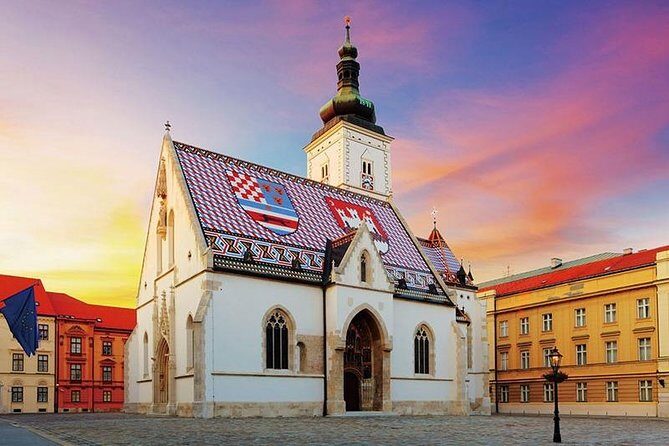
You’ll visit Zagreb Cathedral, Ban Jelačić Square, and St. Mark’s Church. What I like about concentrating these stops early is that you get a “map in your head” for Zagreb fast. Cathedral exteriors teach you the scale of the old town. Ban Jelačić Square helps you orient to the city’s modern rhythm. St. Mark’s Church brings you into the detail work—churches in this region are never just buildings; they’re storybook architecture.
Zagreb’s positioning also gives you a smooth transition to the next parts of the itinerary. After the city-walk feel, you’re headed toward nature.
Possible downside: this day is concentrated
The timing is set up so you’re in motion, not lingering. If you love long museum hours or you want a slow lunch, you might feel the schedule tugging you along. Still, this is a great first day if your style is: get the key sights and learn how the city is put together.


Plitvice Lakes National Park: guided trails and that silvery water look
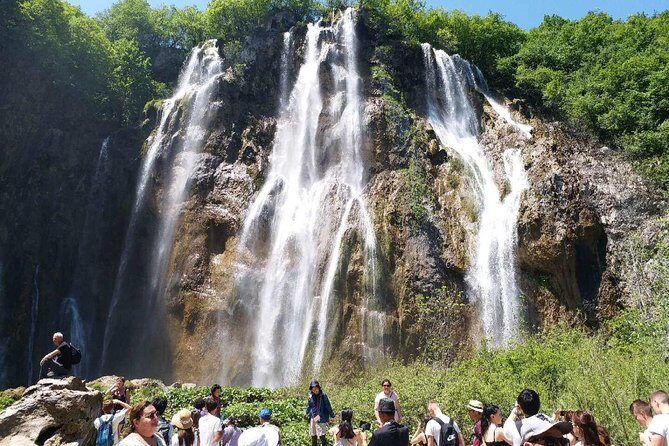
Plitvice Lakes is the kind of stop that makes the whole itinerary feel worthwhile. You get a guided tour inside the national park, and the nature here is what you came for: 16 lakes linked by waterfalls, walkways, and hiking trails.
Why this guided approach helps
When you’re in a place this large, guidance is more than convenience. It helps you avoid wandering in circles and it helps you time your viewing. The water is calcium carbonate rich, which creates that famous silver-toned reflection effect—tiny crystals and the way the surface mirrors trees are part of the magic.
I also like that you’ll have an efficient chunk of time (about 4 hours) to see the park without feeling like your whole day turns into “just one more trail.” Admission is listed as free for this stop, which is a straightforward value win.
Plan around the basics
Even with a guided route, pack for walking. Comfortable shoes matter here. If the weather is damp, paths can feel slick; bring a light layer because you can shift from sun to shade quickly in the forested sections.
Zadar plus Split vibes: medieval streets, Sea Organ, and Diocletian’s Palace
After Plitvice, the itinerary pivots back to cities along the coast. The point isn’t just sightseeing—it’s comparing eras side by side.
Zadar’s old-town feel plus modern waterfront art
In Zadar, you’ll step into an ancient-feeling core with narrow medieval streets and a religious atmosphere. That’s a nice change from big-city pacing. Then you reach the waterfront, where you get modern icons like the Sea Organ (Morske Orgulje) and the Sun Salutation light display.
The practical detail: these are built to be experienced without needing you to chase a ticket booth all day. The Sea Organ is listed as not included for admission, though, so if you’re budgeting tightly, keep that in mind.
Split and the Roman layer: Diocletian’s Palace
From Zadar you head toward Split, with the highlight being the ruins of Diocletian’s Palace—you’ll see the Peristyle. You’re looking at structures that date back more than 1,700 years, so it’s the ultimate “how old is old?” moment.
This section works well if you like visual variety: one day you’re in a park with waterfalls, the next you’re in Roman stone.
Where you sleep matters: Neum area
Overnight is listed in Neum or city nearby. Neum is a less common stop on casual day trips, so you get a geographic reminder that this whole region is shaped by borders and coastlines that don’t behave like straight lines.
Dubrovnik: Old Town highlights, city walls views, and a cable car option
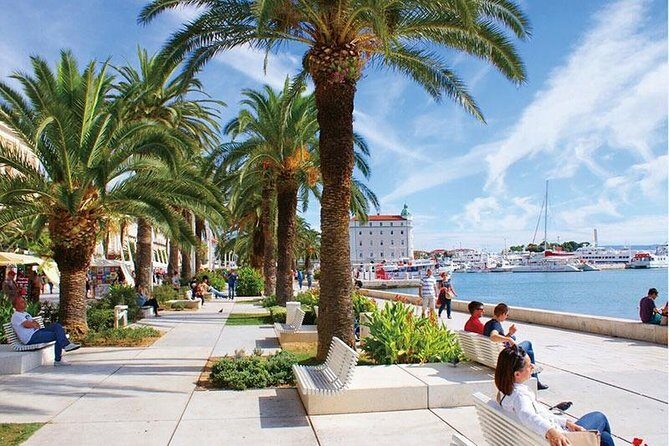
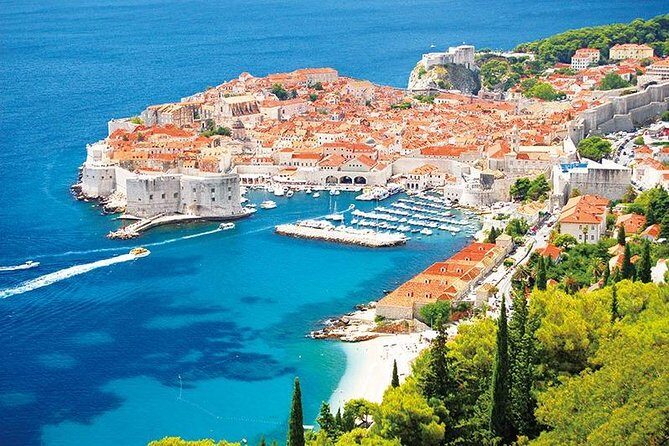
Dubrovnik is the heavy-hitter day. If you’ve ever seen photos of the walls, this is where they come alive—because you’re actually walking among the streets that make those images possible.
Old Town, city walls sights, Rector’s Palace, and more
You’ll see major elements of the historic center: the Old Town, city walls, defensive tower views, Rector’s Palace, and the Franciscan Church and Monastery. Some items list admission as not included, which means you may need to decide on the spot what you want to pay for and what you’re happy to view externally.
There’s also a cable car option to go up into the mountain for views over the city. Even if you skip it, Dubrovnik’s street-level perspective is strong. The walls add the scale—this is a city built to be seen from sea and defended against it.
The watch-out: Dubrovnik is compact but not cheap
Even though the tour lists some items as free, Dubrovnik’s reputation is tied to costs for sights and viewpoints. If you want to maximize value here, treat it as a day for walking, photos, and guided context first—then pick one or two ticketed extras if your budget allows.
Bosnia day: Počitelj, Blagaj, and Mostar’s Old Bridge area
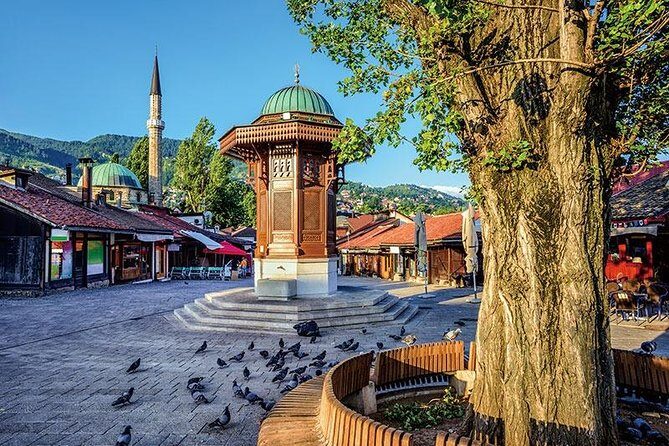
This is where the itinerary changes tone most clearly. Croatia often feels airy and polished on the coast. Bosnia brings more dramatic contrasts—cliffs, fortifications, and the kind of layered architecture you feel in your bones.
Počitelj: stepped fortress village with protected heritage
Your first stop is Počitelj, a stepped medieval fortress village included on the World Cultural Heritage List. The way the village sits along a slope makes it feel built for defense. You get views that you can’t get from flat ground towns.
Admission is listed as free for this part, so you get a meaningful cultural stop without ticket pressure.
Blagaj: the dervish monastery by the cliff
Next is Blagaj with the Dervish Monastery, set into a cliff about 200 meters high and surrounded by crystal-clear streams. This is the “pause and look” stop. Even when you keep moving, the setting does most of the work for you.
Mostar: the bridge crossing and the old-city feel
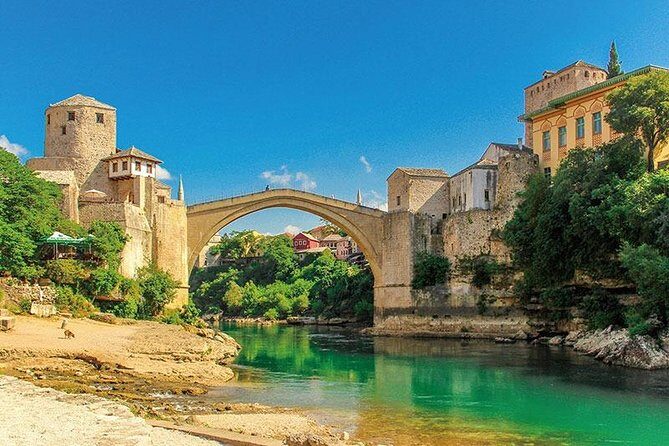
Then you head to Mostar, including crossing the famous ancient arch bridge and viewpoints on both sides of the river. You also have time around the Old Bridge Area of the Old City of Mostar.
Mostar is often the emotional highlight of this region because the bridge isn’t just a landmark; it’s where the town’s story becomes visible in one frame.
Admission for some parts is listed as free and for the Old Bridge area it’s noted as not included, so you’ll want to budget for any ticketed segments if you decide to go deeper.
A practical consideration: expect a busy day
The order—Počitelj, Blagaj, Mostar—packs a lot into one schedule. The upside is you see the big trio. The downside is you won’t have hours and hours in any single village. If you’re the type who needs long photography sessions, you’ll want to use any spare minutes efficiently.
You’ll overnight in Sarajevo or a city nearby afterward (minimum 3-star).
Sarajevo: Latin Bridge, the Meeting of Cultures line, and crossing back to Croatia
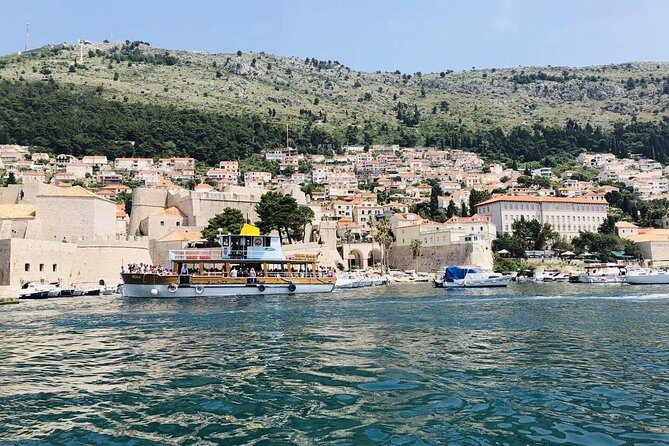
Sarajevo is a city that doesn’t let you stay neutral. It combines religions and cultures in a way that feels visible in the streets, and the itinerary touches the moments that made world headlines.
Old Town impressions and the Latin Bridge story
You’ll visit Latin Bridge, tied to the assassination that triggered the First World War. You’ll also see the Sarajevo Meeting of Cultures Line marking on the ground—small, but powerful as a concept because it shows how the city is a crossroads.
Admission is listed as free for the Sarajevo stop. The guided element is important here because places gain meaning when someone connects the dots for you.
Crossing the border back into Croatia
After the visit, you cross the border into Croatia and overnight in Vinkovci or city nearby (minimum 3-star).
That border day switch is more than geography. It resets the rhythm again: languages, signage, and daily pace shift. Having the coach and tour manager handle the transition keeps the day from becoming stressful.
Pécs on the way home: Turkish ruins and a cathedral in the center
The final day brings you back to Hungary with a stop in Pécs. This is a solid “don’t rush the home stretch” choice because Pécs feels like a city with layers, not a quick roadside photo stop.
Cathedral of Pécs and Szent István Square
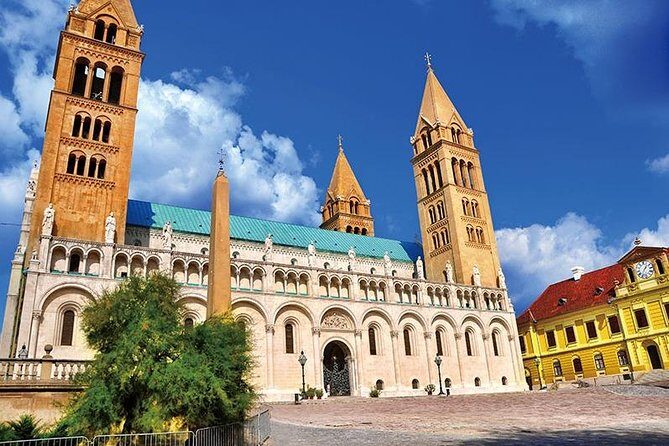
You’ll visit Pécs Cathedral, highlighted as towering over Szent István Square. The cathedral gives you a focal point where you can end the trip with something that feels both historic and grounded.
Admission is listed as free for the cathedral stop, while other listed parts such as Szent István Square are marked not included. In practice, that usually means you’ll still get plenty to see, but any ticketed interior access may cost extra.
Turkish ruins and museum time potential
Pécs also has the “best Turkish ruins in the country” and a magnificent museum (not specified whether included or ticketed). If museum time is your style, you might find that you want extra time here beyond the scheduled viewing.
Then you drive back to Budapest in the afternoon. If you choose post-hotel, you can stay overnight in Budapest (minimum 3-star).
Price and value: what $1,160.11 is really covering
This tour is priced at $1,160.11 per person for about 7 days. On paper, that can sound like a lot until you map out what’s included.
You’re paying for:
- Accommodation in comfortable 3-star (min.) hotels with private facilities
- Daily transportation on air-con coaches with a professional driver
- An experienced tour manager
- Breakfast for 6 days
That’s a lot of logistical labor handled for you. Balkan routes can get complicated fast—border crossings, timing, and coordinating multiple cities—so paying for the structure has real value.
Now the trade-offs:
- Several attractions list admission as not included (for example, Sea Organ and some Dubrovnik/Old Bridge components).
- Gratuities are listed as €10 per person per day, collected in cash by the tour manager.
So I’d think of the base price as “the framework,” and the ticket costs as “the extras.” If you plan for some paid entries and keep your expectations realistic about coach time, the overall value tends to make sense.
Also, the tour size is capped at 30 travelers, which helps keep the experience from feeling chaotic.
Who this tour fits best (and who should look twice)
This fits you best if you:
- Want a guided highlights tour across Croatia and Bosnia without building your own routing
- Like seeing a lot of famous places with context, not just photos
- Prefer the comfort of coach transport and organized hotels over constant day-to-day planning
You might want to look twice if you:
- Hate long travel days and need more breathing room than a packed schedule allows
- Are planning a very tight budget for tickets, because some key sights aren’t included
- Want deep time in one city (this route is about breadth)
Should you book this 7-day Croatia and Bosnia tour?
I’d say book it if your priority is efficient, guided, cross-border sightseeing with real stops like Plitvice Lakes, Dubrovnik, Mostar, and Sarajevo—and you’re comfortable paying a bit for onsite admissions along the way.
Also, keep your expectations aligned with the format: it’s a structured group tour with a cap of 30 and English service, not a slow private journey. If you enjoy meeting people and letting a strong guide keep the story straight between cities, this kind of itinerary is a good match.
If you want to maximize value, plan to budget for a few ticketed attractions you care about most, wear shoes you can trust for walking days, and bring a small layer for indoor/outdoor temperature swings.
FAQ
What is the meeting point for this tour?
The start point is Budapest-Keleti, Budapest, Kerepesi út 2-4, 1087 Hungary.
What time does the tour start?
The tour starts at 8:30 am.
Where does the tour end?
It ends back at the same meeting point.
How long is the tour?
The tour lasts approximately 7 days.
What language is the tour offered in?
The tour is offered in English.
How much is the tour per person?
The price is $1,160.11 per person.
What’s included in the price?
The price includes accommodation in a comfortable 3-star (minimum) hotel with private facilities, daily transport by modern air-conditioned coaches, services of an experienced tour manager, and breakfast for 6 days.
Are attraction tickets included?
Not all tickets are included. The tour notes that some admissions are free and others are not included (depending on the specific stop).
Is there a gratuity during the tour?
Yes. Gratuities are listed as €10 per person per day, collected in cash by the tour manager.
How does cancellation work?
You can cancel up to 3 days in advance for a full refund (you must cancel at least 3 full days before the experience’s start time).