REVIEW · BUDAPEST
A Journey through Jewish Budapest – Walking Tour
Book on Viator →Operated by Insight Cities · Bookable on Viator
Budapest history hits close to home. This Jewish Budapest walking tour strings together the key places in the Jewish neighborhoods, plus sobering WWII memory, in a way that actually makes sense as a walk. Two things I especially like are the stop at Dohány Street Synagogue with scholarly context, and the small-group size that keeps the pace human.
I also like that you get a guided route through the Jewish life of central districts (including the former Pest Ghetto area), rather than just seeing buildings from the outside. The somber finale at the Shoes on the Danube Bank is handled with care, not as a quick photo stop. One thing to consider: synagogue entry tickets for multiple stops are not included, so you’ll want to budget a bit extra and plan around opening hours.
In This Review
- Key Points That Make This Tour Worth It
- Why This Three-Hour Jewish Quarter Walk Works
- Meeting at Kamara Café: Easy Start, Clear Direction
- Stop 1 at Dohány Synagogue: Moorish Revival Plus Real Context
- Stop 2: Kazinczy Street Synagogue, the 2014 Ghetto Wall, and a Mikve
- Stop 3 at Rumbach Street Synagogue: Status Quo Ante Explained in Plain Language
- End at Shoes on the Danube Bank: A WWII Memorial Without Any Soft Edges
- What You Pay: $126.16 and the Value Equation
- Logistics That Matter: Tickets, Timing, and Dress Code
- Who This Tour Suits Best (and Who Might Want Another Option)
- Tips to Make the Most of Your Walk
- Should You Book This Jewish Budapest Tour?
- FAQ
- How long is the walking tour?
- What’s included in the price?
- Are synagogue tickets included?
- What’s the meeting point for the tour?
- Is there a dress code?
- Can I get a full refund if I cancel?
Key Points That Make This Tour Worth It
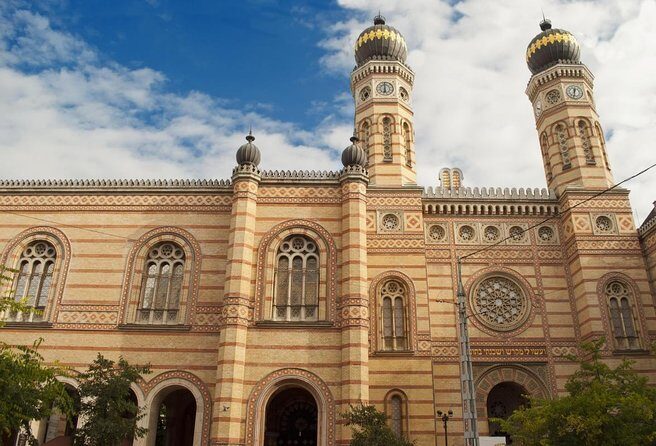
- A historian guide for 3 hours, focused on Jewish heritage in Budapest’s VII and VIII districts
- Dohány Street Synagogue visit with assistance from a Jewish Studies Scholar inside the complex
- Ghetto Wall Memorial (2014) and a route through the area where Jewish life was forcibly reshaped
- Interiors included when open to the public, so you’re not just looking at façades
- Small-group format limited to six people (with an overall maximum of eight) for a more personal flow
Why This Three-Hour Jewish Quarter Walk Works
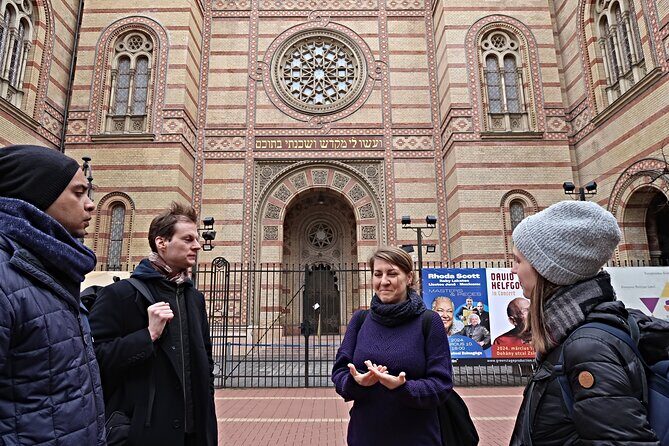
This tour is built for people who want more than a list of sites. In just about three hours, you cover the story arcs you’ll otherwise miss if you wander on your own: community, culture, forced displacement, and memory.
The structure matters. You start with one of the most important synagogues in Europe, then move through the neighboring Jewish streets and synagogues, and end at a WWII memorial that you can’t really “speed-run.”
You can also read our reviews of more walking tours in Budapest



Meeting at Kamara Café: Easy Start, Clear Direction
You meet at Kamara Café, right by Dohány Street, so you’re anchored right where the Great/Central Synagogue rises. You can also expect pickup offered from that meeting location, and you’ll receive your guide’s photo, phone number, and bio after booking.
That small bit of pre-arrival info is useful. It helps if you’re arriving by tram or metro and need to find the group fast. Since it’s near public transportation, you’re less likely to lose time just getting there.
Stop 1 at Dohány Synagogue: Moorish Revival Plus Real Context
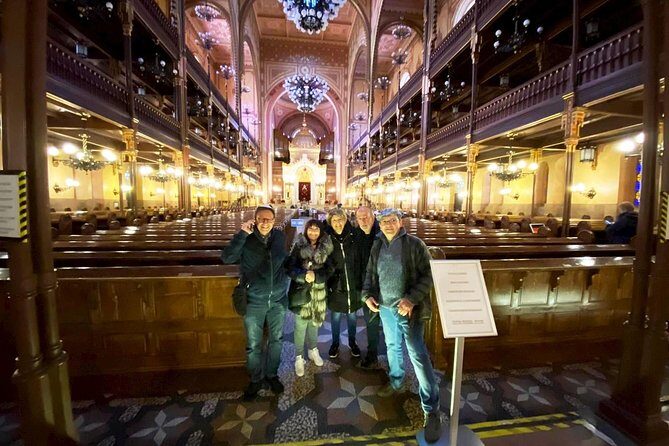
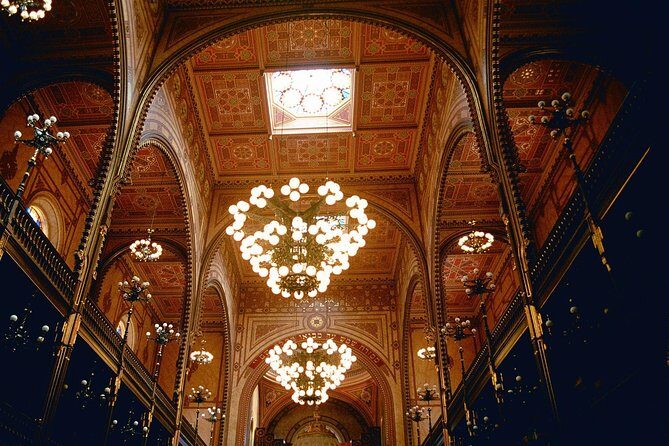
The tour begins at the Great/Central Synagogue (Nagy Zsinagoga), part of the Dohány Street Synagogue complex. This is the stop that sets the tone, because you’re introduced to the grand, Moorish Revival style before you move into the layers of history inside.
You’ll spend about 30 minutes here, and the experience is guided with help from a Jewish Studies Scholar. Inside the complex, you also see the Temple of Heroes, the Jewish Museum, and the Memorial Park. That combination is key: it turns the building into a place with a timeline, not just an architecture lesson.
A practical note: the synagogue’s entry ticket is not included. Plan for that, and also plan your time so you’re not stuck scrambling right before your slot.
If your guide is the one people rave about, you may also get extra human touches. One guide, Orsolya, was praised for weaving in Hungarian context and even culinary recommendations afterward, like a local flodni cake that sounded worth the detour on its own. Even if food isn’t part of the tour, you can ask for one good local suggestion and run with it after.
Stop 2: Kazinczy Street Synagogue, the 2014 Ghetto Wall, and a Mikve
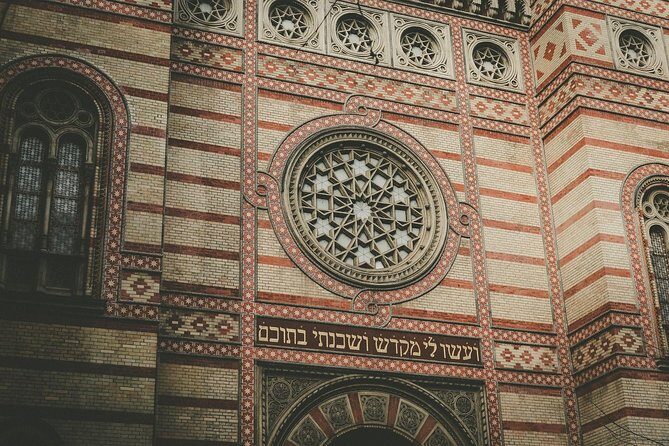
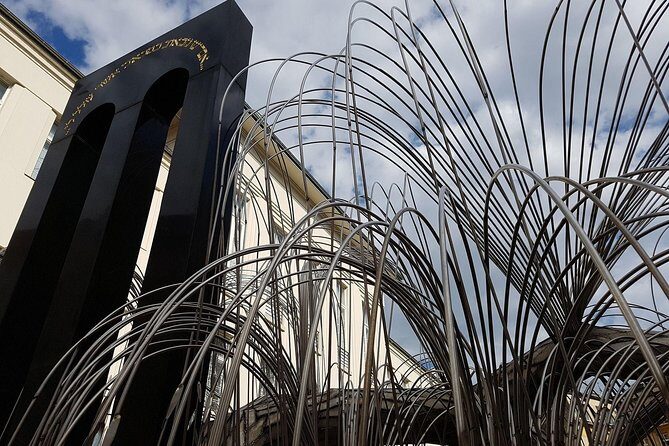
From Dohány, you head toward the area tied to the former Pest Ghetto, and the walk itself is part of the point. Stop 2 brings you to the Kazinczy Street Synagogue, but first you pass by the neighboring Ghetto Wall Memorial, erected in 2014.
That memorial placement helps you “place” the past on the streets you’re walking. It’s not an abstract lesson. You’re seeing how quickly a forced boundary became part of everyday life.
You also pass a Mikve, a Jewish ritual bath. Then you continue to the Art Nouveau orthodox synagogue on Kazinczy Street and (when open to the public) you visit the interior. You’ll spend about 35 minutes here, so this isn’t a flash-by stop.
Two practical considerations:
- The interior is only included when it’s open to the public, so don’t assume a guaranteed entry if hours are tight.
- Visitors to the Dohány and Kazinczy synagogues are requested to have shoulders and knees covered. Bring something light you can pull on or pack it in your day bag.
Stop 3 at Rumbach Street Synagogue: Status Quo Ante Explained in Plain Language
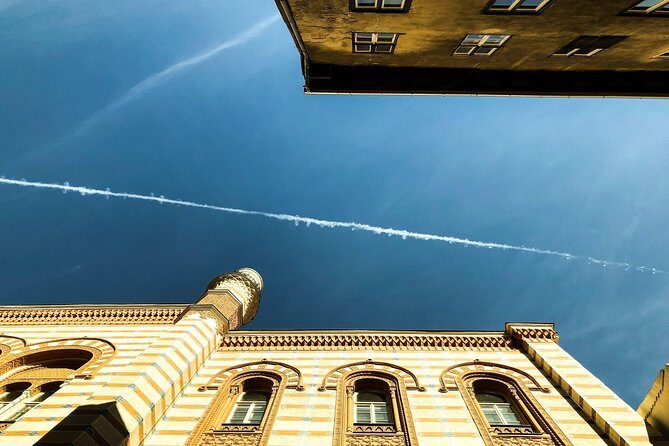
Next up is the Rumbach Street Synagogue. This one has a different flavor because the tour focuses on the history of the Status Quo Ante stream of Judaism, and how it shaped synagogue life over time.
You’ll spend around 25 minutes here, with interior access when the synagogue is open to the public. The value of this stop is that it adds nuance. Budapest’s Jewish story isn’t one single “type” of community or practice. Seeing multiple synagogues on the same walk shows you how traditions lived side by side.
It’s the kind of place where a guide can turn details into something you can remember. One guide, Agi, was highlighted for giving detailed explanations not only about sites, but about the surrounding neighborhoods too, which made the whole area feel connected rather than chopped into separate attractions.






End at Shoes on the Danube Bank: A WWII Memorial Without Any Soft Edges
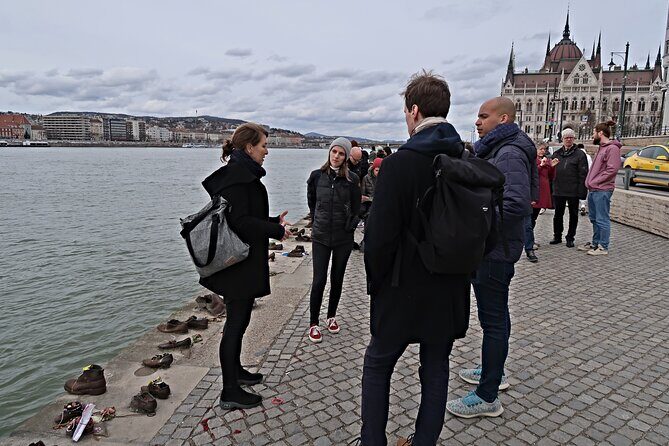
The tour closes at the Shoes on the Danube Bank memorial. The stop lasts about 20 minutes, and it’s free, which makes it easy to handle emotionally without feeling like you’re rushing through a paid attraction.
This memorial was erected on April 16, 2005, to honor Jews massacred along the Danube during WWII. The method described is brutal: people were ordered to remove their shoes, shot at the edge of the water, and the bodies were carried away by the river. The memorial represents the shoes left behind.
It’s not “entertainment.” It’s a place for quiet attention. If you’re someone who tends to keep moving when history gets heavy, give yourself the discipline to slow down here. The point of the walk is partly to bring you from community life to forced violence to remembrance.
What You Pay: $126.16 and the Value Equation
The price is $126.16 per person for an approximately 3-hour guided walking tour with a historian guide. You’re also offered pickup, and there are group discounts.
Here’s where the value math gets real: synagogue tickets for the Dohány, Rumbach, and Kazinczy synagogues are not included. So your final total depends on entry costs and whether you’re able to visit the interiors during opening hours.
Even with that extra spend, I think the tour can still be good value if you care about context. The guide isn’t just showing you where things are. At Stop 1, you get help from a Jewish Studies Scholar, and across the route you get a narrative that connects the neighborhoods to the historical events that shaped them.
Also, it’s not a “big bus” vibe. It’s limited to six people (and an overall maximum of eight), which is exactly the kind of group size where you can ask questions and hear the answers.
Logistics That Matter: Tickets, Timing, and Dress Code
A few details can make or break the experience in your day:
- Tickets aren’t included for the major synagogue stops, so budget for that and arrive with time to handle entry smoothly.
- Dress code: shoulders and knees should be covered for visitors at the Dohány and Kazinczy synagogues.
- Interiors are when open to the public: you’ll likely go inside, but if hours don’t line up, don’t treat interior access as guaranteed.
You also get a mobile ticket, and confirmation comes at booking. That’s helpful for planning and reduces day-of hassle.
If you want the simplest day, pick a departure that matches your energy level. The tour offers choice of morning or afternoon departure, so you can work it around how you’ve planned your sightseeing elsewhere.
Who This Tour Suits Best (and Who Might Want Another Option)
This is ideal if you:
- Want Jewish Budapest context that connects neighborhoods, not just landmarks
- Like a structured walk where you learn as you go
- Appreciate a small group with time for questions
- Are okay with ending at a WWII memorial that asks for respectful silence
It may not be the best fit if you’re hoping for a casual “wander and snack” afternoon. Food and drinks are not included, and the tone becomes heavier toward the end.
If you like meeting strong guides, pay attention to the names that come up in people’s feedback. Endre was praised as exceptionally knowledgeable and attentive, and Orsolya received high praise for academic credentials and for bringing the stories alive. Even if your guide is different, the tour’s format seems designed to support that kind of clear, story-driven guiding.
Tips to Make the Most of Your Walk
I’d plan your day so you can actually reflect at the end. Shoes on the Danube Bank isn’t the place for multitasking.
Also, bring something for the dress requirement at Dohány and Kazinczy. A light layer can save you stress. And since food and drinks aren’t included, have a plan for water and a small snack before or after, depending on your schedule.
Finally, since this is offered in English, it’s a good match for English speakers who still want accurate history. The presence of a Jewish Studies Scholar support at the first stop suggests they take interpretation seriously, not just sightseeing.
Should You Book This Jewish Budapest Tour?
I’d book this tour if you want a guided, human-scale route through Jewish Budapest that links architecture, neighborhood history, and WWII memory into one walk. The small-group size, the historian guide, and the scholarly support at Dohány are big drivers of value, especially compared with doing this route alone.
Only hesitate if you’re trying to avoid extra ticket costs or you strongly prefer flexible stops over a planned route. If that’s you, consider whether you’re willing to pay for synagogue entry and adjust around public opening times.
If you do book, you’ll be set up well by meeting right by Dohány Street, walking through the former ghetto area, and finishing at a memorial that lands with weight. That combination is exactly what this tour is built for.
FAQ
How long is the walking tour?
It lasts about 3 hours.
What’s included in the price?
You get a 3-hour guided walking tour with a historian guide.
Are synagogue tickets included?
No. Tickets for Dohány Synagogue, Rumbach Street Synagogue, and Kazinczy Street Synagogue are not included.
What’s the meeting point for the tour?
The tour starts at Kamara Café, Dohány u. 1b, 1074 Budapest, right by the Great Synagogue.
Is there a dress code?
Yes. Visitors to the Dohány and Kazinczy synagogues are requested to have shoulders and knees covered.
Can I get a full refund if I cancel?
Yes, you can cancel up to 24 hours in advance for a full refund. If you cancel less than 24 hours before the start time, the amount paid won’t be refunded.