REVIEW · BUDAPEST
8 days European Highlights PRIVATE TOUR from Budapest including Budapest Vienna Prague and Bratislava
Book on Viator →Operated by Shuttlesfrombudapest · Bookable on Viator
A quick Danube cruise can beat jet lag. This private 8-day route strings together Budapest, Vienna, Prague, and Bratislava with private sightseeing tours and day-after-day transfers that keep the travel stress low. I like that the plan mixes big-ticket landmarks with time to wander on your own, and it’s the kind of itinerary where guides like Susan (in Budapest) and Steve (for families) show up in the experience in a big way—meaning you’re not just looking at monuments, you’re getting context.
For standout value, I’m also drawn to the included moments that cost extra elsewhere, like the Danube evening cruise with a drink and the guided indoor stop at St. Stephen’s Basilica in Budapest. One thing to weigh: several major attractions have admissions listed as not included (like parts of Prague Castle and Schönbrunn Palace), so you’ll want to be ready for a few extra ticket purchases.
In This Review
- Quick Take on This Private Capitals Circuit
- Value and Price: What You’re Really Paying For
- Day 1 in Budapest: Airport Pickup Done the Easy Way
- Budapest Day 2: Castle District, Parliament, and the Citadella View
- Budapest Day 3: Old Town Walking and an Optional Szechenyi Spa Reset
- Day 4 Vienna: Ringstrasse Architecture and a Schönbrunn Palace Interior
- Day 5 Prague: Old Town Square, Charles Bridge, and Prague Castle Time
- Day 6 Prague: Free-Time Flex Around the Astronomical Clock
- Day 7 Bratislava: Pink Palaces, St. Michael’s Gate, and St. Martin’s Cathedral
- Day 8 Departure: Smooth Ride Back to Budapest Airport
- Hotels, Comfort, and the Private-Tour Advantage
- Should You Book This 8-Day Private Tour?
- FAQ
- What cities are included in this private tour?
- How long is the tour and how are transfers handled?
- What kind of lodging do you get?
- Are meals included?
- Are attraction tickets included, or do I pay extra?
- What’s the cancellation timeline for a full refund?
Quick Take on This Private Capitals Circuit
- Private tours city-by-city: you get your own guide for the timed walking parts, not a crowded free-for-all.
- Included Danube cruise with a drink: a relaxed way to see Budapest when the light changes.
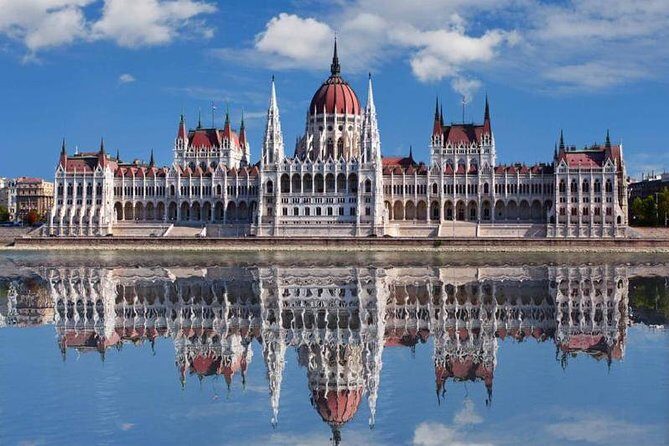
- Castle District concentration in Budapest: Fisherman’s Bastion, Matthias Church, and the Parliament Building all fit into one guided flow.
- Vienna’s Ringstrasse + Schönbrunn pairing: imperial architecture views plus an interior palace visit window.
- Prague in well-paced chunks: Old Town Square and Charles Bridge by foot, then Prague Castle area in a big block.
- Bratislava Old Town in 2 hours: quick but specific highlights plus St. Martin’s Cathedral in the mix.
Value and Price: What You’re Really Paying For
At $3,506.97 per person for an 8-day private package, this is not a bargain-basement deal. But it’s priced like a service-heavy trip: 7 nights in central 3- and 4-star hotels, multiple private transfers, and private sightseeing tours across four cities. That cost makes sense if you care about time. You’re not coordinating rail schedules, guessing meeting points, or losing hours to logistics.
You also get a day with included breakfast (6 breakfasts are listed). That sounds small, but it matters on busy city itineraries. One well-timed breakfast can be the difference between a smooth morning and a late-start scramble—especially in capitals where museums and major landmarks have their own rhythms.
Where the value can feel less perfect is admissions. The itinerary explicitly marks some key sites as admission ticket free and others as not included. So the best way to “win” here is to treat the package as a guide-and-transport framework, then budget a little extra for the big indoor moments you care about most (Schönbrunn Palace, Prague Castle areas, and a few church or tower-style options).
You can also read our reviews of more private tours in Budapest


Day 1 in Budapest: Airport Pickup Done the Easy Way
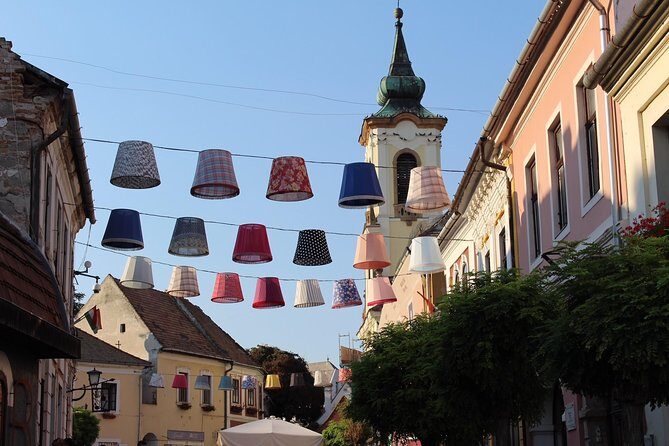
Your first day starts with a classic private-tour benefit: a driver waiting at the Budapest airport arrival hall, holding a sign with your name. That removes the usual post-flight guesswork. Then you get a smoothie drive to your hotel. It’s a small detail, but it’s also a good one. You’ll arrive with less dehydration and fewer immediate decisions to make.
Since your trip is multi-city, Day 1 isn’t the day to cram sights. It’s the day to get settled in a central hotel area and reset your energy so Day 2 hits hard.
Budapest Day 2: Castle District, Parliament, and the Citadella View
Day 2 is your big Budapest sampler, and it’s planned in a smart order. You start in the Castle District area, where viewpoints and walking routes are concentrated.
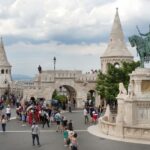
Fisherman’s Bastion is first. Even when you’ve seen photos, being there in person helps you understand the shape of the city. The stop is listed as free admission, so you’re not paying just to get “a quick photo.” It’s the kind of spot that gets you oriented fast.
Then comes Matthias Church in the same Castle District walking context. You’ll hear the church’s history from your guide. The admission is not included, so treat this as a decision point: if you want the inside, you’ll pay on top; if you’re happy with the setting and stories, you can stay outside and keep moving.
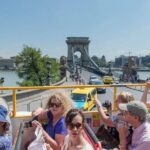
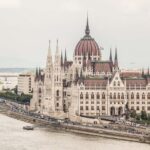
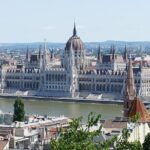
Next, you circle to the Hungarian Parliament Building for a guided walk around. That’s a good move because the building’s story is bigger than its exterior. After that, you learn about the history of the Szechenyi Chain Bridge, the first permanent Danube connection between Buda and Pest. This is one of those “you’ll remember it later” facts, because once you know why the bridge mattered, you see it differently every time you spot it again.
A highlight for many visitors is St. Stephen’s Basilica. This one is included as a guided indoor visit. Going inside with a guide is a big time-saver; you don’t have to hunt for what’s important, and you won’t accidentally miss the points that connect the architecture to Hungary’s story.
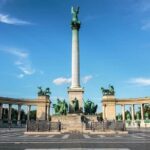
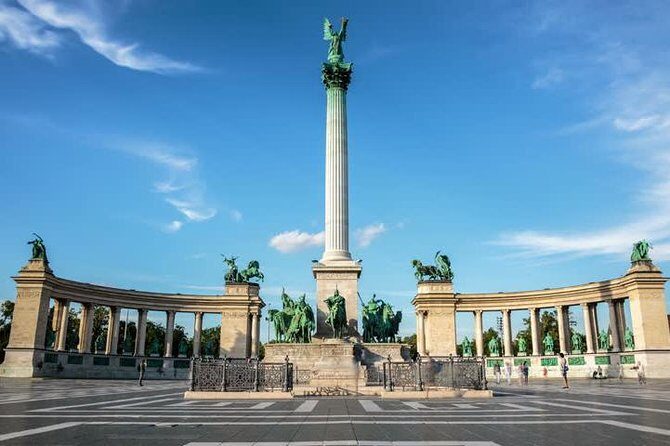
From there you move to Heroes’ Square, the largest square in Budapest, with the Millennium Monument at its center. Admission is free. The guide’s intro helps you read the statues like a map of Hungarian history, not just a row of stone faces.
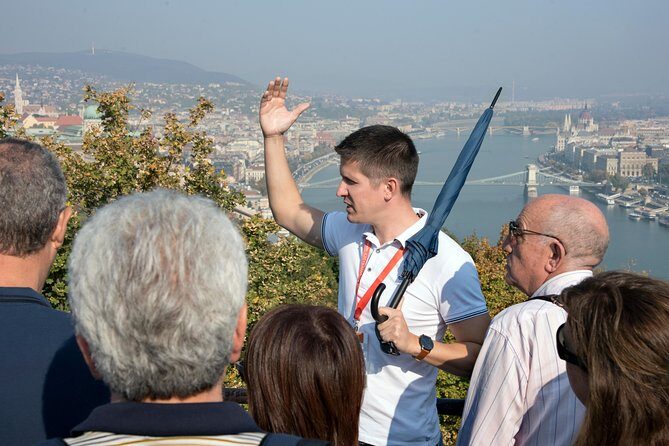
Then you finish on a high note at Citadella on Gellert Hill, with the Liberty statue and a broad view over the city. The admission here is free, but the experience is not “just a view.” You’ll understand how the Danube and the hill lines shape what you see.
Along the way, the driving route includes sights like the Vajdahunyad Castle (passed from the city park area) and the elegant Andrassy Avenue area, where you hear history about key buildings. You’re basically getting a narrated version of Budapest’s “main postcard street,” without spending hours searching for the right bus stop.
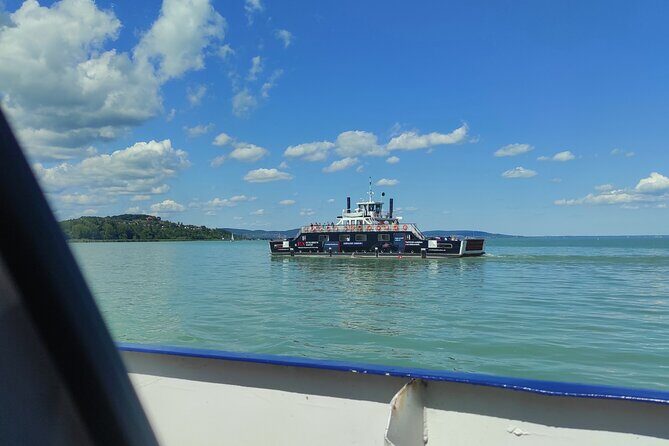
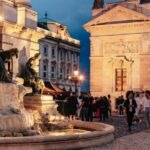
Finally, Day 2 wraps with an evening Danube River cruise including a drink. This is one of the best ways to reset your legs. It’s also a smart way to experience Budapest’s nighttime mood while the city is lit up and you’re not stuck inside a museum schedule.
Budapest Day 3: Old Town Walking and an Optional Szechenyi Spa Reset

Day 3 shifts from landmarks to streets. You start at the Main Square area (Fo ter) and wander through narrow lanes in the Baroque Old Town style zone. The itinerary calls out an artist village built on medieval ruins. That blend matters, because it explains why the streets feel older than you expect and why the “Baroque look” doesn’t feel like a single time period. You’ll get a guide’s walk-and-talk here, plus time for souvenir shopping.
This is also where you get the structure that makes free time easier later. After a walking morning, you’re not locked into another exhausting museum day.
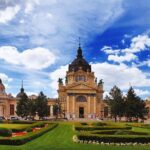
In the afternoon, the plan offers an optional Széchenyi Thermal Bath visit. It’s listed as not included, but it’s your chance to slow down. Széchenyi is described as the largest public bath, with 18 indoor and outdoor pools. If you’ve done two days of walking and stair-climbing, this can feel like a travel cheat code.
If you skip the spa, you’ll still have plenty of time to keep exploring independently around the areas you’ve already “learned” with your guide.
Day 4 Vienna: Ringstrasse Architecture and a Schönbrunn Palace Interior
Vienna on Day 4 is built around two ideas: grand city architecture and a palace day.
You’ll see the Vienna Ringstrasse as part of a broader UNESCO historic center view, with key landmarks mentioned along the boulevard. The plan points out the Vienna State Opera and includes the feeling of an “official Vienna” corridor—buildings arranged like a visual argument for Habsburg-era power and style.
Then you shift to Schönbrunn Gardens for a garden orientation. The gardens stop is listed as free admission, so you can move through it without needing a separate ticket moment to wait for. Even 30 minutes can help you understand the palace layout.
After that, you visit Schönbrunn Palace with an interior visit listed as not included. This is one of your pay-to-play moments. If you care about interiors and historical context, don’t treat it like an optional add-on. The palace is described as the main summer residence of the Habsburg rulers and noted for its size and baroque identity. The inside visit is where that reputation becomes real.
Then you get free time on Mariahilfer Strasse, a long shopping street with major stores and boutiques. This is your “do what you want” hour, which is useful because Vienna can be both expensive and elegant—you might want to browse, grab coffee, or buy a few practical items without racing a timetable.
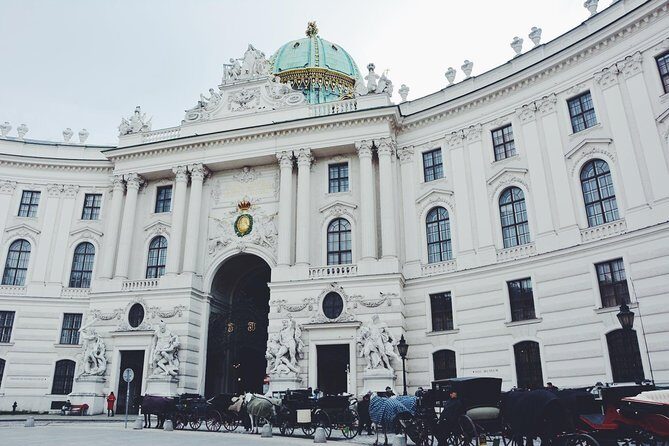
The day ends with the Hofburg, the former imperial palace complex and now the official residence and workplace of Austria’s president. The Hofburg stop is listed as not included, so again you’re paying only if you want to go deeper inside. As a guided stop, it still gives you the “big picture” and helps you connect Vienna’s landmarks to today’s institutions.

Day 5 Prague: Old Town Square, Charles Bridge, and Prague Castle Time
Prague Day 5 is structured like a walking adventure with big “wow” checkpoints.
You begin at Staroměstská radnice / Old Town Square, where you’ll meet the heart of the area’s famous buildings: the Church of Our Lady before Týn, the Old Town City Hall, and St. Nicolas. The itinerary highlights the Old Town City Hall and the astronomical clock that draws crowds every hour. You can choose to pay for access where listed as not included; the walking tour focus is on understanding the significance and seeing why it pulls people in again and again.
Old Town Square is also where tower views matter. The itinerary notes you can climb for views over the square and why Prague is called the city of 1000 spires. If you like city panoramas, budget time and energy for that.
Then comes Charles Bridge, a Gothic stone bridge connecting Old Town and Lesser Town. The stop is listed as free admission and clocks in at about 30 minutes. This is a good length: long enough to feel the atmosphere and take photos, not so long that you feel trapped with crowds. If you’re sensitive to congestion, consider shifting your photo strategy—get one wide shot early in the crossing, then do the rest with slower pacing.
Next is Prague Castle, noted as the largest ancient castle complex in the world, with multiple churches, palaces, towers, and halls. The visit is listed as not included, so this is one of your major ticket decision points. The two hours allocated here is likely enough to orient you, see the most important areas, and still not feel like you missed everything.
You finish with St. Vitus Cathedral, which is listed as free admission for the stop (30 minutes). Even if you don’t go deep into every chapel, a guided focus at this cathedral level helps you grasp why this Gothic landmark matters and how it anchors the castle area spiritually and architecturally.
Day 6 Prague: Free-Time Flex Around the Astronomical Clock
Day 6 gives you breathing space. After breakfast, you get free time in the heart of Prague with the astronomical clock as a focal point.
It’s listed as about 3 hours, and that’s the sweet spot for doing your own thing. You can wander for photos, pop into small shops, or simply sit somewhere with a drink and watch Prague happen. This is one reason private tours work so well: the guide does the heavy lifting on the big sights, and you get to enjoy the city without a strict script the whole day.
If you loved a street on Day 5, this is your chance to go back. Prague has a way of rewarding repeat walks.
Day 7 Bratislava: Pink Palaces, St. Michael’s Gate, and St. Martin’s Cathedral
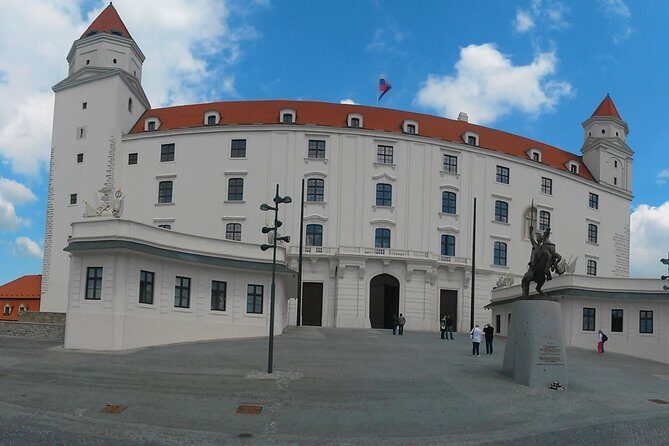
Bratislava is the shortest city day here, which makes planning important. The good news: you’re not trying to conquer the entire country. You’re getting a targeted Old Town overview.
You start at Primates’ Palace, described as a neoclassical palace with a pale pink and white exterior. Admission is listed as not included. Even without paying to go inside, the stop works because it frames the Old Town’s “Palace set” architecture style.
Then you spend about two hours in Bratislava Old Town, where the itinerary lays out several landmarks in a logical walking pattern. You’ll hear about St. Michael’s Tower, with the surviving gate out of the original gates that protected the medieval fortified city. You’ll also get the story around Michalská ulica from the viewing point mentioned in the itinerary.
You’ll see Zichy’s Palace, St. Martin’s Cathedral (described as the largest, oldest, and most remarkable church in Bratislava from the 14th century), and you’ll pass through area details like the Fisherman’s Gate crossroads where musicians often play.
The itinerary also calls out the statue of Čumil, which is one of those quick photo opportunities that’s fun in a very specific, “only here” way. You also get the Fisherman’s Gate street detail with the real-size man statue holding a hat.
After that, your guided Old Town session loops back to the Main Square, noting that every building there is worth attention.
Finally, you visit the Grassalkovich palace, also called the Presidential palace. It includes about an hour here, with the itinerary noting the gated property, a fountain in the front courtyard, and a beautiful garden at the back. Admission is listed as not included, so again, you’re paying only if you want full access.
Day 8 Departure: Smooth Ride Back to Budapest Airport
Your last day is straightforward: a ride from your hotel to Budapest Ferenc Liszt International Airport, described as about 30 minutes. It’s listed as a short stop, with the tour finishing cleanly so you don’t end up squeezing a goodbye day with sightseeing.
When a multi-city trip ends like this, it’s a gift. You pack with less panic and keep your flight day from turning into an all-day event.
Hotels, Comfort, and the Private-Tour Advantage
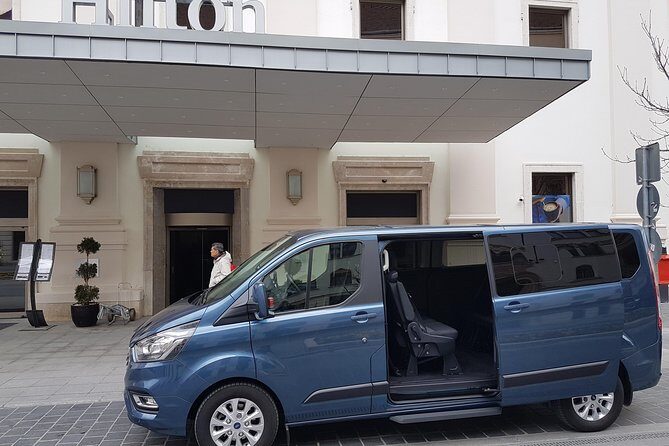
Across the whole trip, the private nature is the main comfort lever. You have round-trip private transfers from and to Budapest airport and transport by an air-conditioned minivan/car. That’s not just convenience. It also protects your sightseeing energy.
One of the strongest signals from the experience feedback is how smooth and punctual the transfers can feel. You’re not repeating the same stress in each city. And because the hotels are described as central in 3- and 4-star categories, you’re usually walking or using short rides instead of spending your day chasing distance.
The experience also aims to balance structure with breathing room: private guided portions in each city, then time later to explore on your own. That’s important for first-timers. You get your bearings fast, then you can steer your day based on what actually interests you when you’re standing in front of it.
Should You Book This 8-Day Private Tour?
Book it if you want an organized, stress-light way to see four major Central European capitals in one trip, especially if you value private guiding and dislike figuring things out between cities.
I’d also lean yes if you like the idea of a plan that includes both big sights and recovery time, like Budapest’s evening Danube cruise and Prague’s half-day free pacing.
Skip it or adjust expectations if you know you’ll only feel satisfied by paying to go deep into multiple major indoor attractions, because several high-profile places are marked as not included. Think of this as a well-run framework where your paid “extras” depend on what you personally want to see inside.
If you’re the type who wants to get the essentials, learn the stories while you walk, and then enjoy the cities at your own pace, this private Capitals circuit is a strong match.
FAQ
What cities are included in this private tour?
You’ll visit Budapest, Vienna, Prague, and Bratislava across an 8-day itinerary.
How long is the tour and how are transfers handled?
The tour runs for about 8 days. It includes round-trip private transfers from and to Budapest airport, plus transport during the tour by air-conditioned vehicle.
What kind of lodging do you get?
The package includes 7 nights of accommodation in central 3- and 4-star hotels.
Are meals included?
Breakfast is included for 6 days. Lunch and dinner are not included.
Are attraction tickets included, or do I pay extra?
Some stops are listed as admission ticket free, while others are listed as not included (for example, Matthias Church, some Prague Castle-related areas, Schönbrunn Palace, and a few additional sites). The Danube cruise and the guided indoor St. Stephen’s Basilica visit are listed as included.
What’s the cancellation timeline for a full refund?
You can cancel up to 6 days in advance for a full refund. The policy also lists 50% refunds for cancellations made 2–6 days before the experience, and no refund for cancellations less than 2 days before the start time.