REVIEW · BUDAPEST
Budapest Essential Walk&Food tasting
Book on Viator →Operated by Budapest Tour Guy · Bookable on Viator
Budapest makes more sense on foot. This private walk-and-food route strings together the big-ticket sights from Deák tér to the Chain Bridge, with short walks, quick metro hops, and stories that connect the dots fast.
I love the pacing. Each stop is timed so you keep moving without feeling rushed through the main sights. I also like the strudel and coffee break, which turns the route into something you can taste, not just see.
One drawback to plan around: this is weather-dependent, and the schedule assumes you’ll keep walking even if the day is a bit wild. If you want long museum stays, this won’t be your style.
In This Review
- Key highlights you’ll care about
- Deák tér meeting point and the Opera-area warm-up
- Millennium Underground to Heroes’ Square and Vajdahunyad Castle
- Széchenyi Thermal Baths: history and quick outdoor-pool views
- Inside St. Stephen’s Basilica and the King Stephen story
- Strudel Stop at Szabadság tér and Soviet-era reminders
- Parliament Square and the Shoes on the Danube Promenade
- Castle Hill by Metro 2: Fisherman’s Bastion panoramas
- Walking Back to the Chain Bridge: lions and the first permanent span
- Value for $90: private pacing plus mostly free admissions
- Pace, weather, and who should book
- Should you book this Budapest Essential Walk&Food tasting?
- FAQ
- How long is the Budapest Essential Walk&Food tasting?
- Where do we meet for the tour?
- Where does the tour end?
- Is this a private tour?
- What food is included?
- Are admission tickets required for the listed stops?
- What transportation does the tour use?
- What time does the tour run?
- What happens if weather is bad or I need to cancel?
Key highlights you’ll care about
- A true private experience: only your group goes with your guide
- The Millennium Underground stop: you ride Europe’s first underground line as part of the sightseeing
- Thermal-bath context at Széchenyi: you get the bath’s story and, if possible, a peek at outdoor pools
- A powerful Danube moment near Parliament: Shoes on the Danube Promenade is built into the route
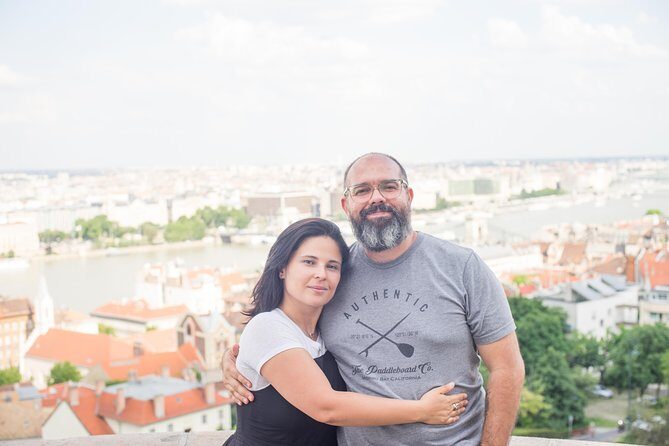
- Castle Hill panoramas: Fisherman’s Bastion lookout views frame the Royal Palace area
- Food included: a short break at the Strudel house with strudel and coffee
Deák tér meeting point and the Opera-area warm-up
You start at the Lutheran Church of Ferenc Deák Square (Deák Ferenc tér 4). The meeting point is on the stairs of the church, which is a nice clear landmark when you’re arriving. From there, the first stretch is an easy walk that gets you oriented quickly—this is the tour’s warm-up phase.
You head toward Elizabeth Square and also get a look toward the Opera house from the outside. That matters because Budapest’s architecture can feel like a puzzle at first. By the time you’re moving past these landmarks, you already know which direction you’re headed and what kind of buildings you’ll be seeing all afternoon.
This stop is kept tight (about 20 minutes) and doesn’t require an admission ticket. If you’re traveling solo, this is also where you’ll get a quick sense of how your guide handles the group—calm, structured, and built for sightseeing rather than waiting around.
You can also read our reviews of more food & drink experiences in Budapest


Millennium Underground to Heroes’ Square and Vajdahunyad Castle
Next comes the big visual switch: Heroes’ Square and City Park. Your route includes a metro ride—specifically, the Millennium underground, described as Europe’s first underground. Even if you don’t usually care about transit history, you’ll feel the payoff here. It’s a quick ride that turns into part of the story instead of just being transportation.
From the ride, you continue toward Heroes’ Square. The focus is on the opulent buildings around you, and you learn to read the façade details without needing to slow down to research on your phone. The tour also brings you through City Park and toward Vajdahunyad Castle.
Vajdahunyad Castle is a great stop for architecture lovers, because it’s not just one style and one era. You spend about 30 minutes here learning about its design and what you’re seeing. This is one of those stops where the guide’s explanations do real work—otherwise, you might walk past and think, nice building, without the why.
The nice part: this whole leg is timed so you don’t burn daylight hunting for the right route. The slight catch: it’s outdoors, so wear comfortable shoes. You’ll be doing several “short but steady” walking chunks throughout the tour.
Széchenyi Thermal Baths: history and quick outdoor-pool views
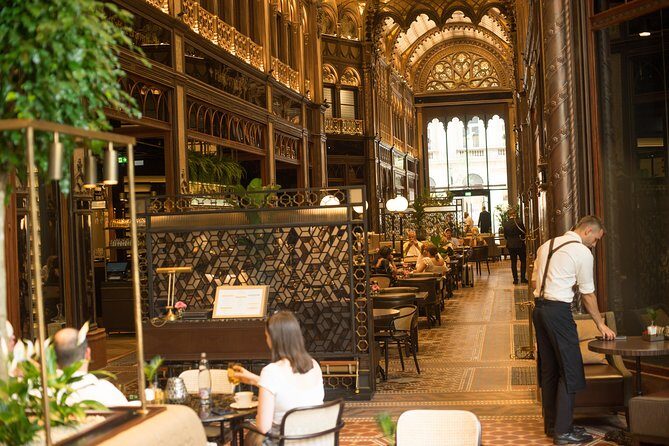
Then you pivot to something Budapest does better than almost anywhere else: thermal baths. At Széchenyi Baths and Pool, you get acquainted with the history of the most visited thermal bath in the city. Even if you don’t spend hours soaking, you still get the why behind the place.
The itinerary notes a possible glimpse at the outdoor pools by entering through a side entrance. That’s a helpful option because it lets you see what people mean when they talk about Széchenyi’s outdoor thermal vibe—without forcing everyone into a long swim/bath plan. Time here is about 20 minutes, so treat it like a viewpoint-and-context stop.
From Széchenyi, the plan calls for taking the underground back toward downtown to St. Stephen Basilica. This is smart logistics. It reduces backtracking and keeps the tour moving toward the next major landmark while you’re still in the sightseeing rhythm.
If you’re the type who loves to linger, you’ll likely want more time here. Still, the value of this stop is that you get the setting and the story without losing half your day.
Inside St. Stephen’s Basilica and the King Stephen story
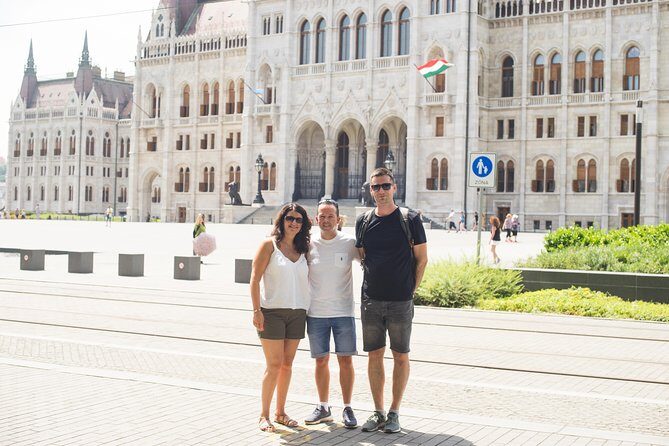
St. Stephen’s Basilica (Szent István Bazilika) is next, with a focus that goes beyond its look. You learn about the birth of Catholic Hungary and King Stephen—Hungary’s state founder. The tour also brings in other major figures from Hungarian history, including Ferenc Puskás.
That combination is why this stop works for a lot of people. It gives you a framework: Budapest is not only a city of buildings. It’s also a timeline of who shaped the country. Even if you’re not a walking encyclopedia, you’ll leave with names and themes you can connect to what you see later.
The time here is about 15 minutes. That can sound short, but it’s intentional. The goal is to hit the highlights and the big stories, then move on to the next square and next moment.
A practical note: a basilica is an active religious site. If you’re going to dress for comfort, aim for clothing that respects indoor rules without turning your trip into a wardrobe project. You’ll also want to be ready for a quick photo window rather than a long hang.
Strudel Stop at Szabadság tér and Soviet-era reminders
After that, the tour heads to Szabadság tér. There’s a short break built in at the Strudel house where you spend your strudel and coffee. This is one of the most satisfying parts of the entire route because it breaks up the walking.
The strudel details matter. One example from the experience highlights trying a poppy seed strudel, and it’s the kind of comfort-food moment that makes the tour feel local rather than just sightseeing checklist. Even if you don’t pick the exact same filling, the point is the same: you pause, you eat, you recharge.
Then the tour transitions into a more reflective area of Budapest’s 20th-century story. You walk toward the bank district and end up at Szabadság tér, learning about the last remaining Soviet statue, the American embassy, and the memorial of the German occupation.
This is one of those stops where a guide’s framing makes a big difference. Seen without context, squares like this can look like monuments placed in the middle of a modern city. With context, they become evidence of how the city and country went through major political shifts.
Time here is about 20 minutes. The atmosphere can feel heavier than earlier stops, so don’t plan to eat a huge meal beforehand. Keep your pace light, and you’ll be able to absorb the stories without feeling weighed down.
You can also read our reviews of more tours and experiences in Budapest





Parliament Square and the Shoes on the Danube Promenade
Now you reach Kossuth tér, where you observe the Hungarian Parliament Building from outside. The tour spends real time on architecture and history, plus the politics behind it—past and present issues. If you like buildings with meaning, this is one of the core payoff stops.
Just nearby is the Shoes on the Danube Promenade. This is included close to the Parliament building, and it adds emotional gravity to the Danube corridor. It’s a short stop, but it’s the kind of moment that sticks, because it forces you to look at the river not just as a view, but as a witness.
You spend about 20 minutes here. That’s long enough to get the key architectural points and to understand what the memorial is meant to represent, without dragging you into a long detour.
One practical tip: if you’re visiting in late day light, plan on photos, but don’t let photos steal the moment. This stop is strongest when you pause and listen.
Castle Hill by Metro 2: Fisherman’s Bastion panoramas
After Parliament, the itinerary uses Metro 2, the red line under the Danube. It’s another smart move: you’re not just walking around; you’re using Budapest’s transit network as part of the sightseeing plan.
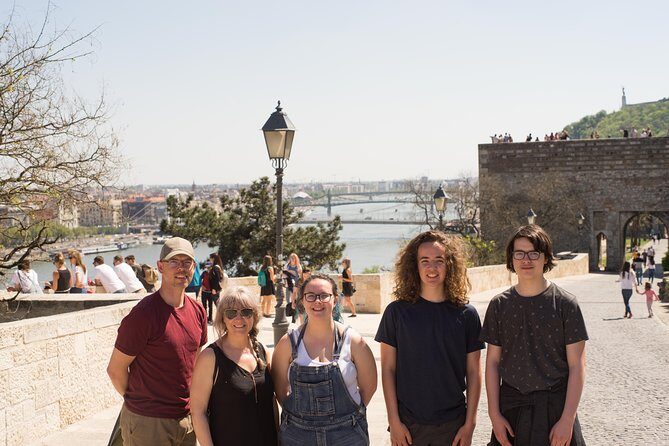
Soon you reach the top of Castle Hill and start your historical journey at Fisherman’s Bastion. This stop emphasizes the panoramic view from the lookout terrace. It’s the kind of viewpoint that makes Budapest feel instantly cinematic, but the tour also uses it as a bridge to the Royal Palace area.
From Fisherman’s Bastion, you walk onward toward the Royal Palace area. Total time here is about 30 minutes. It’s enough to get good views, hear the major context, and start connecting the hilltop sights into one storyline.
Castle Hill can involve uneven ground and slopes. Even on a “short” walking route, you’ll benefit from shoes with solid grip. If you have mobility concerns, the tour is still described as mostly walkable for most travelers, but the hilltop terrain is something to take seriously.
Walking Back to the Chain Bridge: lions and the first permanent span
From Castle Hill, you make your way toward Széchenyi Chain Bridge. The tour notes walking down along the Castle hill with the funicular. That’s convenient because it keeps you from fighting elevation for too long.
Your guide shares stories about the iconic first permanent bridge of Budapest, plus the lions. It’s a small detail, but these kinds of stories are what turn a famous photo spot into a place you can remember.
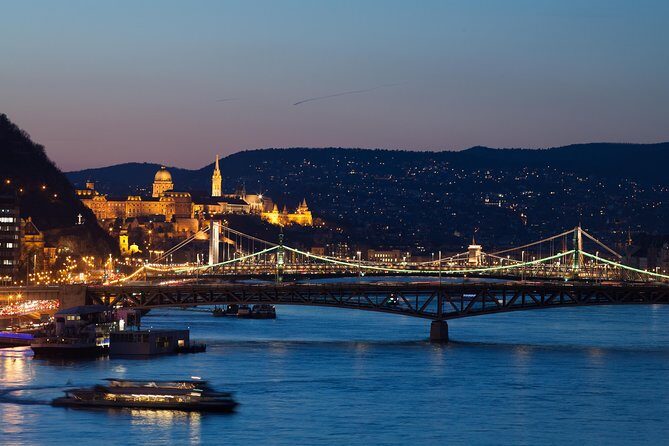
Time here is about 30 minutes, and the walking route ends at Széchenyi Lánchíd. The experience states the ending area is in the Castle district, near Holy Trinity Square (Szentháromság tér), just off Matthias Church.
This ending is practical too. If you’re staying in the Castle district area after the tour, you’re dropped right near a busy core. If you’re not, you’re still close to transit options because you’ll be near major tourist routes.
Value for $90: private pacing plus mostly free admissions
The price is $90.11 per person for a 3 to 4 hour private experience. That’s solid value if you compare it to what you’d pay for a private guide who only talks and doesn’t help with logistics. Here, you’re not just paying for commentary. You’re paying for a planned route that uses public transportation, keeps stops timed, and includes at least one food stop.
Another value point: the itinerary lists admission tickets free at every stop it names (Deák Ferenc Square meeting area sightseeing, Heroes’ Square/Vajdahunyad Castle visit, Széchenyi Baths and Pool historical visit, St. Stephen’s Basilica, Szabadság tér, Parliament area and Shoes on the Danube Promenade, Fisherman’s Bastion, and Chain Bridge). That doesn’t mean every single footstep is free forever in Budapest—just that the stops the itinerary targets are presented as ticket-free experiences.
Also, the experience uses a mobile ticket, which keeps day-of hassle low. It’s one less thing to manage while you’re trying to meet at a specific place on specific stairs.
One more quiet advantage: booking tends to happen about 21 days in advance on average. That’s not a guarantee, but it does signal that this kind of “highlights + food + transit” tour is popular for good reason.
Pace, weather, and who should book
This tour is designed for people who want Budapest’s greatest hits without turning the day into a checklist grind. Stop times are short—often 15 to 30 minutes—so you move through the city, learn the connections, and still have energy afterward.
It’s also described as a private tour/activity. Only your group participates, so you’re not fighting for space around a guide or being forced to wait while others decide what they want to do. That flexibility can matter a lot on a day with rain or wind.
Weather matters here. The experience requires good weather, and it can be canceled due to poor conditions. If that happens, you’re offered a different date or a full refund, so you’re not stuck losing money to one cloudy day. And because this route includes outdoor viewpoints like Fisherman’s Bastion and the Danube corridor, you’ll want to dress for movement and sudden changes.
The run window shown is Monday through Sunday, 3:00 PM to 9:00 PM. If you’re choosing a time, late afternoon can work well for views, but it also means colder or darker weather in certain seasons. Bring layers, and you’ll thank yourself.
This is a great fit if:
- You’re seeing Budapest for the first time
- You want big sights in one structured afternoon or early evening
- You like stories tied to architecture, politics, and daily life
- You want one real food moment, not just photos
It may not be the best fit if:
- You want long cathedral or museum time
- You’re hoping for a full thermal bath session
- Walking uphill terrain and short stops don’t match your style
Should you book this Budapest Essential Walk&Food tasting?
If you want a smart, efficient way to get oriented and still eat something good, I think this is an easy yes. It hits major landmarks—Deák tér, Heroes’ Square, Széchenyi context, St. Stephen’s Basilica, Szabadság tér, Parliament and Shoes on the Danube, Fisherman’s Bastion, and the Chain Bridge—while using transit so you don’t waste the day on route-finding.
Book it if you’re excited by architecture, political context, and Danube-area viewpoints, and you’re okay with short, focused stops. Skip it if you prefer slow browsing, long indoor stays, or a full day focused on one museum or one neighborhood.
From a value standpoint, the $90.11 price makes sense because you’re paying for private guidance plus a route that already accounts for movement, timing, and a built-in food break.
FAQ
How long is the Budapest Essential Walk&Food tasting?
It lasts about 3 to 4 hours.
Where do we meet for the tour?
You meet at the Lutheran Church of Ferenc Deák Square, on the stairs at Deák Ferenc tér 4, 1052 Hungary.
Where does the tour end?
The tour ends at Széchenyi Chain Bridge. The end point is described as the Castle district, near Holy Trinity Square (Szentháromság tér) just off Matthias Church.
Is this a private tour?
Yes. It’s a private tour/activity, so only your group participates.
What food is included?
The itinerary includes a short break at the Strudel house for strudel and coffee.
Are admission tickets required for the listed stops?
The itinerary lists admission ticket free for the named stops and sights.
What transportation does the tour use?
The route uses the Millennium underground, the underground back to downtown, Metro 2 (red line) under the Danube, and walking with the funicular on the way to the Chain Bridge.
What time does the tour run?
Tours operate Monday through Sunday from 3:00 PM to 9:00 PM.
What happens if weather is bad or I need to cancel?
The experience requires good weather. If canceled due to poor weather, you’ll be offered a different date or a full refund. You can cancel for a full refund up to 24 hours in advance.