REVIEW · BUDAPEST
Private Café Wandering: Excursion through Budapest’s Belle Epoque
Book on Viator →Operated by Insight Cities · Bookable on Viator
If you like your Budapest culture with a side of cake, this tour fits. It’s a private, art-historian-led walking loop through the city’s café golden age, connecting places like Gerbeaud and the New York Café to the writers and thinkers who shaped Budapest’s image. I especially love the mix of iconic cafés and meaningful context, and I love that the guide ties the décor, the guest books, and the social rituals to the big historical picture. The only real catch: you’ll pay for coffee, desserts, and meals separately at the stops.
For a small group of up to 10, the pace feels human. You’ll start at Vörösmarty tér and spend about 3 hours moving between cafés, including a tram ride by the Danube after the first stop. A small consideration: it’s a walking tour, so plan comfortable shoes and expect short transfers between locations rather than a sit-and-watch day.
In This Review
- Key Points You’ll Care About
- The Big Idea: Why Budapest Cafés Matter More Than You Think
- 3 Hours, 6 Famous Cafés: The Walk at a Glance
- Vörösmarty tér to Gerbeaud: Starting in Imperial Budapest Mode
- Gerbeaud to Central Café by Tram: A Danube Breathing Moment
- Museum Café (Since 1885): The Guest Book Is the Star
- Urania Café on Rákóczi Street: Where Film and Lectures Shared Space
- Toward Blaha Lujza tér to New York Café: Grand Scale, Big-City Confidence
- Muvesz Café Near the Opera House: Coffee, Cake, and Theater-World People Watching
- Price and Value: What You’re Really Paying For
- Best For Who: The Right Fit (and the Wrong Fit)
- What to Ask Your Guide During the Walk
- Should You Book Private Café Wandering Through Budapest’s Belle Epoque?
- FAQ
- How long is the private café walking tour?
- How many cafes will we visit?
- Where does the tour start?
- Is pickup available?
- Is this tour private?
- What language is the tour offered in?
- Is the cost of coffee, cake, and other refreshments included?
- What is the price for the tour?
- What’s the cancellation policy?
Key Points You’ll Care About
- Private group only: just your guide and your group, no blending into a crowd
- Expert storytelling: an art historian explains what makes each café matter
- Iconic stops, in a logical flow: Gerbeaud to Central, then Museum, Urania, New York Café, and Muvesz
- A Danube tram break: you don’t just walk the whole way between early stops
- Guest-book history: the Museum Café connects names from politics and arts to the room you’re in
- Final coffee with a view of theater life: Muvesz Café sits near the Opera House
The Big Idea: Why Budapest Cafés Matter More Than You Think
Budapest’s café culture isn’t just about coffee. It’s about public life—ideas traded over pastries, social status displayed in room design, and a city learning how to be itself during the late 1800s and early 1900s. This tour is built to show you that café you’re looking at also once served as a stage for writers, politicians, artists, and intellectuals.
I like that the guide focuses on meaning, not just names. The emphasis is on why each place earned its reputation—history you can see in tilework, mirrors, guest books, and the way the cafés feel like old social hubs rather than modern coffee shops.
You can also read our reviews of more private tours in Budapest

3 Hours, 6 Famous Cafés: The Walk at a Glance
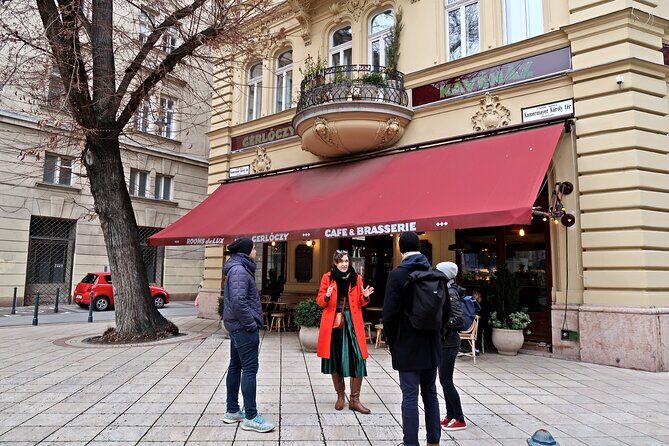
This is an approximately 3-hour private walk offered in English, with a mobile ticket provided. You’ll meet at Café Gerbeaud, Vörösmarty tér 7–8, 1051 Budapest unless your pickup arrangement is set differently. If you’re meeting by default, plan to arrive 15 minutes early so you don’t start late.
The itinerary is designed with good geographic sense: you begin around Vörösmarty tér, move through classic inner-city café territory, and end near Andrássy Avenue and the Opera House. Along the way, you get variety: grand interiors, tiled walls and historic documentation, a café tied to film and lectures, and a finale that practically begs for people-watching.
Vörösmarty tér to Gerbeaud: Starting in Imperial Budapest Mode
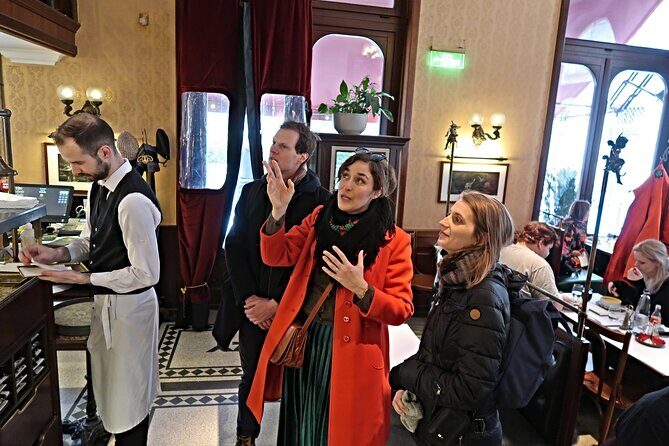
The tour kicks off at Vörösmarty tér, one of the central squares that sets the tone for a classic city walk. Your first stop is Café Gerbeaud at Vörösmarty tér 7, and it’s chosen for a reason: it’s tied to the social heartbeat of late 19th-century Budapest.
Gerbeaud is described as having an exquisite interior and more than 100 years of history, with a reputation as a central meeting place for both tourists and locals. That matters because the café isn’t treated like a museum piece. It’s framed as a working social space from an era when Budapest’s identity was still sharpening.
What I’d watch for: the feel of the room. On a café tour like this, the point is to notice how the space itself invites lingering and conversation. Even before you sit down, Gerbeaud’s reputation helps you understand why people used these places as their public living rooms.
Gerbeaud to Central Café by Tram: A Danube Breathing Moment
After Gerbeaud, you take a tram along the Danube to the next major stop: Central Café. This is one of those smart pacing choices that keeps the tour from turning into a continuous shuffle.
Central Café is presented as a space with dignity—something that reflects what café houses meant at the pinnacle of the Habsburg Empire’s economic and cultural power. The décor, the “delicate” interior atmosphere, and the emphasis on meals, desserts, and refreshing drinks all point to a place designed for full sensory stays, not quick in-and-out stops.
Practical tip: since refreshments aren’t included, this is where you can decide your budget style. If you want the full café experience, Central Café is a strong candidate for ordering a dessert or drink that matches the old-school ritual vibe.
Potential drawback: if you’re easily tired from walking plus stairs, plan for a seating rhythm. You’ll want to take short rests between cafés, especially when interiors are grand and you’ll naturally slow down to look.
Museum Café (Since 1885): The Guest Book Is the Star
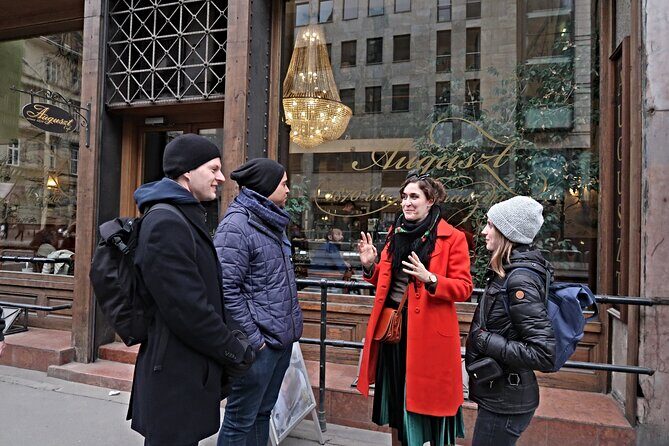
Next is Museum Café, and the detail that makes it special is the age: it’s described as operating since 1885. This stop is where the tour leans hard into the idea that cafés were public record, not just private indulgence.
The guest book is now treated as a historical document, and it includes entries from prominent people—Members of Parliament, distinguished writers, and famous Hungarian actors. That’s a big deal because it connects your visit to names tied to governance, literature, and performance, all sharing the same rooms at different times.
The interior features also play a role in the story. The walls are covered in tiles from Zsolnay porcelain works, and there’s a grand 19th-century Venetian mirror, which helps explain the luxury feel without needing to guess.
What you’ll likely enjoy most: standing in the café and imagining who signed that book. When a place has written evidence like that, it makes the past feel less abstract and more like a living social network.






Urania Café on Rákóczi Street: Where Film and Lectures Shared Space
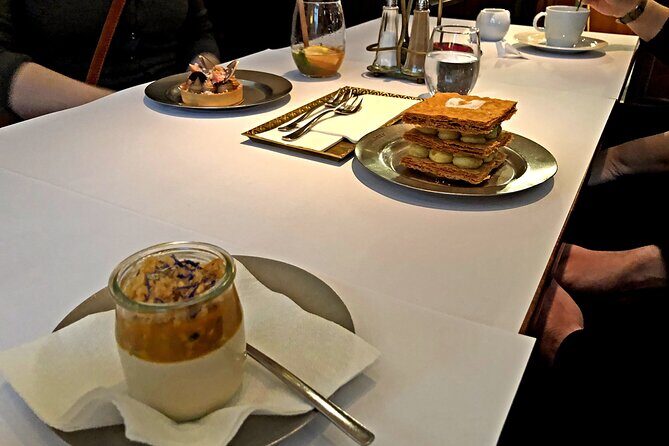
From there, you walk to Urania Café on Rákóczi Street. One of the standout claims here is that it houses the oldest Film Theatre in the city. In other words: you’re not only stepping into an old café; you’re stepping into a venue where modern(ish) culture—film—took root.
Urania is also known for lectures given by prominent intellectuals before large audiences of Budapest cosmopolitans. That adds a sharper edge to the café story. The room isn’t just about art and conversation—it’s described as a place where public ideas were presented and debated.
Why this stop is worth it: it widens the idea of café culture. You start to see cafés as part of the city’s information system, not just its nightlife.
Consideration: if you prefer quieter venues where you can talk without thinking about presentations, Urania may feel energetic. That’s not bad, but it’s a different atmosphere than the more purely pastry-and-coffee rhythm.
Toward Blaha Lujza tér to New York Café: Grand Scale, Big-City Confidence
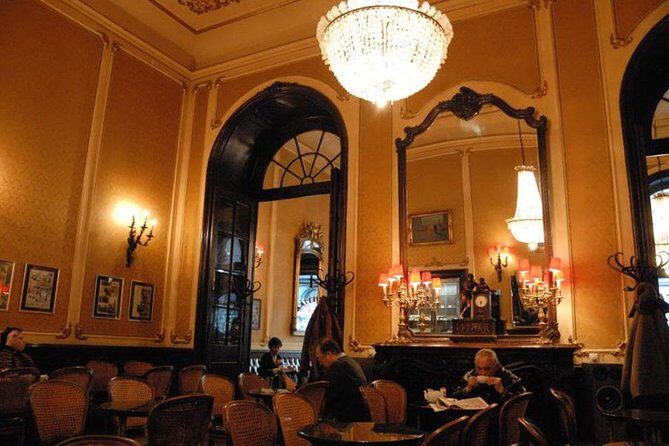
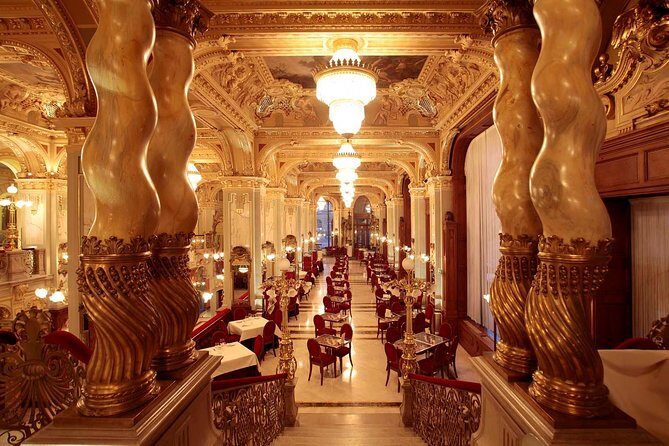
Next the route moves along a larger boulevard toward Blaha Lujza tér, heading for New York Café. The selling point is the café-house scale and elegance—described as one of the most beautiful café houses in the world.
This is where Budapest café culture hits its most theatrical form. Even if you’ve seen photos of New York Café before, the point on this tour is to understand that the grandeur wasn’t random. It reflects an era when cities used architecture and interior design to project prestige.
What I’d do during the stop: slow down for the ceiling-and-wall views and spend time on details. When interiors are this famous, the risk is rushing through. This tour’s value is that you have an art historian in your corner helping you notice what’s meaningful, not just pretty.
Muvesz Café Near the Opera House: Coffee, Cake, and Theater-World People Watching
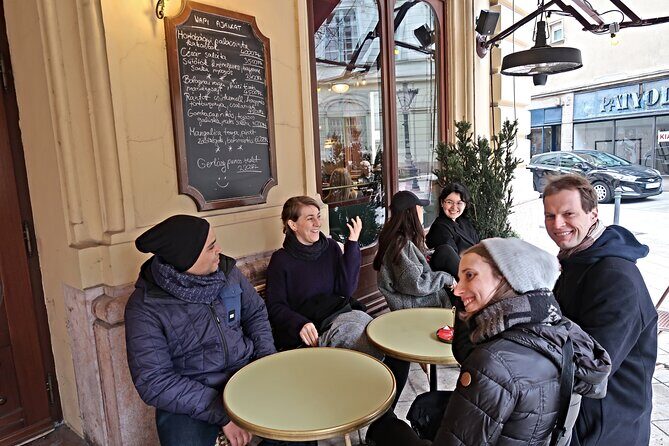
The tour ends at Muvesz Café on Andrássy Boulevard, near the Opera House, where you’ll sit down for coffee and cake. This finale isn’t just dessert—it’s a hint at the next layer of Budapest culture.
The stop is described as a place where celebrity actors and actresses regularly patronize the venue during rehearsal breaks from Budapest’s Broadway scene. Even if you don’t spot a famous face, you’re still in the kind of neighborhood where performance culture is always close by.
Practical move: bring your best people-watching patience. This is a café stop designed for relaxing after walking, and it’s a good time to ask your guide follow-up questions while you cool down with a drink.
Price and Value: What You’re Really Paying For
The price is $449.51 per group (up to 10) for about 3 hours. On its face, that can look high if you’re thinking per person. But because it’s priced per group, your value changes fast depending on how you travel.
Here’s how I’d judge it:
- If you’re 2–4 people, you’ll feel the cost more, so focus on what you want: expert commentary and multiple iconic interiors.
- If you’re 6–10 people, it becomes much easier to justify because you’re sharing the guide time across the group.
- You’re also not just buying access to cafés; you’re buying interpretation—how an art-historian connects design and artifacts to social history.
One more money note: refreshments are not included, so decide your café strategy ahead of time. If you want to stretch value, keep one or two orders modest. If you want the full experience, pick the stops with the strongest matching vibe—Central Café for the social meal/dessert feel and Muvesz Café for the end-of-tour cake moment.
Best For Who: The Right Fit (and the Wrong Fit)
This tour is ideal if you:
- love Budapest and want more than a quick photo stop at famous interiors
- enjoy art and cultural history that connects to everyday public life
- prefer small groups and a guide who can answer questions
It may be less ideal if you:
- hate walking or want a mostly seated itinerary
- plan to spend all day ordering a lot of food and drink, since refreshments aren’t included and you’ll be paying at multiple stops
- prefer modern café experiences over historical interiors and stories
What to Ask Your Guide During the Walk
This tour shines when you treat it like a conversation. Here are a few questions that fit the way the stops are framed:
- Which café best shows the social role of Budapest’s late 19th century public life?
- What detail in the Museum Café interior feels most important to the story of Hungarian art and industry?
- How did lecture culture and film theatre fit into café life at Urania?
- At New York Café, what interior features connect to the idea of prestige and status?
Also, if your guide is Kata, lean into that energy. One of the standout review notes was that Kata was very informative and generous with time, and that a good mix of cafés plus other city context made the experience feel complete.
Should You Book Private Café Wandering Through Budapest’s Belle Epoque?
I’d book this if you want Budapest with context. It’s not a random list of café names; it’s a guided walk that links interiors, artifacts, and public culture into one readable story. The private format helps you move comfortably and ask questions, and the café selection hits the biggest anchors of the city’s café identity.
Skip it only if you’re looking for a purely low-effort food crawl or you want everything fully included. Since refreshments aren’t part of the price, you’ll want to budget your café orders and plan your pacing.
If you like guided history that feels grounded in real places—where you can actually see the evidence—this is a smart choice.
FAQ
How long is the private café walking tour?
It runs for approximately 3 hours.
How many cafes will we visit?
The tour visits five classic cafés.
Where does the tour start?
The meeting point is Café Gerbeaud, Vörösmarty tér 7–8, 1051 Budapest. The start is in the area of Vörösmarty tér.
Is pickup available?
Pickup is offered, though if you don’t arrange hotel pickup you’ll meet your guide at Café Gerbeaud 15 minutes before the start time.
Is this tour private?
Yes. It’s a private tour, so only your group participates.
What language is the tour offered in?
The tour is offered in English.
Is the cost of coffee, cake, and other refreshments included?
No. Refreshments, cakes, and coffees chosen at the cafés are not included in the price.
What is the price for the tour?
It’s $449.51 per group, up to 10 people.
What’s the cancellation policy?
Free cancellation is available. You can cancel up to 24 hours in advance for a full refund. If you cancel less than 24 hours before the start time, the amount paid is not refunded.