REVIEW · BUDAPEST
Budapest Jewish Heritage: Synagogues, Shoes, Secrets & Flódni
Book on Viator →Operated by Fungarian · Bookable on Viator
Synagogues and survival stories, all in one walk. This tour strings together Budapest Jewish life through architecture and memory, with a true Jewish guide setting the tone as you move from the big landmark sights into the quieter corners of the Jewish Quarter. I especially liked the focus on the Dohány Street Synagogue (Europe’s largest, Neolog Judaism’s centerpiece) and the way the tour ends with flódni, a warm, proper Hungarian Jewish pastry, not just a cookie-and-go moment.
The one consideration: synagogue admission tickets are not included for most stops, and each interior visit is brief. So it feels like a strong overview (with a lot packed in), but you’ll want to plan for extra ticket costs if you want to linger.
In This Review
- Key highlights worth your time
- Entering Budapest’s Jewish Quarter with a guide who connects the dots
- Start at Dohány Street: first bearings, then the big symbol
- Dohány Street Synagogue (Nagy Zsinagóga): Europe’s largest and not just pretty
- Rumbach Street Synagogue: Otto Wagner’s Moorish surprise
- Carl Lutz Memorial: the Swiss diplomat story tied to Budapest
- Shoes on the Danube Bank: a memorial you feel in your body
- Kazinczy Street Synagogue: Orthodox design and stained-glass ceiling work
- The ghetto wall fragment: secrets you can’t see, but can imagine
- Flódni and the end-of-walk calm: a sweet close that still makes sense
- Price and logistics: what you’re really paying for
- Who should book this tour
- Should you book Budapest Jewish Heritage: Synagogues, Shoes, Secrets & Flódni?
- FAQ
- How long is the tour?
- Where does the tour start and end?
- Is hotel pickup included?
- Are synagogue entrance tickets included?
- Is flódni included?
- Is this tour private?
- What language is the tour offered in?
- Does the tour include a mobile ticket?
Key highlights worth your time
- Dohány Street Synagogue: Europe’s biggest synagogue, with Neolog roots and WWII context built into the stories
- Rumbach Street Synagogue and Otto Wagner: Moorish flair from a master of the Austrian Secession
- Carl Lutz Memorial: the Swiss diplomat connection to Budapest survival
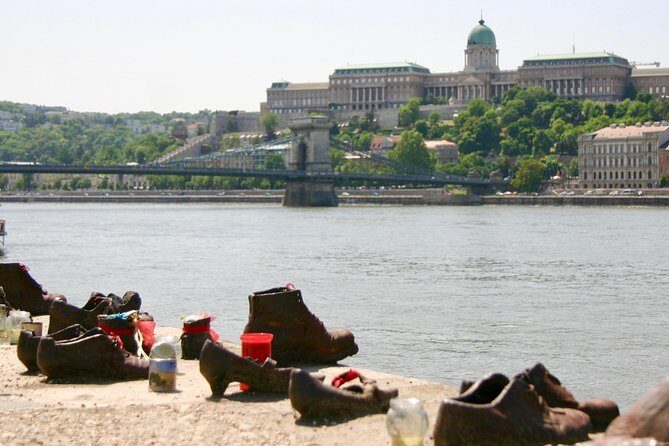
- Shoes on the Danube Bank: the 2005 memorial marking shootings tied to the riverbank
- A ghetto wall fragment: a small surviving section that helps you picture how life was forced into a cage
- Flódni finale: end with a traditional Jewish dessert right after the most serious stops
Entering Budapest’s Jewish Quarter with a guide who connects the dots
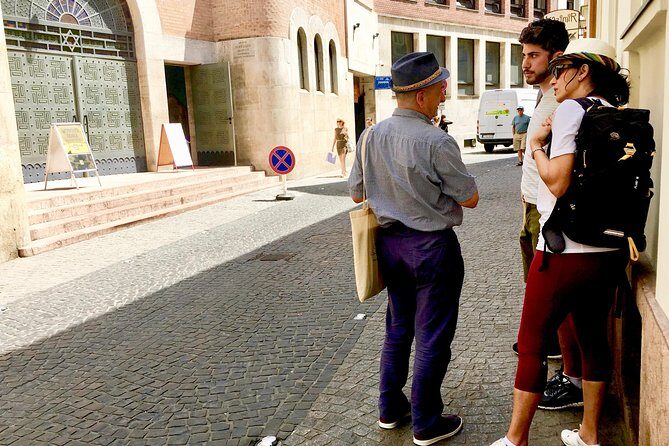
Budapest can feel like a postcard city until you start noticing what’s underneath it: the layers of who lived here, who was celebrated, and who was erased. What makes this tour work is that it doesn’t treat the sites like museum props. You get the architectural facts, yes, but also the human “why this matters” behind them.
I like that it’s designed for conversation, not a lecture you survive. Several guides tied to this program have shared personal perspectives as Hungarian Jews, and that changes the tone from history-only to something more grounded. You can ask questions and steer the pace a bit, so the walk feels personal even though the stops are famous.
Budget-wise, the price is in the midrange for a structured, guided experience in central Budapest. You’re paying for a real storyteller plus hotel pickup (when offered), and for the time it takes to cover multiple key landmarks without you piecing everything together on your own. Just be ready for entrance fees inside the synagogues.
You can also read our reviews of more historical tours in Budapest



Start at Dohány Street: first bearings, then the big symbol
You begin near Dohány Street (with the meeting point at Dohány u. 1). From the opening stretch near Herzl Square and the Great Synagogue area, your guide frames the Jewish Quarter not as a single district, but as a world that shifted with politics, borders, and war.
This start matters because the Jewish Quarter in modern Budapest doesn’t look like the ghetto did. Buildings changed. Streets got renovated. Some areas are harder to “see” than others. A good guide helps you read the city anyway, using stories to build an invisible map over the street grid.
If you want a quick win: wear comfortable shoes and keep a bottle of water handy. You’re doing a concentrated walk that’s long enough to notice fatigue, but short enough that you won’t dread the next stop.
Dohány Street Synagogue (Nagy Zsinagóga): Europe’s largest and not just pretty
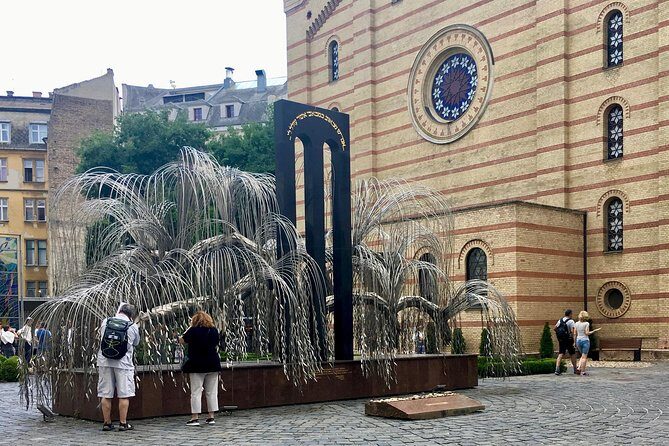
The Dohány Street Synagogue is the main event for a reason. It’s the largest synagogue in Europe, seating about 3,000 people, and it’s a center of Neolog Judaism—the stream of Jewish life that leaned toward integration and modernization in Hungary.
What I found most useful here isn’t just the size. Your guide connects the architecture to the historical moment: why this style, why this scale, and why a community would build something so public and confident. You also get WWII context tied to Hungarian Jewry, including the grim reality of what was happening during the Second World War and how Hungarian Jews appear in international history through famous names associated with the community.
Practical note: interior time is limited on this kind of walking tour. Also, admission tickets are not included for this stop, so check your budget. If you care about the interior details, plan to arrive ready to focus.
Rumbach Street Synagogue: Otto Wagner’s Moorish surprise
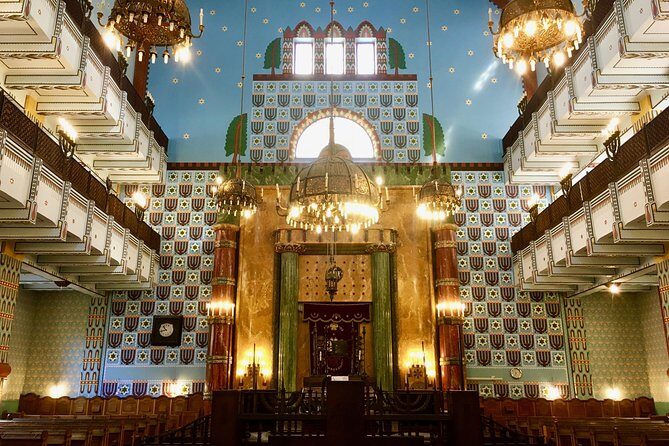
Next comes Rumbach Street Synagogue, built in 1872 and designed by Austrian Secessionist architect Otto Wagner. On paper it sounds like a classic “synagogue stop,” but the payoff is how different this one feels from the larger main landmark.
The Rumbach synagogue was made for a moderate Conservative community, and that shows in both the design language and the guide’s explanation of how Hungarian Jewish life wasn’t one single thing. You’re not just seeing religious buildings. You’re seeing different “branches” and different cultural priorities, all living in the same city.
You’ll also hear how the interior looks after restoration efforts. That matters in Budapest because some of these buildings have gone through long periods where details were harder to appreciate. Here, the guide points out the décor in a way that helps you actually notice it, not just glance at it while moving to the next corner.
Like the other main synagogues, admission is not included, so treat this stop as a budget add-on, not a free bonus.
Carl Lutz Memorial: the Swiss diplomat story tied to Budapest
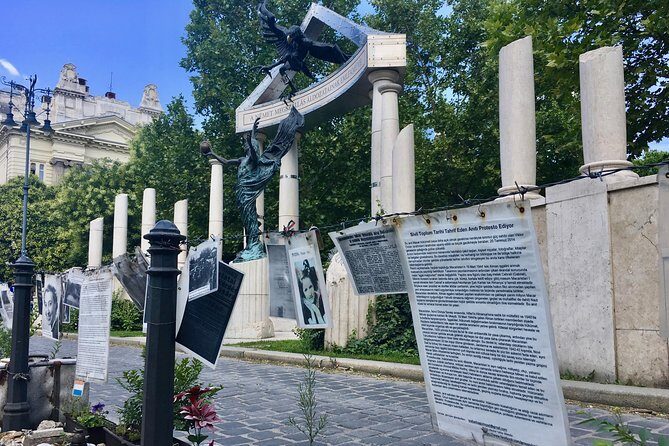
Then you shift from buildings to a name. The Carl Lutz Memorial is dedicated to the Swiss diplomat who helped save tens of thousands of Jews in Budapest during the war, protecting people from persecution and deportation.
This is a valuable stop because it adds balance to the standard WWII narrative. You don’t just get forced marching and loss. You also get human choices—someone using access and paperwork and risk to change outcomes. It’s the kind of story that makes history feel less like a distant script and more like a chain of decisions.
Timing-wise, this one is short on purpose. You’re still in “walk and absorb” mode. If you want more detail, your guide can usually point you toward extra reading, but the main idea lands quickly.






Shoes on the Danube Bank: a memorial you feel in your body
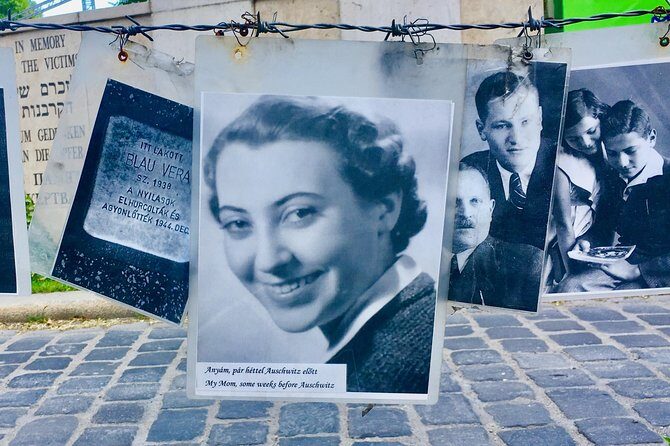
The Shoes on the Danube Bank memorial is included on the tour, and it’s the kind of site that doesn’t need decoration to hit hard. Unveiled on April 16, 2005, it commemorates Jewish victims murdered at the riverbank during World War II. People were forced to remove their shoes before being shot; their bodies were carried away by the Danube.
Here’s the practical truth: you’re going to spend a few minutes standing, looking, and trying to picture what you’re being shown in a metal-and-stone way. That mental picture is the point. Your guide doesn’t let it drift into vague sadness. You get the specifics of what happened at this location and why the memorial uses shoes—small, ordinary objects turned into evidence.
If you’re the type who gets emotional fast, take a moment before you reach the riverbank. Then let the guide’s framing do the heavy lifting.
Kazinczy Street Synagogue: Orthodox design and stained-glass ceiling work
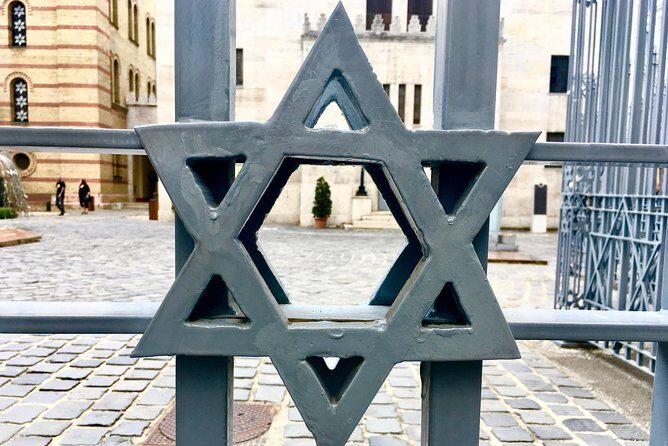
In a smaller side street you’ll see Budapest’s Orthodox synagogue, built in 1913 with touches of late Art Nouveau. The guide’s emphasis here is how modern it looked at the time—bright colors, a sense of movement in the design, and stained-glass windows in the ceiling designed by Miksa Róth.
This stop helps you understand something important: “synagogue” isn’t one style, one community, or one story. Orthodox life had its own visual language, its own priorities, and its own place in a rapidly changing society. By the time you reach Kazinczy Street, the city starts to feel like it had many Jewish identities living side by side.
Admission is not included, so plan ahead.
The ghetto wall fragment: secrets you can’t see, but can imagine
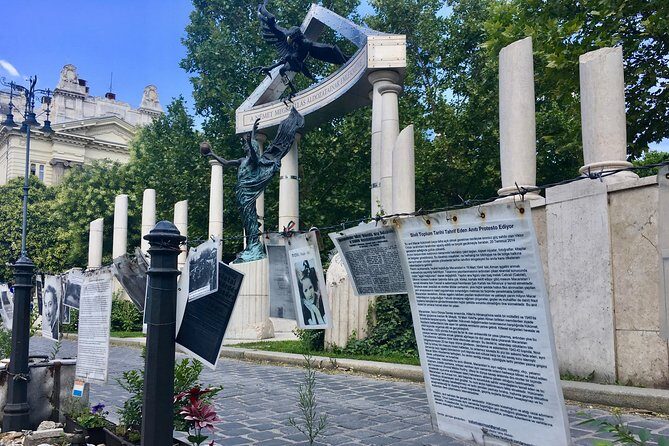
One of the most powerful moments is also one of the most physical: a small section of a WWII ghetto wall that still stands in the heart of Budapest. It’s easy to miss on your own, which is why it works inside a guided walk.
Your guide helps you connect what remains in the present to what the ghetto represented in 1944: confinement, surveillance, forced crowding, and the uncertainty of what would come next. You also hear about everyday life inside the ghetto and what happened to those living there.
This stop is a reminder that urban history often survives as scraps. A wall fragment is not a full snapshot, but it’s a strong anchor. It helps your brain build the missing parts—streets, routines, and the feeling of being boxed in.
Flódni and the end-of-walk calm: a sweet close that still makes sense
After the serious stops, you end with flódni—an authentic Jewish dessert. It’s a traditional Hungarian Jewish pastry, and it’s offered as the tour’s snack finale.
Why this ending works: it doesn’t pretend you can “switch off” after the Danube memorial. Instead, it gives you something normal and human again. Food is part of culture and part of continuity. You leave with a taste of how life was enjoyed and carried forward, not only destroyed.
If you’re hoping to try flódni for the first time, this is a clean way to do it without hunting down a place on your own while still riding the wave of the day’s stories.
Price and logistics: what you’re really paying for
At about $102.95 per person for roughly 2 hours 45 minutes, this isn’t a budget “grab-and-go” walk. You’re paying for several things that add value:
- A Jewish guide and historian guide (included), which changes how the sites are interpreted
- Hotel pickup when offered, which reduces the friction of getting from place to place
- A private tour format, so you can ask questions and keep the pace humane
- A multi-site circuit that would be harder to plan well on your own in one morning
Two “pay attention” items from the tour details:
1) Synagogue entrance tickets are not included for most interior visits. The Shoes on the Danube stop is included, but the key synagogue interiors will cost extra.
2) Time is tight. You get a focused look, not an all-day wandering session.
The program also uses a mobile ticket, and it’s offered in English. It’s booked pretty far in advance on average, so if your dates are firm, reserve earlier rather than guessing.
Who should book this tour
This is a strong fit if you want:
- A structured Jewish heritage overview with multiple synagogues plus key WWII memorials
- A guide who treats the stories as connected, not random stops
- A private format that makes questions feel normal
It’s also a good match if you’re non-Jewish and want to understand Hungarian Jewish history in context. Some guides tied to this program ask you what brought you here, then tailor the walk to your interests. That makes it easier to stay engaged without feeling like you’re on the outside looking in.
If you want only the ghetto and Holocaust events with zero architectural or community context, you might find this too broad. But if you want the full picture—community, culture, and catastrophe—this tour has the right shape.
Should you book Budapest Jewish Heritage: Synagogues, Shoes, Secrets & Flódni?
I’d book it if you like learning through real places and you want a guided story that links buildings to lived life. The Dohány Street Synagogue stop is worth the trip by itself, and the addition of Rumbach Street, Carl Lutz, the Danube memorial, and the ghetto wall fragment gives you a sequence that feels logical instead of scattered. End it with flódni and you’ve got a memorable day without needing a second plan for food.
Skip it or reconsider only if you dislike memorial sites or if you hate tours where interior time is short. Also, budget for synagogue admission tickets since they are not included for most of the interiors.
FAQ
How long is the tour?
It runs about 2 hours 45 minutes.
Where does the tour start and end?
It starts at Budapest, Dohány u. 1, 1074 Hungary, and ends back at the meeting point.
Is hotel pickup included?
Yes, hotel pickup is included (when offered).
Are synagogue entrance tickets included?
Admission tickets are not included for the Great/Central Synagogue, Rumbach Street Synagogue, and Kazinczy Street Synagogue. Shoes on the Danube Bank is included, and the ghetto wall stop is free.
Is flódni included?
Yes. The tour ends with an authentic flódni dessert.
Is this tour private?
Yes. It’s a private tour/activity, meaning only your group participates.
What language is the tour offered in?
It’s offered in English.
Does the tour include a mobile ticket?
Yes, the tour includes a mobile ticket.