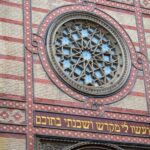
Budapest has stories in every corner. This 2-hour, small-group walk mixes street art, Jewish memorials, and major landmarks without turning the day into a marathon. You meet at Szent István tér and finish there too, so it’s easy to plug into the rest of your sightseeing.
I really like that the stops are mostly ticket-free, so the money goes toward a guided, human explanation instead of entrance fees. I also like the variety: murals and Szimpla Kert on one side, then the Jewish Quarter and Szakszervezetek Háza on the other. The one drawback to keep in mind is that if your time slot gets changed, the route can shift too, so confirm what you’ll actually cover—especially if you’re focused on one specific neighborhood.
In This Review
- Key points worth your time
- Getting your bearings: start at Szent István tér
- District VII murals: an open-air gallery with a lesson built in
- Szimpla Kert: how a worn-out building became a cultural magnet
- The Jewish Quarter: memorial statues that ask for real attention
- Szakszervezetek Háza: trade-union architecture from the 1970s
- Szent Istvan Bazilika: your guided finish near a major landmark
- What makes the route feel worth $36
- The one thing to plan around: route changes if your time shifts
- Who this tour fits best (and who might want a different option)
- A smooth day plan: how to get the most from each stop
- Should you book this Budapest walking tour?
Key points worth your time

- Small group pace (max 15) keeps questions possible and the walk from feeling rushed.
- District VII street murals turn a neighborhood street into an open-air gallery you can interpret as you go.
- Szimpla Kert’s backstory (from a dilapidated building to an arts-and-nightlife hangout) adds context beyond the photos.
- Jewish Quarter memorial statues give you a focused moment to reflect and learn what they commemorate.
- Szakszervezetek Háza offers a clear look at 1970s trade-union-era architecture in central Budapest.
- A couple surprise stops mean you get extra value for staying alert and walking with the group.
Getting your bearings: start at Szent István tér
This tour is built for people who want structure but not a full-day commitment. You start at Szent István tér 1 (1051) and the walk ends back at the same place, which makes it simple to hop back onto public transit or meet up later. It’s also near public transportation, so you won’t feel stuck if your timing is a little off.
Price is $36 per person for about 2 hours with a professional guide, offered in English. There’s a mobile ticket, and confirmation is sent at booking. For most visitors, it’s an easy “walking with stops” format, not a hike.
The best part for your planning brain: your time is used on short segments at multiple meaningful sites, rather than long stretches of guessing what to look at. And since the stops are listed as ticket-free, you’re paying mainly for the guide’s commentary and the way the route connects the dots.
You can also read our reviews of more walking tours in Budapest



District VII murals: an open-air gallery with a lesson built in
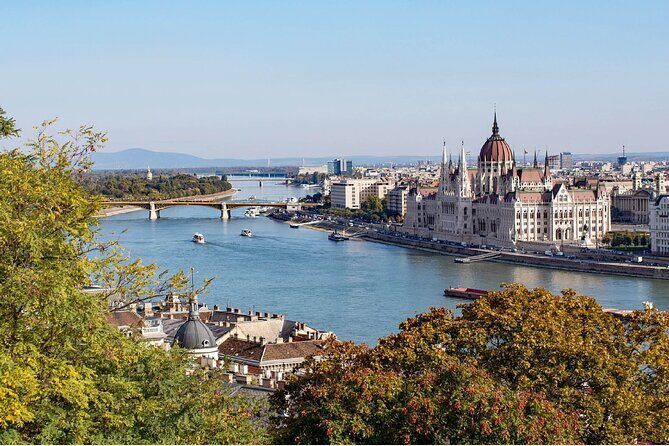
District VII is where the street-level Budapest feeling really comes through. You’ll spend about 20 minutes on murals connected to Budapest’s Street Art Project, which means you’re not just seeing art—you’re learning why this kind of public work shows up where it does.
In practice, this stop is short, so treat it like a “look first, then listen” moment. Pause at a few murals and notice how the artwork changes the street mood: it can make an area feel more human, more talkable, and more layered than what you’d get from a quick photo pass.
A smart approach is to keep your eyes moving even when you’re looking at one mural. The guide’s job is to point out details you might otherwise miss, like how the project concept transforms a neighborhood into a visible gallery. If you’re the type who likes to understand what you’re photographing, this first stop sets you up well for the rest of the walk.
Szimpla Kert: how a worn-out building became a cultural magnet
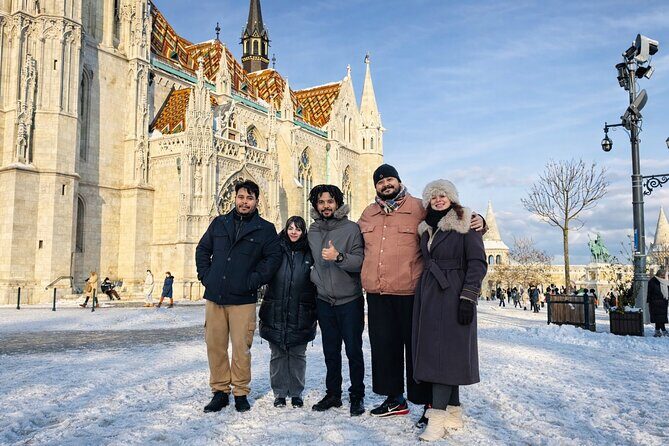
Next up is Szimpla Kert, with another 20 minutes on the clock. This is the kind of place where tourists think it’s just a cool ruin bar, but the backstory makes it more interesting.
According to the tour details, Szimpla Kert started in a dilapidated building and then became a hub filled with eclectic furniture, art, and live events. That’s a big difference in how you experience the space. Instead of treating it like a themed stop, you start seeing it as an example of Budapest reusing what’s already there and turning it into something creative.
For your own visit mindset: if there’s any event activity during your time window, keep it low-key. You can admire the scene without trying to “out-shoot” everyone else. And if you’re curious, it’s worth noticing how casual the art and objects feel—this place is designed for wandering and lingering, even in a short guided stop.
The Jewish Quarter: memorial statues that ask for real attention

You’ll spend about 30 minutes in Budapest’s Jewish Quarter, centered on memorial statues. The tour frames these as honorific markers for the Jewish community’s history and as commemorations for the people lost during the Holocaust.
This is one of the stops where your tone matters. Don’t rush. Don’t treat it like background scenery while you scroll. Even without reading every element closely, you can show respect by slowing down, listening to what the guide explains, and giving yourself a quiet minute or two to absorb what’s in front of you.
I like that this stop is allotted more time than the “quick hit” locations. It signals that the walk isn’t only about what looks good; it also includes what needs to be understood. If you’re visiting Budapest for the first time, this is also where the city’s story becomes heavier—and more memorable—because the meaning is specific.
Practical tip: keep your phone dim and your attention up. If you want photos, take them thoughtfully, but let the learning come first.
Szakszervezetek Háza: trade-union architecture from the 1970s
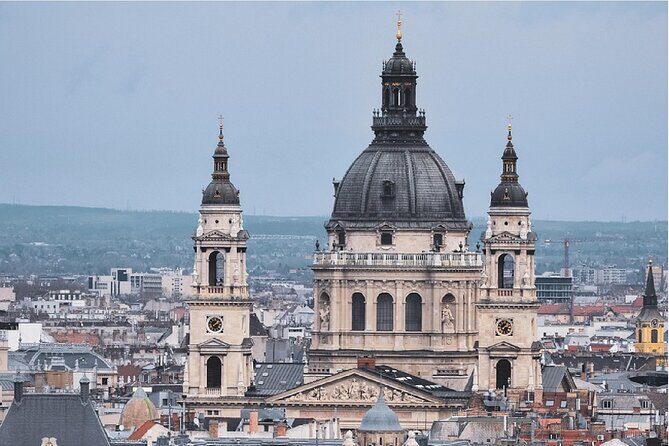
Another strong stop is Szakszervezetek Háza, scheduled for 30 minutes. This building is described as an iconic structure in central Budapest, built in the 1970s and originally serving as a hub for trade unions in Hungary.
Even if you’re not an architecture person, this is valuable because it connects a recognizable building form to a real social function. You’re not just looking at concrete and lines; you’re learning what that space was meant to do and who it was meant to serve.
What to do during your time here: stand back enough to take in the whole presence, then walk a little to see how the building feels from different angles. Guides usually point out elements that fit the era’s style and purpose, and you’ll likely get a clearer sense of how political and economic life shaped the physical city.
This stop also balances the emotional weight of the Jewish Quarter. You get reflection there, then you shift into understanding how another part of history left visible marks on Budapest.






Szent Istvan Bazilika: your guided finish near a major landmark

You’ll spend about 20 minutes at Szent István Bazilika. The tour description doesn’t promise a long sit-down or deep interior experience—so I’d plan it as an exterior-and-area stop where you get orientation, key sightlines, and a moment to photograph and reset your legs.
One nice twist: the walk includes a few more stops along the way, but those are kept as surprises so the guide can tailor the flow. That means you should stay switched on even when you think you already know the route. If you like learning as you walk, those surprise moments can be the difference between a generic landmark checklist and a real story-driven tour.
If you’re the type who hates surprises, it still works because the big anchors are clearly included. You just might pick up extra context as you go.
What makes the route feel worth $36
At $36 for about two hours, this tour can feel like a fair deal because so much of the experience is built on commentary and connection. The fact that each of the major planned stops is marked as ticket free (no paid admissions listed for them) is key. You’re paying for a guided thread through the city, not for a stack of entry fees.
The pace also matters. With a duration around 2 hours and a maximum of 15 travelers, you won’t feel like you’re competing for the guide’s attention in a crowd. Small-group walks are great when you want to ask quick questions, confirm what you’re looking at, or get a simple explanation that makes a site click.
Also, this is a route that works for different interests:
- If you love street art, District VII and the mural stop give you the first taste.
- If you’re more into nightlife culture, Szimpla Kert adds modern texture.
- If you’re there for history and memory, the Jewish Quarter segment is the emotional core.
- If you want social-history architecture, Szakszervezetek Háza is the pivot.
That mix is why the value holds up even when the time is short. You’re not repeating the same “look, photo, move on” rhythm all day.
The one thing to plan around: route changes if your time shifts
One real caution comes from an account where the tour time changed and the actual neighborhood focus changed too. The guide in that case was praised for quality (a guide named Janet was described as awesome), but the bigger issue was communication and the swap of coverage when the schedule shifted.
So here’s the practical move: if Budapest is tight on your days, and you care especially about the Jewish Quarter stop, try to choose a time slot you’re confident you can keep. And if anything changes, ask what will be covered before you commit your schedule elsewhere.
That doesn’t mean the tour is unreliable. It just means you should protect your plan, because a short walk has limited time. If a substitute route happens, you may not get every planned neighborhood in the same way.
Who this tour fits best (and who might want a different option)
This is a great choice if you’re:
- Visiting Budapest for the first time and want a fast orientation through meaningful parts of the city
- Interested in street art and modern Budapest culture, not just monuments
- Comfortable with a tour that mixes lighter stops (like Szimpla Kert) with heavier ones (like memorial statues)
- Looking for a guide-led walk you can finish and still have time for independent exploring
It also helps that the tour says most travelers can participate and that service animals are allowed. If you have mobility limits, you’ll still want to be ready for walking between stops, but the structure is short and broken into manageable chunks.
You might consider a different plan if you:
- Need guaranteed coverage of every specific neighborhood regardless of timing changes
- Prefer long, slow museum-style time at a single site rather than multiple short stops
- Want an all-day tour where you can go inside places for extended periods (this one is designed as a focused 2-hour walk)
A smooth day plan: how to get the most from each stop
Because this tour is timed in short segments, your biggest win is your attitude toward pacing. Keep your shoes comfortable, because you’re not just standing still at five points—you’re walking between them and then regrouping.
I also recommend this mental checklist:
- At each stop, pick one thing to remember after the guide finishes speaking.
- Save your biggest photo time for the end of each segment, not at the beginning. That way you hear the context before you shoot.
- For memorial-focused moments, slow down and let the explanation lead. Photos can wait.
If you’re the type who likes to extend the experience after the tour, your next step is usually easy: pick one of the zones you liked most and spend extra time walking on your own. A guided route gives you the map of what matters; self-walking gives you the freedom to linger.
Should you book this Budapest walking tour?
I’d book it if you want an efficient, human-guided walk that mixes street art, culture, memory, and a couple major landmarks in just two hours. The $36 price makes sense for what you’re getting, especially because the core stops are listed as ticket-free, meaning the guide’s explanation is the main value you pay for.
Just do two things before you go: pick a time you can keep, and stay flexible in case your route coverage changes with scheduling. If you go in with that mindset, you’ll come away with a clearer sense of Budapest than you’d get from a checklist of monuments alone.