REVIEW · BUDAPEST
Capital Budapest – Half Day Private Tour (4hr)
Book on Viator →Operated by Fungarian · Bookable on Viator
Budapest hits fast when you travel with a plan. This private 4-hour route stitches together Danube icons, Castle District viewpoints, and big civic landmarks, with smart transit choices like Metro Line M1. You’ll also get a calm finish at Kamara Café, which is a nice way to turn sightseeing into something that feels more like a day out.
I especially like two things. First, you don’t just stare at monuments; you get context at street level, from St Gellért Square down to local crossings like Clark Square and Széll Kálmán tér. Second, the tour includes practical extras: a public transport pass, a city map, and a small notebook with pen, plus one hot or cold beverage.
One consideration: several major sights along the way are not included for admission. Fisherman’s Bastion, Matthias Church, the Parliament Building, St. Stephen’s Basilica, and the Great Synagogue have an admission charge, so you should budget a little extra if you want to go inside.
In This Review
- Key things to know before you go
- How the tour works in 4 hours (and why that pace helps)
- Metro Line M1: the practical ride that also feels historic
- Liberty Bridge to St Gellért Square: Budapest’s river-city connection
- Clark Square and the Castle District “photo corridor”
- Fisherman’s Bastion and Matthias Church: views first, then meaning
- Bécsi kapu area and Disz tér: historic texture without the wait
- Széll Kálmán tér to Heroes’ Square: switching from views to scale
- Parliament Building and St Stephen’s Basilica: civic grandeur with time to breathe
- Deák Ferenc tér and the Great Synagogue area: Budapest after the postcards
- Kamara Café terrace: the smart way to end a busy half day
- Cost and value: is $489.24 per group fair?
- Who this private tour fits best (and who should skip it)
- Should you book this private Budapest half-day tour?
Key things to know before you go
- Private pickup on your terms: meet at your hotel or a central point you agree on, then finish near Astoria (Károly körút).
- Metro Line M1 is part of the story: Budapest’s oldest underground line, also one of the oldest in Europe—an easy way to move without fighting traffic.
- Castle District viewpoints get real focus: Fisherman’s Bastion and the Matthias Church area are built for photos and short pauses.
- You’ll balance big landmarks with real-city squares: Heroes’ Square and Parliament sit alongside everyday places like Deák Ferenc tér and Erzsébetváros.
- Time is tight, by design: most stops run about 10–15 minutes, so it’s best for first-time orientation and not a slow museum day.
- Some admissions are separate: the itinerary mixes free segments and paid entries, so plan ahead if interiors matter to you.
How the tour works in 4 hours (and why that pace helps)
This is a true half-day private tour, about 4 hours total. You start in the downtown / Jewish Quarter area (Dohány u. 4, 1074) and you can be picked up from your hotel anywhere in Budapest, or from a central meeting point. That flexibility matters: it saves time, and it keeps the day from feeling like logistics.
The route is built around walking plus public transit. You’ll spend time at major sights, but the goal isn’t to “check boxes.” It’s to help you get your bearings fast—across the river, up into the Castle District, and then back out to Parliament and the Basilica zone.
Because each stop is fairly short (most are around 10–15 minutes, with a longer café break later), this works best when you want highlights and context in one go. If you’re hoping to do deep interiors or linger for hours in one museum, you’ll likely want to pair this with a longer follow-up day.
You can also read our reviews of more private tours in Budapest



Metro Line M1: the practical ride that also feels historic
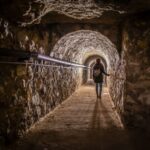
A standout part of this tour is how movement is handled. Your transportation includes a public transport pass, and you use Metro Line M1 (Millennium Underground Railway) during the day. It’s the oldest line of the Budapest Metro and the first underground on the European mainland, and it ranks among the world’s oldest underground systems.
Why I like this approach: you’re not burning time in traffic, and you’re also seeing Budapest’s layers of time. The city has a way of feeling “old” even when you’re in modern streets, and the metro helps connect the dots quickly.
In practical terms, M1 also makes the schedule make sense. You can cover big distances between Buda and Pest without turning your half-day into a long commute. For anyone short on time—maybe you’re here for two or three days—this is the kind of choice that actually improves your experience.
Liberty Bridge to St Gellért Square: Budapest’s river-city connection
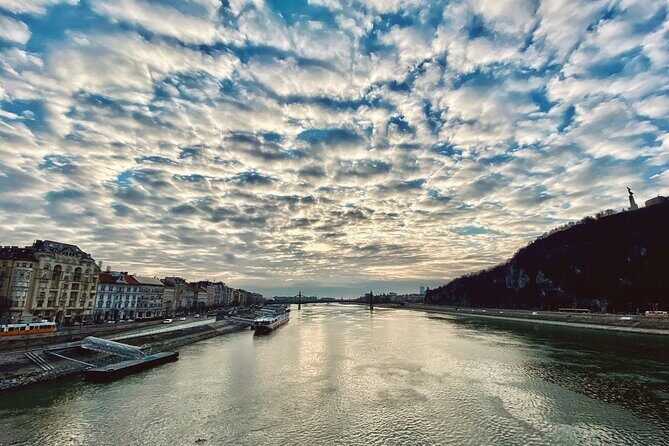
The day begins with a classic, easy orientation: Liberty Bridge (Szabadság híd). It’s the third southernmost public road bridge in Budapest, linking Buda and Pest across the Danube. It also has an earlier name, the Franz Joseph Bridge, which is the kind of detail that makes the bridge feel less like a postcard and more like a piece of city history.
From there, you head toward St Gellért Square on the Buda side. The square is named for Bishop St Gellért, known as the Martyr for Hungarian Christendom. Even if you don’t plan to spend long inside any site, squaring the streets and names like this gives you a better sense of what you’re actually looking at.
Expect walking pauses and photo moments rather than long museum-style stops. The first part of the tour is designed to set mood: river views, grand architecture lines, and a smooth route uphill toward the Castle District.
Clark Square and the Castle District “photo corridor”
Next comes Clark Square, one of those places you’ll see on foot and from windows—because it’s where several major routes converge. It’s also closely tied to major Castle connections, including the chain link between downtown energy and Castle Hill access routes like the tunnel beneath Castle Hill and the funicular up to Szt. György Square.
That’s exactly why I think Clark Square works here: it’s not only scenic. It’s a junction. Your guide can point out how Budapest’s geography is shaped by movement—who goes up, who goes down, and why the Castle District feels like its own world while still staying connected.
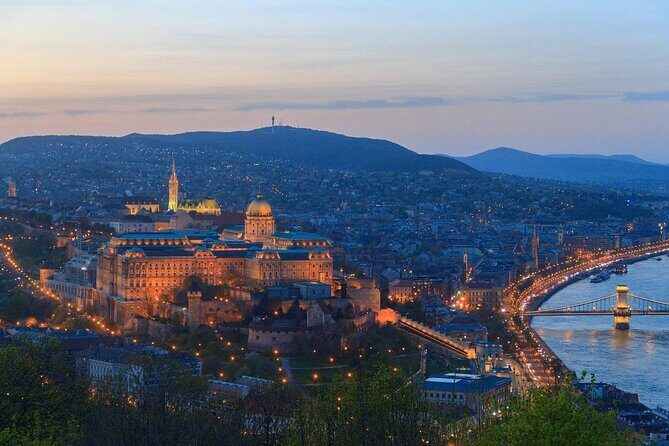
From Clark Square, you’ll move into the Buda Castle approach area, winding up toward viewpoints near Fisherman’s Bastion. The tour specifically calls out the road that leads up to Buda Castle, passing under Fisherman’s Bastion toward the Royal Palace—an excellent setup for photos. In a short day like this, I’d rather you get the good angles than spend your time searching for them.
Fisherman’s Bastion and Matthias Church: views first, then meaning
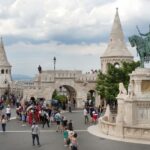
Your Castle District highlight is Fisherman’s Bastion (Halászbástya). This is one of Budapest’s best-known monuments, built near Buda Castle with Neo-Romanesque lookout terraces. The reason people come is straightforward: the panorama is special, and you can see Budapest spreading out with the river cutting through.
You also get symbolic detail: the seven high-pitched stone towers are meant to represent the seven chieftains of the Hungarians who founded Hungary in 895. That matters because it transforms the experience from pretty walls to a clear explanation of what the structure is trying to communicate.
Right after that, you’ll visit the area in front of Matthias Church (Mátyás-templom). The church is a Roman Catholic landmark located near Fisherman’s Bastion at the heart of the Castle District. Tradition places an early Romanesque origin in 1015, though the tour information also notes there’s no archaeological evidence for remains from that date.
Time here is usually short—around 10 minutes—so treat it like a focused orientation stop. If you care about deeper interior details, you can come back later on your own. For this tour’s goal—understand the Castle District fast—this is the right balance.






Bécsi kapu area and Disz tér: historic texture without the wait
After Matthias Church, the route passes through areas around the Vienna Gate (Bécsi kapu). The name matters here: it was the port connecting the Castle with the highway to Vienna. Even if you don’t memorize the wording, you’ll feel the logic. This is the Castle District’s “in-between space,” where streets and routes explain how the area worked over time.
Then you’ll reach Dísz tér, a central square in the Castle District. It’s described as mainly one- and two-storey old residential buildings, with medieval Gothic houses that once stood here. The square runs north-south in the central part of the district, and it sits near St George’s Square by the palace area.
What I like about having these stops in the half-day: it keeps you from only seeing the big-ticket icons. Dísz tér gives you historic atmosphere in a quick hit, and it’s the kind of place where your guide can point out how the city’s layers sit right next to each other.
If you want a “feel” for Budapest beyond photos, this is one of the best ways to do it without adding hours.
Széll Kálmán tér to Heroes’ Square: switching from views to scale
Once you come back down from the Castle District, the tour uses a major transport node: Széll Kálmán tér. It’s one of Budapest’s busiest interchange squares, and the tour notes it can be considered the centre of Buda due to its traffic flow and surrounding stores, including the Mammut shopping mall.
Why this is useful on a half-day itinerary: it’s efficient. You’re not only sightseeing; you’re moving in a way that shows the city’s real rhythm. And since you have transit support, you can focus on places rather than routes.
From there you reach Heroes’ Square, one of Budapest’s big national plazas. It’s known for its statue complex with the Seven chieftains of the Magyars and other Hungarian national leaders, plus the Memorial Stone of Heroes (often mistakenly referred to as the Tomb of the Unknown Soldier). That correction alone is worth hearing, because it helps you understand what you’re looking at rather than just photographing it.
Heroes’ Square is given about 15 minutes. That’s long enough to walk the edges, absorb the scale, and get orientated for the next set of landmarks across the city.
Parliament Building and St Stephen’s Basilica: civic grandeur with time to breathe
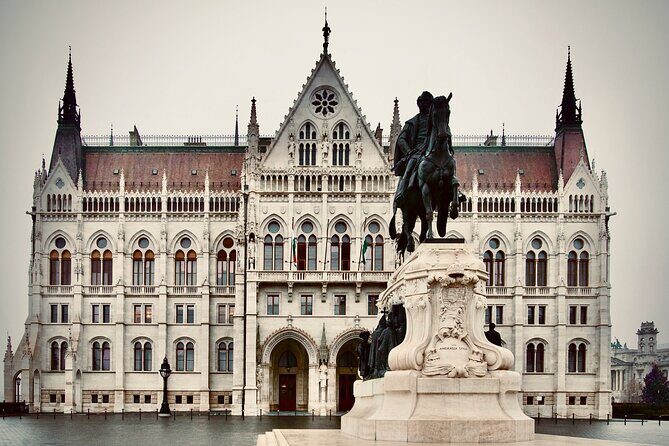
The tour continues to the Hungarian Parliament Building on Kossuth Square in the Pest side, on the eastern bank of the Danube. Designed by Imre Steindl in a neo-Gothic style and opened in 1902, it’s also described as the largest building in Hungary since completion. That’s the kind of fact that makes the sheer size of the structure click.
The Parliament stop runs about 15 minutes. Admission isn’t included here, so think of this as your chance to see the building clearly from the outside and understand its role as the seat of Hungary’s National Assembly. If you want the inside tour later, you’ll be able to plan it with more confidence.
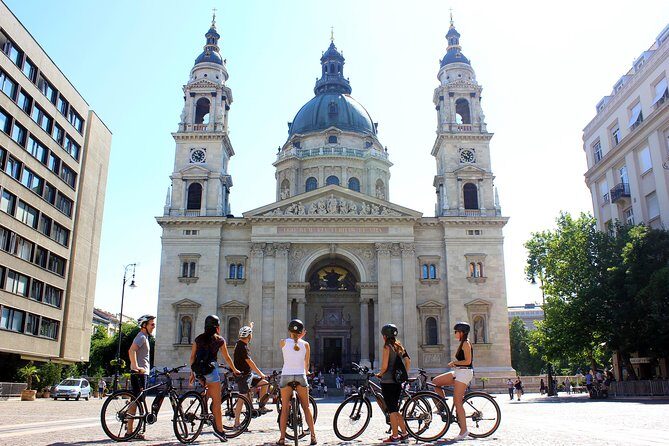
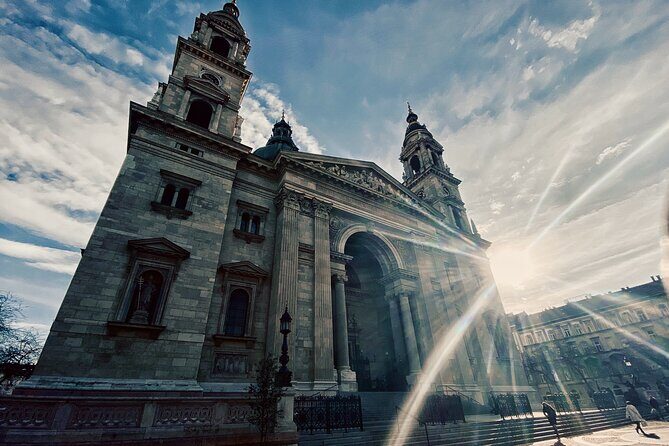
After that you move to St. Stephen’s Basilica (Szent Istvan Bazilika). It’s a Roman Catholic basilica named for Stephen, the first King of Hungary, and the tour information notes a reliquary tied to his supposed right hand. You’ll also hear that the basilica was once the sixth largest church building in Hungary before 1920.
Again, about 15 minutes here is perfect for exterior orientation and a quick sense of scale, especially because the day is already full. If you prefer longer cathedral time, treat this stop as a preview for your own later visit.
Deák Ferenc tér and the Great Synagogue area: Budapest after the postcards
The tour makes room for a more lived-in Budapest stop near Deák Ferenc tér. The info highlights a nearby park that’s popular for young people, where grassy areas are used and the square can stay active until midnight hours. For a half-day tour, that’s a good reminder: you’re not only seeing architecture, you’re seeing daily life.
Next you head to the heart of the Jewish Quarter for the Great / Central Synagogue (Nagy Zsinagoga), also known as the Dohány Street Synagogue. It’s described as the largest synagogue in Europe, seating 3,000 people, and it’s a centre of Neolog Judaism. This stop is about 15 minutes, and admission is not included—so you’ll get a strong exterior and contextual moment, and you can decide later if you want to go inside.
If the day is your first taste of Budapest’s neighborhoods beyond the core monuments, this is where you’ll feel a shift. The streets around Erzsébetváros have their own energy, and the synagogue area gives you a sense of Budapest’s cultural history that goes beyond kings and bridges.
Kamara Café terrace: the smart way to end a busy half day
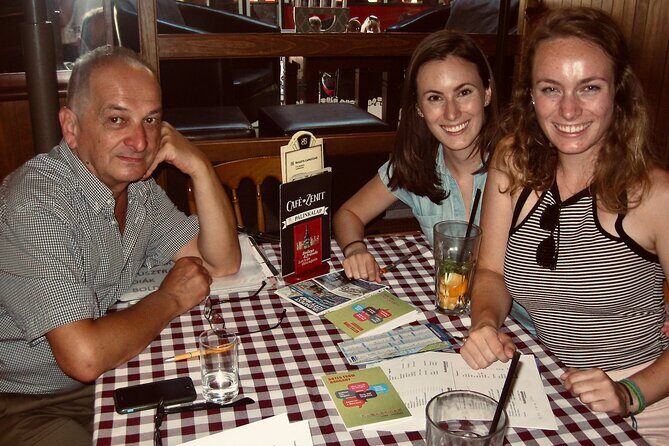
After covering a lot of ground, you finish with a quieter break at Kamara Café. This final stop runs about 30 minutes, and the tour includes one hot or cold beverage. The idea is simple: take a breath, look back at what you’ve seen, and let your notes and map do their job.
There’s also a practical touch here—using the time to practise Hungarian and plan how to get the best out of the rest of your stay. That’s a small thing, but it changes the feel of the trip. Instead of rushing off, you land back in real life.
If you’re the type who likes to organize your next day while everything is still fresh, this café window is very handy. You’ll remember streets better when you can sit still for a moment.
Cost and value: is $489.24 per group fair?
The price is $489.24 per group for up to 4 people, with about 4 hours on the clock. Here’s how I’d judge value.
- If you can fill the group (up to 4), it can work out closer to roughly $122 per person. That’s often reasonable for a private guide who handles pickup flexibility, transit support, and timed stops across multiple major areas.
- If it’s just 1 or 2 of you, it’s more expensive per person, because it’s still priced per group. In that case, you’re paying for the private experience and the efficiency of having someone map out a short, high-impact route.
The inclusions matter: you get a public transport pass, a city map, and a notebook with pen, plus one drink at Kamara Café. Admissions are mixed (some free, several paid), so part of the real cost is what you choose to enter.
For me, the value sweet spot is first-time visitors who want orientation without chaos. It’s also a good fit if you want flexibility with pickup and a guide who can keep the day smooth.
Who this private tour fits best (and who should skip it)
This works best for you if:
- You’re in Budapest for a short stay and want a first-pass overview.
- You like walking and photos but also want context so the city doesn’t feel like a list.
- You prefer the confidence of a private guide plus transit help.
- You want to cover both sides of the Danube in one go.
It may be less ideal if:
- You want to spend long hours inside multiple paid attractions. This schedule is built around quick stops and exterior orientation.
- You’re planning an ultra-slow pace day with no transit. The route is designed to be efficient.
One more practical note: the tour requires good weather. On a bad-weather day, you might be offered a different date or a full refund, so it’s smart to have some flexibility in your Budapest plan.
Should you book this private Budapest half-day tour?
If you want a smart, time-efficient way to see the big essentials—Liberty Bridge, Castle District viewpoints, Heroes’ Square, Parliament, St Stephen’s Basilica, and the Great Synagogue—this is a strong booking choice. The private format plus pickup flexibility helps a lot, and the included transport pass makes it easier to trust the schedule.
I’d book it when you’re balancing first-time sightseeing with limited time, especially if you like learning names, stories, and symbols that make the architecture feel purposeful. Just remember the key tradeoff: several major interiors cost extra, so decide in advance which ones are must-sees for you.