REVIEW · BUDAPEST
Communist Budapest Walking Tour
Book on Viator →Operated by Insight Cities · Bookable on Viator
History feels close here. This 3-hour Communist-era Budapest walk gives context fast, using real streets and landmarks tied to the 1956 uprising and the Cold War. I like the small-group size, which keeps questions flowing instead of getting swallowed by a crowd.
I also like the mix of big-picture politics and street-level detail, plus the guide’s practical help with getting around by tram and metro if you don’t already have a visitor pass. One possible drawback: this is not a sightseeing-only tour. You’ll spend time on heavy subjects, so it’s best if you’re okay with serious history over scenic stops.
In This Review
- Key Highlights I’d Put on Your Radar
- Why This Communist Budapest Walk Hits Hard (In a Good Way)
- From Parliament to Kossuth Square: 1956 Meets the Cold War
- House of Terror Outside Stop: Powerful, Even Without the Ticket
- People’s Stadium to Puskas Ferenc: Propaganda You Can Still See
- Freedom Square Connections: Soviet Memorials and Reagan’s Presence
- Bem József Square and the 1960s Coffeehouse Moment
- Price and Value: What You’re Really Paying For
- Group Size, Timing, and What to Bring for Comfort
- Who This Tour Is For (and Who Should Skip It)
- Should You Book the Communist Budapest Walking Tour?
- FAQ
- How long is the Communist Budapest walking tour?
- Where does the tour start and end?
- What language is the tour offered in?
- What’s the group size limit?
- Is the House of Terror Museum ticket included?
- Are there admission fees for the other stops?
- Do I need tram and metro tickets?
- Can I cancel for free if my plans change?
Key Highlights I’d Put on Your Radar
- Small-group pacing with a historian, designed to keep the tour conversational
- 1956 revolution landmarks tied directly to what you’re seeing on the street
- Cold War wayfinding around the U.S. Embassy area, Soviet Army monument, and related symbols
- People’s Stadium to Puskas Stadium with socialist realist propaganda statuary still visible
- House of Terror Museum exterior stops the tour at a powerful endpoint without forcing extra ticketing
Why This Communist Budapest Walk Hits Hard (In a Good Way)
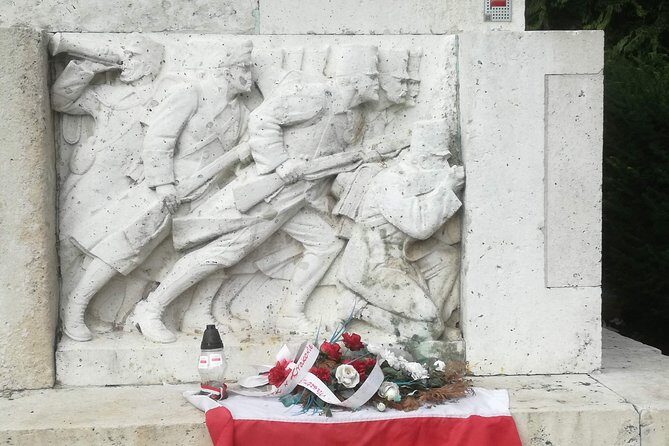
Communism in Budapest isn’t stuck in a textbook. You feel it in the geometry of the squares, the placement of monuments, and the way the city frames power—who gets remembered, who gets questioned, and what gets left in view.
What makes this tour especially useful is how quickly it turns sightseeing into understanding. In about three hours, you connect the 1956 uprising to the Cold War pressure that followed, and you do it by moving through areas that still look “normal” at first glance. That’s the point: regimes don’t only build buildings; they shape daily life and public memory.
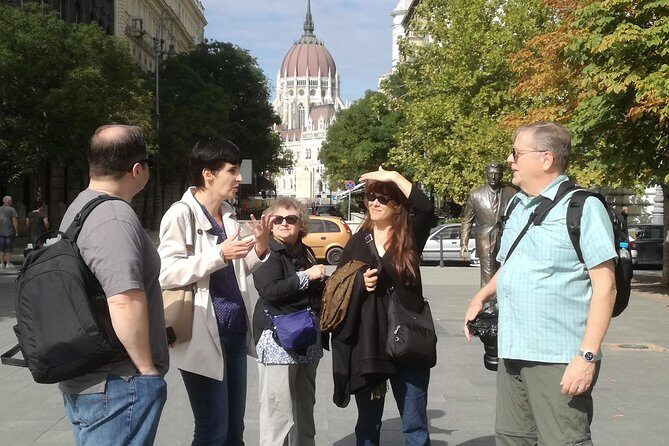
I also appreciate the teaching style. The tour is led by a local historian, and the vibe is more “guided conversation” than a lecture with a stopwatch. If you enjoy asking questions and hearing specifics, you’ll likely get a lot of value. People mention guides like András and Kata, and the common thread is depth plus a willingness to talk.
You can also read our reviews of more walking tours in Budapest

From Parliament to Kossuth Square: 1956 Meets the Cold War
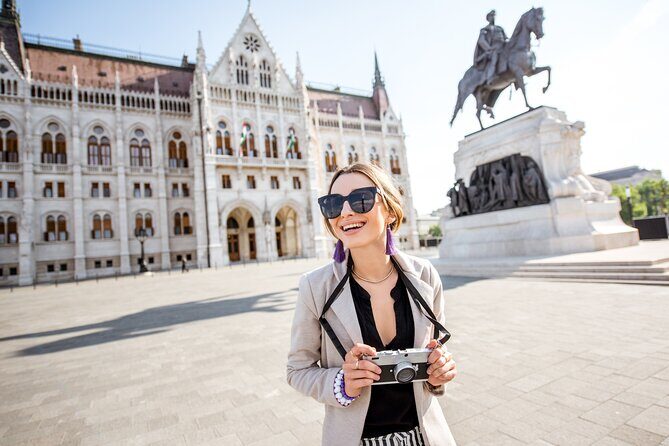
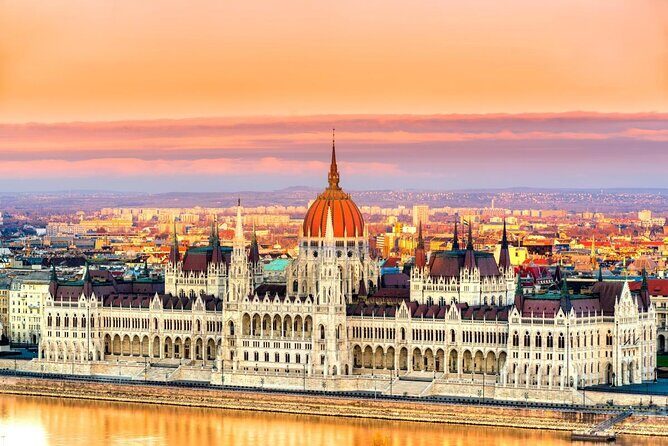
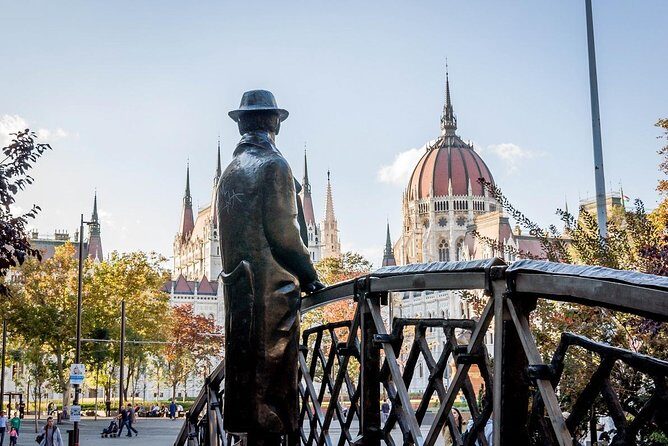
You start near the Hungarian Parliament area and head toward Kossuth Square, where the monuments connected to the 1956 revolution set the tone. This is where the tour does a smart thing: it grounds you in Hungary’s own story first, not just the wider Soviet-bloc narrative. That helps you interpret the later Cold War symbolism without feeling lost.
Then you move on to the Liberty Square side of the city, where the discussion expands to Cold War realities. The route includes a look near the U.S. Embassy, a monument to the Soviet Army, a Ronald Reagan statue, and even an atomic shelter point of discussion.
Why this works for you:
- You’re not just seeing monuments. You’re learning what they were meant to communicate.
- You’re getting cause-and-effect. The tour ties earlier Hungarian resistance to later East–West tension in a way that’s easier to remember than facts read from a screen.
A small practical note: you’ll travel by subway for part of the transfer. That’s a good break from walking and also keeps you from wasting time. It also means your timing feels efficient—three hours can cover a lot here if you’re not fighting the city.
House of Terror Outside Stop: Powerful, Even Without the Ticket
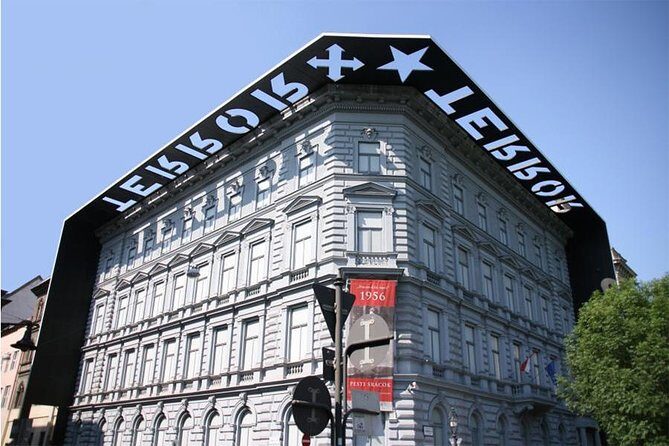
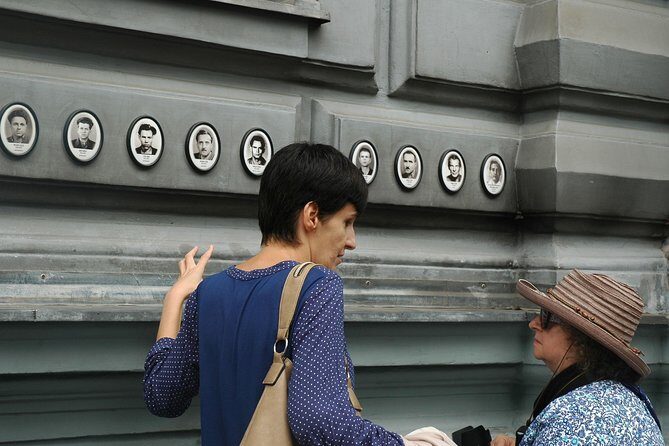
After that, you come to one of Budapest’s most intense historical sites: the House of Terror Museum. The tour focuses on the exterior, in particular the fact that the museum is housed in the former headquarters of the communist secret services.
There’s also a standout visual reference outside: a slab of the Berlin Wall in front of the building. That gives you an immediate “Cold War at full volume” feeling without requiring you to sit through extra content on the day.
Important for your expectations: the museum exhibit inside is not included in the tour. So you’ll get the outside context as part of this guided walk, and if you want more, you can buy a ticket and go deeper on your own.
Why I think that’s a good setup:
- You don’t get rushed through an indoor exhibit.
- You finish the walking portion with a strong endpoint, then decide whether you want to spend additional time absorbing the details at your own pace.
People’s Stadium to Puskas Ferenc: Propaganda You Can Still See
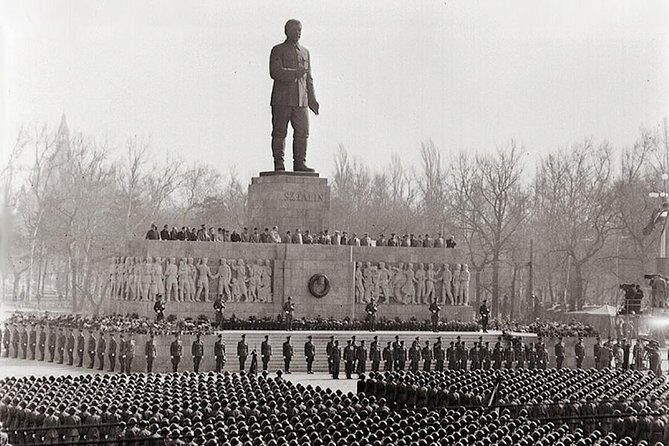
Next, you head toward the area of the former People’s Stadium, now Puskás Soccer Stadium. This stop is easy to gloss over if you think the only “communist signals” are museums or big monuments. But the tour points you toward something more telling: socialist realist statues that remain in place.
The value here is the contrast. A sports stadium can look like just another city venue—until you notice how the art and statuary were designed to praise the system, reinforce ideology, and create public legitimacy. On this tour, you’re trained to notice those signals instead of walking past them like background decoration.
If you’re the type who likes understanding how art serves politics, this portion can land really well. If not, it still works because the guide makes the symbolism readable and connects it back to the larger Cold War story you’ve been building across earlier stops.
Freedom Square Connections: Soviet Memorials and Reagan’s Presence
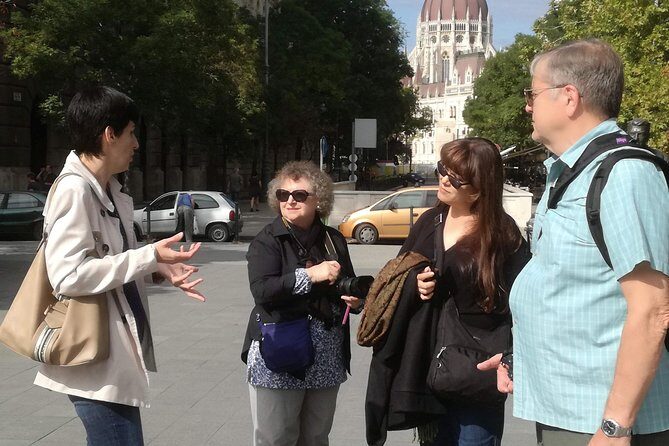
One of the tour’s strongest themes is how Budapest remembers global power plays. On the Freedom Square area, you’ll see the Soviet War Memorial and connect it to the broader discussions around East–West tension—especially as the route passes by symbols tied to the United States.
You also meet Ronald Reagan’s statue during the tour, framed through the Hungarian perspective of obligation to him for efforts connected to bringing down the Iron Curtain. Even if you already know the broad Cold War storyline, this helps you understand why a Hungarian city might visually “translate” it into local public memory.
This is one of those moments where a guide really matters. Without guidance, you might treat these as random statues. With guidance, you can read them like messages—who they were for, what they tried to normalize, and what they tried to overwrite.





Bem József Square and the 1960s Coffeehouse Moment
The tour includes Bem József Square, where the first big demonstration of the 1956 uprising started. That matters, because it stops the history from floating around in theory. You stand in the place where public action ignited—and you get the context to understand why that spot became meaningful.
Then there’s a small detail that I genuinely like: a nearby coffeehouse that’s kept its original interior from the 1960s. This is not just a quirky add-on. It’s a reminder that ideology lived in ordinary routines too—cafés, daily conversations, and the rhythms of city life.
In a tour focused on political history, this kind of human-scale stop helps you breathe. It also helps you remember what you’re learning. People can forget dates. They often remember a place.
Price and Value: What You’re Really Paying For
At $126.50 per person for about three hours, this isn’t the cheapest way to walk Budapest. But it can be good value if you care about understanding what you’re seeing.
Here’s what you’re getting for the money, in plain terms:
- A guided walk with a historian (not just a regular host)
- A small-group experience (kept limited, with a maximum group size stated as up to eight)
- Key stops that are largely free to view (the tour uses outdoor landmarks and monument areas)
- A mobile ticket
- Help with getting around by tram and metro if you don’t have a visitor pass
Where the value shows most: you’re paying to save time and mental energy. Budapest can be wonderfully walkable, but Communist-era sites are also politically charged and easy to misread if you don’t know what to look for. This tour does the interpretation part for you, and you get it while you’re standing in front of the evidence.
If you’re a “read it later” traveler and you don’t like explanations, you might feel the cost is high. If you want context while you’re there, the price starts to make sense quickly.
Group Size, Timing, and What to Bring for Comfort
This tour runs with a morning or afternoon departure, and it’s offered in English. That flexibility helps if you’re trying to fit it into a travel schedule that’s already full.
The experience is also designed for active travelers. Even though there are subway segments and short viewing stops, you’re still walking for most of the three hours. A strong tip from past experiences: wear good walking shoes and bring water, especially on warm days.
One more practical point: the tour is near public transportation, and the guide can help with tram/metro tickets if you need them. That’s handy when you don’t want to spend the first hour of a historical tour figuring out transit.
Also, it’s capped at a maximum group size of eight, which usually keeps your questions from getting lost. If you like one-on-one attention—without paying for a private guide—this size is a sweet spot.
Who This Tour Is For (and Who Should Skip It)
This is ideal if you:
- Want to understand communism and the Cold War through real locations
- Like history that connects to the city you’re walking through
- Enjoy discussion and Q&A with local historians
You might want to skip it if your goal is mostly photo stops and easy sightseeing. The themes are serious, and the tour is built to teach—not to keep things light.
If you’re not sure, use this quick test: if you’re comfortable reading a city’s monuments as political messages, you’ll likely love this. If you want your day to be mostly about scenery and short explanations, you may find it too focused.
Should You Book the Communist Budapest Walking Tour?
Yes—book it if you want context fast and you’re okay with serious historical themes. At this price, you’re paying for a historian-led route that helps you interpret monuments tied to 1956 and the Cold War without getting stuck doing research mid-trip.
I’d especially recommend it if you like your tours to be more than “point and look.” This one teaches you how to read the city: why certain symbols are placed where they are, why specific sites matter, and how Hungarian memory intersects with global power.
If your travel style is strictly sightseeing, consider another Budapest walking option. But if you want real understanding, this tour does the job in three hours.
FAQ
How long is the Communist Budapest walking tour?
It lasts about 3 hours.
Where does the tour start and end?
It starts at Frankel Leó út 2-4, 1027 Hungary and ends outside the House of Terror Museum, Andrássy út 60, 1062 Hungary.
What language is the tour offered in?
The tour is offered in English.
What’s the group size limit?
The tour has a maximum group size of 8 travelers.
Is the House of Terror Museum ticket included?
No. The tour stops outside the House of Terror Museum, and the exhibit inside is not included.
Are there admission fees for the other stops?
The tour includes stops where admissions are listed as free for the outdoor viewing points. Only the House of Terror museum exhibit is listed as not included.
Do I need tram and metro tickets?
If you do not already have a visitor pass, your guide can help you purchase Budapest Tram and Metro tickets.
Can I cancel for free if my plans change?
Yes. You can cancel for a full refund up to 24 hours before the experience start time.
If you want, tell me your travel dates and whether you prefer morning or afternoon, and I’ll help you fit this into a sensible Budapest day route.