REVIEW · BUDAPEST
Downtown Pest Walking Tour
Book on GetYourGuide →Operated by insightcities.com · Bookable on GetYourGuide
Pest tells Hungary’s story in bricks. This Downtown Pest walking tour is built around how the east-bank city became Hungary’s political, financial, and religious hub in the late 1800s. You’ll move through the kind of landmarks that look grand from the outside and make more sense once someone explains the why behind the stone.
I especially like the intense “big picture” storytelling: it connects buildings, institutions, and national identity without getting stuck in dates forever. Second, I like the range of stops, from major state power spots to sites tied to Jewish and Catholic life, all in one smooth city-center route.
One possible drawback: it’s a 3-hour walking experience through central Pest, so if you prefer lots of seated time or smaller clusters of stops, you may find the pace a bit full.
In This Review
- Key things I’d circle on your map
- Pest’s 19th-century power story makes more sense on foot
- Meeting at Szamos Café and lining up your bearings
- Parliament at Kossuth Square: the national statement, inside and out
- The Danube’s Holocaust Memorial: history you can’t ignore
- Freedom Square and the Stock Exchange Palace: where money became architecture
- Cardinal Mindszenty and the long memory of religion in the city
- St. Stephen’s Basilica and Art Nouveau streets: Budapest’s famous face
- A Jewish landmark stop you should know
- Andrassy Boulevard: the noble esplanade, above and under your feet
- Heroes Square: the 1896 millennium moment
- Price and value: what $123 buys you in real terms
- Guides make the difference: what the best reviews highlight
- Who should book this Downtown Pest tour
- Should you book this Downtown Pest Walking Tour?
- FAQ
- How long is the Downtown Pest walking tour?
- Where does the tour start?
- What sights will I see?
- Is the tour in English?
- Is the group size private or small-group?
- Can I cancel, and can I pay later?
Key things I’d circle on your map
- Start at Kossuth Square for a fast sense of where Hungarian power is concentrated
- Parliament + the Danube Holocaust Memorial in the same area, with context that matters
- Freedom Square and the Stock Exchange Palace for the financial story behind the architecture
- St. Stephen’s Basilica and nearby landmarks that sit at the intersection of faith and city growth
- Art Nouveau street scenes plus a planned walk along Andrassy Boulevard
- Heroes Square ending tied to the 1896 Hungarian millennium celebration
Pest’s 19th-century power story makes more sense on foot
Downtown Pest is where Budapest’s second half of the 1800s really shows off. In that period, Pest grew into an opulent political and financial center, and it also became a major religious stage for Hungary’s different communities. The tour’s core idea is simple: when you walk these blocks in sequence, you can feel how “new nation” ambition translated into grand public architecture.
You don’t just get landmark names. You get an explanation of why those institutions mattered and how they shaped the city. That is the difference between seeing buildings and understanding the city’s logic.
You can also read our reviews of more walking tours in Budapest
Meeting at Szamos Café and lining up your bearings
The meeting point is Szamos Cafe at Kossuth Lajos tér 10. From there, the tour quickly orients you toward the heart of downtown Pest, beginning in front of Parliament at Kossuth Square.
I like this kind of start because it reduces the mental load. You’re not wandering first, guessing which direction matters. You’re dropped into the route’s “spine,” then everything else clicks into place: square, monument, religious sites, financial center, grand boulevard, and finally the ceremonial finish.
And yes, you’ll be outdoors and on your feet. Bring comfortable walking shoes and plan for city-center walking.
Parliament at Kossuth Square: the national statement, inside and out
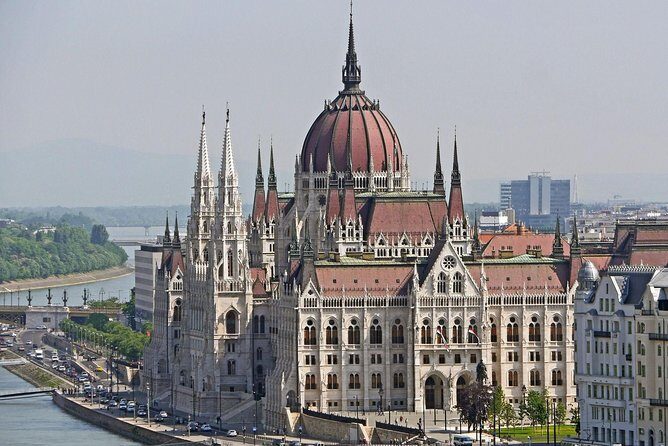
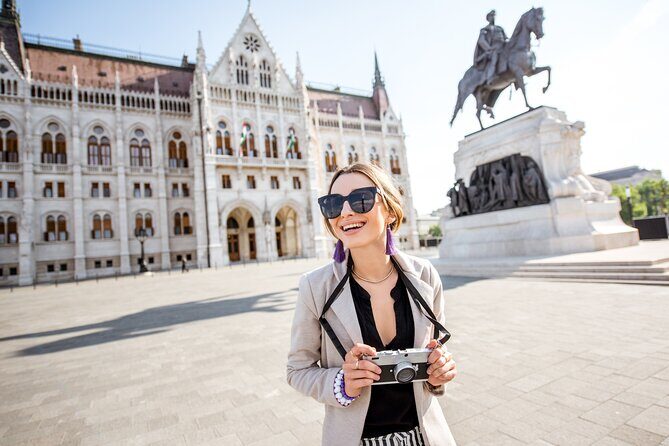
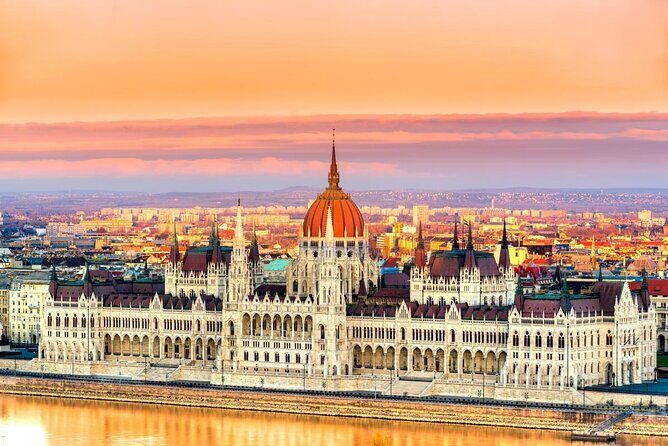
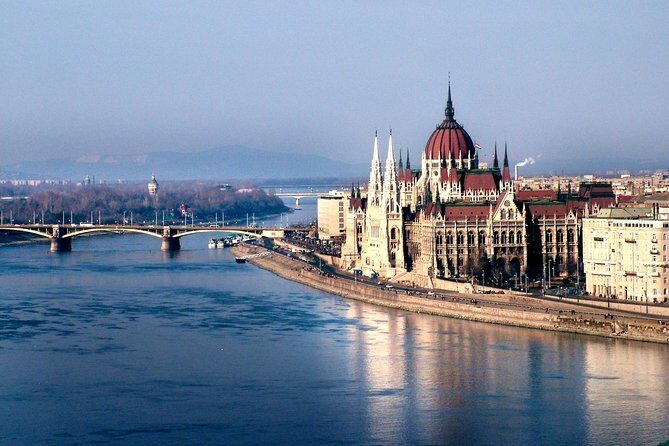
The tour’s first true anchor is Hungarian Parliament at Kossuth Square. At its inauguration in 1896, it was described as the largest and most costly structure ever built in Hungary. That’s the kind of sentence you don’t fully absorb until you see the scale in person.
From the outside, it’s massive and imposing. But what tends to make people lean in is what’s said about the interior: it’s home to works of art that represent nearly every famous Hungarian painter and sculptor of the time. So this isn’t just a government building. It’s a curated image of Hungarian cultural identity.
A practical note for your attention span: this stop can feel like the tour’s main event, so I recommend you take a moment to look wide first, then focus on specific details. That way you don’t feel like you rushed the grandness.
The Danube’s Holocaust Memorial: history you can’t ignore
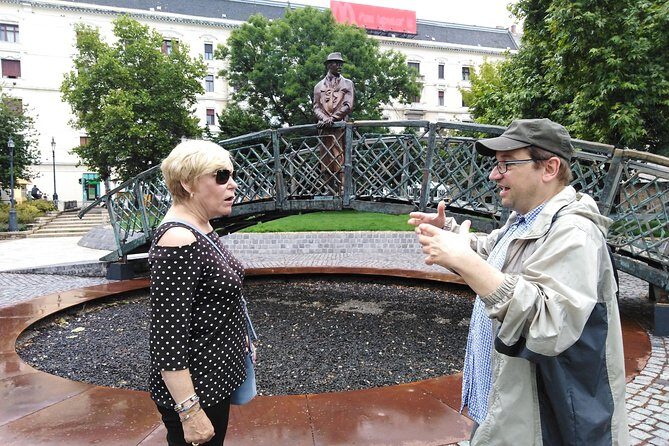
Right behind Parliament, on the banks of the Danube, you visit the Holocaust Monument. The point here is stark and direct: it pays tribute to the many thousands of Jewish citizens of Budapest killed on that same spot in the last months of World War II.
This is one of those stops where a guided explanation changes the experience. Without context, it can read like another memorial in a historic district. With context, it becomes part of the city’s real wartime geography and the human scale behind it.
It’s also a useful contrast to the nearby monumental power imagery. You get to hold two different truths in the same frame: the ambition of a rising nation, and the destructive end of that story for many people.
Freedom Square and the Stock Exchange Palace: where money became architecture
Next up is Freedom Square, originally built as the city’s financial center. Many people consider it Budapest’s most beautiful square, and the tour treats it like more than a pretty photo spot. You learn how the financial engine of Pest shaped its public look.
At the center of the financial story is the Stock Exchange Palace, along with opulent buildings that still house several banks. Even if you’re not a finance person, this stop helps you understand why Pest’s growth wasn’t only about politics. Money built the city’s visible confidence.
This is also where I like the tour’s rhythm. After heavy material near the Danube, Freedom Square gives you a different kind of focus: façades, institutional grandeur, and the way squares work as social and civic stages.





Cardinal Mindszenty and the long memory of religion in the city
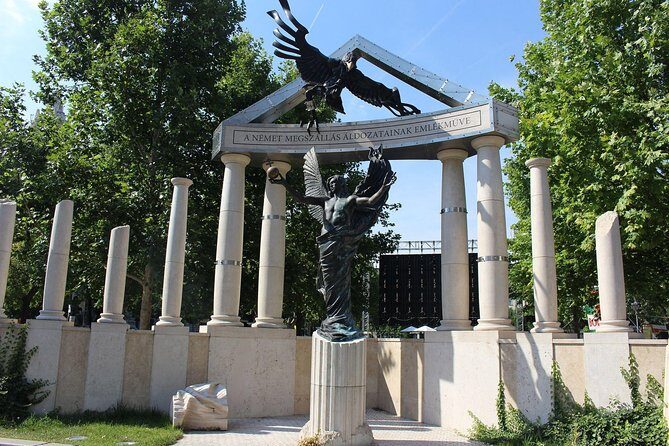
From Freedom Square, the tour includes the statue of Cardinal Mindszenty, head of the Catholic Church in Hungary. The explanation connects the statue to a real human ordeal: his life on the run from the communists and the fact that he lived hidden for 15 years in the U.S. embassy.
This is a good stop if you want history that feels personal, not just structural. It also shows you how downtown Pest carries political memory in public spaces, even when the building is what grabs your eyes first.
St. Stephen’s Basilica and Art Nouveau streets: Budapest’s famous face
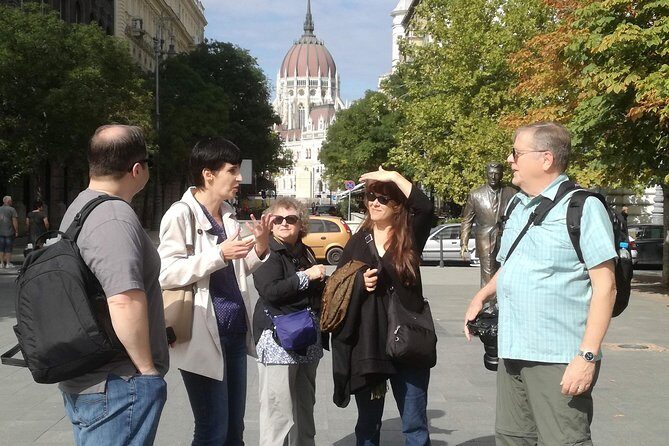
As you continue, you pass by St. Stephen’s Basilica. Along the way, you also see several Art Nouveau buildings for which Budapest is famous. This part of the tour is where the city’s visual style becomes a kind of language.
Art Nouveau in Budapest isn’t just decorative. It’s tied to the period when Pest was projecting a modern, confident national identity. So when you look at the curving lines and ornate façades, the tour helps you see them as cultural ambition, not just pretty street furniture.
A Jewish landmark stop you should know
A bit farther along, you’ll come to the second-largest synagogue in the world. The tour frames it as a monument to the vital role of the city’s Jewish population and its wealthy bourgeois in developing the city.
I like how this balances the Holocaust Memorial earlier in the route. You see both the importance and the tragedy tied to Jewish life in Budapest, without turning it into one-note history.
Andrassy Boulevard: the noble esplanade, above and under your feet
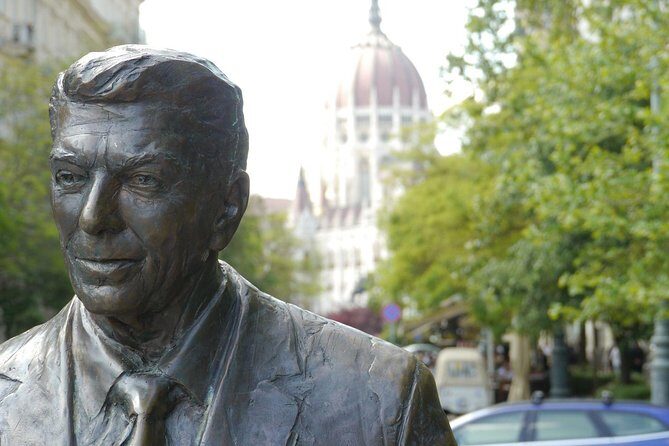
Then comes Andrassy Boulevard, described as an esplanade designed for the country’s nobility. The tour doesn’t treat this as a simple walk to a viewpoint. It positions Andrassy Boulevard as a deliberate social space—where status and design meet.
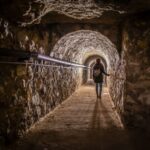
You’ll travel along and under Andrassy Boulevard as part of the route. That underground element matters because it reminds you the city wasn’t only built with showy surfaces. The infrastructure supported everyday movement for a growing capital.
There’s also a quick stop at the Opera House. Even if opera isn’t your thing, it’s worth seeing because it’s one more piece of the “Pest grew into style” puzzle. You’re collecting evidence of how the city wanted to look and feel like a major European capital.
Heroes Square: the 1896 millennium moment
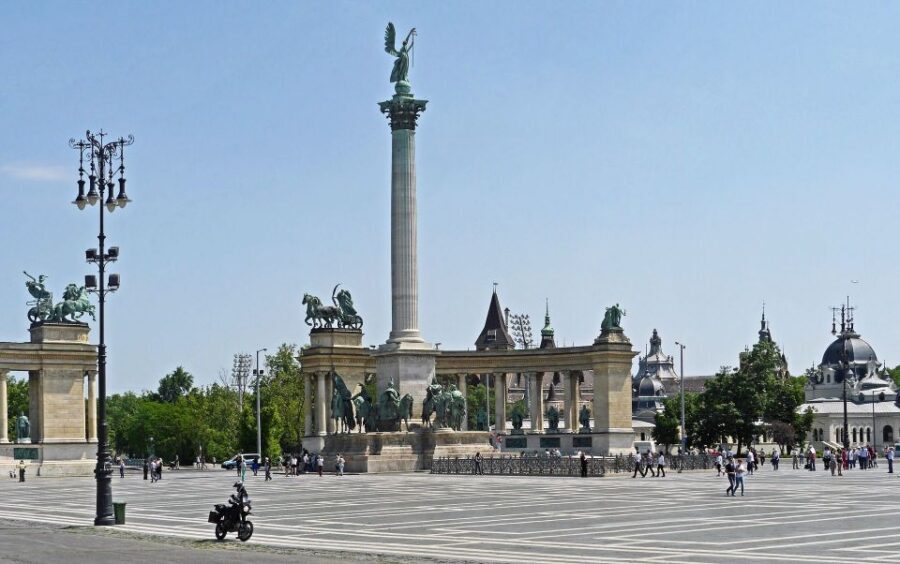
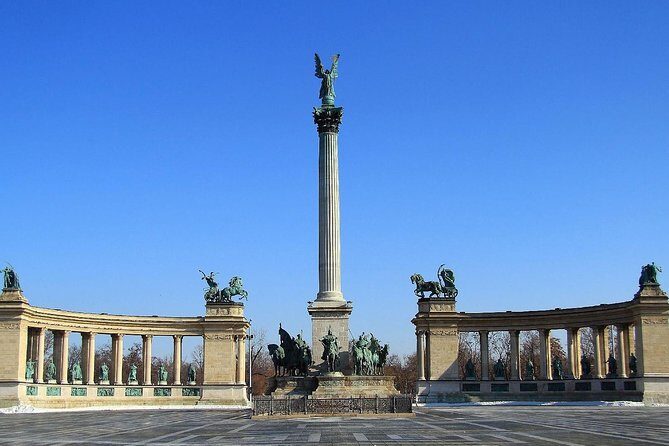
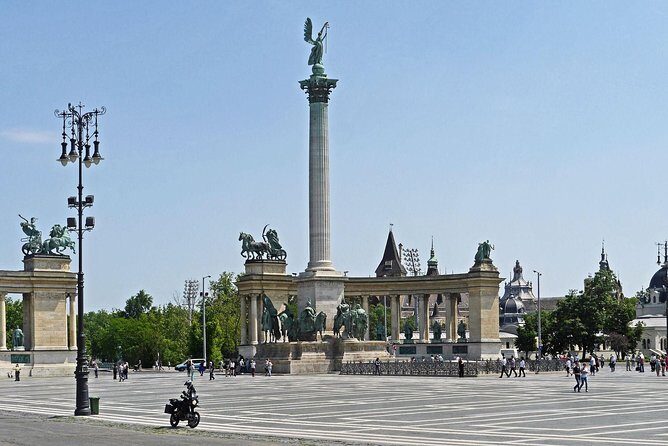
The tour ends at Heroes Square, where Hungarians celebrated the 1,000-year anniversary of the founding of their kingdom in 1896.
If Parliament is the nation’s governance statement, Heroes Square is the nation’s ceremonial statement. It’s about legacy, mythology, and unity—presented in huge, unforgettable scale.
This ending works well for most people because it wraps the route into a single timeframe. Late 1800s energy turns into public celebration. And in the same walk, you’ve also seen the human costs that followed later.
Price and value: what $123 buys you in real terms
At $123 per person for a 3-hour guided walk, this isn’t a budget activity. But the value makes sense if you care about context, not just checklists.
Here’s why it can feel worth it:
- You get a historian guide, which changes how quickly you understand each stop.
- You cover multiple major sites in a tight downtown radius, including landmarks that many people pass without knowing what to notice.
- The route is structured so that themes connect: nation-building, money, faith, and major historical trauma.
It’s the kind of tour that helps you avoid the common problem in big European capitals: walking past big buildings with no clue why they matter. For $123, you’re paying for interpretation, pacing, and a coherent storyline.
That said, if your ideal day is mostly spontaneous wandering and you already feel comfortable reading the city on your own, you might decide it’s more guided time than you need.
Guides make the difference: what the best reviews highlight
The experience clearly leans on the guide’s ability to explain without drowning you in facts. The standout praise centers on guides who were engaging, patient, and easy to talk to, with storytelling that made the hours pass quickly.
Two guide names came up repeatedly: András and Zsofia. In the feedback, both are described as highly knowledgeable with strong storytelling skills, and the experience feels like it stays objective rather than turning into a single political take. That matters, because the tour touches sensitive topics like the Holocaust Memorial and the communist-era story tied to Cardinal Mindszenty.
If you book, I’d treat the tour like a conversation you join. Ask questions. If you’re the type who likes to linger at a detail—good. That’s where guided tours can pay off most.
Who should book this Downtown Pest tour
This is a good match if:
- you want to understand how Pest became the powerhouse of late-19th-century Hungary
- you like architecture, but also want the political and social reasons behind it
- you want an organized route that hits major sights without feeling like a nonstop dash
It may be less ideal if:
- you dislike walking for about 3 hours through central areas
- you want a mostly visual tour with minimal interpretation (this one is history-forward by design)
Should you book this Downtown Pest Walking Tour?
I think you should book if your goal is to see downtown Pest and leave with a clearer mental map of what made it Hungary’s center. The combination of Parliament, Freedom Square, Art Nouveau streets, Andrassy Boulevard, and Heroes Square gives you the full 19th-century “why,” not just the “what.”
If you’re on the fence, ask yourself this: do you want the context to turn landmarks into story? If yes, this tour fits well.
FAQ
How long is the Downtown Pest walking tour?
It lasts 3 hours.
Where does the tour start?
It meets at Szamos Cafe, Budapest, Kossuth Lajos tér 10, and the walk begins around Parliament at Kossuth Square.
What sights will I see?
You’ll cover downtown Pest’s major highlights including Hungarian Parliament, the Holocaust Monument by the Danube, Freedom Square and the Stock Exchange Palace, Cardinal Mindszenty’s statue, St. Stephen’s Basilica, a major synagogue, Andrassy Boulevard (including parts that go under it), the Opera House, and Heroes Square.
Is the tour in English?
Yes, the live guide offers the tour in English.
Is the group size private or small-group?
The experience offers private or small groups.
Can I cancel, and can I pay later?
You can cancel up to 24 hours in advance for a full refund, and there is a reserve now & pay later option.