REVIEW · BUDAPEST
Gems of the Budapest Castle District Walking Tour
Book on Viator →Bookable on Viator
Castle Hill tells stories fast. This Budapest Castle District walk connects monuments, myths, and viewpoints in about two hours, all in English.
I especially love the way the guide links each statue and church detail to what came before.
And I like the photo breaks that actually fit the sights, not just the schedule.
A possible drawback: you’ll cover a lot of ground on castle-hill paths, so plan good shoes and expect some uphill walking.
In This Review
- Key Highlights You’ll Feel on the Ground
- How the Tour Paces Your Castle District Day (and Why It Works)
- Start at Holy Trinity Statue: Getting Oriented Before You Walk Up
- Matthias Church: Architecture Details You Can Actually Spot
- Fisherman’s Bastion: Views of Pest Plus the Double-Cross Story
- Statue Moments That Link Hungary’s Power to Its Myths
- Pope Innocent XI and Related Royal Figures
- National Archives of Hungary: The Detail Stop
- Church of Saint Mary Magdalene: Coronation Mantle and WWII Ruins
- Wartime Clues and WWII Siege Stories on Arpad Toth Promenade
- Mounted Andras Hadik, the Labyrinth, and Dracula’s Shadow
- Statue of Mounted Andras Hadik
- Labyrinth: A Dungeon Story with Vlad the Impaler
- Independence War Symbolism, 1848, and the House of Houdini
- Szent György Street, Buda Hill Funicular, and the Turul Bird
- Buda Hill Funicular: Small Stops with Big “Firsts”
- Turul Bird Statue: National Bird and Origin Story
- From Matthias Fountain to Lions Court: Court Stories and Court Drama
- Fountain of King Matthias
- Lions Court (Buda Castle) and the Facade Statues
- Royal Riding Hall
- Prince Eugene Statue: A Big Moment Before Your Final Walk
- S. Maria Mater Dei, Castle Garden, and Várkert Bazar Finishing Vibes
- S. Maria Mater Dei: Mary and the Bridge Connection
- Castle Garden: Triton Fountain and the Spiral Staircase Tower
- Castle Garden Bazaar (Várkert Bazar): Finish Right at the Ornate Stuff
- Practical Stuff I’d Plan Before You Go
- Wear shoes you trust
- Bring a camera and expect quick photo moments
- Go in with one mindset: symbols over sightseeing checklists
- Budget reality check
- Should You Book This Budapest Castle District Tour?
- FAQ
- How long is the Gems of the Budapest Castle District Walking Tour?
- What is the tour price?
- When does the tour start and where does it meet?
- Where is the tour end point?
- Is admission included for the stops?
- Is the tour offered in English?
- What happens if the weather is poor?
Key Highlights You’ll Feel on the Ground
- Antel’s clear English helps the symbols click fast, from church foundations to war memorial ideas
- Fisherman’s Bastion time for photos and panoramic Pest views, without feeling rushed
- Nearly everything is free to enter, since the stops are mostly exterior landmarks
- WWII siege and 1848 revolution threads run through the route so the district feels connected
- Small-group feel with a max of 45 people and a steady pace across 20 stops
- A fun ending near Castle Garden Bazaar with views and ornate facade details
How the Tour Paces Your Castle District Day (and Why It Works)
This is a late-afternoon–style walk that runs about 2 hours 10 minutes, starting at 3:00 pm. That timing matters. You get better light for photos than harsh midday sun, and you’re not trying to “museum marathon” your way through the hill.
The best part is the pacing. The route is packed with stops—around 20—yet each one is brief enough that you keep moving. You also get built-in breaks where they count, like the longer stretch around Fisherman’s Bastion for wide views and statue details.
Price is shockingly low at $3.61 per person. For that money, you’re mostly paying for one thing: a live English guide who turns random-looking stones into a readable story. Since admission is free at every listed stop, you don’t hit that awkward moment where you’re expected to pay extra just to see the basics.
Group size is capped at 45, which helps keep the talk audible and your photo chances realistic. You’ll still be in a walking group, so expect a little stop-and-go crowd rhythm.
You can also read our reviews of more walking tours in Budapest



Start at Holy Trinity Statue: Getting Oriented Before You Walk Up
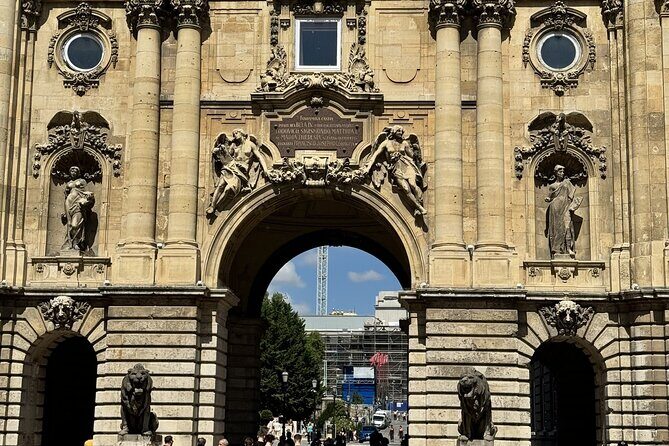
You begin at the Holy Trinity Statue on Szentháromság u. (1014). Before you even reach the big postcard spots, the guide explains why the monument was built and what the figures on the column symbolize. I like this setup because it trains your eyes. After the first stop, you start noticing symbolism instead of just admiring shapes.
This is also a quick orientation moment. The tour stays efficient: about 5 minutes here, with free entry. If you’re the type who usually ignores the “boring” monuments, this one is the opposite. It sets up the way the entire castle district speaks—through allegory.
Matthias Church: Architecture Details You Can Actually Spot
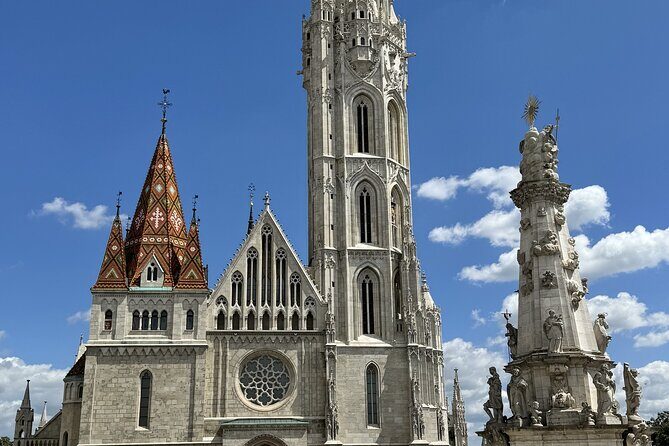
Next comes Matthias Church, again with free entry and a short stop time. The guide focuses on the church’s foundation story and then points out architectural details you’d likely miss if you just wandered past.
Here’s the practical benefit: you’re not learning abstract facts. You’re learning what to look for. Even if you only catch a couple features, it changes the whole feel of the building once you know what the guide is pointing at.
Matthias Church also helps you understand the castle district’s “royal” side—this is the spiritual and political center vibe, not just scenery.
Fisherman’s Bastion: Views of Pest Plus the Double-Cross Story
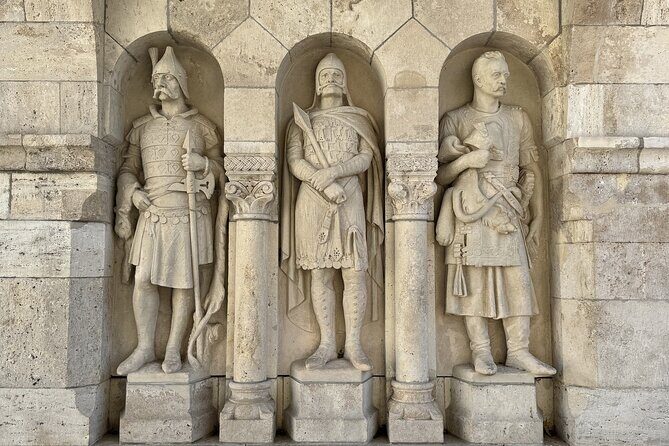
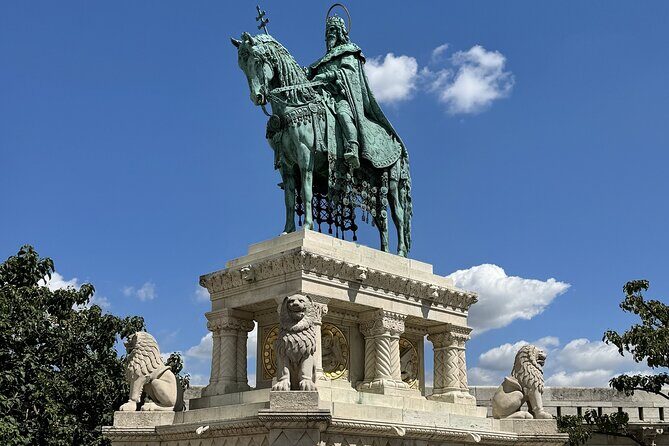
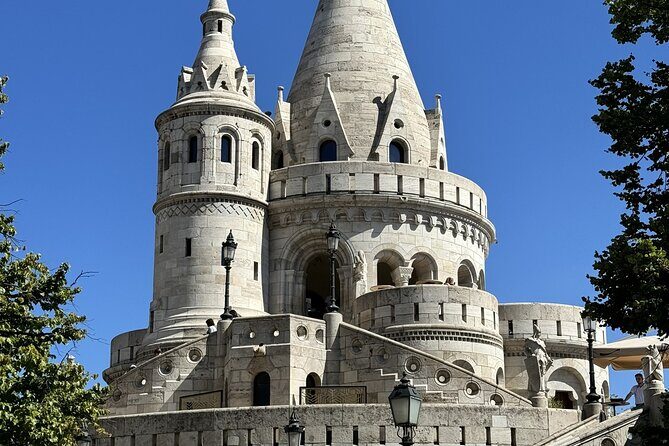
Then you hit Fisherman’s Bastion, and this is where the tour shifts into maximum wow-per-minute. You get around 20 minutes, including time for photos and a slow look at statues.
The guide talks about statues and, importantly, the relationship of the double cross to Hungarian identity. That matters because Fisherman’s Bastion is easy to treat like a pure viewpoint. The tour nudges you to see it as a message—one built into the design.
Plan to spend your mental energy here. Take a few photos, yes. But also look at the statue groupings and how they frame the city below. On a clear day, the Pest views are the kind that make you pause even when you’re trying to keep up with a tour group.
A small note: this is a photo-friendly area, so you’ll likely share space with other people. That doesn’t ruin anything, but it’s good to remember that castle district views attract crowds.
Statue Moments That Link Hungary’s Power to Its Myths
After the bastion, the tour continues with a set of quick, meaningful stops that connect rulers, religion, and national identity.






Pope Innocent XI and Related Royal Figures
At the Statue of Pope Innocent XI, the guide also references Pope Sylvester II and the coronation statue of King Matthias. The time is short (about 5 minutes), but the point is big: the guide ties who these figures were to what Hungary was trying to represent.
National Archives of Hungary: The Detail Stop
The National Archives of Hungary is another “quick but rewarding” stop at about 5 minutes. You’ll notice architectural wonders such as the Vienna Gate, plus “golden signatures” connected to Uri Street (as described on the tour). The nearby statues come with short tales too.
This stop feels like a palate cleanser. After the church-and-statue symbolism, you start appreciating how power leaves physical traces in civic architecture.
Church of Saint Mary Magdalene: Coronation Mantle and WWII Ruins
At the Church of Saint Mary Magdalene, the guide points out the monument to the coronation mantle of Hungarian kings. You’ll also see WWII ruins and hear how the site fits into that heavier twentieth-century layer.
This stop is brief, but it gives you contrast. The castle district isn’t only about kings and romance. It’s also about survival, rebuilding, and what came after catastrophe.
Wartime Clues and WWII Siege Stories on Arpad Toth Promenade
Then you’re at Arpad Toth Promenade (Setany). This is one of the most “historical detective” stops on the walk. The guide covers the first flag after WWII, the row of cannons, and the view toward the Buda hills.
You also get a short explanation of WWII and the siege of Budapest. That’s useful because it prevents the castle hill from feeling like a postcard only. You start understanding why certain memorial choices were made and why the district’s symbols look the way they do.
You’ll want to listen a bit harder here, because the details aren’t just decorative. They’re anchors to the story of the city under pressure.
Mounted Andras Hadik, the Labyrinth, and Dracula’s Shadow
The tour swings from military and political memory to legends.
Statue of Mounted Andras Hadik
At the Statue of Mounted Andras Hadik, the guide highlights the famed Hungarian knight, plus local trends tied to the area. There’s also an interesting note connected to the oldest Hungarian confectionery nearby, which gives the stop a human, local-feeling texture rather than pure monument worship. This is short—about 5 minutes—but it helps you see the district as lived-in, not frozen in time.
Labyrinth: A Dungeon Story with Vlad the Impaler
Next is the Labyrinth, described as a natural cave used as a dungeon. The guide brings in the Dracula / Vlad the Impaler connection.
I like this stop because it gives you a different type of storytelling. It’s not just “who built what.” It’s about rumor, fear, and how legends stick to physical places.
The stop lasts about 10 minutes, so you get time to look around and absorb the mood without feeling stuck in one spot.
Independence War Symbolism, 1848, and the House of Houdini
Then comes the Statue of Independence War, tied to the Hungarian revolution of 1848. The guide connects the symbolisms of the statues back to the war’s meaning.
A fun detail here is the mention of the House of Houdini nearby. It’s a reminder that even around official monuments, Budapest keeps room for personality and showmanship.
This stop is short (about 5 minutes), but it adds a crucial bridge: after WWII and medieval stories, you move into nineteenth-century national identity and revolution.
Szent György Street, Buda Hill Funicular, and the Turul Bird
At Szent György Street, the tour points out offices of Hungary’s president and prime ministers and also references ruins of medieval castles. The guide adds secret-story style context, using the setting to hint at what has changed over time.
This section is only about 5 minutes, but it’s a big deal if you like seeing how the present sits on top of the past.
Buda Hill Funicular: Small Stops with Big “Firsts”
Then you reach the Buda Hill Funicular. The guide notes it’s the second oldest funicular, points out the Zero kilometer stone, and mentions the oldest bridge of Hungary.
Even if you don’t ride it, this is a good “systems” stop. It helps you see the castle hill as an engineered place, not just an old scenic walk.
Turul Bird Statue: National Bird and Origin Story
The Turul Bird Statue is about 5 minutes. The guide talks about Hungary’s national bird and the storyline of how the Hungarians got their name.
This is one of those moments where, if you just glance, you miss the meaning. With a guide framing it, the statue becomes a shorthand for a longer identity story.
From Matthias Fountain to Lions Court: Court Stories and Court Drama
Now the walk shifts closer to the heart of the castle.
Fountain of King Matthias
At the Fountain of King Matthias, you get a short pause (about 5 minutes) with emphasis on why the fountain is considered pretty and the romantic-tragedy vibe tied to it.
It’s a quick stop, but it’s a nice breather. You’re walking. Then you’re suddenly holding still and thinking about love-and-loss stories embedded in public art.
Lions Court (Buda Castle) and the Facade Statues
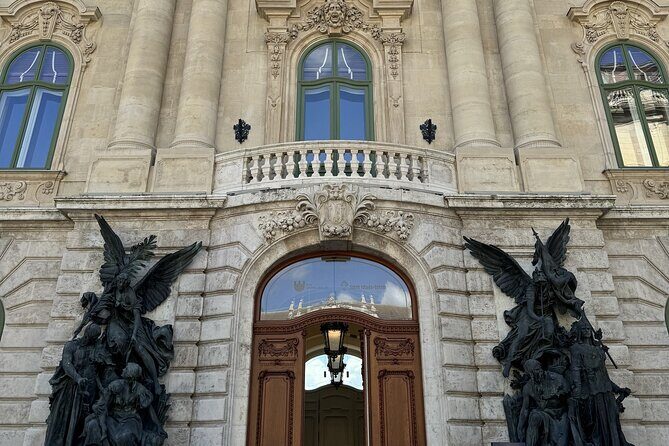
In Lions Court – Buda Castle, you explore a courtyard and get explanations of mythical statues on the facade. This stop is about 5 minutes.
I like courtyards like this in a guided format because the guide helps you connect the facade details to the mood of the place. Without that, it’s easy to see only random ornament.
Royal Riding Hall
Then you get to the Royal Riding Hall, described as the royal Hungarian stable, with local trend context from the guide. Expect about 2 minutes here—short, visual, and effective.
Prince Eugene Statue: A Big Moment Before Your Final Walk
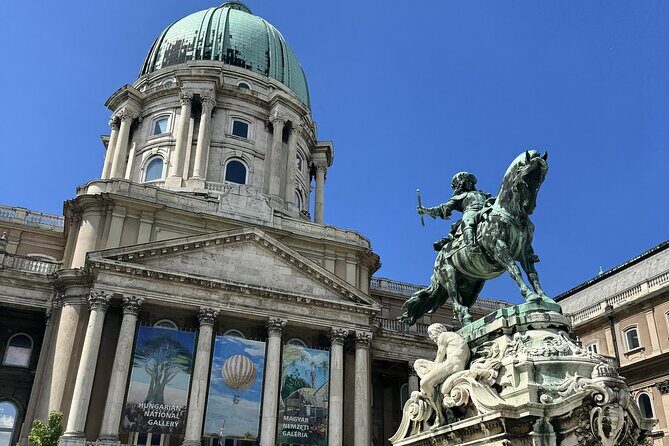
The Prince Eugene of Savoy’s Equestrian Statue is the biggest statue in the castle district. The guide explains that he’s remembered as a liberator from the Ottomans, and includes fun facts tied to the sculpture.
This is about 5 minutes, and it feels like a turning point. After a string of religious and symbolic sites, this one is pure public memory: grand, visible, and hard to ignore.
If you want to rest your legs, this is the place to do it. It’s a strong “take it in” moment before the garden portion.
S. Maria Mater Dei, Castle Garden, and Várkert Bazar Finishing Vibes
The final stretch softens the tone from monuments to atmosphere.
S. Maria Mater Dei: Mary and the Bridge Connection
At S. MARIA MATER DEI, you’ll see a statue of Virgin Mary with baby Jesus and hear how the guide connects bridges in Budapest to Hungarian monarchs. It’s short—about 5 minutes—but it ties back the theme of Hungary using physical features to tell stories.
Castle Garden: Triton Fountain and the Spiral Staircase Tower
In Castle Garden, you get another 5-minute pause with the spiral staircase tower and the Triton fountain.
This is a nice endgame. Gardens reset your brain after statue-heavy walking. You can look around, breathe, and take photos without constantly checking your footing.
Castle Garden Bazaar (Várkert Bazar): Finish Right at the Ornate Stuff
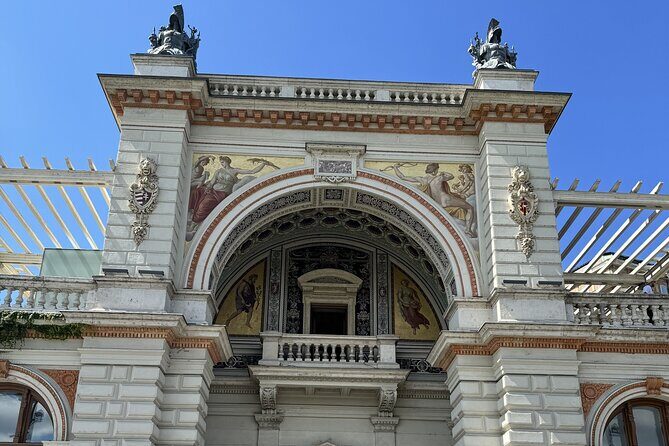
Finally, you end at Castle Garden Bazaar by Ybl Miklós tér and the Várkert Bazar area. The tour points out the architecture of the Várkert Bazar and statues on the facade.
This ending location is smart. It’s right by Castle Garden, so you finish where it’s easy to keep exploring on your own—cafés, viewpoints, and those ornate facade details that look better up close.
Practical Stuff I’d Plan Before You Go
Wear shoes you trust
This is a walking tour across uneven castle-hill terrain. Even if you’re fit, your feet matter. Grippy soles beat “fashion sneakers” every time.
Bring a camera and expect quick photo moments
You’ll have time set aside for photos, especially at Fisherman’s Bastion. Still, many stops are only 5 minutes, so be ready to move fast and shoot smart.
Go in with one mindset: symbols over sightseeing checklists
What makes this tour work is the way it treats monuments as coded messages. If you show up looking for names only, you’ll feel rushed. If you show up curious about why each symbol exists, the whole walk clicks.
Budget reality check
With free admission at the listed stops, the tour stays low-pressure. You’re not suddenly paying to enter things just to keep going. You’re paying for the guide’s interpretation.
Should You Book This Budapest Castle District Tour?
Yes—if you want a focused, story-driven way to understand the Castle District without spending a whole day guessing what you’re looking at. The price is low, the route is packed but paced, and the guide’s English is the kind you’ll actually rely on, including when the talk gets symbolic or legend-based.
I’d think twice only if you hate walking or you need long indoor museum time. This is a monument-and-viewpoint walk. It’s great for getting your bearings and learning the meanings behind the sights, then choosing what to revisit later.
If you enjoy photos, history threads, and street-level explanations, this tour is an efficient way to turn a hill full of famous buildings into a readable story.
FAQ
How long is the Gems of the Budapest Castle District Walking Tour?
The tour runs about 2 hours 10 minutes.
What is the tour price?
The price is $3.61 per person.
When does the tour start and where does it meet?
It starts at 3:00 pm. The meeting point is at the Holy Trinity Statue, Budapest, Szentháromság u., 1014 Hungary.
Where is the tour end point?
The tour ends at Castle Garden Bazaar, Budapest, Ybl Miklós tér 2-6, 1013 Hungary, right next to Castle Garden by the Várkert Bazar area.
Is admission included for the stops?
Admission ticket is listed as free for each stop.
Is the tour offered in English?
Yes, it’s offered in English, and you’ll receive a mobile ticket.
What happens if the weather is poor?
This experience requires good weather. If it’s canceled due to poor weather, you’ll be offered a different date or a full refund.