A Jewish Quarter walk in Budapest hits hard—in a good way. You get a guided route through key sights tied to community life and WWII memory, with stops you would likely miss on your own. I like the private pace (so you can ask questions without being rushed), and I love how the guide connects buildings, streets, and the human stories behind them. One thing to plan for: synagogue entry costs can be extra, and a couple of synagogue stops cannot be entered in the current conditions.
The tour runs about four hours, which is a sweet spot for a dense part of the city. I also like the mix of places: ghetto-era remnants, major synagogues like the Dohány Street Synagogue, and memorial sites along the Danube. The only drawback to keep in mind is the walking time adds up, so comfortable shoes matter.
In This Review
- Key Points to Know Before You Go
- A Private Jewish Quarter Walk That Connects Streets to Stories
- Price and Value: What You’re Paying For (and What You Might Pay Extra)
- Your 4-Hour Route in Plain English: What Each Stop Feels Like
- Stops 1-4: Ghetto Boundaries and the Synagogues You Can Actually See
- Stops 5-8: Memorials, the Danube, and Ruin-Bar Budapest
- The Real Star: How the Guides Set the Tone
- Food Tastings: A Small Break That Helps the Day Work
- Practical Tips That Make the Tour Feel Smooth
- Who This Tour Suits Best (and Who Might Think Twice)
- Should You Book This Jewish Budapest Private City Walk?
- FAQ
- How long is the Jewish Budapest private city walk?
- Is this a private tour or a group tour?
- Are hotel or cruise ship pickups included?
- What language is the tour offered in?
- Are synagogue entrance fees included?
- Is the tour recommended on Saturdays?
- Is free cancellation available?
Key Points to Know Before You Go
- Private group up to 15 means your guide can tailor the route to your wishes.
- Dohány Street Synagogue is the big architectural highlight, but entry isn’t always included.
- Some synagogues are outside-only right now due to renovation or community limits.
- Holocaust memory stops include Danube remembrance and the Carl Lutz memorial story.
- Food tastings are part of the experience, but lunch is not.
- Saturday closures are a real schedule constraint because synagogues close for Jewish holidays.
A Private Jewish Quarter Walk That Connects Streets to Stories
Budapest’s Jewish Quarter (especially in the inner parts of Pest) can feel like a collection of monuments if you go solo. With a guide, it turns into a timeline you can actually follow: what Jewish life looked like, what the Nazis and Arrow Cross did, and what came after. The private setup is what makes it work, because you can linger when something grabs you—architecture, a name on a memorial, or a street corner that once meant something else.
I also like that the focus isn’t just on big “name” sites. You get the kind of details that make a place stop being a postcard. For example, you’ll see surviving traces of the former ghetto boundary and yellow-star houses—small physical remnants that help you picture how crowded and controlled life became.
The tone matters here. The tour covers somber events, but it does so in a careful, respectful way. In guide feedback, I noticed repeated praise for serious, patient explanations—even for groups with older participants—so you can expect a thoughtful pace rather than a speech-and-run routine.
You can also read our reviews of more city tours in Budapest

Price and Value: What You’re Paying For (and What You Might Pay Extra)
The price is listed as $342.93 per group for up to 15 people, for a tour lasting about four hours. That can feel high if you assume it’s “just a walking tour.” But in practice, you’re paying for a professional guide plus hotel or port pickup and drop-off, plus a private route plan rather than a crowded group schedule.
Here is the value math that helps you decide:
- If you’re traveling as a family or small circle, the per-group price can work out well.
- The stops are tightly packed, and the big-ticket item—synagogue entry—often costs extra elsewhere anyway.
- You are not paying for a generic city overview. This is purpose-built for Jewish history and memorial sites.
Now the part to get right: synagogue entrance fees are not consistently included. The Dohány Street Synagogue is listed as not included, and the Kazinczy Street Synagogue can’t be entered because it is temporarily closed. Another synagogue stop (Rumbach Street Synagogue) is described as outside-only unless you request to see inside, and tickets still aren’t listed as included. One review specifically called out that the Dohány Street Synagogue costs extra and wasn’t fully expected—so plan ahead so there are no surprises.
Bottom line: the tour is good value when you treat it like a guided education with optional-paid access to major rooms.
Your 4-Hour Route in Plain English: What Each Stop Feels Like
This is a half-day route with a clear structure: neighborhood remains first, major religious sites next, then WWII memory sites and a modern slice of the area.
Stops 1-4: Ghetto Boundaries and the Synagogues You Can Actually See
Stop 1: Budapest’s Jewish Quarter
You start in the area tied to the former ghetto, including remaining wall sections and the idea of the yellow-star houses. This opening works because it sets the physical reality of the area before you jump into dramatic architecture. It is also the right moment to get context: why these buildings and walls mattered, and how Budapest’s Jewish community was shaped by policy and persecution.
The time here is short, so I recommend you use the first minutes to ask your guide what to focus on. If you do that, the later synagogues land with more meaning.
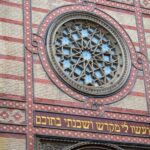
Stop 2: Great / Central Synagogue (Nagy Zsinagóga), the Dohány Street Synagogue
This is the headline stop for a reason. It is described as the biggest functioning synagogue in Europe, and the architecture is a major part of the visit. You’ll get an explanation of the turbulent history connected to the synagogue and the building itself. Entry is not included in the basic visit, and access can depend on what you choose and what the building requires on that day.
Even if you end up paying extra, this is usually the moment that makes people say they would not want to do the area without a guide. Expect the guide to point out placement, layout, and historical references so you can “read” the building.
Stop 3: Kazinczy Street Synagogue (outside only right now)
You cannot enter this one at the moment. It is temporarily closed for renovation, and there is also a note that the community has a ban limiting access beyond certain rules. You still get to see it from the outside, including the Art Nouveau style that was prominent when it was built.
This stop can disappoint if you planned on seeing inside, but it still adds value by showing how many different synagogue styles existed in the neighborhood. If inside access matters most to you, you should ask your guide ahead of time whether any alternative options are possible on your day.
Stop 4: Rumbach Street Synagogue (outside now, inside by request)
This building is described as recently renovated with striking architecture and important community connections. The tour does not include tickets to visit inside, but your guide may show you inside upon request. That means your experience depends on timing and permissions.
I like this structure because it avoids false promises. You get the visual and historical context either way, and if you can access the interior, you gain more.
Stops 5-8: Memorials, the Danube, and Ruin-Bar Budapest
After the synagogues, the tour turns more directly toward WWII memory and modern remembrance culture.
Stop 5: Carl Lutz Memorial
This stop is about Carl Lutz, the Swiss diplomat credited with helping thousands of Jewish people avoid the death camps. The guide walks you through his story and why it matters. This is one of those moments where the tour does something important: it doesn’t only talk about horror. It also gives credit to survival, courage, and human choice.
Even if you know the name, the guided framing helps you connect the site to what happened and why this specific memory matters.
Stop 6: Szimpla Kert (ruin-bar area)
This is a contrast stop, and it works. Szimpla Kert is part of the VII district’s famous ruin-bar scene, and the stop gives you a sense of how the area feels today. The guide points you toward the atmosphere and the design vibe that attracts people from around the world.
This part can be brief, but it helps your brain reset after heavy memorial content. Just remember: you are still in a neighborhood layered with difficult past. The “fun” factor here is not denial—it’s a reminder that people rebuilt lives.
Stop 7: Shoes on the Danube Bank
This memorial remembers people who were shot into the Danube during the Arrow Cross terror. The guide explanation is crucial here because the memorial’s simplicity is the point. You stand with a line of emotion and meaning, and the story gives you the weight behind what looks like a public art installation.
One reason this stop hits: it anchors history to a place you can see from the walkway. You’re not just hearing about events; you’re standing at the river edge tied to those events.
This is also why the tour deserves the private format. You can pause longer, ask a question, and keep your own pace.
Stop 8: Király Street (ghetto wall segment)
Under Király Street number 15, there is an original segment of the Great Ghetto in Budapest. You’ll see it and hear how it connects to the second largest WWII ghetto in the world. The guide ties the physical segment to the broader story, so it stops being a random plaque and becomes a piece of lived confinement you can visualize.
If you’re the type who wants the “why” behind each location, this is another strong spot for questions.
You can also read our reviews of more private tours in Budapest






The Real Star: How the Guides Set the Tone
This tour’s reviews consistently point to the guides as a major reason it works. Names that showed up in feedback include Suzy (also referenced as Suzy Szoke), Joel, and Bogato. Different guides, same pattern: patient answers, careful pacing, and a strong ability to connect architecture to history.
For older groups, Joel was praised for patience with a group that included travelers over 70. That matters because synagogue visits and memorial sites can be a lot of standing, reading, and listening in a short time. With the wrong guide, you get speed-walking and missed details. With the right one, you get a serious tone and still feel supported.
Suzy also received repeat praise for being passionate and able to connect Jewish community history with broader Hungarian and WWII events. One review noted that the tour ran a bit longer than the advertised time without rushing, which is what you want on a subject this heavy.
And yes, humor is allowed. Not jokes about tragedy—just a guide who can keep the room calm and engaged while staying respectful.
Food Tastings: A Small Break That Helps the Day Work
The tour includes food tastings, and one review specifically mentioned a stop at a Strudel House for a snack during the walk. Lunch is not included, so think of tastings as a palate pause, not a full meal plan.
If you’re doing this in the morning, plan a light breakfast or carry water. If you’re prone to fatigue, you might want to eat something before the tastings so the day doesn’t turn into low-energy listening.
Practical Tips That Make the Tour Feel Smooth
This walk is about history, but it still runs like a real city tour—so a few practical choices will save you stress.
- Wear comfortable shoes. Even though the tour is “just four hours,” the stops and Memorials on the Danube area add up.
- Build in extra time for the synagogue parts. Entry availability and optional inside access can change your schedule.
- If you care a lot about inside synagogue access, plan around closures. The tour is not recommended on Saturdays because synagogues are closed for Jewish holidays.
- Bring a small question list. Ask early about what you should focus on, especially at the Dohány Street Synagogue.
Also, note that the tour is offered in English and is described as near public transportation, which gives you options if pickup timing doesn’t perfectly match your day.
Who This Tour Suits Best (and Who Might Think Twice)
This is a great match for you if:
- You want a structured route through the Jewish Quarter that includes major synagogues and key WWII memorial sites.
- You like asking questions and getting clear answers rather than reading everything alone.
- You prefer a private format—up to 15 people—with a guide who can adjust pacing.
It might be less ideal if:
- You are not comfortable with heavy historical topics. This walk includes WWII and Arrow Cross terror remembrance sites.
- You strongly dislike paying for extra entrances. The Dohány Street Synagogue entry is not included, and Kazinczy Street is outside-only due to closure.
- You are planning for a Saturday. With Jewish holiday closures, the synagogues will be shut.
Should You Book This Jewish Budapest Private City Walk?
I’d book it if you want one focused afternoon in Budapest that connects neighborhood remains, synagogue architecture, and WWII memory in a way you can understand. The private format, the consistently praised guide style, and the inclusion of Carl Lutz and the Danube memorials are the big reasons this works.
Just go in with two expectations set:
- Synagogue entry fees may be extra, especially for the Dohány Street Synagogue.
- Saturdays are tricky, because synagogues close for Jewish holidays.
If you can align your day for access and you like guided context, this tour is exactly the kind of thing that turns a city visit into something you actually carry home.
FAQ
How long is the Jewish Budapest private city walk?
It runs for about 4 hours (approx.).
Is this a private tour or a group tour?
It is a private tour. Only your group participates, with a group size up to 15.
Are hotel or cruise ship pickups included?
Hotel and port pickup and drop-off are offered. If you are arriving by cruise ship, you need to provide port details like ship name, docking time, disembarkation time, and re-boarding time.
What language is the tour offered in?
The tour is offered in English.
Are synagogue entrance fees included?
Not all synagogue access is included. For example, entry to the Great / Central Synagogue (Nagy Zsinagóga) is not included, and Kazinczy Street Synagogue is closed for entry at the moment. Rumbach Street Synagogue is not listed as included, though inside access may be possible upon request.
Is the tour recommended on Saturdays?
No. The tour is not recommended on Saturdays because synagogues are closed due to Jewish holidays.
Is free cancellation available?
Yes. You can cancel up to 24 hours in advance for a full refund. If you cancel less than 24 hours before the experience start time, the amount paid is not refunded.