REVIEW · BUDAPEST
Original Budapest Alternative Street Art & Jewish Tour
Book on Viator →Operated by Original Budapest Tours · Bookable on Viator
Street art plus Jewish-quarter context makes a smart combo. This Original Budapest alternative tour uses street art and neighborhood storytelling to point you at Budapest’s offbeat corners in about three hours. You’ll move through the 6th and 7th districts with a local guide in a social, friendly pace.
I love how it mixes art-reading with real place names, so you’re not just staring at walls. I also love the focus on specific mural stops like Lépcső Street Art and the Színes Város (Colourful City) theme linked to street-art landmarks.
One thing to consider: the experience can swing a bit based on guide experience. If the guide is new, you may notice gaps—especially when it comes to getting the Jewish geography right—so ask questions if something feels off.
In This Review
- Key highlights
- Start at St. Stephen’s Basilica: Get your bearings fast
- The route focus: 6th and 7th districts, plus Jewish-quarter context
- Stop 1: Lépcső Street Art (about 30 minutes)
- Stop 2: Terézváros (about 30 minutes)
- Stop 3: Andrássy Avenue to Király u. (and into the 7th district)
- Stop 4: Szines Esernyok and the Colourful City theme (about 30 minutes)
- Price and value: why $25.20 can work (if your guide clicks)
- What to bring, how to pace yourself, and how to get better value
- Who should book this alternative street art and Jewish tour
- Should you book the Original Budapest Alternative Street Art & Jewish Tour?
- FAQ
- FAQ
- How long is the Budapest Alternative Street Art & Jewish Tour?
- How much does the tour cost?
- Where does the tour start, and what time does it begin?
- Is a mobile ticket provided?
- What is included in the price?
- Are there admission fees at the stops?
- Where does the tour end?
- Do I need to bring anything like bottled water?
- What happens if the weather is bad?
- What is the cancellation window for a full refund?
Key highlights
- A street-art walk that uses neighborhood context so the murals connect to Budapest, not just aesthetics.
- Lépcső Street Art as a first taste of the city’s alternative culture.
- Terézváros and the 6th/7th district shift that helps you understand why Budapest feels different block to block.
- Andrássy Avenue to Király u. as a practical route through the city center’s edge.
- Színes Város (Colourful City) and related street-art references that shaped the idea of this kind of tour.
Start at St. Stephen’s Basilica: Get your bearings fast

The tour starts at St. Stephen’s Basilica (Szent István tér 1, 1051), and the departure time is 11:00 am. The length is about 3 hours, so this is a good use of a morning when you still have energy for walking.
You’ll get a mobile ticket, which makes it easy to show up without printing anything. Also, each stop is listed as free for admission, which means you’re paying for the guide and the route, not entry fees into a museum.
Bring the basics. Bottled water isn’t included, and you’ll want it once you start moving between districts. And since the experience requires good weather, plan to dress for the day you actually get—not the forecast dreams.
You can also read our reviews of more tours and experiences in Budapest


The route focus: 6th and 7th districts, plus Jewish-quarter context
This is not a “hop-on, hop-off” tour. It’s a walking experience designed to help you see how Budapest’s 6th and 7th districts feel in real life. The tour style is social, too—you’re encouraged to chat with the other people in the group as you go.
The reason that matters is simple: street art changes how you read a neighborhood. When someone points out why a mural is where it is, you start noticing the city’s layers on your own—corners, courtyards, side streets, and that sense that locals own the walls, not just the tourists.
Because it’s also framed as a Jewish tour, you’re likely to hear Jewish-history context as you walk through this part of town. One practical note: geography is part of the value here, so if your guide references a place location and it doesn’t match what you expected, ask for clarification on the spot.
Stop 1: Lépcső Street Art (about 30 minutes)
You start with Lépcső Street Art, and that first stop is doing more than filling time. It sets the tone for how the guide wants you to look at the city—up close, on purpose, and with the idea that street art is part of Budapest’s living culture.
At this stage, expect a mix of visual cues and explanation: what you’re seeing, why it’s there, and how the neighborhood supports that kind of work. Even if you’ve photographed plenty of murals before, a first stop like this helps you slow down instead of treating street art like wallpaper.
The good part? This stop is listed as free for admission. So you’re not waiting in a line or paying extra. The main “cost” is your attention span, and luckily this tour is paced to keep it from wandering.
A drawback of starting here: if you’re expecting a quiet, sit-down history lecture, you might find the format more street-level than academic. This is a walk that uses the sidewalk as the classroom.
Stop 2: Terézváros (about 30 minutes)
Next comes Terézváros, and this is where the tour starts building a sense of district identity. The guide’s job here is to connect the route to how Budapest changes as you move—who lives nearby, what kind of streets you’re in, and how the city shapes everyday life.
This stop is listed at about 30 minutes, so it’s enough time to slow down but not enough time to feel stuck in one spot. You’ll likely get context that makes later murals easier to read. In other words: you’re learning vocabulary before the tour starts writing sentences.
What I like about this kind of stop is that it often answers the question you didn’t ask out loud: why does Budapest feel different on one street than the next? A guide can point you to the patterns that your eyes might miss.
If you’re prone to “photo-and-move,” slow down here. Terézváros works best when you let the guide tell you what to notice.
Stop 3: Andrássy Avenue to Király u. (and into the 7th district)
At Andrássy Avenue, the route is guided by a simple, useful reality: you’re working around the city’s structure. The tour mentions the way Andrássy Avenue sits between key streets—specifically Király u. to help you understand where you are as you cross into Budapest’s 7th District.
This segment is also described as a social moment with other travelers while the guide explains the atmosphere. That matters because you’re not just passing through a corridor—you’re learning how the city’s energy changes as neighborhoods overlap.
It’s worth paying attention to how this stretch feels. Andrássy Avenue is the kind of place where you can easily assume you already know what you’ll see. A street-art and Jewish-context approach flips that. Suddenly the guide isn’t just pointing at big sights; they’re showing you how the “in-between” streets carry meaning too.
Potential drawback: because the route includes moving through more central streets, you might hit more foot traffic. It’s still manageable, but if you hate crowds, wear comfortable shoes and keep your pace steady so the group rhythm stays smooth.






Stop 4: Szines Esernyok and the Colourful City theme (about 30 minutes)
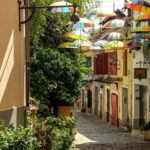
The last stop is Szines Esernyok, tied to the tour’s big recurring idea: Színes Város (Colourful City). This is the part that explains why this street-art style became a reason to book alternative walking tours in Budapest in the first place.
You’re meant to see how local artists and street-art works add life not only to famous landmarks, but also to ordinary side roads. That concept is the whole point of doing a walking tour like this: you start realizing that “important” in a city often means “seen up close by locals every day,” not just posted on postcards.
Expect another round of interpretation—what you’re seeing, what it’s connected to, and how it fits into Budapest’s broader alternative culture. This is also where the guide’s experience really shows. If the guide is comfortable, you’ll get confident explanations. If they’re less prepared, the tour can feel thinner.
One practical tip here: come with questions ready. Even one good question can pull a tour back into focus—like asking what the Colourful City theme is trying to express, or how a specific work changes the street view.
Price and value: why $25.20 can work (if your guide clicks)
The listed price is $25.20 per person, and the guide is included. That price looks low for a guided 3-hour walk, and it is worth thinking about what you’re actually buying.
You’re not paying for museum entry or transportation. You’re paying for someone to steer your attention through street art and neighborhood context—plus the route logic that makes the time feel efficient. Because each stop is marked free for admission, your money isn’t going to fees. It goes to the guide’s explanations and pacing.
Also, the tour is described as tip-driven: the guides work for tips and the price model involves choosing your own amount. That’s why your engagement matters. If you ask questions, respond to the route, and take the guide seriously, you’re more likely to feel you got what you paid for.
Just keep expectations realistic. The big risk with low-cost, guide-led walking tours is variability in guide depth. You can reduce that risk by asking early in the walk what the guide wants you to look for, and by flagging anything that feels factually off—especially around Jewish history locations.
What to bring, how to pace yourself, and how to get better value
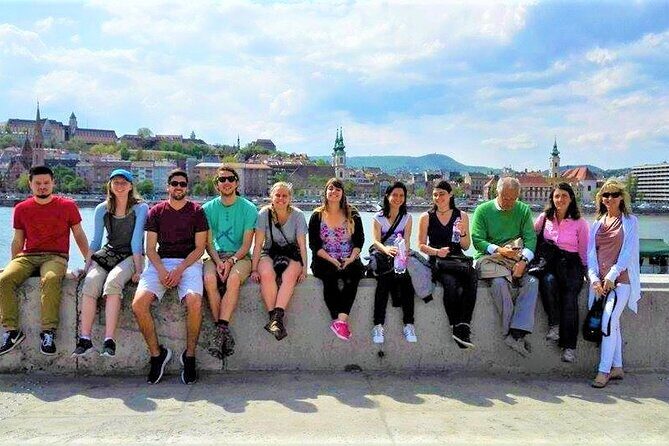
This is a walking tour, and it’s built for about 3 hours. So I recommend you:
- Wear shoes you can move in for a long stretch.
- Bring water, since bottled water isn’t included.
- Use your camera, but don’t let it turn into speed-running murals.
The best street art tours have a rhythm: stop, look, listen, then look again. If you only snap photos, you miss the moment where the guide connects the work to the street. That connection is where the value lives.
If you’re pairing this with other Budapest plans, plan for overlap time. This tour ends in a location that can vary, so you’ll want a nearby café or a flexible next activity. Also, because the experience requires good weather, you’ll feel smarter if you keep the day open as much as possible.
One more practical thing: if you care about Jewish-quarter context, don’t keep it passive. Ask where the story is anchored geographically as you walk. That’s the kind of detail that turns a nice mural tour into a clearer understanding of the neighborhood.
Who should book this alternative street art and Jewish tour
This tour fits best if you like:
- Street art that comes with explanations, not just photos.
- Neighborhood walking where the route teaches you the city’s layout.
- A social guide-led format where you can talk and share observations.
It also works well for repeat visitors. Even if you know Budapest, street art and district transitions can still surprise you, because they change what you pay attention to. You’ll see the same area through a different lens.
If you want a strict, museum-style chronology, this may feel more casual and story-driven than you expect. That’s not bad. It just means you’ll get more out of it if you’re comfortable with a walking conversation.
Should you book the Original Budapest Alternative Street Art & Jewish Tour?
Book it if you want a low-stress, guide-led walk that connects street art to place and adds Jewish-quarter context without making it feel like a textbook. With the listed price and the free-for-admission stops, you’re mostly funding a thoughtful route and conversation—which is a great deal when the guide is strong.
Skip or be cautious if you need ultra-precise historical geography and you’re worried about guide variability. In that case, I’d ask questions early and stay alert to whether the story and location details feel consistent.
If you like your Budapest with street corners included, this is a good bet. It’s the kind of tour that can make a mural feel like a landmark—and a neighborhood feel like a story you can actually walk through.
FAQ
FAQ
How long is the Budapest Alternative Street Art & Jewish Tour?
It runs for about 3 hours.
How much does the tour cost?
The price is listed as $25.20 per person.
Where does the tour start, and what time does it begin?
It starts at St. Stephen’s Basilica at 11:00 am.
Is a mobile ticket provided?
Yes. The tour uses a mobile ticket.
What is included in the price?
A local tour guide is included.
Are there admission fees at the stops?
Admission tickets are listed as free at the stops.
Where does the tour end?
The end point varies.
Do I need to bring anything like bottled water?
Bottled water is not included, so it’s a good idea to bring your own.
What happens if the weather is bad?
The experience requires good weather. If it’s canceled due to poor weather, you’ll be offered a different date or a full refund.
What is the cancellation window for a full refund?
You can cancel for a full refund up to 24 hours in advance.